Open Now
3100 Weslayan St Suite 232, Houston, TX 77027
Galleria's HVAC landscape is unlike anywhere else in Houston: aging 1980s–1990s high-rise towers with fan-coil systems share the neighborhood with luxury townhome clusters and a handful of 1960s–1970s ranch homes, each category carrying its own refrigerant era, access complexity, and condo-association approval gauntlet. With a median year built of 2003 and owner-occupancy at just 29.2%, a large share of units are rentals where deferred equipment maintenance is common—meaning a surprising number of Galleria condos are still running original R-22 or early R-410A systems well past their service life. This page is worth reading because a standard residential HVAC call in Galleria can require freight-elevator scheduling, building-specific insurance certificates, and City of Houston mechanical permits before a technician even touches the equipment.
Ranked by verified Google rating × review volume × verification tier. How we rank →
Some highly-rated pros serve Galleria from nearby and may not keep a Galleria street address. Those are listed under "Also serving Galleria" with their real city and distance, so you always know where each business is based.
3100 Weslayan St Suite 232, Houston, TX 77027
2802 Timmons Ln #27191, Houston, TX 77027
Highly-rated pros based nearby who cover Galleria. Distance shown from the Galleria area.
Serving Galleria Based in Tanglewood · 0.6 mi away
Serving Galleria Based in Bellaire · 1.1 mi away
Serving Galleria Based in West University · 1.2 mi away
Serving Galleria Based in Bellaire · 1.6 mi away
Serving Galleria Based in Bellaire · 1.7 mi away
Serving Galleria Based in Bellaire · 1.7 mi away
Serving Galleria Based in Upper Kirby · 1.9 mi away
Serving Galleria Based in Tanglewood · 2 mi away
Why it matters to you
Galleria's older condominium towers—many built in the 1980s and 1990s—rely on individual fan-coil units installed inside unit closets with condensate drain lines that discharge into building drain stacks. Houston's 90%+ relative humidity keeps these coils continuously wet, and partial clog of a shared drain stack can back up into multiple units at once, overflowing onto luxury finishes and triggering disputes between the unit owner and the condo association over liability. Unlike a slab-on-grade single-family home where a condensate pan overflow just wets the floor, a high-rise overflow can damage the unit below.
What a good pro does
A qualified technician licensed by the Texas Department of Licensing and Regulation (TDLR) should flush and treat the condensate pan and drain line every cooling season—not just when a backup occurs—and verify that the building's shared drain stack is clear at the point of connection. Before scheduling, confirm the tech carries the specific insurance limits required by your building's condo association, as most Galleria towers impose higher minimums than standard residential policies.
Sources: Texas Department of Licensing & Regulation, Local HOA / deed restrictions (see area profile)
Why it matters to you
A meaningful share of Galleria's older high-rises and surrounding 1960s–1970s single-family ranch homes still operate R-22 systems—equipment that predates the EPA's January 2020 production ban. With the Galleria neighborhood's owner-occupancy rate at only 29.2%, many of these units are investor-owned rentals where replacement has been deferred season after season. When an R-22 system develops a refrigerant leak today, reclaimed R-22 costs $80–$150 per pound (estimate), making a simple recharge potentially cost $600–$1,500+ and economically irrational compared with full replacement.
What a good pro does
A TDLR-licensed contractor should perform a refrigerant leak test before adding any refrigerant to an R-22 system—topping off a leaking system wastes money and releases refrigerant into the atmosphere. If replacement is warranted, the contractor must pull a City of Houston mechanical permit through the Houston Permitting Center's One-Stop portal before installing new equipment; homeowner self-pull is not permitted for HVAC mechanical work under City of Houston rules.
Sources: Texas Department of Licensing & Regulation, City of Houston Permitting Center
Why it matters to you
Every high-rise and townhome community in the Galleria area operates under its own mandatory condo association or HOA with independent rules on contractor work hours (commonly 9 AM–5 PM weekdays only), freight elevator reservations, staging areas, and construction debris removal—all of which apply on top of the City of Houston mechanical permit requirement. A compressor replacement that takes one afternoon in a Meyerland ranch house can stretch across multiple scheduled freight-elevator windows in an Uptown tower, leaving a unit without cooling for days during peak summer heat.
What a good pro does
Before any HVAC work begins in a Galleria condo or townhome, confirm that your contractor has submitted proof of insurance meeting the specific building's requirements and has scheduled freight elevator access in writing with building management. Simultaneously, verify that the City of Houston mechanical permit has been pulled—inspections must be coordinated around the building's access windows, not just the contractor's calendar.
Sources: Local HOA / deed restrictions (see area profile), City of Houston Permitting Center
Why it matters to you
The Galleria district's dense glass-and-stucco high-rises and glass-heavy townhomes absorb significant solar heat gain, and the Uptown corridor's urban heat island effect means outdoor temperatures at the condenser level can run several degrees above official airport readings during July and August. Houston already exceeds 400 hours above 95°F annually in a typical year; equipment in poorly ventilated mechanical rooms or rooftop condenser banks with limited airflow runs even harder, accelerating compressor wear and refrigerant cycling failures. Many Galleria condos have original 1980s–1990s air handlers with single-speed blowers that are fundamentally mismatched to today's humidity control demands.
What a good pro does
An HVAC technician should evaluate the equipment's sensible heat ratio and verify that the existing air handler fan speed and refrigerant charge are properly matched to the unit's actual load—not just the original equipment nameplate. When replacing equipment in a high-rise setting, look for ENERGY STAR-rated variable-speed systems that modulate capacity during shoulder months, reducing both humidity and compressor cycling stress; a TDLR-licensed contractor can document efficiency ratings required for any available utility rebate programs.
Sources: ENERGY STAR / U.S. Dept. of Energy, Texas Department of Licensing & Regulation
Hiring ac repair in Galleria? The Galleria/Uptown area is dominated by high-rise and mid-rise condominiums, townhome communities, and a small number of older single-family pockets, creating a uniquely diverse home services landscape. Each building and community has its own HOA or condo association with distinct rules governing contractor access, work hours, and architectural approvals. Homeowners must coordinate closely with building management for any interior or exterior work, especially in high-rise settings where logistics, freight elevators, and insurance requirements add complexity.
Building era
1980s–2010s, with ongoing new construction; some surrounding single-family pockets date to 1960s–1970s.
Typical style
High-rise and mid-rise condominiums (contemporary and modern-traditional glass/stucco), townhome clusters (Mediterranean, traditional brick, transitional contemporary), and a few remaining 1960s–1970s ranch-style single-family homes.
Foundations
High-rises utilize engineered deep pier/caisson systems with podium slabs; townhomes and single-family homes are predominantly slab-on-grade. Not confirmed with Galleria-specific engineering records — verify per building.
Common systems
Central HVAC with individual units in condos (often fan coil or split systems); copper and CPVC plumbing in newer towers, galvanized possible in older 1980s buildings; modern electrical panels in towers with dedicated metering per unit.
What that means for repairs
Condo interior renovations (kitchen and bath remodels, flooring upgrades) are the most common projects, driven by aging 1980s–1990s finishes in older towers. Older single-family pockets see teardown-and-rebuild or conversion to townhome developments.
Permit jurisdiction
Houston Permitting Center (City of Houston).
HOA & deed restrictions
No single mandatory HOA covers the entire Galleria area. Each condo building, townhome community, and gated subdivision has its own mandatory HOA or condo association with independent rules, fees, and architectural review processes. Some older single-family pockets may have only civic clubs or no formal HOA. Status is property-specific — review recorded condo declarations and deed restrictions for each property.
Historic districts
No City of Houston historic district designation confirmed.
Contractor note
Contractors must obtain individual building HOA/condo association approval before beginning work, as each high-rise and community has its own rules on work hours, freight elevator scheduling, insurance requirements, and construction debris removal. Failure to secure approval can result in work stoppages and fines.
FEMA flood zone
FEMA Zone X (low flood risk) — source: fema_nfhl. The Galleria/Uptown core sits west of central bayou channels, with Buffalo Bayou to the south and substantial commercial drainage infrastructure in the area.
Hurricane Harvey impact
The Galleria/Uptown area was not among the worst-publicized residential devastation zones during Hurricane Harvey (2017). Some commercial buildings and parking structures reported street flooding and water intrusion, but large-scale residential flood damage was limited compared to nearby neighborhoods like Meyerland and Memorial. Specific building-level impact should be verified through individual condo association records and seller disclosures.
Heat & humidity load
High-rise HVAC systems face heavy demand during Houston's extreme summer heat and humidity; aging fan coil units in 1980s–1990s towers are prone to condensate drain clogs and mold issues. Flat-roof townhomes and podium-level units require regular roof membrane and drainage inspections to prevent heat-related deterioration and water intrusion.
Working with contractors here
The Galleria area's contractor workload is heavily weighted toward condo interior remodels — kitchen and bath renovations, flooring replacement, and HVAC unit upgrades in aging 1980s and 1990s high-rises. Plumbing repipes are increasingly common in older towers transitioning from original galvanized or early CPVC systems. Townhome communities generate steady demand for exterior stucco repair, roof replacement, and fence/gate maintenance. Contractors must plan for high-rise logistics including freight elevator scheduling, limited staging areas, and strict building-imposed work hours, often 9 AM–5 PM weekdays only. Obtaining proof of insurance meeting each building's specific requirements is essential before mobilizing to any job site in this area.
Local Tip
Always ask for a written estimate before work begins. Texas contractors are required to provide one on jobs over $1,000.
The Galleria/Uptown area is dominated by high-rise and mid-rise condominiums, townhome communities, and a small number of older single-family pockets, creating a uniquely diverse home services landscape. Each building and community has its own HOA or condo association with distinct rules governing contractor access, work hours, and architectural approvals. Homeowners must coordinate closely with building management for any interior or exterior work, especially in high-rise settings where logistics, freight elevators, and insurance requirements add complexity.
Source: U.S. Census Bureau, ACS 5-Year 2023
Most of Galleria maps to FEMA Zone X (low mapped flood risk), but Houston's flash-flood reality means even low-risk blocks benefit from smart drainage and storm-hardened installs.
Source: FEMA National Flood Hazard Layer (NFHL). Flood zones vary by parcel — verify your individual FIRM panel.
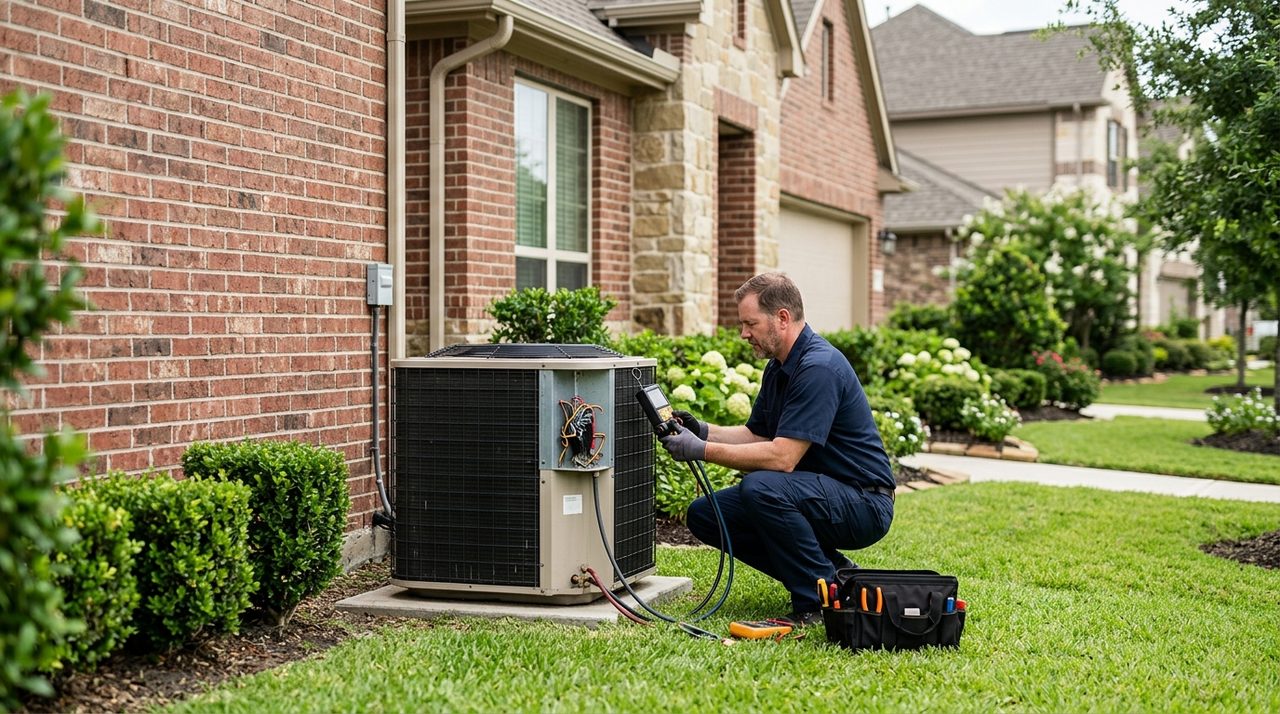
After a hurricane passes through Galleria, clear debris from condenser coil fins with a gentle water rinse before restoring power — compressed leaf litter and shingle granules restrict airflow and can overheat the compressor on a first cooling call during the post-storm heat spike. A TDLR-licensed technician can also inspect the refrigerant charge, which can shift if the unit was significantly jostled. In-city Galleria work falls under City of Houston floodplain and permitting rules.
Wind-driven rain during a severe thunderstorm can overwhelm attic ventilation in Galleria and soak fiberglass duct insulation, reducing system efficiency for weeks until the insulation dries — a post-storm attic check for wet duct wrap costs far less than the efficiency loss on your summer CenterPoint bill. A TDLR-licensed HVAC technician can re-wrap and seal affected sections during a single service visit. Confirm the current FEMA panel for your Galleria parcel — the area maps to Zone X, but adjacent lots can differ.
In lower-flood-risk areas like Galleria, the primary Uri 2021 HVAC failure mode was loss of heating entirely when heat-pump defrost boards were overwhelmed — verify that your backup heat strips are energized and pulling correct amperage with a quick licensed-technician check every fall, because a failed heat strip during a power-restored freeze night leaves the house unprotected. CenterPoint's rotating outage schedule during Uri meant systems that failed had no repair window for days. In-city Galleria work falls under City of Houston floodplain and permitting rules.
Sources: FEMA National Flood Hazard Layer (NFHL), Ready.gov -- Hurricanes, CenterPoint Energy -- Storm Center, City of Houston -- Emergency Preparedness, Ready.gov -- Winter Weather, Harris County Flood Control District
Houston-specific estimators to plan your project before you call a pro. All results are planning estimates — a licensed local pro confirms the details on site.
Living space you want cooled (400–10,000 sq ft).
Recommended nominal size
Estimated cooling load
This is a planning estimate only — actual requirements depend on an on-site assessment by a licensed Houston pro. Houston's humidity and long cooling season make an oversized unit a common, costly mistake — it short-cycles and never dehumidifies. A licensed contractor confirms sizing with a full Manual J calculation.
Disconnect & drain every outdoor hose bib
Remove hoses, drain the spigots, and cover each with an insulated faucet sock. Un-drained hose bibs are the #1 burst point in a Houston freeze.
Insulate exposed pipes in the attic & garage
Wrap any pipe in an unconditioned space (attic runs, garage walls) with foam sleeves. Houston homes rarely insulate these because they only matter a few nights a year — which is exactly why they burst.
Open cabinet doors & keep a pencil-width drip
On hard-freeze nights, open kitchen/bath cabinets so warm air reaches the pipes and let faucets on exterior walls drip to relieve pressure.
Protect the attic/garage water heater & its lines
An attic or garage tank sits in unconditioned space. Insulate the cold-inlet and hot-outlet lines and confirm the emergency drain pan is clear so a leak doesn't reach the ceiling.
This is a planning estimate only — actual requirements depend on an on-site assessment by a licensed Houston pro. If a pipe has already burst, shut off your main water supply and call a licensed Houston plumber immediately — freeze bursts flood fast.
Sources: City of Houston Permitting CenterTexas Department of Licensing & Regulation
Sources: Local HOA / deed restrictions (see area profile)City of Houston Permitting Center
Sources: City of Houston Permitting Center