16250 State Hwy 3 STE D12, Webster, TX 77598
Best Appliance Repair in Webster, TX
Webster's dominant housing stock — slab-on-grade ranch homes built between the 1970s and 1990s in SE Harris County's coastal clay belt — creates a specific appliance-repair picture: aging machines (or their once-replaced successors) operating in high-humidity air near Clear Lake, on foundations that shift seasonally, and on a grid that took repeat beatings from Harvey (2017), Beryl (2024), and the May 2024 derecho. All permit work for appliance-related gas or electrical modifications runs through the City of Webster's own permit office, not Houston or Harris County — a detail that trips up out-of-area technicians. Read on to understand which failure patterns are most common in Webster subdivisions and what to ask a technician before authorizing any repair.
Verified against Google Business data
Updated 2026
See the 10 Appliance Repair Serving Webster 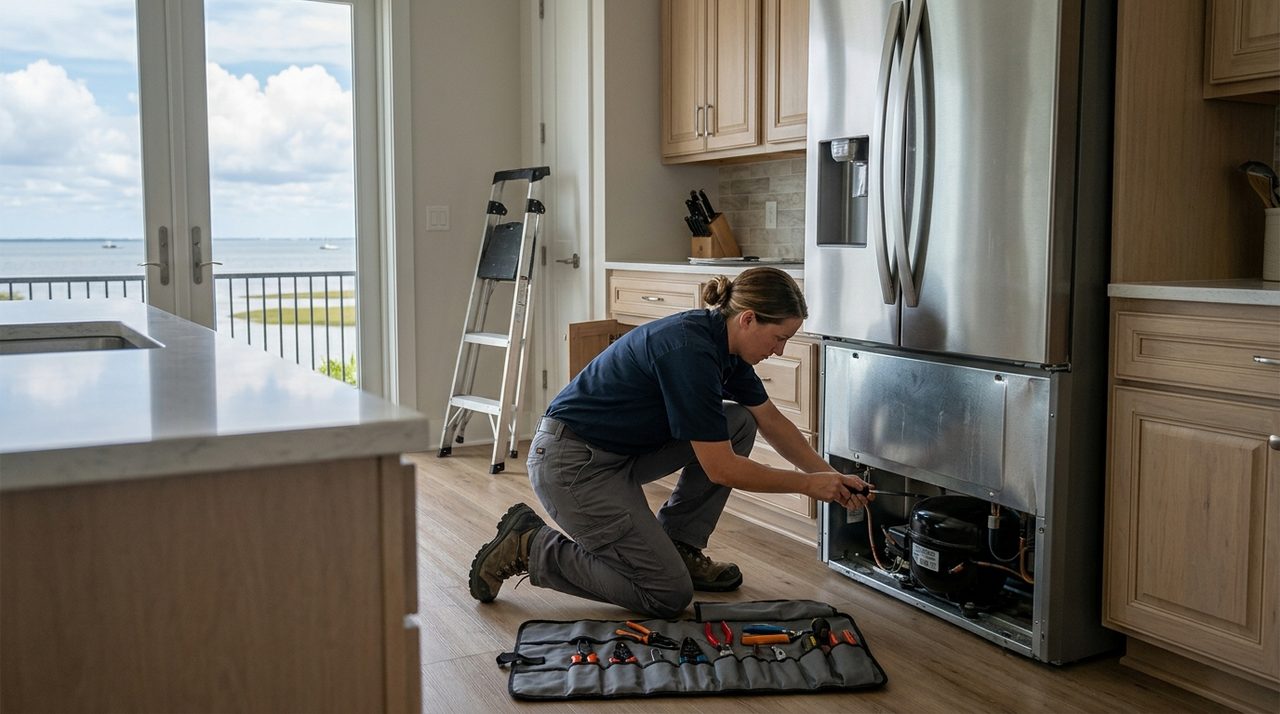
- Median home built
- 1992
- Median home value
- $284,900
- FEMA flood zone
- X (low)
- Typical repair cost (est.)
- $150–$650
- Most common local issue
- Storm-surge control-board failures in 2000s–2010s smart appliances near NASA Rd 1 corridor
Ranked by verified Google rating × review volume × verification tier. How we rank →
Some highly-rated pros serve Webster from nearby and may not keep a Webster street address. Those are listed under "Also serving Webster" with their real city and distance, so you always know where each business is based.
Min rating:
10 resultsBased in Webster
Closed
20610 Gulf Fwy, Webster, TX 77598
1402 E Medical Center Blvd #6985, Webster, TX 77598
Also serving Webster
Highly-rated pros based nearby who cover Webster. Distance shown from the Webster area.
Closed
Serving Webster Based in Friendswood · 1.8 mi away
Serving Webster Based in League City · 2.5 mi away
Open Now
Serving Webster Based in League City · 2.8 mi away
Closed
Serving Webster Based in League City · 3.3 mi away
Closed
Serving Webster Based in League City · 3.3 mi away
Serving Webster Based in League City · 3.3 mi away
Closed
Serving Webster Based in League City · 3.7 mi away
Appliance Repair in Webster: What You Should Know
Beryl and the Derecho Fried Smart-Appliance Boards in Webster's Newer Subdivisions
Why it matters to you
Neighborhoods like Edgewater — built in the 2000s–2010s with modern inverter-drive washers, Wi-Fi-enabled dishwashers, and variable-speed refrigerator compressors — were hit hard by the voltage spikes and extended CenterPoint outages that followed Hurricane Beryl in July 2024 and the May 2024 derecho. These smart appliances are highly sensitive to dirty power restoration: a single brown-out event after a 48-hour outage can burn out an inverter board or Wi-Fi control module in a way that isn't obvious until days later. Homeowners who didn't lose water or visible storm damage often overlook the appliance damage entirely until a machine stops mid-cycle weeks after the storm.
What a good pro does
A qualified technician should run a full diagnostic — not just address the symptom — on any appliance in a home that lost power for 48 or more hours during recent storms. Control board replacements in this class of appliance typically run $300–$650 parts and labor (estimated, Houston market). If the home lacks whole-home surge protection, ask your electrician about SPD installation before the next storm season; it won't reverse past damage but can prevent repeat failures.
Sources: Municipal permit office (see area profile), ENERGY STAR / U.S. Dept. of Energy
1970s–1990s Ranch Homes: Washers and Dryers Destabilized by Coastal Clay Slab Movement
Why it matters to you
Webster's older subdivisions — the bulk of the city's housing stock with a Census-estimated median year built of 1992 — sit on slab-on-grade foundations over the same expansive Houston Black clay soils found across SE Harris County. Seasonal wet-dry cycles cause slabs to heave and settle; even modest out-of-level conditions exceeding one-quarter inch over six feet cause front-load washers to vibrate destructively, wearing drum bearings and door gaskets years ahead of schedule. Garage-mounted dryers in these homes often have long or kinked exhaust runs that worsen with slab movement, trapping heat and lint — a compounding problem given Webster's 100-plus heat-index days each summer.
What a good pro does
When a technician responds to an 'excessive vibration' or 'loud spin cycle' call in a Webster ranch home, the floor level should be checked with a digital level before assuming the machine itself is at fault. Bearing and drum-seal jobs on front-loaders run roughly $250–$500 (estimated); on machines over eight years old with documented clay-soil wear, the technician should give an honest replace-versus-repair assessment. Dryer vent runs should be inspected for kinks or sag caused by slab movement at the same visit.
Sources: Municipal permit office (see area profile), ENERGY STAR / U.S. Dept. of Energy
Hard Water from the Houston Municipal System Scales Dishwashers and Ice Makers Faster Here
Why it matters to you
Webster receives City of Houston municipal water, which averages 17–20 grains per gallon hardness per the City of Houston Water Quality Report. In the humid near-bay environment of SE Harris County, lime scale accumulates rapidly inside dishwasher spray arms, refrigerator ice-maker orifices, and washing machine inlet valve screens — particularly in the 1970s–1990s homes where original or first-generation replacement appliances may have been running on unfiltered supply for a decade or more. Slow dishwasher cycles, cloudy glassware, and undersized ice production are the typical homeowner complaints; the root cause is almost always scale restriction, not a failed pump or compressor.
What a good pro does
A thorough technician will disassemble and descale spray arms and inlet valves rather than immediately pricing a pump-motor replacement. Dishwasher pump-motor replacements run $150–$350 (estimated, parts and labor) — money better spent on a water softener or inline filter if scale is the documented cause. Ask whether the home has any softening or filtration on the supply line; if not, cleaning intervals for these components will be shorter than the manufacturer's national-average maintenance schedule assumes.
Sources: ENERGY STAR / U.S. Dept. of Energy, Municipal permit office (see area profile)
Gas Appliance Swaps in Webster Require City of Webster Permits — Not Houston's
Why it matters to you
Webster is an independently incorporated city with its own permit authority; any gas appliance replacement — a range, gas dryer, or tankless water heater — that involves disconnecting or reconnecting a gas line requires a permit pulled through the City of Webster's permit office, not the City of Houston or Harris County. Out-of-area appliance companies unfamiliar with the NASA corridor's patchwork of incorporated cities sometimes pull the wrong jurisdiction's paperwork or skip the gas-line permit entirely, leaving homeowners with an uninspected connection and a potential warranty or insurance gap.
What a good pro does
Confirm before scheduling that your technician or installer knows to permit through Webster specifically and that any gas piping work beyond the appliance itself will be performed by a plumber licensed through TSBPE (Texas State Board of Plumbing Examiners) or an HVAC contractor licensed through TDLR for gas-line work. For homeowners in Edgewater or other HOA-governed communities, verify whether an exterior appliance vent or utility modification also requires HOA architectural review before work begins.
Sources: Municipal permit office (see area profile), Texas State Board of Plumbing Examiners, Texas Department of Licensing & Regulation, Local HOA / deed restrictions (see area profile)
Appliance Repair in Webster: What You Should Know
Hiring appliance repair in Webster? Webster is a small incorporated city in SE Harris County near Clear Lake and the NASA corridor, with housing stock ranging from 1950s-era homes in the original town grid to 2000s master-planned communities like Edgewater. Homeowners here deal with aging slab-on-grade foundations on coastal clay soils, subdivision-specific deed restrictions, and proximity to Clear Creek floodplain areas. Permitting runs through the City of Webster rather than Houston or Harris County, which contractors must account for in project planning.
- Housing era
- Mixed
- Foundation
- Predominantly slab-on-grade for post-1960 suburban construction
- Flood zone
- FEMA Zone X (low flood risk) per official NFHL data
- Permits
- City of Webster Permitting (Webster is an incorporated city with its own permit authority)
Housing stock & systems
Building era
Mixed: some mid-century (1950s–1960s) in the original town grid, with the majority built from the 1970s through the 1990s; newer infill, townhomes, and master-planned sections (e.g., Edgewater) date to the 2000s–2010s.
Typical style
Single-story and 1.5-story ranch/suburban traditional brick homes dominate older subdivisions; newer sections feature contemporary suburban traditional and Mediterranean-influenced designs; townhomes and garden-style condos near NASA Rd 1 and I-45 are typically contemporary stucco/brick construction.
Foundations
Predominantly slab-on-grade for post-1960 suburban construction; pier-and-beam may exist in some older or custom structures but is uncommon.
Common systems
1970s–1990s homes typically have original or once-replaced central HVAC systems, copper or CPVC plumbing (some older homes may have galvanized supply lines), and 100–200 amp electrical panels. Newer 2000s construction features modern HVAC with higher SEER ratings and PEX plumbing.
What that means for repairs
Kitchen and bath remodels in 1970s–1990s homes are common as these properties age past the 30–40 year mark. HVAC replacements, slab foundation repair on expansive clay soils, and re-roofing after storm damage are frequent projects. Newer communities like Edgewater require HOA architectural approval before exterior modifications.
Permits & restrictions
Permit jurisdiction
City of Webster Permitting (Webster is an incorporated city with its own permit authority).
HOA & deed restrictions
No single city-wide HOA exists. HOAs and POAs operate on a subdivision-by-subdivision basis. Master-planned communities like Edgewater have mandatory HOAs with architectural controls and dues. Condo complexes have mandatory council-of-co-owners associations. Some older platted areas may have lapsed or inactive deed restrictions. Confirm HOA status per property via Harris County real property records or the TREC HOA Management Certificate database.
Historic districts
No City of Houston historic district designation confirmed. Webster is an independently incorporated city with no known local historic district overlay.
Contractor note
Contractors must pull permits through the City of Webster, not Houston or Harris County. Each subdivision may have its own HOA architectural review process that must be satisfied before exterior work begins, particularly in Edgewater and newer communities.
Flood & weather
FEMA flood zone
FEMA Zone X (low flood risk) per official NFHL data. However, properties near Clear Creek along Webster's southern boundary may fall within higher-risk flood zones; homeowners in those areas should verify their specific parcel's FEMA designation. Clear Creek has historically been a source of localized flooding in the region.
Hurricane Harvey impact
SE Harris County, including the Clear Creek and Clear Lake corridor, experienced significant rainfall and localized flooding during Harvey, particularly near bayous and the Clear Creek floodplain. However, the worst catastrophic structural flooding in Harris County was concentrated in other areas (Addicks/Barker, Greens Bayou). No city-level official dataset specifically quantifying the number of flooded Webster homes was identified; impact appears to have been moderate and concentrated near low-lying drainage areas rather than catastrophic across the entire city.
Heat & humidity load
Houston's extreme summer heat and humidity drive heavy HVAC demand, especially in 1970s–1990s homes with aging or undersized systems. Slab-on-grade foundations on coastal clay soils are subject to seasonal expansion and contraction, making foundation monitoring and proper drainage maintenance critical during dry summer periods. Coastal proximity increases salt air corrosion risk on exterior metal components and roofing fasteners.
Working with contractors here
Contractors in Webster most commonly handle HVAC replacements, foundation repairs, and re-roofing on the large stock of 1970s–1990s suburban homes that have reached or exceeded their major system lifespans. Slab foundation issues driven by expansive clay soils are a recurring concern, particularly after extended dry spells followed by heavy rain. Kitchen and bath remodels are popular in these aging homes, often requiring updated plumbing and electrical to meet current code. In newer communities like Edgewater, contractors should expect HOA architectural review requirements and potentially stricter material and design specifications. Because Webster is independently incorporated, all permits must go through the City of Webster rather than Houston or Harris County, which can affect timelines and inspection scheduling.
Local Tip
Always ask for a written estimate before work begins. Texas contractors are required to provide one on jobs over $1,000.
About Webster
Webster is a small incorporated city in SE Harris County near Clear Lake and the NASA corridor, with housing stock ranging from 1950s-era homes in the original town grid to 2000s master-planned communities like Edgewater. Homeowners here deal with aging slab-on-grade foundations on coastal clay soils, subdivision-specific deed restrictions, and proximity to Clear Creek floodplain areas. Permitting runs through the City of Webster rather than Houston or Harris County, which contractors must account for in project planning.
- Median year built
- 1992
- Median home value
- $284,900
- Owner-occupied
- 19.1%
- Population
- 12,283
- Housing units
- 6,788
- Median income
- $62,536
Source: U.S. Census Bureau, ACS 5-Year 2023
Flood & storm risk
FEMA Zone XLow flood riskMost of Webster maps to FEMA Zone X (low mapped flood risk), but Houston's flash-flood reality means even low-risk blocks benefit from smart drainage and storm-hardened installs; risk climbs sharply on blocks nearest Clear Creek, where it varies parcel to parcel.
Source: FEMA National Flood Hazard Layer (NFHL). Flood zones vary by parcel — verify your individual FIRM panel.
Frequently Asked Questions
Does the City of Webster require a permit just to reconnect a gas dryer or range after moving it for repairs?
Webster runs its own permit office independent of Houston and Harris County, and any modification or reconnection to a gas line — even a flex-connector swap — technically falls under Webster's gas work permit requirements, which mirror state rules requiring a licensed master plumber or gas fitter for piping work beyond the appliance itself. A simple like-for-like appliance swap on an undisturbed gas line is lower risk, but if the technician needs to extend, cap, or replace any portion of the gas supply line, pull a permit through the City of Webster Permitting office before the work begins. Confirm the specific scope with Webster's permit office directly, since suburban jurisdictions in SE Harris County each set their own thresholds independently of Houston's rules.
Sources: Municipal permit office (see area profile)Texas State Board of Plumbing Examiners
My Webster home was built in the mid-1980s and the original dishwasher was never replaced — is it worth repairing or should I just replace it?
A 1980s-era dishwasher in Webster has been running on Houston municipal water averaging 17–20 grains per gallon hardness for decades, meaning spray arms, inlet valves, and the pump motor have accumulated heavy lime-scale wear well beyond what you'd see in a softer-water market. At that age, a repair estimate of $150–$350 (a Houston-market estimate for a single-part fix) likely covers only the current failure, with more components close behind; most technicians in this market advise replacement when repair cost exceeds 50% of a new unit's price on machines over 15 years old. The hard-water wear history in Webster's older homes makes that threshold arrive earlier than the national average.
Clear Creek runs near some Webster blocks — if my laundry room took on water during a flash flood, can the washer and dryer be repaired or are they done?
Most of Webster sits in FEMA Zone X (low mapped flood risk), but blocks nearest Clear Creek carry real flash-flood exposure, and appliances that have sat in even a few inches of standing water are in a grey zone: manufacturers explicitly void warranties after flood exposure, and moisture absorbed into motor windings or control boards can cause latent failures weeks after the event rather than immediate shutdown. A qualified technician can open and inspect the units, but be aware that any repair estimate — likely $250–$500 for a washer bearing or board job — carries higher-than-normal comeback risk on flood-exposed machines, and the repair cost may be better applied toward replacement units installed with raised platforms or flood-resistant positioning.
When is the worst time of year to wait on an appliance repair appointment in Webster, and how far out should I expect to book?
Post-storm surges are the hardest booking windows: after Beryl in July 2024 and the May 2024 derecho, Webster-area repair shops serving the NASA Rd 1 and I-45 corridor were running 1–3 week backlogs as refrigerator and washer control-board calls stacked up across SE Harris County simultaneously. Outside of storm events, summer (June–August) is the second-tightest season because refrigerator compressor calls spike when Houston ambient temperatures push heat-index values past 100°F, stressing already-strained condenser coils. Booking 3–5 business days out is typical in calm periods; if your refrigerator fails in a post-storm or peak-heat window, call the same day and ask specifically about emergency diagnostic availability, which typically carries a $75–$125 surcharge estimate on top of base repair costs.
My Webster home has a newer smart washer from around 2018 — what should I ask an appliance tech before they replace the control board after a power event?
Ask whether the technician will test the entire electrical harness and door latch assembly before ordering the board, because CenterPoint grid-restoration dirty power can damage multiple components in the same surge event — replacing one board only to find a secondary failure a week later is a common outcome in post-storm repair calls here. Also confirm whether the technician has access to OEM (original equipment manufacturer) boards for your brand, since aftermarket boards on 2015+ inverter-drive machines sometimes create compatibility issues that void any labor warranty the shop offers. Finally, ask for a written estimate separating parts and labor so you can compare the total against a new unit's price, given that control board jobs in the Houston market are estimated at $300–$650 all-in.
Webster has a lot of rental units and garden condos near NASA Rd 1 — if I'm a condo owner there, who is responsible for pulling permits on appliance-related gas or electrical work, me or the HOA?
In Webster's condo and garden-style complexes, the permit responsibility for work inside an individual unit — including gas range reconnections or new 240V dryer circuits — falls on the unit owner, not the condo association; the HOA or council of co-owners typically governs common-area infrastructure only. However, before any work begins, check your condo's governing documents and the TREC HOA Management Certificate database to confirm whether your association requires notification or a pre-approval for trades work inside units, since some Webster-area associations impose that layer on top of the City of Webster permit requirement.
Sources: Municipal permit office (see area profile)Local HOA / deed restrictions (see area profile)