Open Now
2125 Strawberry Rd, Pasadena, TX 77502
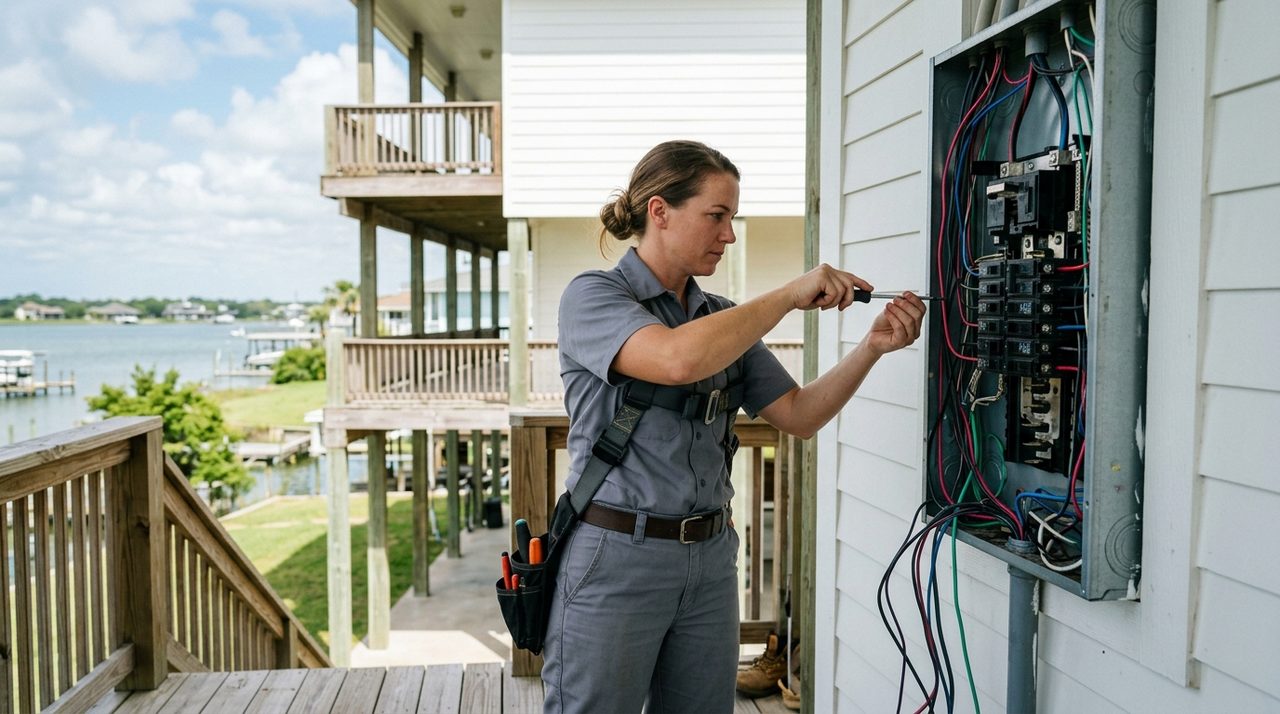
Pasadena's large inventory of 1950s–1970s petrochemical-boom-era tract homes—most of them slab-on-grade with original 100-amp panels and wiring installed under decades-old code—puts electrical upgrades near the top of every serious renovation list in this city. All permits must go through the City of Pasadena Permitting and Inspections Department, not Houston's permitting center, which means timelines, fee schedules, and inspection sequences differ from what contractors accustomed to Harris County or COH work may expect. This page explains the specific electrical challenges Pasadena homeowners face and what a properly licensed electrician should actually do about them.
Ranked by verified Google rating × review volume × verification tier. How we rank →
Some highly-rated pros serve Pasadena from nearby and may not keep a Pasadena street address. Those are listed under "Also serving Pasadena" with their real city and distance, so you always know where each business is based.
2125 Strawberry Rd, Pasadena, TX 77502
Highly-rated pros based nearby who cover Pasadena. Distance shown from the Pasadena area.
Serving Pasadena Based in Deer Park · 2.2 mi away
Serving Pasadena Based in South Houston · 2.4 mi away
Serving Pasadena Based in South Houston · 3.2 mi away
Serving Pasadena Based in Deer Park · 3.6 mi away
Serving Pasadena Based in South Houston · 3.9 mi away
Serving Pasadena Based in South Houston · 4 mi away
Serving Pasadena Based in Deer Park · 4.2 mi away
Serving Pasadena Based in Deer Park · 5.1 mi away
Serving Pasadena Based in Deer Park · 5.3 mi away
Why it matters to you
The majority of Pasadena homes built during the 1960s and early 1970s petrochemical boom were wired for 100-amp service—sufficient for an all-gas household of that era, but dangerously undersized by today's standards. After Winter Storm Uri in February 2021, many Pasadena homeowners added electric space heaters or heat-pump water heaters as gas-supply backups, pushing these aging panels past their rated capacity and causing repeated breaker trips, warm junction covers, and in some cases conductor insulation degradation. With the city's median home value at roughly $193,600 and high owner-occupancy turnover, these panels also face scrutiny at the point of sale when inspectors flag inadequate service capacity.
What a good pro does
A TDLR-licensed Master Electrician must pull the permit through the City of Pasadena Permitting and Inspections Department—not the Houston Permitting Center—before touching the service entrance. The right scope includes a full load calculation per NEC Article 220, an upgrade to at minimum 200-amp service (estimated $1,800–$3,200 installed including Pasadena's permit fee), and replacement of any double-tapped breakers or undersized conductors identified during the panel inspection. The Master Electrician's license number must appear on the permit application, as Texas requires master-level licensure to pull permits and supervise all field work.
Sources: Texas Department of Licensing & Regulation, Municipal permit office (see area profile), International Residential Code (as adopted by City of Houston)
Why it matters to you
Pasadena's tract-home construction peak overlaps almost exactly with the aluminum branch-circuit wiring era of 1965–1975, when copper prices spiked and builders substituted single-strand aluminum wire for 15- and 20-amp branch circuits throughout entire subdivisions. Aluminum oxidizes at receptacle and switch terminations far faster than copper, creating resistance heat that is invisible until a device fails or a thermal-imaging scan reveals a hot spot. Homes in Pasadena approaching resale are increasingly flagged for this condition, and standard buyer inspections now routinely call out aluminum wiring as a material defect requiring disclosure.
What a good pro does
Proper remediation is not a coat of anti-oxidant paste—it requires either full copper rewiring of affected circuits or, where full rewiring is cost-prohibitive, installation of CO/ALR-rated receptacles and switches plus AlumiConn connector splices at every termination point in the panel and at each device. Whole-home remediation in a typical Pasadena ranch (1,200–1,800 sq ft) runs an estimated $3,500–$8,000 depending on circuit count and attic-access conditions. All work requires a permit through the City of Pasadena, and the electrician must be TDLR-licensed at the master level to pull it.
Sources: Texas Department of Licensing & Regulation, Municipal permit office (see area profile), International Residential Code (as adopted by City of Houston)
Why it matters to you
Pasadena sits on the same Beaumont and Houston Black clay formation that drives foundation movement across southeast Harris County, and the slab-on-grade construction dominant here since the 1960s means underground conduit runs and service laterals are embedded in or directly beneath a concrete deck that shifts seasonally with rainfall cycles. When a slab moves—a routine event in Pasadena given the documented clay activity and ongoing foundation repair demand in the area—conduit fittings can shear, PVC runs can crack, and fault paths develop that are difficult to locate without a licensed electrician performing a complete service-entrance and underground inspection. Homeowners often discover the problem only after a persistent GFCI trip or a utility-side fault that CenterPoint cannot clear.
What a good pro does
Diagnosis starts with a systematic continuity and insulation-resistance test on the affected underground segments, followed by thermal imaging if an active load path can be maintained. Where conduit is confirmed sheared or breached, rerouting through accessible above-slab pathways—or, if the run is unavoidable underground, replacing with Schedule 80 PVC re-glued at all fittings with expansion couplings—is the correct repair. This is permitted work in Pasadena; the City of Pasadena Permitting and Inspections Department requires a permit for any service-entrance modification, and a TDLR master electrician must be on the permit.
Sources: Texas Department of Licensing & Regulation, Municipal permit office (see area profile), International Residential Code (as adopted by City of Houston)
Why it matters to you
As Pasadena homeowners in newer outer-edge subdivisions built in the 1990s–2000s add Level 2 EV chargers, a common and costly mistake is assuming the City of Houston's electrical permit process applies—it does not. Pasadena is an incorporated city with its own permitting office, its own fee schedule, and its own inspection pipeline, and work performed without a City of Pasadena electrical permit is unpermitted regardless of whether it would have passed in Houston. Compounding this, many Pasadena homes still carry original 100- or 150-amp panels that cannot support a 40–50-amp EVSE circuit without a concurrent service upgrade, and some subdivisions have HOA or POA deed restrictions that govern exterior conduit visibility and equipment placement.
What a good pro does
Before any wire is pulled, the electrician must confirm the permit jurisdiction (City of Pasadena Permitting and Inspections), perform a panel load calculation to determine whether the existing service can absorb the EVSE circuit, and check the specific subdivision's HOA or POA rules on exterior equipment—these vary block by block in Pasadena and must be verified with the individual association, not assumed uniform. A dedicated 40-amp, 240-volt EVSE supply circuit on a panel that already has capacity runs an estimated $400–$900 installed; if a panel upgrade to 200-amp service is required concurrently, budget an additional $1,800–$3,200. The TDLR master electrician pulls both permits if needed.
Sources: Texas Department of Licensing & Regulation, Municipal permit office (see area profile), Local HOA / deed restrictions (see area profile)
Hiring electricians in Pasadena? Pasadena is a separate incorporated city in Harris County with a large base of mid-century suburban tract homes built during the petrochemical boom era. Homeowners here face challenges common to aging slab-on-grade construction, including foundation shifting, outdated plumbing, and HVAC systems that struggle with Gulf Coast humidity. The subdivision-by-subdivision patchwork of HOA governance means contractors must verify deed restrictions and architectural review requirements on a per-project basis.
Building era
Primarily 1950s–1970s with additional development through the 1980s–2000s on outer edges.
Typical style
Conventional suburban tract homes, predominantly brick or brick-veneer ranch and traditional styles.
Foundations
Predominantly slab-on-grade for post-1960 construction; some older pier-and-beam in pre-1950s areas — not definitively confirmed from available records.
Common systems
Older homes feature original copper or galvanized steel plumbing, single-stage HVAC units, and 100-amp electrical panels; newer subdivisions typically have PVC/PEX plumbing and 200-amp service.
What that means for repairs
Foundation repair and re-leveling are common due to expansive clay soils. Many homeowners update plumbing from galvanized to PEX and upgrade electrical panels to support modern loads. Post-Harvey flood damage remediation drove significant interior remodeling activity in affected areas.
Permit jurisdiction
City of Pasadena Permitting and Inspections Department (Pasadena is an incorporated city with its own permit office, not under Houston Permitting Center).
HOA & deed restrictions
Subdivision-specific patchwork. Some subdivisions have mandatory HOAs/POAs (e.g., Fairway Place Homeowners Association, Fairmont Estates Sec 04 R/P). Others have voluntary neighborhood associations coordinated through the City of Pasadena's Neighborhood Network Information Center. No single citywide mandatory HOA exists.
Historic districts
No City of Houston historic district designation confirmed. Pasadena is a separate incorporated city and does not fall under HAHC jurisdiction.
Contractor note
Contractors must pull permits through the City of Pasadena, not Houston or Harris County. HOA architectural review requirements vary by subdivision, so pre-approval processes should be confirmed with the specific HOA or POA before starting exterior work.
FEMA flood zone
FEMA Zone X (low flood risk) per official NFHL data. However, Pasadena sits near several bayous and drainage channels, and localized flooding has historically occurred despite Zone X designation in some areas. Homeowners should verify flood risk for specific lots, especially near Armand Bayou and Vince Bayou corridors.
Hurricane Harvey impact
Pasadena experienced significant flooding during Hurricane Harvey in 2017, with numerous neighborhoods sustaining substantial water intrusion. The city's low-lying terrain and proximity to the Houston Ship Channel area contributed to widespread damage. Many homes required full interior gutting and remediation. Specific block-level impact varied widely across the city.
Heat & humidity load
Extended Gulf Coast heat and humidity stress aging HVAC systems in 1950s–1970s homes, often leading to compressor failures and ductwork condensation issues. High humidity also accelerates mold growth in homes with inadequate ventilation, particularly in post-flood-repaired interiors.
Working with contractors here
Contractors in Pasadena most commonly handle foundation repair, HVAC replacement, and plumbing upgrades in the large stock of 1950s–1970s slab-on-grade homes. The expansive clay soils prevalent in southeast Harris County cause ongoing foundation movement, making foundation leveling and pier installation a steady demand driver. Re-piping from galvanized steel to PEX is frequent in older neighborhoods, and many homes still need electrical panel upgrades from 100-amp to 200-amp service. Post-Harvey, interior remodeling and mold remediation remain ongoing needs. Contractors should note that Pasadena operates its own permitting and inspection department independent of Houston, and turnaround times and code interpretations may differ from Harris County or COH standards.
Local Tip
Always ask for a written estimate before work begins. Texas contractors are required to provide one on jobs over $1,000.
Pasadena is a separate incorporated city in Harris County with a large base of mid-century suburban tract homes built during the petrochemical boom era. Homeowners here face challenges common to aging slab-on-grade construction, including foundation shifting, outdated plumbing, and HVAC systems that struggle with Gulf Coast humidity. The subdivision-by-subdivision patchwork of HOA governance means contractors must verify deed restrictions and architectural review requirements on a per-project basis.
Source: U.S. Census Bureau, ACS 5-Year 2023
Most of Pasadena maps to FEMA Zone X (low mapped flood risk), but Houston's flash-flood reality means even low-risk blocks benefit from smart drainage and storm-hardened installs.
Source: FEMA National Flood Hazard Layer (NFHL). Flood zones vary by parcel — verify your individual FIRM panel.
Beryl 2024 demonstrated that Houston's above-ground distribution grid fails even in areas well away from surge zones, leaving Pasadena, TX residents in dangerous July heat without a way to power fans or refrigeration. Protect your home's sensitive electronics — smart panels, EV chargers, and variable-speed HVAC controls — with a whole-house surge protector installed by a licensed electrician before the next storm forms in the Gulf. Confirm the current FEMA panel for your Pasadena parcel — the area maps to Zone X, but adjacent lots can differ.
After the May 2024 derecho left parts of Pasadena, TX dark for four days, homeowners without transfer switches had no safe way to connect a generator — a TDLR-licensed electrician can install an interlock kit on most existing panels in four hours, making it one of the most time-effective storm-prep investments available. Book the work now, before the next round of severe weather puts every licensed electrician in Houston on a three-week waiting list. As a Harris County community, Pasadena may follow county rather than City of Houston storm rebuild rules.
In Pasadena, TX, the primary ice-storm electrical risk is the same one that paralyzed Houston during Uri 2021: extended outage combined with unsafe generator use inside or near the home. A TDLR-licensed electrician can install a transfer switch or interlock kit that lets you run your furnace blower, well pump, and essential circuits from a portable generator safely, without the back-feed risk that puts CenterPoint lineworkers in danger during restoration. With a median build year of 1976, the older building stock here is more exposed to hard-freeze damage than newer construction. As a Harris County community, Pasadena may follow county rather than City of Houston storm rebuild rules.
Sources: FEMA National Flood Hazard Layer (NFHL), Ready.gov -- Hurricanes, CenterPoint Energy -- Storm Center, City of Houston -- Emergency Preparedness, Ready.gov -- Winter Weather, Harris County Flood Control District
Houston-specific estimators to plan your project before you call a pro. All results are planning estimates — a licensed local pro confirms the details on site.
Disconnect & drain every outdoor hose bib
Remove hoses, drain the spigots, and cover each with an insulated faucet sock. Un-drained hose bibs are the #1 burst point in a Houston freeze.
Insulate exposed pipes in the attic & garage
Wrap any pipe in an unconditioned space (attic runs, garage walls) with foam sleeves. Houston homes rarely insulate these because they only matter a few nights a year — which is exactly why they burst.
Open cabinet doors & keep a pencil-width drip
On hard-freeze nights, open kitchen/bath cabinets so warm air reaches the pipes and let faucets on exterior walls drip to relieve pressure.
Protect the attic/garage water heater & its lines
An attic or garage tank sits in unconditioned space. Insulate the cold-inlet and hot-outlet lines and confirm the emergency drain pan is clear so a leak doesn't reach the ceiling.
This is a planning estimate only — actual requirements depend on an on-site assessment by a licensed Houston pro. If a pipe has already burst, shut off your main water supply and call a licensed Houston plumber immediately — freeze bursts flood fast.
Sources: Municipal permit office (see area profile)Texas Department of Licensing & Regulation
Sources: Municipal permit office (see area profile)
Sources: EPA Lead Renovation, Repair and Painting (RRP) Rule
Sources: Local HOA / deed restrictions (see area profile)
Sources: Municipal permit office (see area profile)