Open Now
10400 Westoffice Dr Ste 117, Houston, TX 77042
Westchase's housing stock—predominantly 1970s through 1990s slab-on-grade single-family homes spread across dozens of separately platted subdivisions—creates a concentrated demand for electrical upgrades that the area's original 100-amp services were never designed to handle. Every electrical permit here runs through the City of Houston's Houston Permitting Center, and because Westchase has no single governing HOA, an electrician must confirm deed restrictions subdivision by subdivision before routing exterior conduit or mounting equipment on a façade. This page cuts through that complexity with the specific challenges Westchase homeowners are actually facing.
Ranked by verified Google rating × review volume × verification tier. How we rank →
Some highly-rated pros serve Westchase from nearby and may not keep a Westchase street address. Those are listed under "Also serving Westchase" with their real city and distance, so you always know where each business is based.
10400 Westoffice Dr Ste 117, Houston, TX 77042
3200 Wilcrest Dr #170, Houston, TX 77042
10400 Westoffice Dr #114, Houston, TX 77042
11152 Westheimer Rd, Houston, TX 77042
9801 Westheimer Rd Ste 300 #1039, Houston, TX 77042
Highly-rated pros based nearby who cover Westchase. Distance shown from the Westchase area.
Serving Westchase Based in Alief · 1.9 mi away
Serving Westchase Based in Energy Corridor · 3.5 mi away
Serving Westchase Based in Alief · 4.3 mi away
Serving Westchase Based in Alief · 4.5 mi away
Serving Westchase Based in Spring Branch · 4.6 mi away
Why it matters to you
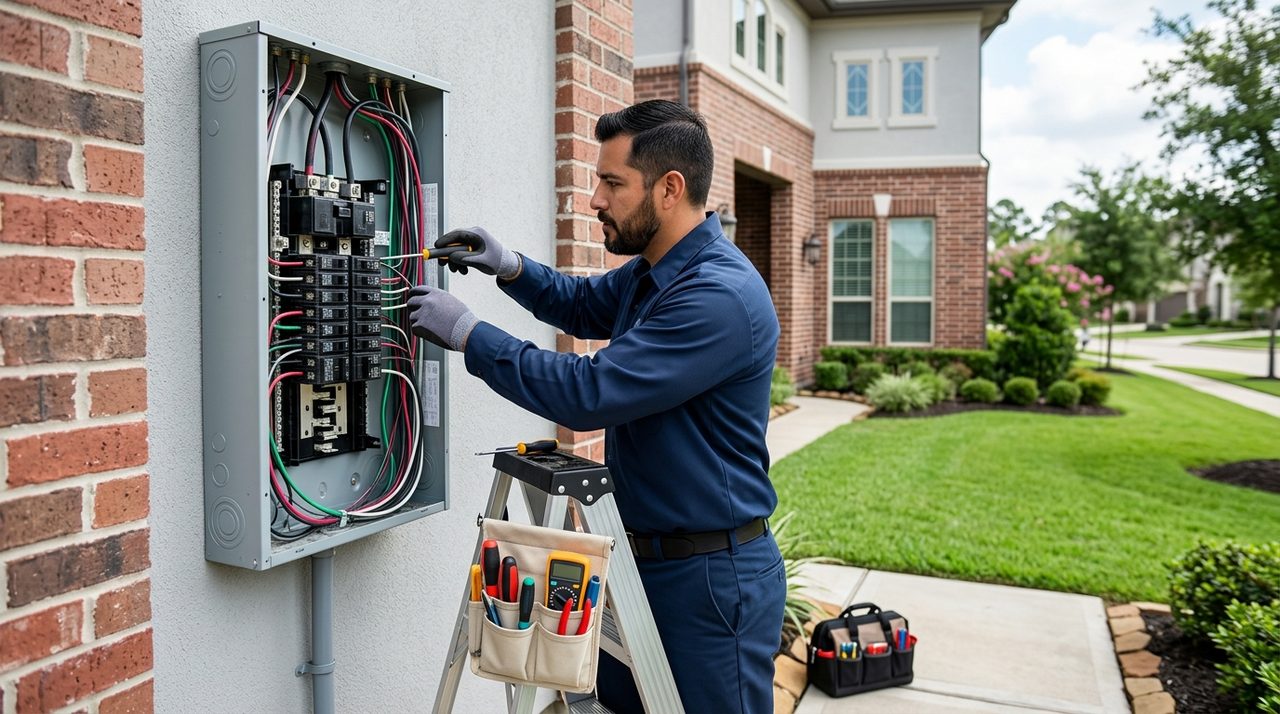
Most of Westchase's single-family homes were built between the mid-1970s and late 1980s with 100-amp main services sized for an era of gas water heaters, gas furnaces, and modest appliance loads. After Winter Storm Uri in February 2021, many homeowners in this area added electric space heaters or switched to heat-pump water heaters as gas-backup alternatives—loading panels that were already near capacity. Nuisance breaker trips, warm breaker boxes, and dimming lights under simultaneous load are the warning signs Westchase owners report.
What a good pro does
A TDLR-licensed Master Electrician should perform a load calculation on the existing service before any heat-load addition is energized permanently. In most Westchase scenarios, upgrading from a 100-amp to a 200-amp service—typically estimated at $1,800–$3,200 installed including the City of Houston electrical permit—resolves both the immediate safety issue and positions the home for an EV charger or future electrification without a second panel pull. The Master Electrician pulls the permit through the Houston Permitting Center and schedules a CenterPoint reconnect after inspection.
Sources: Texas Department of Licensing & Regulation, City of Houston Permitting Center, Municipal permit office (see area profile)
Why it matters to you
Homes built in Westchase during the roughly 1970–1975 window frequently used single-strand aluminum branch-circuit wiring, which was the industry norm during a period of high copper prices. Aluminum oxidizes at switch and receptacle terminations, increasing resistance and creating a documented fire hazard—a risk that becomes acute in Westchase's aging kitchen-and-bath remodel cycle, where contractors disturb terminations without recognizing the material. The Census-estimated 1986 median build year masks the fact that a meaningful share of the district's detached single-family stock predates 1976.
What a good pro does
Proper remediation—not just a coat of anti-oxidant paste—requires either full copper replacement or installation of CO/ALR-rated devices and AlumiConn connectors at every termination point. Whole-home remediation in a typical Westchase 1,800–2,400 sq ft home is estimated at $3,500–$8,000 depending on circuit count and attic accessibility. Any remodel contractor disturbing outlets or switches in a suspected aluminum-wired Westchase home should flag the finding immediately so the electrician can scope remediation before drywall goes back up.
Sources: Texas Department of Licensing & Regulation, International Residential Code (as adopted by City of Houston), City of Houston Permitting Center
Why it matters to you
Houston's average relative humidity consistently exceeds 75%, and Westchase attics—many of which received minimal insulation upgrades since original construction—routinely exceed 140°F on summer afternoons. In the district's 1970s–1990s homes, attic-run wiring is common, and wire-nut connections in uncovered junction boxes corrode silently over decades. Homeowners typically discover the problem only after a breaker trips repeatedly with no obvious cause, or after an HVAC technician doing a Westchase attic inspection spots a discolored junction box during a routine service call.
What a good pro does
A licensed electrician should conduct a targeted attic inspection—ideally with a thermal-imaging camera—on any Westchase home older than 25 years that presents unexplained breaker trips or flickering lights. Corroded wire nuts should be replaced with rated connectors, bare aluminum neutrals should be treated and properly terminated, and any open junction boxes must be covered per NEC requirements. This scope typically runs $300–$700 per attic access point depending on the number of connections affected, and no City of Houston permit is required for like-for-like connection repair, though a permit is required if circuits are extended or rerouted.
Sources: International Residential Code (as adopted by City of Houston), Texas Department of Licensing & Regulation, Municipal permit office (see area profile)
Why it matters to you
Westchase has no single area-wide mandatory HOA, which sounds like freedom—but it means EV charger installation rules vary block by block depending on which of the district's separately platted subdivisions a home sits in. One subdivision may have no deed restrictions affecting exterior conduit visibility; the neighbor two streets over may have an architectural review committee that requires conduit to be concealed or prohibits wall-mount hardware visible from the street. A homeowner who skips this check can face a demand to remove non-compliant work after installation.
What a good pro does
Before scheduling a Level 2 charger install—estimated at $400–$900 for the EVSE supply circuit alone when the existing panel has capacity, or $2,200–$4,100 when a concurrent 200-amp panel upgrade is needed—verify the specific subdivision's deed restrictions through Harris County deed records or the Harris County Appraisal District parcel search. The Master Electrician pulling the City of Houston electrical permit through the Houston Permitting Center handles the regulatory side, but the homeowner is responsible for confirming HOA compliance before exterior conduit is routed. Getting both steps right before work starts avoids costly rework.
Sources: Local HOA / deed restrictions (see area profile), City of Houston Permitting Center, Municipal permit office (see area profile)
Hiring electricians in Westchase? Westchase is a large, mixed-use district near Beltway 8 composed of multiple separately platted subdivisions, each with its own potential HOA and deed restrictions. Housing stock ranges from 1970s–1990s single-family homes to newer multifamily and townhome developments, nearly all built on slab-on-grade foundations. Contractors must verify deed restrictions and HOA rules on a per-subdivision basis, as there is no single umbrella association governing the entire area.
Building era
Primarily 1970s through 1990s, with continued multifamily and townhome development into the 2000s and 2010s.
Typical style
Contemporary suburban: traditional-to-transitional single-family homes, brick or stucco façade garden-style apartments, and townhomes.
Foundations
Slab-on-grade (nearly universal for post-1960s suburban Harris County construction).
Common systems
Central A/C with gas furnace, copper or CPVC plumbing transitioning to PEX in renovations, standard residential electrical panels (100–200 amp). Older 1970s–1980s homes may still have original galvanized supply lines or polybutylene piping requiring replacement.
What that means for repairs
Kitchen and bath remodels are common in aging 1970s–1980s homes. Plumbing re-pipes (replacing galvanized or polybutylene), HVAC system replacements on units past their 20-year lifespan, and slab foundation repair driven by Houston's expansive clay soils are frequent project types.
Permit jurisdiction
City of Houston — Houston Permitting Center.
HOA & deed restrictions
No single area-wide mandatory HOA exists. The Westchase District is a Texas Legislature-created management district focused on commercial improvements, not residential lot governance. The Westchase Super Neighborhood Council is a City of Houston advisory body. A Westchase Community Association (501(c)(4), formed 1974) exists, but its authority over individual residential lots is not clearly documented. Individual subdivisions within the Westchase area may have their own mandatory HOAs — must be verified per subdivision via Harris County deed records.
Historic districts
No City of Houston historic district designation confirmed.
Contractor note
Contractors must confirm which subdivision a property belongs to and check for active deed restrictions and HOA architectural review requirements before beginning exterior work, fencing, or additions. The lack of a single governing HOA means rules vary block by block.
FEMA flood zone
FEMA Zone X (low flood risk) per official NFHL data. Drainage is influenced by local bayous and channels within the Harris County Flood Control system; proximity to specific drainage channels should be verified on a per-property basis.
Hurricane Harvey impact
No Westchase-specific street-level Harvey flood impact documentation was found in available sources. The area is east of the Addicks and Barker Reservoir watersheds and experienced varying levels of impact during Harvey. Flood history should be verified through Harris County Flood Control District records and individual property disclosure for any specific address.
Heat & humidity load
Sustained summer heat puts heavy strain on aging HVAC systems in 1970s–1980s homes; capacitor failures, refrigerant leaks, and compressor burnout are common seasonal calls. Slab-on-grade foundations on Houston's expansive clay soils experience movement during summer drought cycles, leading to door/window sticking and drywall cracks that trigger foundation inspection and repair demand.
Working with contractors here
Westchase keeps contractors busy with the bread-and-butter maintenance demands of aging 1970s–1990s suburban homes: HVAC replacements, whole-house plumbing re-pipes, and slab foundation repair. The area's slab-on-grade construction on expansive clay means foundation work is a recurring need, especially after drought-to-rain cycles. Roof replacements on 20–30-year-old composition shingle roofs are common, and many homeowners are upgrading aging electrical panels to support modern loads. Because Westchase comprises many separate subdivisions, contractors must scope each job with attention to the specific subdivision's deed restrictions and any HOA architectural review — exterior modifications, fence styles, and material choices may vary significantly from one block to the next.
Local Tip
Always ask for a written estimate before work begins. Texas contractors are required to provide one on jobs over $1,000.
Westchase is a large, mixed-use district near Beltway 8 composed of multiple separately platted subdivisions, each with its own potential HOA and deed restrictions. Housing stock ranges from 1970s–1990s single-family homes to newer multifamily and townhome developments, nearly all built on slab-on-grade foundations. Contractors must verify deed restrictions and HOA rules on a per-subdivision basis, as there is no single umbrella association governing the entire area.
Source: U.S. Census Bureau, ACS 5-Year 2023
Most of Westchase maps to FEMA Zone X (low mapped flood risk), but Houston's flash-flood reality means even low-risk blocks benefit from smart drainage and storm-hardened installs.
Source: FEMA National Flood Hazard Layer (NFHL). Flood zones vary by parcel — verify your individual FIRM panel.
In Westchase, your primary hurricane electrical risk is extended outage and surge damage rather than panel flooding, so have a licensed electrician install a transfer switch and whole-house surge arrester before the season peaks in August. When Beryl 2024 knocked out power to 900,000 CenterPoint customers in July heat, homes with interlock kits and generators were the ones that stayed livable. Confirm the current FEMA panel for your Westchase parcel — the area maps to Zone X, but adjacent lots can differ.
After the May 2024 derecho left parts of Westchase dark for four days, homeowners without transfer switches had no safe way to connect a generator — a TDLR-licensed electrician can install an interlock kit on most existing panels in four hours, making it one of the most time-effective storm-prep investments available. Book the work now, before the next round of severe weather puts every licensed electrician in Houston on a three-week waiting list. In-city Westchase work falls under City of Houston floodplain and permitting rules.
In Westchase, the primary ice-storm electrical risk is the same one that paralyzed Houston during Uri 2021: extended outage combined with unsafe generator use inside or near the home. A TDLR-licensed electrician can install a transfer switch or interlock kit that lets you run your furnace blower, well pump, and essential circuits from a portable generator safely, without the back-feed risk that puts CenterPoint lineworkers in danger during restoration. In-city Westchase work falls under City of Houston floodplain and permitting rules.
Sources: FEMA National Flood Hazard Layer (NFHL), Ready.gov -- Hurricanes, CenterPoint Energy -- Storm Center, City of Houston -- Emergency Preparedness, Ready.gov -- Winter Weather, Harris County Flood Control District
Houston-specific estimators to plan your project before you call a pro. All results are planning estimates — a licensed local pro confirms the details on site.
Disconnect & drain every outdoor hose bib
Remove hoses, drain the spigots, and cover each with an insulated faucet sock. Un-drained hose bibs are the #1 burst point in a Houston freeze.
Insulate exposed pipes in the attic & garage
Wrap any pipe in an unconditioned space (attic runs, garage walls) with foam sleeves. Houston homes rarely insulate these because they only matter a few nights a year — which is exactly why they burst.
Open cabinet doors & keep a pencil-width drip
On hard-freeze nights, open kitchen/bath cabinets so warm air reaches the pipes and let faucets on exterior walls drip to relieve pressure.
Protect the attic/garage water heater & its lines
An attic or garage tank sits in unconditioned space. Insulate the cold-inlet and hot-outlet lines and confirm the emergency drain pan is clear so a leak doesn't reach the ceiling.
This is a planning estimate only — actual requirements depend on an on-site assessment by a licensed Houston pro. If a pipe has already burst, shut off your main water supply and call a licensed Houston plumber immediately — freeze bursts flood fast.
Sources: City of Houston Permitting CenterTexas Department of Licensing & Regulation
Sources: Local HOA / deed restrictions (see area profile)
Sources: City of Houston Permitting CenterTexas Department of Licensing & Regulation