Closed
Serving Briargrove Based in Tanglewood · 0.5 mi away
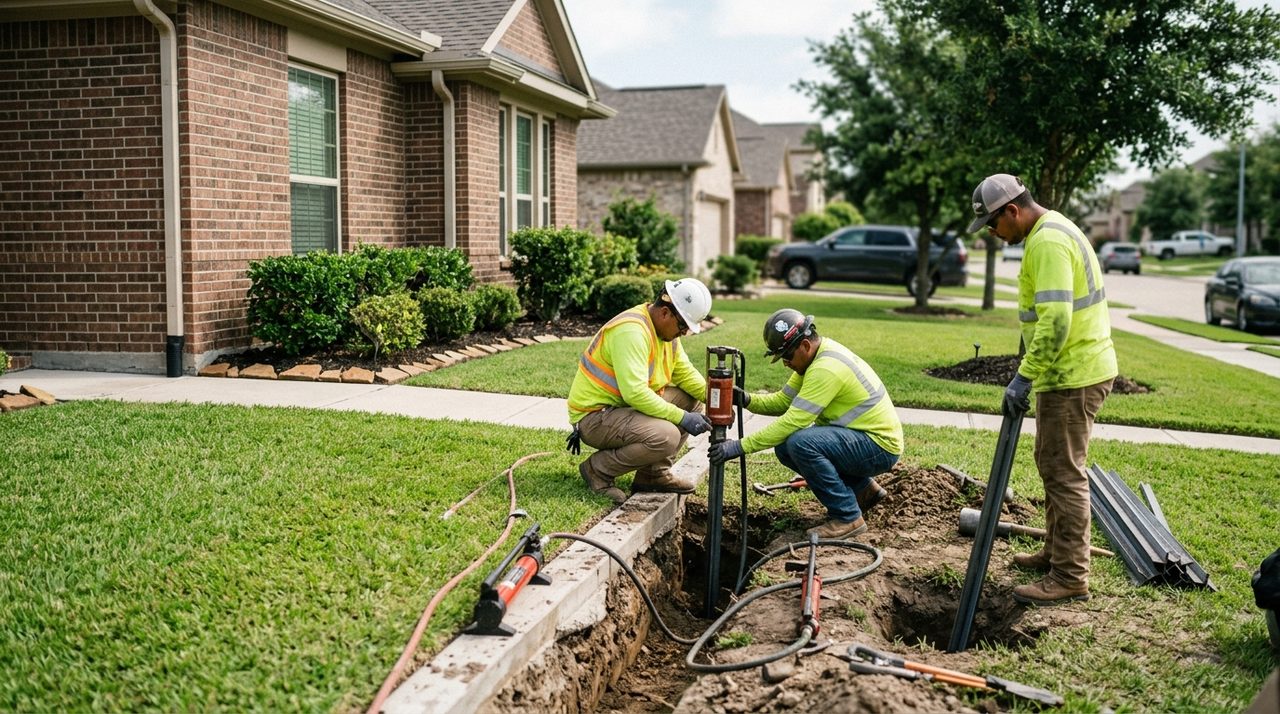
Briargrove's 1950s slab-on-grade and pier-and-beam homes sit directly on Houston's Beaumont Black clay — one of the most expansive soil formations in North America — and nearly seven decades of wet-dry cycles have had plenty of time to stress original foundations. The neighborhood's vigorous teardown-and-rebuild activity means some lots carry brand-new slabs next to original mid-century ones, making side-by-side comparisons of movement patterns especially telling. Because Briargrove falls inside Houston city limits, all underpinning and structural repair work must be permitted through the City of Houston Permitting Center, and the mandatory Briargrove HOA adds a second layer of approval for any exterior trenching or visible repair work.
Ranked by verified Google rating × review volume × verification tier. How we rank →
Some highly-rated pros serve Briargrove from nearby and may not keep a Briargrove street address. Those are listed under "Also serving Briargrove" with their real city and distance, so you always know where each business is based.
Highly-rated pros based nearby who cover Briargrove. Distance shown from the Briargrove area.
Serving Briargrove Based in Tanglewood · 0.5 mi away
Serving Briargrove Based in Tanglewood · 0.6 mi away
Serving Briargrove Based in Bellaire · 2.5 mi away
Serving Briargrove Based in Bellaire · 2.6 mi away
Serving Briargrove Based in Bellaire · 2.7 mi away
Serving Briargrove Based in Westchase · 2.8 mi away
Serving Briargrove Based in Bellaire · 2.9 mi away
Serving Briargrove Based in Sharpstown · 3.1 mi away
Serving Briargrove Based in Westchase · 3.8 mi away
Serving Briargrove Based in Sharpstown · 4.2 mi away
Why it matters to you
Briargrove's original construction dates to the 1950s, meaning these foundations have absorbed roughly seven decades of Houston's seasonal wet-dry cycles on Beaumont Black clay. That repeated swelling and shrinking produces cumulative differential movement — one corner of a slab or one pier row settling inches lower than another — visible as stair-step brick cracks, out-of-square door frames, and repeating drywall cracks along the same interior walls year after year. Homes that have been renovated but not re-evaluated structurally are especially exposed, because cosmetic repairs mask movement patterns that a proper inspection would catch.
What a good pro does
A qualified contractor should begin with a transit-level elevation survey across the full slab or pier grid — not just a walk-through — to map actual differential movement in fractions of an inch. For slab homes, steel push piers (estimated $1,200–$1,800 per pier installed) driven to competent bearing soil below the active clay zone are generally more reliable on Houston's expansive clay than the pressed concrete pilings common in 1980s-era repairs. The contractor must pull a foundation repair permit through the City of Houston Permitting Center before any underpinning begins.
Sources: City of Houston Permitting Center, Municipal permit office (see area profile)
Why it matters to you
Briargrove homes built in the 1950s almost universally rely on cast-iron under-slab drain lines, and Winter Storm Uri in February 2021 accelerated cracking in lines that were already 60-plus years old. A slow under-slab leak continuously saturates the clay directly beneath the foundation, causing localized heave while nearby dry sections settle — exactly the asymmetric movement pattern that looks like a soil problem but is actually a plumbing problem. Homeowners who skip a plumbing test and proceed straight to pier installation risk paying $15,000–$25,000 for underpinning that won't stabilize a foundation still being undermined by water.
What a good pro does
Before signing any repair contract, commission a standalone hydrostatic plumbing test — estimated $250–$400 — from a plumber licensed by the Texas State Board of Plumbing Examiners. If the test fails, the under-slab drain lines must be repaired or re-routed (requiring both a City of Houston plumbing permit and a TSBPE-licensed plumber) before any structural work begins. A reputable foundation contractor will insist on this sequence rather than skipping it.
Sources: Texas State Board of Plumbing Examiners, City of Houston Permitting Center, Municipal permit office (see area profile)
Why it matters to you
Briargrove's tree-lined streetscape is a major draw, but the live oaks and water oaks within 20 feet of a foundation are quietly competing with that slab for soil moisture every dry season. On Houston's expansive clay, tree roots can extract enough moisture to cause measurable localized foundation drop on the tree side of a house — while the sunny, open side of the same slab retains more moisture and stays higher. The 2022–2023 La Niña drought years were particularly damaging in established west Houston neighborhoods, and homeowners who did not maintain perimeter irrigation during that period may now be seeing movement that accumulated invisibly before cracking became obvious.
What a good pro does
A thorough foundation inspection should map crack patterns relative to tree locations and check whether the low side consistently faces large trees. Prevention going forward means running a soaker hose 18–24 inches from the foundation perimeter during dry stretches to keep moisture levels consistent. If root intrusion into drain lines is suspected, a camera inspection of the under-slab lines (coordinated with the hydrostatic test) can confirm it before repair decisions are made. The Briargrove HOA deed restrictions may limit root pruning or tree removal, so any plan involving large canopy trees should be reviewed against recorded restrictions on file with the Harris County Clerk.
Sources: Local HOA / deed restrictions (see area profile), Texas State Board of Plumbing Examiners
Why it matters to you
Because Briargrove sits inside Houston city limits, foundation underpinning — including steel push piers, helical piers, and mudjacking — requires a permit from the City of Houston Permitting Center, with inspections at specified stages. On top of that, the Briargrove Homeowners Association actively enforces deed restrictions and can require architectural review before visible exterior work, including perimeter trenching, begins. Homeowners who allow contractors to proceed without both approvals in hand can face stop-work orders, fines, and — most painfully — title problems at resale when a buyer's inspector or attorney finds unpermitted structural work in city records.
What a good pro does
Confirm that your contractor has submitted the City of Houston foundation repair permit application and received an active permit number before any digging starts; you can verify permit status directly through the city's Development Services Department online portal rather than relying solely on the contractor's word. Separately, submit an exterior modification request to the Briargrove HOA and get written approval in hand. Texas TREC disclosure rules require sellers to disclose known foundation movement and all prior repairs, so complete documentation of permitted, inspected, HOA-approved work protects your resale position and removes legal exposure.
Sources: City of Houston Permitting Center, Municipal permit office (see area profile), Local HOA / deed restrictions (see area profile)
Hiring foundation repair in Briargrove? Briargrove is a well-established 1950s subdivision in west Houston with tree-lined streets, an active mandatory HOA, and a housing stock that increasingly blends original mid-century construction with significant modern updates. Homeowners here frequently navigate renovation projects that must satisfy both City of Houston permitting requirements and Briargrove HOA deed restrictions. The aging infrastructure—plumbing, electrical, and HVAC—drives steady demand for upgrades and whole-home remodels.
Building era
1950s, with ongoing renovations and some teardown-rebuilds in subsequent decades.
Typical style
Older homes with modern updates; specific architectural style breakdown (ranch, traditional, mid-century modern) not confirmed in available research.
Foundations
Not confirmed - check with local inspectors; both slab-on-grade and pier-and-beam are common in 1950s-era Houston subdivisions.
Common systems
Homes of this era typically feature galvanized or cast-iron drain lines, copper supply piping, older electrical panels (potentially 100-amp or fuse boxes in un-renovated homes), and central HVAC systems that may have been retrofitted or replaced multiple times.
What that means for repairs
Significant teardown and rebuild activity is common in established west Houston neighborhoods like Briargrove, alongside whole-home remodels that modernize kitchens, bathrooms, and mechanical systems while preserving lot footprints under HOA guidelines.
Permit jurisdiction
City of Houston Permitting Center (Briargrove is within Houston city limits).
HOA & deed restrictions
Mandatory HOA: Briargrove Homeowners Association, Inc. (also referenced as Briargrove Property Owners Association). The association actively enforces deed restrictions and community rules. Specific recorded deed restriction details not confirmed - check Harris County Clerk records.
Historic districts
No City of Houston historic district designation confirmed.
Contractor note
Contractors must obtain City of Houston permits for structural, electrical, plumbing, and mechanical work, and should verify project plans comply with Briargrove HOA deed restrictions before beginning exterior modifications or new construction.
FEMA flood zone
FEMA Zone X (low flood risk) - source: fema_nfhl. Briargrove is located in west Houston; specific bayou or creek proximity details were not confirmed in available research.
Hurricane Harvey impact
Specific Hurricane Harvey (2017) flooding data for Briargrove was not confirmed in available research. Recurring flood-prone streets or blocks could not be identified from provided sources. Homeowners should check Harris County Flood Control District records and individual property flood history for site-specific risk.
Heat & humidity load
Houston's extreme summer heat and humidity place heavy demands on HVAC systems in 1950s-era homes, which may have inadequate insulation, single-pane windows, or undersized ductwork. Contractors should expect high seasonal demand for AC repairs, attic insulation upgrades, and weatherization work. Foundation movement from clay soil expansion and contraction during summer drought cycles is also a recurring concern.
Working with contractors here
Briargrove's 1950s housing stock generates consistent demand for plumbing re-pipes (replacing galvanized and cast-iron lines), electrical panel upgrades, and HVAC system replacements. Whole-home remodels and teardown-rebuilds are common as homeowners invest in modernizing aging properties on desirable lots. Contractors should be prepared to coordinate with the Briargrove HOA on exterior work, including fencing, roofing materials, and driveway modifications. Foundation repair is a frequent need given the age of homes and Houston's expansive clay soils. Job scoping should account for potential asbestos or lead paint in original construction materials, requiring proper testing and abatement procedures.
Local Tip
Always ask for a written estimate before work begins. Texas contractors are required to provide one on jobs over $1,000.
Briargrove is a well-established 1950s subdivision in west Houston with tree-lined streets, an active mandatory HOA, and a housing stock that increasingly blends original mid-century construction with significant modern updates. Homeowners here frequently navigate renovation projects that must satisfy both City of Houston permitting requirements and Briargrove HOA deed restrictions. The aging infrastructure—plumbing, electrical, and HVAC—drives steady demand for upgrades and whole-home remodels.
Source: U.S. Census Bureau, ACS 5-Year 2023
Most of Briargrove maps to FEMA Zone X (low mapped flood risk), but Houston's flash-flood reality means even low-risk blocks benefit from smart drainage and storm-hardened installs.
Source: FEMA National Flood Hazard Layer (NFHL). Flood zones vary by parcel — verify your individual FIRM panel.
Wind-driven rain during a hurricane can saturate soil on the windward side of your home while the leeward side stays dry, creating differential moisture conditions beneath your slab that show up as sticking doors weeks later in Briargrove. Schedule a Zip-Level elevation reading after any named storm passes so a foundation professional can distinguish normal seasonal movement from storm-induced settlement requiring pier work. In-city Briargrove work falls under City of Houston floodplain and permitting rules.
Even with low mapped flood risk, Briargrove is not immune to the localized sheet flow that accompanies a Houston severe thunderstorm, and repeated minor inundation at the foundation perimeter sustains the clay moisture that drives slow heave cycles. A pre-storm season inspection confirming that soil grade, splash blocks, and downspout extensions all direct water away from the slab is the most cost-effective foundation repair step you can take. In-city Briargrove work falls under City of Houston floodplain and permitting rules.
Ice loading from roof accumulation during a hard freeze transfers compressive stress to your foundation corners, and in Briargrove that added load on clay subgrade that has stiffened from cold can create corner settlement that persists after the thaw. A TDLR-licensed foundation contractor should inspect visible brick-to-foundation transitions and interior door frames after any multi-day freeze event, even if no pipe damage occurred. With a median build year of 1978, the older building stock here is more exposed to hard-freeze damage than newer construction. Confirm the current FEMA panel for your Briargrove parcel — the area maps to Zone X, but adjacent lots can differ.
Sources: FEMA National Flood Hazard Layer (NFHL), Ready.gov -- Hurricanes, CenterPoint Energy -- Storm Center, City of Houston -- Emergency Preparedness, Ready.gov -- Winter Weather, Harris County Flood Control District
Houston-specific estimators to plan your project before you call a pro. All results are planning estimates — a licensed local pro confirms the details on site.
Grouped by mature root aggression & water demand.
Trunk center to the nearest exterior wall.
The root zone likely reaches your foundation's soil during Houston's dry summers, when clay shrinks most. Watch for sticking doors and diagonal cracks, keep soil moisture even with a soaker hose during drought, and have a foundation pro evaluate if you see any movement.
Find a Houston foundation pro →This is a planning estimate only — actual requirements depend on an on-site assessment by a licensed Houston pro. Guidance is based on general species root behavior in expansive clay, not a soil test.
Disconnect & drain every outdoor hose bib
Remove hoses, drain the spigots, and cover each with an insulated faucet sock. Un-drained hose bibs are the #1 burst point in a Houston freeze.
Insulate exposed pipes in the attic & garage
Wrap any pipe in an unconditioned space (attic runs, garage walls) with foam sleeves. Houston homes rarely insulate these because they only matter a few nights a year — which is exactly why they burst.
Open cabinet doors & keep a pencil-width drip
On hard-freeze nights, open kitchen/bath cabinets so warm air reaches the pipes and let faucets on exterior walls drip to relieve pressure.
Protect the attic/garage water heater & its lines
An attic or garage tank sits in unconditioned space. Insulate the cold-inlet and hot-outlet lines and confirm the emergency drain pan is clear so a leak doesn't reach the ceiling.
This is a planning estimate only — actual requirements depend on an on-site assessment by a licensed Houston pro. If a pipe has already burst, shut off your main water supply and call a licensed Houston plumber immediately — freeze bursts flood fast.
Sources: City of Houston Permitting CenterLocal HOA / deed restrictions (see area profile)
Sources: FEMA National Flood Hazard Layer (NFHL)Municipal permit office (see area profile)
Sources: City of Houston Permitting Center