811 Rustic Harbor Ct, Houston, TX 77062
Best Handyman Services in Clear Lake, TX
Clear Lake's NASA-era subdivisions — built largely between 1960 and 1985 for the Johnson Space Center workforce — mean most homeowners here are maintaining slab-on-grade ranch and traditional brick homes whose original galvanized plumbing, cast-iron drain lines, and aging drywall are now overdue for small-scale attention. Most of these properties fall under City of Houston permit jurisdiction and at least one of three mandatory HOAs (CLCCA, CLFCA, or Reserve at Clear Lake), so even a simple fence-board swap or exterior paint touch-up can require Architectural Review Committee sign-off before a handyman lifts a tool. This page explains which maintenance issues hit Clear Lake homes hardest and what the permit and HOA landscape actually requires before work begins.
Verified against Google Business data
Updated 2026
See the 10 Handyman Services Serving Clear Lake 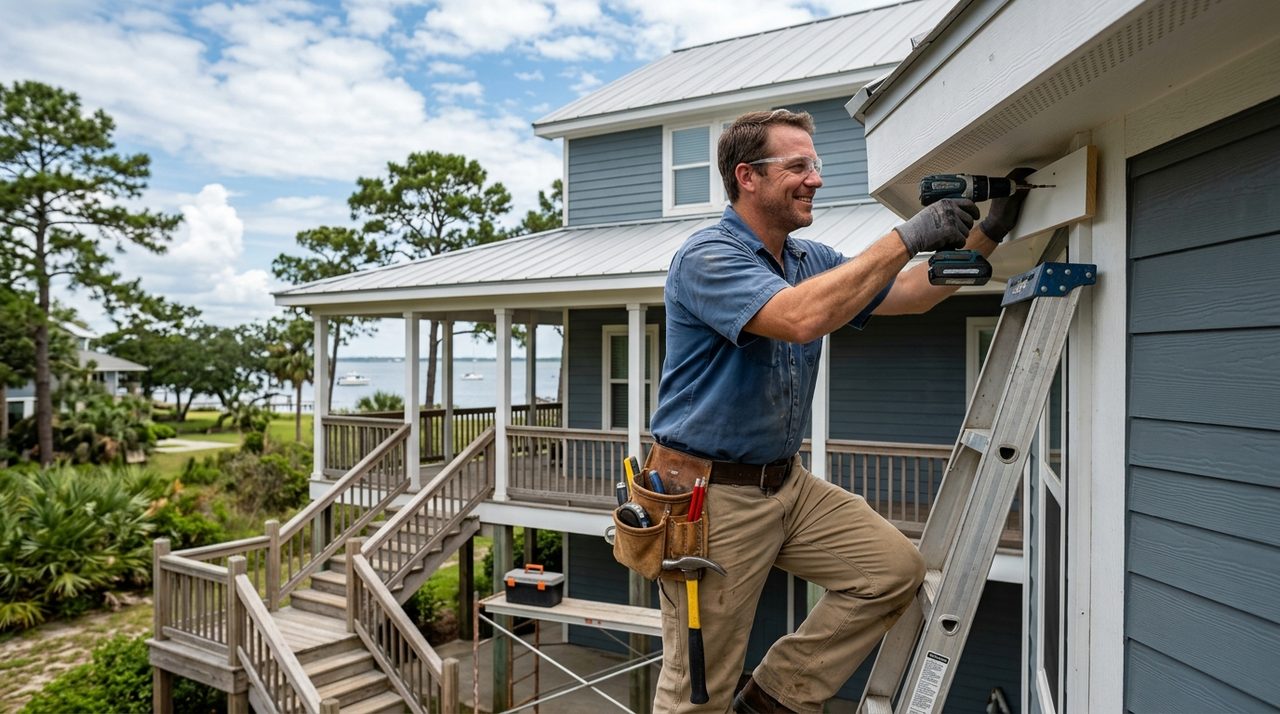
- Median home built
- 1984
- Median home value
- $293,628
- FEMA flood zone
- X (low)
- Typical cost (est.)
- $350–$600 half-day / $75–$150 per hour
- Most common local issue
- Recurring slab-movement drywall cracks in 1960s–1980s ranch homes on expansive coastal-plain clay
Ranked by verified Google rating × review volume × verification tier. How we rank →
Some highly-rated pros serve Clear Lake from nearby and may not keep a Clear Lake street address. Those are listed under "Also serving Clear Lake" with their real city and distance, so you always know where each business is based.
Min rating:
10 resultsBased in Clear Lake
16821 Buccaneer Ln Suite 200, Houston, TX 77058
16055 Space Center Blvd, Houston, TX 77062
Also serving Clear Lake
Highly-rated pros based nearby who cover Clear Lake. Distance shown from the Clear Lake area.
Serving Clear Lake Based in Webster · 2.7 mi away
Open Now
Serving Clear Lake Based in Webster · 3 mi away
Open Now
Serving Clear Lake Based in Webster · 3.4 mi away
Open Now
Serving Clear Lake Based in League City · 4.8 mi away
Serving Clear Lake Based in League City · 5 mi away
Closed
Serving Clear Lake Based in Friendswood · 5.5 mi away
Closed
Serving Clear Lake Based in League City · 5.9 mi away
Handyman Services in Clear Lake: What You Should Know
Slab Cracks and Sticking Doors That Return Every Year in NASA-Era Homes
Why it matters to you
The 1960s–1980s slab-on-grade homes that define Clear Lake's core neighborhoods sit on the same expansive Beaumont/Houston Black clay that underlies the coastal plain. As Gulf moisture cycles through wet and dry seasons, slabs shift incrementally — producing interior drywall cracks above doorframes, separating baseboard trim, and doors that bind in summer humidity and swing freely in winter. Because the U.S. Census Bureau estimates the median year built here at 1984, a large share of Clear Lake's housing stock is old enough that these cracks have cycled through many seasons and the gypsum board may already have been patched once or twice with mismatched texture.
What a good pro does
A skilled handyman re-patches with Houston's standard orange-peel or knockdown texture — not a flat skim — then primes and paints to match; budget $150–$400 per repair location as an estimate. More importantly, a thorough professional documents crack patterns across multiple wall planes before patching, because recurring cracks in a consistent pattern can signal active foundation movement warranting a structural engineer's eye rather than another cosmetic fix. Work that opens walls or affects structural members triggers a City of Houston permit review.
Sources: City of Houston Permitting Center, International Residential Code (as adopted by City of Houston)
HOA Architectural Review Makes 'Quick' Exterior Repairs Anything But
Why it matters to you
Most Clear Lake subdivisions operate under mandatory membership HOAs — the Clear Lake City Community Association, Clear Lake Forest Community Association, or Reserve at Clear Lake Community Association — each with its own Architectural Review Committee and its own approved material lists. A handyman replacing storm-blown cedar fence boards with a pressure-treated substitute, or repainting a front door a slightly different shade, can trigger a deed-restriction violation and a fine even if the work is otherwise permitted. These ARC rules are subdivision-specific, so what CLCCA allows for driveway crack filler may differ from what CLFCA permits for the same repair two streets over.
What a good pro does
Before scheduling any exterior handyman work, pull the specific subdivision's current ARC guidelines — not a neighbor's approval letter from five years ago, since committees update standards. Submit a written ARC request with material specs and, where required, a site sketch; only after written approval should the handyman proceed and the City of Houston permit application be filed. Reputable operators working Clear Lake will ask which HOA governs the address as a standard intake question.
Sources: Local HOA / deed restrictions (see area profile), City of Houston Permitting Center
Chronic Caulk Failure and Wood Rot Accelerated by Galveston Bay Humidity
Why it matters to you
Clear Lake's position between Galveston Bay and the Houston Ship Channel means dew points regularly exceed 75°F from May through September — conditions that degrade silicone and latex caulk at tub surrounds, exterior door thresholds, and window perimeters in two to four years rather than the seven to ten years a homeowner might expect from drier-climate experience. In the 1960s–1970s ranch homes common along Bay Area Boulevard and El Camino Real corridors, original aluminum single-pane windows are still present in some units, and the glazing compound around glass lites is frequently cracked or missing, channeling moisture into wood sills and frames.
What a good pro does
A competent handyman uses paintable polyurethane caulk rated for high-humidity applications at exterior penetrations and 100-percent silicone at wet-area tile and tub joints — not the cheap all-purpose latex tubes from a big-box shelf. On aluminum-frame windows with deteriorated glazing compound, re-glazing with DAP 33 or equivalent and priming before painting is estimated at $120–$250 per window depending on size. Any work that reveals hidden mold behind failed caulk lines should stop for an IICRC-standard assessment before the cavity is closed.
Sources: IICRC (water/mold restoration standards), International Residential Code (as adopted by City of Houston)
Galvanized and Cast-Iron Afterthoughts: Uri-Era Damage Still Hiding in Walls
Why it matters to you
Winter Storm Uri hit February 2021, and while Clear Lake did not see the most extreme freeze temperatures compared to northwest Houston, the area's pre-2000 homes with galvanized supply lines and cast-iron drain waste vent stacks were already vulnerable — and many owners patched burst pipes quickly to restore water service without addressing the cracked drywall, unfinished tile, or corroded hose bibs left behind. Three-plus years later, handymen in Clear Lake's 1970s–1980s subdivisions still routinely encounter drywall patches that were never textured to match, hose bib stems with hairline cracks weeping into the exterior brick cavity, and bathroom floor tiles cracked at grout lines from ice expansion that was never repaired.
What a good pro does
Exterior hose bib replacement on a slab home requires cutting into the wall cavity to swap the stem; that repair touches the supply plumbing stub-out and falls under Texas State Board of Plumbing Examiners licensing requirements — a handyman should subcontract or coordinate with a licensed plumber for that specific step rather than attempting an unpermitted supply-line connection. Cosmetic closures — drywall texture match, grout replacement, paint — are legitimate handyman scope and are estimated at $150–$400 for a patch-and-texture, with bathroom grout refresh running $200–$450 for a standard tub surround.
Sources: Texas State Board of Plumbing Examiners, City of Houston Permitting Center, International Residential Code (as adopted by City of Houston)
Handyman Services in Clear Lake: What You Should Know
Hiring handyman services in Clear Lake? Clear Lake is a sprawling collection of master-planned subdivisions built primarily from the 1960s through the 1980s during the Johnson Space Center boom. Homeowners face the maintenance demands of aging slab-on-grade ranch and traditional homes—original HVAC, cast-iron drain lines, and galvanized plumbing are common upgrade targets. Multiple mandatory HOAs enforce deed restrictions and architectural review, so contractors and homeowners must account for approval processes before exterior work.
- Housing era
- 1960s–1980s (core buildout), with newer infill subdivisions into the 2000s
- Foundation
- Predominantly concrete slab-on-grade, consistent with post-1960 Houston suburban construction
- Flood zone
- FEMA Zone X (low flood risk) per official NFHL data
- Permits
- Houston Permitting Center (City of Houston jurisdiction for most Clear Lake subdivisions within city…
Housing stock & systems
Building era
1960s–1980s (core buildout), with newer infill subdivisions into the 2000s.
Typical style
One- and two-story ranch and traditional brick homes; some Colonial Revival facades in older sections; suburban traditional in 1980s–2000s additions.
Foundations
Predominantly concrete slab-on-grade, consistent with post-1960 Houston suburban construction.
Common systems
Original homes typically have copper or galvanized supply lines, cast-iron drain waste vent, R-22 refrigerant HVAC systems, and older 150–200 amp electrical panels. Homes from the 2000s subdivisions like Reserve at Clear Lake have modern PEX/PVC plumbing and R-410A systems.
What that means for repairs
Kitchen and bathroom remodels are frequent in 1960s–1970s homes. HVAC replacements are common as original systems exceed useful life. Many owners are re-piping from galvanized to PEX and upgrading electrical panels to support modern loads. Slab foundation repair is a recurring need due to expansive clay soils in the coastal plain.
Permits & restrictions
Permit jurisdiction
Houston Permitting Center (City of Houston jurisdiction for most Clear Lake subdivisions within city limits). Some adjacent areas may fall under Harris County Engineering for unincorporated pockets—verify by address.
HOA & deed restrictions
No single area-wide HOA; multiple subdivision-level mandatory HOAs govern most properties. Key associations include Clear Lake City Community Association (CLCCA), Clear Lake Forest Community Association (CLFCA), and Reserve at Clear Lake Community Association. Membership is mandatory within each association's boundaries, with deed-restriction enforcement and architectural review committees.
Historic districts
No City of Houston historic district designation confirmed.
Contractor note
Exterior modifications—roofing materials, fencing, paint colors, and additions—typically require Architectural Review Committee (ARC) approval from the applicable subdivision HOA before permits are pulled. Contractors should confirm which association governs the property and obtain written ARC approval to avoid stop-work orders and violation fines.
Flood & weather
FEMA flood zone
FEMA Zone X (low flood risk) per official NFHL data. However, Clear Lake's proximity to Clear Lake (the body of water), Galveston Bay, and local bayou tributaries means localized street-level flooding can occur during extreme rainfall events despite the overall Zone X designation.
Hurricane Harvey impact
Research sources did not document specific Harvey flood impacts for Clear Lake. Broader public reporting indicates parts of Clear Lake experienced significant flooding during Harvey, particularly near bayous and low-lying areas close to the lake and bay, but impact varied street by street. For property-specific Harvey inundation data, check Harris County Flood Control District historical maps and FEMA Harvey inundation records.
Heat & humidity load
Houston's extreme summer heat and humidity stress aging HVAC systems in 1960s–1980s homes, often pushing original or under-capacity units to failure. High humidity also promotes mold in poorly ventilated attics and crawl spaces. The coastal-plain location adds salt air exposure that accelerates corrosion on outdoor HVAC condensers, metal roofing components, and exterior fixtures.
Working with contractors here
The dominant work in Clear Lake involves updating systems in 1960s–1980s slab-on-grade homes: whole-house re-pipes replacing galvanized and cast-iron with PEX and PVC, HVAC changeouts from legacy R-22 systems to modern high-efficiency units, and electrical panel upgrades from 150-amp to 200-amp service. Foundation leveling and mudjacking are steady demand items given the expansive clay soils beneath slabs in this coastal-plain environment. Contractors should expect HOA architectural review requirements on any exterior-facing work—roofing, siding, fencing, and even driveway resurfacing may need pre-approval from the applicable subdivision association. Job scoping should include verifying the specific HOA (CLCCA, CLFCA, Reserve at Clear Lake, etc.) and its current ARC guidelines, as requirements vary by subdivision.
Local Tip
Always ask for a written estimate before work begins. Texas contractors are required to provide one on jobs over $1,000.
About Clear Lake
Clear Lake is a sprawling collection of master-planned subdivisions built primarily from the 1960s through the 1980s during the Johnson Space Center boom. Homeowners face the maintenance demands of aging slab-on-grade ranch and traditional homes—original HVAC, cast-iron drain lines, and galvanized plumbing are common upgrade targets. Multiple mandatory HOAs enforce deed restrictions and architectural review, so contractors and homeowners must account for approval processes before exterior work.
- Median year built
- 1984
- Median home value
- $293,628
- Owner-occupied
- 62.7%
- Population
- 61,850
- Housing units
- 28,021
- Median income
- $104,556
Source: U.S. Census Bureau, ACS 5-Year 2023
Flood & storm risk
FEMA Zone XLow flood riskMost of Clear Lake maps to FEMA Zone X (low mapped flood risk), but Houston's flash-flood reality means even low-risk blocks benefit from smart drainage and storm-hardened installs; risk climbs sharply on blocks nearest Clear Lake and Galveston Bay, where it varies parcel to parcel.
Source: FEMA National Flood Hazard Layer (NFHL). Flood zones vary by parcel — verify your individual FIRM panel.
Frequently Asked Questions
Do I need a permit from the City of Houston for minor handyman work in my Clear Lake subdivision?
Most Clear Lake subdivisions fall within City of Houston jurisdiction, so the Houston Permitting Center is your permit authority — not a separate suburban office. Purely cosmetic interior work like drywall patching, caulking, or painting does not require a permit, but any work touching electrical circuits, plumbing connections, or structural framing does, regardless of how small the job looks. Confirm your parcel is actually within city limits (a small number of adjacent parcels sit in unincorporated Harris County) by searching the Houston Permitting Center's address lookup before scheduling a handyman.
Sources: City of Houston Permitting Center
My Clear Lake home was built in 1972 — should I be concerned about lead paint when a handyman sands or scrapes interior trim?
Yes, homes built before 1978 are presumed to contain lead-based paint under EPA rules, and Clear Lake's core 1960s–1970s ranch stock falls squarely in that window. If a handyman sands, scrapes, or cuts into painted surfaces — including window sills, door casings, or baseboards — on a pre-1978 home, the firm must hold EPA Lead-Safe Certified renovation credentials under the RRP rule. Ask any handyman you hire to show their firm's EPA RRP certification number before work begins; uncertified sanding in older homes can create a health hazard and expose you to liability.
Sources: EPA Lead Renovation, Repair and Painting (RRP) Rule
How far in advance should I book a Clear Lake handyman before and after a major Gulf storm season?
Book pre-storm prep work — screen re-attachment, caulk refreshes, gutter re-spiking, and exterior wood sealing — no later than April or early May, before the June 1 Atlantic hurricane season start. Post-storm backlogs in Clear Lake historically stretch 6–12 weeks for small-ticket items after significant events like the May 2024 derecho or Beryl 2024, because insurers typically focus adjusters on major structural damage and leave minor punch-list repairs to homeowners. If you're in one of the blocks nearest Clear Lake or Galveston Bay where flood exposure increases parcel-by-parcel, also budget time to inspect and reseal any exterior penetrations — caulk failure around soffits and door thresholds is a documented accelerant of moisture intrusion after surge events.
Can a handyman swap out a hose bib or replace a bathroom faucet in my Clear Lake home without a plumbing license?
In Texas, a straight fixture swap — replacing a hose bib stem or swapping a faucet on an existing supply stub-out without modifying the supply or drain lines — generally stays in the cosmetic/maintenance gray zone that does not require a licensed plumber. However, if the hose bib or supply line is galvanized (very common in Clear Lake's 1960s–1970s homes), the corroded pipe section often must be cut and extended, which crosses into plumbing work requiring a TSBPE-licensed plumber. Tell your handyman upfront what pipe material is behind the wall so they can scope it honestly before work starts.
What should I ask a Clear Lake handyman to confirm before they replace fence boards or repaint my home's exterior?
Before any exterior work, confirm which of the three main Clear Lake associations governs your lot — CLCCA, CLFCA, or Reserve at Clear Lake — because each has its own Architectural Review Committee with different approved materials, colors, and timelines, and requirements vary even within the same zip code. Ask the handyman whether they will obtain ARC written pre-approval before pulling any City of Houston permit; skipping that sequence can result in stop-work orders or mandatory reversal of completed work at your expense. Get the HOA's current approved color palette or fence material list in writing so the handyman purchases matching materials before job day.
Sources: Local HOA / deed restrictions (see area profile)City of Houston Permitting Center
What's a realistic cost estimate and timeline for patching and texture-matching drywall cracks in a 1970s Clear Lake ranch home?
Budget roughly $150–$400 per repair location as an estimate, with the higher end applying when a handyman must match Clear Lake-era orange-peel or knockdown spray texture — a skill that takes practice and is harder to blend than smooth drywall. For a typical ranch home with three or four recurring slab-movement cracks, a half-day visit estimated at $350–$600 in labor is a reasonable planning figure, though material costs have run 15–25% above pre-2020 levels so confirm pricing at quote time. Schedule these repairs in late fall or after a dry summer spell when the clay soil has stabilized, since patching during active seasonal shrink-swell cycles often means the crack reopens within weeks.