Closed
Serving Meyerland Based in Bellaire · 2.1 mi away
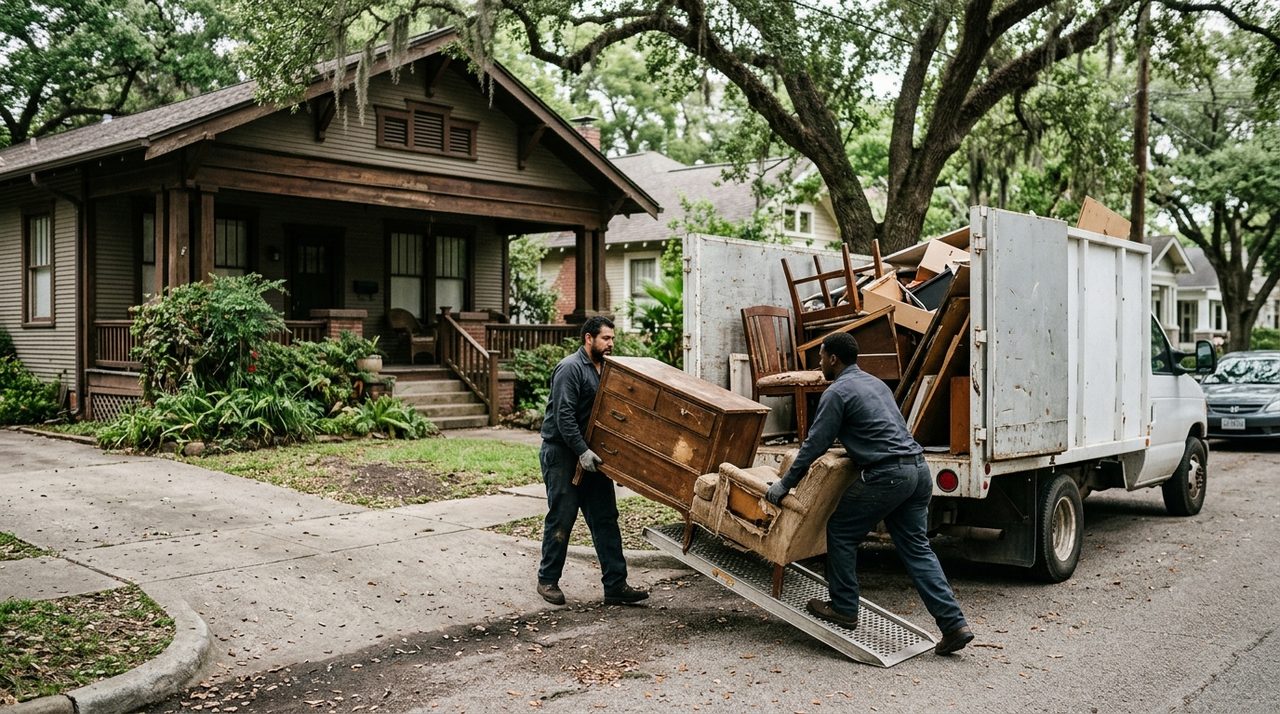
Meyerland's roughly 2,238 mid-century ranch homes sit squarely in FEMA Zone AE along Brays Bayou, and the neighborhood has been gutted — sometimes more than once — by major flood events including Harvey (2017) and Beryl (2024), making post-flood debris removal a defining home-service reality here rather than a rare emergency. Layered on top of that: hundreds of post-Harvey rebuilds and elevations have generated waves of construction and demolition debris, old appliances, and decades of accumulated possessions from original 1960s ranch homes that are finally being cleared. If you're planning a cleanout in Meyerland, understanding the volume, weight surcharges, Meyerland Community Improvement Association staging rules, and City of Houston disposal requirements will keep the job from becoming more expensive and more complicated than it needs to be.
Ranked by verified Google rating × review volume × verification tier. How we rank →
Some highly-rated pros serve Meyerland from nearby and may not keep a Meyerland street address. Those are listed under "Also serving Meyerland" with their real city and distance, so you always know where each business is based.
Highly-rated pros based nearby who cover Meyerland. Distance shown from the Meyerland area.
Serving Meyerland Based in Bellaire · 2.1 mi away
Serving Meyerland Based in Bellaire · 2.2 mi away
Serving Meyerland Based in Bellaire · 2.4 mi away
Serving Meyerland Based in Sharpstown · 2.7 mi away
Serving Meyerland Based in Tanglewood · 3.7 mi away
Serving Meyerland Based in Galleria · 3.8 mi away
Serving Meyerland Based in Upper Kirby · 4.1 mi away
Serving Meyerland Based in Tanglewood · 4.4 mi away
Serving Meyerland Based in Briargrove · 4.7 mi away
Serving Meyerland Based in Missouri City · 5.3 mi away
Why it matters to you
Meyerland's FEMA Zone AE designation and its position along Brays Bayou mean that when a significant storm hits — as Harvey did in 2017 and Beryl did in 2024 — a single ranch home gut-out routinely generates 10–20 cubic yards of waterlogged drywall, original 1960s-era plaster, saturated insulation, laminate flooring, and ruined furniture that must reach the curb within days to prevent mold colonization. Original ranch homes that were never previously flooded can produce even larger loads because they may still contain fifty-plus years of accumulated contents. Standard single-item or partial-truckload pricing does not apply here; expect full-truck runs at $500–$900 per load (estimate) due to the weight surcharges at permitted facilities such as the Westpark or McCarty Road transfer stations.
What a good pro does
A qualified hauler will conduct a walk-through before quoting, estimate cubic yardage and weight separately (waterlogged material is far heavier than dry household junk), and schedule multiple truck runs if needed. Confirm that the hauler disposes only at TCEQ-permitted solid waste facilities — illegal dumping is a Class B misdemeanor under Texas Health & Safety Code §365.012, and the liability can follow the homeowner if they hired an unregistered hauler.
Sources: FEMA National Flood Hazard Layer (NFHL), Harris County Flood Control District, Texas Commission on Environmental Quality
Why it matters to you
The Meyerland Community Improvement Association enforces deed restrictions across the entire neighborhood, and those restrictions govern what you can leave at the curb, for how long, and whether a roll-off container can sit in your driveway at all. A homeowner who schedules a large gut-out or estate clearout without checking with the MCIA first can face fines that fall entirely on the homeowner — not the hauler — and that can accumulate daily. This is especially relevant during post-Harvey rebuild projects, where debris staging can drag on for weeks.
What a good pro does
Before booking any large-scale removal — particularly if it involves a roll-off dumpster or multi-day curbside staging — contact the MCIA directly at (713) 729-2167 to confirm what the current deed restrictions permit. A junk-removal company familiar with Meyerland will ask about HOA restrictions upfront and structure the job around shorter, same-day haul-away runs rather than leaving a loaded container overnight, reducing your exposure to violations.
Sources: Local HOA / deed restrictions (see area profile)
Why it matters to you
Meyerland's original ranch homes — median year built 1962 — frequently still contain aging central HVAC air handlers, window units added over the decades, water heaters damaged by repeated flood saturation, and older refrigerators and ranges that have finally been replaced as part of post-flood renovations. Winter Storm Uri (2021) accelerated appliance failure across the neighborhood, and because these are slab-on-grade single-story homes with no basement, every old unit must come out through living space. Post-Harvey rebuilds that elevated the slab add the complication of accessing mechanical equipment now housed at a higher finished floor level. Single large-appliance removal typically runs $75–$150 per item (estimate) in the Houston metro.
What a good pro does
Choose a hauler who confirms refrigerant recovery compliance for HVAC units — improperly venting refrigerants is an EPA violation — and who has experience navigating narrow doorways and elevated slab thresholds common in Meyerland's mix of low-slung originals and newly elevated rebuilds. Ask whether the hauler donates or recycles working appliances before disposal, as some Houston-area nonprofits and scrap recyclers will take functional units, which can reduce your net cost.
Sources: Texas Commission on Environmental Quality, EPA Lead Renovation, Repair and Painting (RRP) Rule
Why it matters to you
Many of Meyerland's original 1960s ranch homes were owned by the same families for decades before flood events or estate transitions forced a full clearout. These homes routinely surface CRT televisions, fluorescent tube lighting, old propane tanks from gas grills, and painted furniture and cabinetry predating 1978 — all of which carry special handling requirements under EPA regulations. Mixing these items into a standard junk load can expose the hauler — and potentially the homeowner — to environmental liability, and some transfer stations will reject mixed loads that contain regulated materials.
What a good pro does
Before a hauler loads anything from a pre-1978 Meyerland ranch home, walk through the space together and flag painted wood furniture, any tube-style televisions, fluorescent fixtures, and propane cylinders for separate handling. The EPA's lead-safe work practices apply to renovation debris from pre-1978 homes, and Harris County Household Hazardous Waste drop-off events accept many of these items at no charge. A knowledgeable hauler will sort these out rather than risk a load rejection at the transfer station.
Sources: EPA Lead Renovation, Repair and Painting (RRP) Rule, Texas Commission on Environmental Quality
Hiring junk removal in Meyerland? Meyerland is a deed-restricted southwest Houston neighborhood of roughly 2,238 single-family homes, most originally built in the late 1950s–1960s, with a significant wave of post-Harvey rebuilds and elevations since 2017. The neighborhood sits in FEMA Zone AE near Brays Bayou, making flood mitigation, foundation elevation, and water damage restoration among the most critical home service categories. Contractors here must navigate mandatory HOA oversight through the Meyerland Community Improvement Association and City of Houston permitting requirements.
Building era
Late 1950s–1960s (median year built 1962), with substantial post-2017 new construction and rebuilds.
Typical style
Mid-century ranch-style single-story homes (brick veneer, low-sloped roofs) alongside newer two-story traditional/transitional rebuilds.
Foundations
Predominantly slab-on-grade; many post-Harvey rebuilds feature elevated slab foundations raised above base flood elevation.
Common systems
Original homes often have aging central HVAC systems, copper or galvanized plumbing, and older electrical panels (60–100 amp). Rebuilt homes typically have modern high-efficiency HVAC, PEX plumbing, and 200-amp electrical service.
What that means for repairs
Post-flood gut renovations and full rebuilds have been the dominant renovation activity since 2015. Many homeowners have elevated homes, replaced all drywall and insulation, upgraded plumbing to PEX, and installed modern HVAC. Unrenovated original ranch homes still require significant systems updates.
Permit jurisdiction
City of Houston — Houston Permitting Center.
HOA & deed restrictions
Mandatory HOA — Meyerland Community Improvement Association (MCIA), 4999 W. Bellfort Ave., Houston, TX 77035, (713) 729-2167. MCIA maintains a management certificate with the Texas Real Estate Commission and enforces deed restrictions across the neighborhood.
Historic districts
No City of Houston historic district designation confirmed.
Contractor note
Contractors must obtain City of Houston permits for structural, electrical, plumbing, and mechanical work. MCIA deed restrictions may also govern exterior modifications, fencing, and accessory structures — always verify with the HOA before beginning exterior work.
FEMA flood zone
FEMA Zone AE (high flood risk) — source: fema_nfhl. Meyerland is situated adjacent to Brays Bayou, and much of the neighborhood falls within the 100-year floodplain. Properties closest to the bayou and in lower-lying sections face the highest risk.
Hurricane Harvey impact
Meyerland experienced extensive, widespread home flooding during Hurricane Harvey (2017) and is one of Houston's most prominently impacted neighborhoods. The area also flooded significantly during the 2015 Memorial Day Flood and 2016 Tax Day Flood. Sections closest to Brays Bayou (including Meyerland Sections 1–8) were especially hard hit. Hundreds of homes were gutted and many were demolished and rebuilt or elevated. For street-level repetitive loss data, consult the Harris County Flood Education Mapping Tool and FEMA FIRMs.
Heat & humidity load
Original 1960s ranch homes with aging HVAC systems struggle with Houston's extreme summer heat and humidity. Older ductwork in unconditioned attics can develop condensation issues and mold. Post-flood rebuilt homes generally perform better but elevated foundations can expose ductwork and plumbing to extreme heat beneath the structure. Dehumidification and proper attic ventilation are essential across all vintages.
Working with contractors here
The most common contractor work in Meyerland falls into two categories: maintaining and upgrading original 1960s ranch homes, and completing or refining post-Harvey rebuilds and elevations. Plumbing contractors frequently replace galvanized or cast-iron drain lines in original homes, while electricians upgrade older panels to handle modern loads. Foundation repair is common on original slab-on-grade homes due to Houston's expansive clay soils and repeated flood saturation. Flood mitigation work — including home elevation, backflow preventer installation, and flood-resistant material retrofits — remains in high demand. Contractors should scope jobs with the understanding that many homes have had multiple flood events, and hidden moisture damage or improper previous repairs may be present behind walls and under flooring.
Local Tip
Always ask for a written estimate before work begins. Texas contractors are required to provide one on jobs over $1,000.
Meyerland is a deed-restricted southwest Houston neighborhood of roughly 2,238 single-family homes, most originally built in the late 1950s–1960s, with a significant wave of post-Harvey rebuilds and elevations since 2017. The neighborhood sits in FEMA Zone AE near Brays Bayou, making flood mitigation, foundation elevation, and water damage restoration among the most critical home service categories. Contractors here must navigate mandatory HOA oversight through the Meyerland Community Improvement Association and City of Houston permitting requirements.
Source: U.S. Census Bureau, ACS 5-Year 2023
Much of Meyerland maps to FEMA Zone AE (high flood risk), so flood-resilient detailing -- elevated equipment, water-tolerant materials, and drainage-first thinking -- is essential here, not optional; risk climbs sharply on blocks nearest Brays Bayou, where it varies parcel to parcel.
Source: FEMA National Flood Hazard Layer (NFHL). Flood zones vary by parcel — verify your individual FIRM panel.
Sources: Texas Commission on Environmental QualityCity of Houston Permitting Center
Sources: EPA Lead Renovation, Repair and Painting (RRP) RuleTexas Commission on Environmental Quality
Sources: FEMA National Flood Hazard Layer (NFHL)Harris County Flood Control District