1950 County Rd 220, Angleton, TX 77515
Best Landscapers in Angleton, TX
Angleton's median home was built in 1978, meaning most of the city's ranch-style slabs sit on Brazoria County's notorious expansive clay — soil that swells after Gulf rain events and cracks to depth during summer drought, creating a punishing cycle for landscapes and foundations alike. As the Brazoria County seat situated close enough to the coast to catch tropical wind and surge from storms like Beryl (2024), Angleton homeowners face a landscaping environment where species selection, drainage design, and post-storm recovery all carry real consequences. Whether your property falls inside Angleton city limits (City of Angleton Building Department) or in unincorporated Brazoria County matters before a single irrigation head or retaining wall goes in.
Verified against Google Business data
Updated 2026
See the 8 Landscapers Serving Angleton 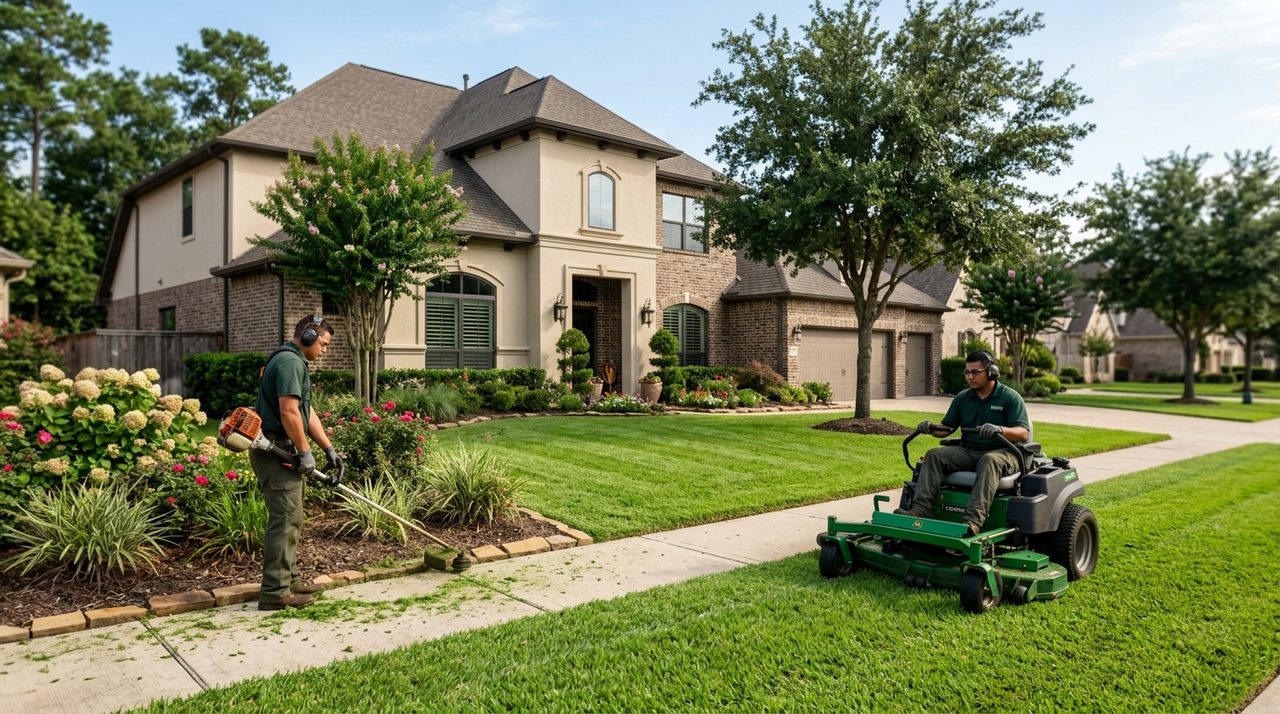
- Median home built
- 1978
- Median home value
- $187,400
- FEMA flood zone
- X (low)
- Typical landscaping cost (est.)
- $45–$18,000 depending on scope — basic mow/edge contracts ~$160–$220/mo; full design-install $4,500–$18,000
- Most common local issue
- Chronic ponding and bed drowning on Brazoria County black clay after Gulf rain events
Ranked by verified Google rating × review volume × verification tier. How we rank →
Min rating:
8 results Closed
2916 N Velasco St, Angleton, TX 77515
Closed
4 Stadium Dr, Angleton, TX 77515
Closed
826 E Mulberry St, Angleton, TX 77515
Closed
122 County Rd 839, Angleton, TX 77515
Closed
17000 S Hwy 288b, Angleton, TX 77515
1950 County Rd 220, Angleton, TX 77515
Closed
28512 FM 2004, Angleton, TX 77515
Landscapers in Angleton: What You Should Know
Black Clay Drainage Failures Around Angleton's 1950s–1980s Ranch Slabs
Why it matters to you
Brazoria County's expansive Houston Black clay absorbs Gulf rainfall slowly and sheds it even more slowly around the shallow perimeter of older slab-on-grade ranch homes, which dominate Angleton's in-town blocks. The result is chronic ponding alongside foundations, beds that stay waterlogged for days after a heavy rain, and turf that repeatedly drowns in low spots — a problem compounded by the nearly flat topography common across the county seat's older platted areas. Even FEMA Zone X properties (Angleton's predominant flood designation) experience localized standing water that kills root systems and accelerates slab edge settlement as the clay moisture cycle fluctuates.
What a good pro does
A qualified landscaper working on an Angleton ranch home should assess the existing lot grade relative to the slab finished floor elevation before any planting or sod installation, and recommend French drains or a dry creek bed routed to a street curb or swale outfall if ponding is present. French drain corrections for a typical Angleton residential lot run approximately $2,500–$7,500 depending on linear footage and outfall access (estimate). Because grading work that redirects drainage can require a permit in some jurisdictions, verify with the City of Angleton Building Department or Brazoria County Engineering whether a grading or drainage permit applies to your property before work begins.
Sources: FEMA National Flood Hazard Layer (NFHL), Municipal permit office (see area profile), Harris County Flood Control District
Hurricane & Derecho Wind Damage in Angleton's Older Tree Canopy
Why it matters to you
Angleton's in-town neighborhoods contain mature tree canopies — live oaks, pecans, and Chinese tallow trees planted decades ago around 1950s–1970s ranch homes — that become serious liabilities when tropical systems make landfall across Brazoria County. Beryl (2024) delivered damaging winds well inland through this corridor, and trees with shallow root anchoring in saturated Brazoria County clay topple with significantly less wind force than those rooted in drier or sandier soils. Bradford pears planted in 1990s-era newer subdivisions on the city fringe are particularly brittle and frequently split at crotch unions at speeds well below hurricane force.
What a good pro does
Before the next storm season, a knowledgeable Angleton landscaper should walk your lot and flag trees with included bark, co-dominant stems, or root zones compromised by pavement or chronic wetness — these are the highest-risk failures in a Brazoria County wind event. Post-storm large-tree removal in the Houston area typically runs $800–$3,500 per tree under ordinary conditions, with demand-surge pricing common in the days after a named storm (estimate). Replanting after removal should prioritize wind-rated native or adapted species — live oak with proper root-zone drainage, bald cypress in wetter spots, or native yaupon holly — rather than fast-growing brittle ornamentals.
Sources: Harris County Flood Control District, Municipal permit office (see area profile)
Freeze-Kill Replanting After Uri in Angleton's Established Yards
Why it matters to you
Angleton sits in USDA Hardiness Zone 9a, where mild Gulf winters historically allowed homeowners to plant sago palms, bougainvillea, esperanza, and bird-of-paradise throughout the city's older in-town yards — many of those plants were established for a decade or more before Winter Storm Uri (February 2021) killed them to the root or outright. Homeowners who rebuilt beds after Uri often replanted the same cold-sensitive species because of Angleton's typically mild winters, leaving them exposed to the next hard freeze event. The older 1950s–1980s ranch homes that make up much of Angleton's housing stock frequently have mature landscape beds where a single Uri-level freeze can represent thousands of dollars in plant loss.
What a good pro does
A landscaper serving Angleton should be direct with clients about Zone 9a cold exposure: sago palms, bougainvillea, and citrus carry real freeze-mortality risk and should be treated as replaceable accents rather than permanent structure plants. For framework plantings around Angleton ranch homes, cold-hardy alternatives like dwarf yaupon holly, Texas sage (cenizo), knockout roses, and Gulf muhly grass provide the lush, low-maintenance look clients want without the Uri-scale replacement cost. Sod installation in post-Uri bare spots runs approximately $1.00–$1.75 per square foot installed for St. Augustine (estimate), and re-establishing an entire front bed from scratch after a hard freeze can easily reach $3,000–$8,000 on a typical Angleton lot.
Sources: Municipal permit office (see area profile)
Irrigation Permits & TCEQ Licensing Across City and County Parcels
Why it matters to you
Angleton's split permitting jurisdiction — City of Angleton Building Department for in-city properties, Brazoria County Engineering for unincorporated lots — creates a real compliance trap for homeowners hiring irrigation work. Texas law requires a TCEQ-licensed Irrigator to design and install any new irrigation system, and backflow prevention devices must meet TCEQ Chapter 344 specifications and be tested annually by a separately licensed backflow tester; these state requirements apply regardless of which local jurisdiction your property falls in. Many homeowners in Angleton's newer fringe subdivisions are surprised to learn that an unlicensed crew doing irrigation installation — even for a simple drip system — exposes the homeowner to permit violations and potential insurance complications.
What a good pro does
Before hiring anyone for irrigation installation or modification in Angleton, ask specifically for the contractor's TCEQ Irrigator License number and verify it at the TCEQ license lookup; do not accept a subcontractor arrangement where you cannot confirm the licensed irrigator will actually be on-site. Determine your permitting jurisdiction first — call the City of Angleton Building Department if you are inside city limits, or Brazoria County Engineering if you are in an unincorporated subdivision — and confirm whether a permit and inspection are required before work begins. Full irrigation system installs with permitting and backflow prevention for a standard Angleton suburban yard typically factor into a $4,500–$18,000 full landscape project or can run $2,500–$6,000 as a standalone install depending on zone count and head spacing (estimate).
Sources: Texas Commission on Environmental Quality, Municipal permit office (see area profile), Local HOA / deed restrictions (see area profile)
Landscapers in Angleton: What You Should Know
Hiring landscapers in Angleton? Angleton is the Brazoria County seat with housing ranging from 1950s ranch homes near downtown to newer production-built subdivisions on the outskirts. There is no single mandatory HOA—restrictions and associations vary by subdivision, requiring lot-level verification. Contractors should confirm whether a property falls inside city limits (City of Angleton permitting) or in unincorporated Brazoria County, as the permitting jurisdiction and requirements differ.
- Housing era
- 1950s–1980s in older in-town areas
- Foundation
- Predominantly slab-on-grade for post-1950s construction
- Flood zone
- FEMA Zone X (low flood risk) per official NFHL data
- Permits
- City of Angleton Building Department for properties within city limits
Housing stock & systems
Building era
1950s–1980s in older in-town areas; 1990s–present in newer subdivisions at the city fringe.
Typical style
Ranch-style one-story brick or brick/wood homes in older areas; traditional suburban brick-and-siding 1–2 story homes in newer subdivisions; scattered farmhouses and manufactured homes in unincorporated areas.
Foundations
Predominantly slab-on-grade for post-1950s construction; some older homes may have pier-and-beam, but slab dominates across the area.
Common systems
Older in-town homes (1950s–1970s) may have original galvanized or cast-iron plumbing, aging electrical panels (60–100 amp), and older central HVAC or window units. Newer subdivision homes (1990s+) typically have copper or PEX plumbing, 200-amp panels, and central HVAC with ductwork in attics.
What that means for repairs
Older in-town homes frequently need plumbing re-pipes, electrical panel upgrades, and HVAC modernization. Kitchen and bath remodels are common in 1960s–1980s ranch homes. Newer subdivisions see cosmetic updates and occasional foundation repair due to Brazoria County's expansive clay soils.
Permits & restrictions
Permit jurisdiction
City of Angleton Building Department for properties within city limits; Brazoria County Engineering for properties in unincorporated areas. Not under City of Houston permitting jurisdiction.
HOA & deed restrictions
No citywide mandatory HOA. Multiple individual subdivision POAs/HOAs exist (e.g., Angleton Heritage Court Property Owners Association, Inc.), each governing only its own subdivision. Many older platted areas have only deed restrictions with no active association. HOA status must be verified by subdivision name via the Texas HOA/POA Management Certificate Search for Brazoria County and the property's deed and title commitment.
Historic districts
No City of Houston historic district designation confirmed. Angleton is not within Houston's HAHC jurisdiction.
Contractor note
Contractors must first determine whether a property is inside Angleton city limits or in unincorporated Brazoria County, as permit requirements, inspections, and fee structures differ. Some subdivisions have architectural review requirements through their POA that must be satisfied in addition to municipal or county permits.
Flood & weather
FEMA flood zone
FEMA Zone X (low flood risk) per official NFHL data. However, portions of greater Angleton and Brazoria County near Bastrop Bayou and other local waterways may carry higher flood designations; buyers and contractors should verify flood zone status for specific parcels via FEMA's Flood Map Service Center.
Hurricane Harvey impact
Not confirmed from research for specific Angleton neighborhoods. Brazoria County experienced widespread flooding during Hurricane Harvey (2017), and mandatory evacuations were issued for parts of the county due to Brazos River and bayou flooding. Specific Harvey impact for individual Angleton subdivisions should be verified through Brazoria County Clerk records and FEMA damage reports.
Heat & humidity load
Angleton's humid subtropical climate and Brazoria County's coastal proximity drive heavy HVAC demand from May through October. Older homes with undersized or aging systems are prone to compressor failure and ductwork condensation issues. Slab foundations on expansive clay soils may shift during summer drought cycles, potentially causing foundation stress and related plumbing issues.
Working with contractors here
Contractors in Angleton most commonly handle HVAC replacements, plumbing re-pipes, and electrical upgrades in the town's substantial stock of 1950s–1980s ranch homes. Foundation repair is a recurring need due to Brazoria County's expansive clay soils, which shift with seasonal moisture changes. Newer subdivisions generate demand for cosmetic remodeling, fence installation, and roof replacements after storm events. Job scoping should account for the lack of a unified HOA—restrictions vary by subdivision, and some older lots have minimal or expired deed restrictions, while newer developments may require architectural committee approval. Contractors unfamiliar with the area should verify the permitting jurisdiction (city vs. county) before beginning work, as inspection schedules and code enforcement practices differ between the two.
Local Tip
Always ask for a written estimate before work begins. Texas contractors are required to provide one on jobs over $1,000.
About Angleton
Angleton is the Brazoria County seat with housing ranging from 1950s ranch homes near downtown to newer production-built subdivisions on the outskirts. There is no single mandatory HOA—restrictions and associations vary by subdivision, requiring lot-level verification. Contractors should confirm whether a property falls inside city limits (City of Angleton permitting) or in unincorporated Brazoria County, as the permitting jurisdiction and requirements differ.
- Median year built
- 1978
- Median home value
- $187,400
- Owner-occupied
- 66.3%
- Population
- 19,597
- Housing units
- 8,358
- Median income
- $83,981
Source: U.S. Census Bureau, ACS 5-Year 2023
Flood & storm risk
FEMA Zone XLow flood riskMost of Angleton maps to FEMA Zone X (low mapped flood risk), but Houston's flash-flood reality means even low-risk blocks benefit from smart drainage and storm-hardened installs; as a Brazoria County coastal community, tropical surge and wind add a layer generic guidance misses.
Source: FEMA National Flood Hazard Layer (NFHL). Flood zones vary by parcel — verify your individual FIRM panel.
Frequently Asked Questions
Do I need a permit from the City of Angleton or Brazoria County before a landscaper installs a French drain or retaining wall on my property?
It depends entirely on whether your lot falls inside Angleton city limits or in unincorporated Brazoria County — these are two separate permitting jurisdictions with different fee schedules and inspection processes. For properties inside city limits, contact the City of Angleton Building Department before any grading work or retaining wall installation; for unincorporated parcels, the Brazoria County Engineering office handles permits. Retaining walls over roughly 30 inches typically trigger a permit requirement in either jurisdiction, and grading changes that redirect drainage onto neighboring lots can create liability even when no permit is technically required, so confirm your parcel's jurisdiction before signing a contract.
Sources: Municipal permit office (see area profile)
My 1960s Angleton ranch home has almost no slope in the backyard and water sits for days after any Gulf rain — what drainage approach actually works on this soil?
Older in-town Angleton lots platted in the 1950s and 1960s were graded to minimal standards before Brazoria County's expansive black clay behavior was well understood, so dead-flat backyards are extremely common in this housing era. A landscaper familiar with local soil should evaluate whether a French drain with a proper outfall, a surface swale graded toward the street or a rear easement, or a dry creek bed is the right solution — often a combination is needed because the clay's slow infiltration rate means you cannot simply rely on absorption. Ask any candidate landscaper specifically where their proposed outfall point is; a drain that just moves water to another low spot on your lot solves nothing.
Sources: Harris County Flood Control District
Angleton maps mostly to FEMA Zone X, so does that mean I can skip worrying about drainage design on a new landscape install?
Zone X means your property is outside the mapped 100-year floodplain, which lowers your federal flood insurance obligation, but it does not mean your yard is immune to the standing water and runoff problems driven by Brazoria County clay soil and Gulf rain events — flash flooding from intense localized storms can affect Zone X parcels that have no formal floodplain exposure. Beryl (2024) and other recent events dumped rainfall fast enough to overwhelm even well-graded lots, and low-lying Zone X blocks in southern Angleton near Chocolate Bayou tributaries have seen unexpected pooling. Good drainage design is worth doing regardless of FEMA designation when your soil absorbs water this slowly.
Does a landscaper doing pesticide or herbicide applications in Angleton need a state license, or can any lawn crew legally spray my yard?
Any landscaper or lawn company applying pesticides or herbicides for hire in Texas — including weed control and fire ant treatments — must hold a Texas Department of Agriculture (TDA) Commercial Pesticide Applicator License; spraying without one is a state violation regardless of whether you're inside Angleton city limits or in unincorporated Brazoria County. Before authorizing any chemical application, ask the crew to confirm their TDA license number, which you can verify on the TDA website. General mowing and planting crews who do not hold this license legally cannot apply any pesticide product on your property for compensation.
My Angleton subdivision has a POA — do I need architectural approval before a landscaper installs a new garden bed, fence-line hedge, or decorative boulder edging?
Angleton has no citywide mandatory HOA, but individual subdivision POAs — such as the Angleton Heritage Court Property Owners Association — each set their own rules, and some include architectural review requirements for visible landscape changes like hedges at property lines, decorative walls, or tree removals facing the street. You need to pull your deed and check the specific covenants for your subdivision before your landscaper breaks ground, because POA removal orders for non-approved installs come at your expense, not the contractor's. If your subdivision's POA is inactive or your older lot carries only deed restrictions with no active association, written approval may not be required — but that still needs to be confirmed lot by lot.
Sources: Local HOA / deed restrictions (see area profile)
What time of year is best to schedule a landscape redesign or sod installation on my Angleton property, and how far out should I book?
For St. Augustine sod installation, late March through early May is the local sweet spot — soil temperatures are rising, the summer fungal pressure (brown patch) has not peaked yet, and newly laid sod has time to root before Angleton's brutal July and August heat indexes arrive. Fall installs (October–November) are a viable second window, though sod goes semi-dormant and establishment is slower. Post-storm surges after events like Beryl mean reputable Angleton-area landscapers can book 6–10 weeks out during active storm seasons, so plan ahead and get a written scope before paying any deposit; cost estimates for sod are roughly $1.00–$1.75 per square foot installed, which is an estimate and will vary by supplier pricing and lot conditions at time of install.