13360 South Fwy, Houston, TX 77047
Best Landscapers in Braeswood
Braeswood sits directly on the Brays Bayou flood corridor in FEMA Zone AE, meaning landscaping here is inseparable from drainage engineering — every grading decision, plant selection, and tree placement either mitigates flood impact or compounds it. The neighborhood's mix of original 1950s–1960s ranch homes on expansive Beaumont clay and post-flood slab-on-grade rebuilds creates a split landscape reality on the same block, where soil compaction, anaerobic root zones, and silt deposits from repeated inundation are routine starting conditions. Understanding what Braeswood's specific flood history and section-by-section deed restrictions demand of a landscaper is what separates a durable result from another storm-cycle casualty.
Verified against Google Business data
Updated 2026
See the 10 Landscapers Serving Braeswood 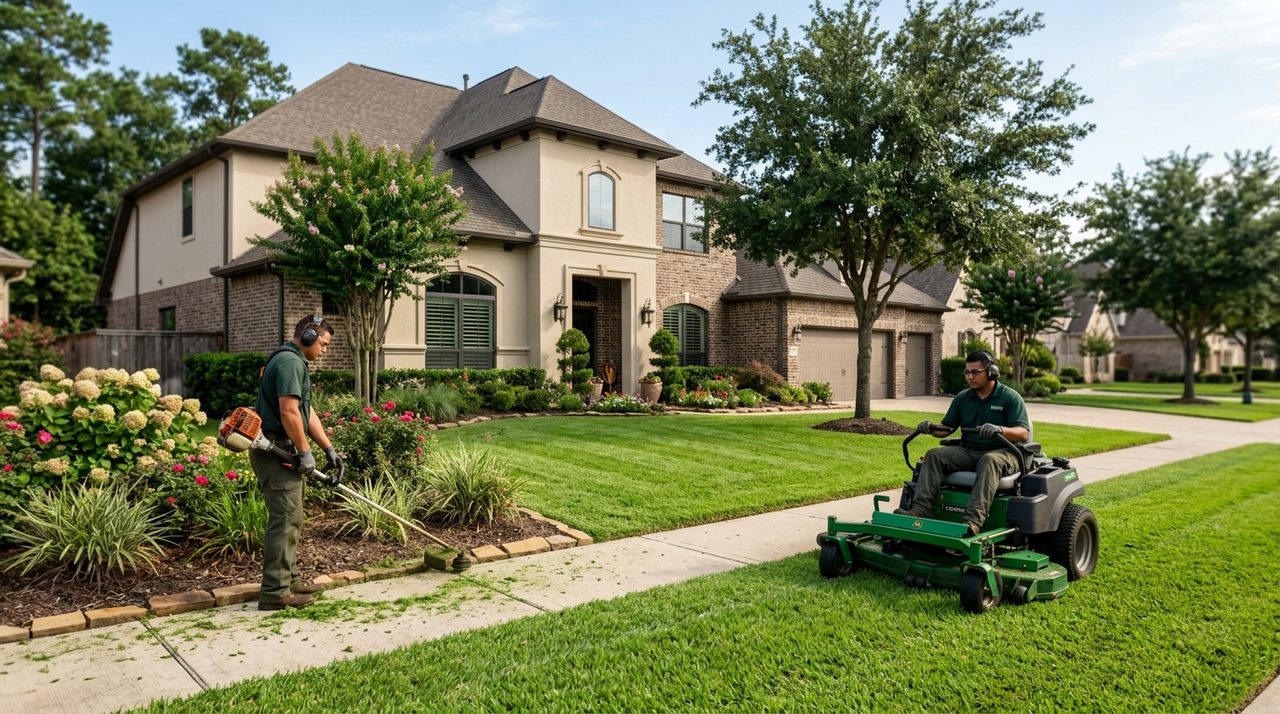
- Median home built
- 1996
- Median home value
- $385,354
- FEMA flood zone
- AE (high)
- Typical cost (est.)
- $2,500–$18,000
- Most common local issue
- Post-flood silt buildup and anaerobic soil killing replanted beds near Brays Bayou
Ranked by verified Google rating × review volume × verification tier. How we rank →
Some highly-rated pros serve Braeswood from nearby and may not keep a Braeswood street address. Those are listed under "Also serving Braeswood" with their real city and distance, so you always know where each business is based.
Min rating:
10 resultsBased in Braeswood
Also serving Braeswood
Highly-rated pros based nearby who cover Braeswood. Distance shown from the Braeswood area.
Closed
Serving Braeswood Based in Meyerland · 1.6 mi away
Closed
Serving Braeswood Based in Bellaire · 1.7 mi away
Closed
Serving Braeswood Based in Bellaire · 2 mi away
Closed
Serving Braeswood Based in Bellaire · 2.6 mi away
Closed
Serving Braeswood Based in Bellaire · 2.9 mi away
Closed
Serving Braeswood Based in Upper Kirby · 3.3 mi away
Open Now
Serving Braeswood Based in Sharpstown · 3.4 mi away
Serving Braeswood Based in Galleria · 3.7 mi away
Closed
Serving Braeswood Based in Tanglewood · 4.2 mi away
Landscapers in Braeswood: What You Should Know
Flood-Deposited Silt and Anaerobic Soil After Repeated Bayou Inundation
Why it matters to you
Braeswood properties along and near Brays Bayou have flooded multiple times in the past decade — Harvey in 2017 dropped record rainfall across these blocks, and many yards sit in mapped FEMA Zone AE. Each inundation event leaves behind a layer of compacted silt, disrupts soil pH, and creates oxygen-depleted anaerobic layers that suffocate root systems. Homeowners who simply replant after water recedes without addressing the soil profile often watch new plantings die within one growing season.
What a good pro does
A qualified landscaper working in Braeswood should order a soil test before any replanting — testing for pH disruption, heavy-metal loading, and compaction depth — then amend with compost and, where anaerobic layers are confirmed, perform mechanical aeration or subsoil fracturing before install. Grade restoration to positive drainage away from the structure is a companion step, not optional. This is a distinct service from routine landscape refresh and should be scoped and priced accordingly.
Sources: Harris County Flood Control District, FEMA National Flood Hazard Layer (NFHL)
Clay-Soil Drainage Corrections on Lots Still Graded for Pre-Harvey Conditions
Why it matters to you
Original 1950s–1960s Braeswood ranch homes were graded to drainage standards that predate current HCFCD channel improvements and modern rainfall modeling; many of those grades have also shifted as Houston Black clay swelled and settled through decades of wet-dry cycles. The result is chronic ponding in side yards and along rear property lines that drowns turfgrass roots, accelerates foundation movement on older pier-and-beam homes, and creates mosquito habitat within days of a Gulf rain event.
What a good pro does
French drains or dry creek beds routed to a street outfall or alley drain are the standard corrective here, typically running $2,500–$7,500 for a residential lot depending on linear footage — these are cost estimates, not guarantees. A landscaper should stake the lot's existing drainage pattern before design, not after. Note that grading work altering drainage flow in a FEMA Zone AE property may require a City of Houston floodplain development permit, which the homeowner — not the landscaper — is ultimately responsible for obtaining.
Sources: Harris County Flood Control District, City of Houston Permitting Center, FEMA National Flood Hazard Layer (NFHL)
HOA and Deed-Restriction Approval Before Any Exterior Landscape Change
Why it matters to you
Braeswood is not a single HOA — it is a patchwork of the Braeswood Place Homeowners Association, the Seventy-Six Fifty-Five South Braeswood HOA, smaller condo and townhome associations, and individually restricted plats, all of which govern different lots with different rules on turf species, fence heights, landscape wall materials, and tree placement setbacks. A landscaper who installs a retaining wall, replaces a front-yard tree, or re-sods with a non-approved species without confirming the governing document for that specific lot risks a removal order that falls entirely on the homeowner.
What a good pro does
Before signing a landscape contract for any Braeswood property, a responsible landscaper should request the lot's recorded deed restriction document — not just ask which HOA applies — and confirm submittal requirements for the planned scope. The City of Houston has no municipal zoning to fall back on here; deed restrictions are the binding land-use instrument. Retaining walls over 30 inches also require a City of Houston building permit regardless of HOA status.
Sources: Local HOA / deed restrictions (see area profile), City of Houston Permitting Center
Slab Foundation Risk From Trees Planted Too Close on Repeatedly Saturated Clay
Why it matters to you
Virtually all post-1990s rebuilds and infill homes in Braeswood are slab-on-grade, and those slabs sit on Beaumont clay that has been through repeated extreme wet-dry saturation cycles from bayou flooding events. Large-rooted species — live oaks, Chinese tallows, and even mature crepe myrtles — planted within 10–15 feet of a slab edge accelerate differential settlement by pulling moisture unevenly from already-stressed clay. On original 1950s ranch homes with pier-and-beam foundations, aggressive root systems can displace piers over time.
What a good pro does
A landscaper working in Braeswood should flag foundation setback concerns in writing before planting any canopy tree, recommend root barrier installation for trees placed within 15 feet of any foundation edge, and favor species with less aggressive lateral root systems (e.g., crape myrtle over live oak in tight spots). Post-flood rebuilds with engineered slab specifications may have foundation engineer notes on file — worth requesting before planting design is finalized. This advisory role is part of competent landscape design in this corridor, not an upsell.
Sources: Harris County Flood Control District, FEMA National Flood Hazard Layer (NFHL)
Landscapers in Braeswood: What You Should Know
Hiring landscapers in Braeswood? Braeswood straddles Brays Bayou in southwest Houston, placing flood mitigation at the center of virtually every home service decision. The neighborhood's mix of original 1950s–1960s ranch homes and post-flood teardown rebuilds means contractors encounter widely varying foundation types, electrical panels, and plumbing systems on a single block. Multiple mandatory HOAs and recorded deed restrictions add a layer of compliance review before exterior modifications.
- Housing era
- 1950s–1960s original construction with significant teardown/infill waves in the late 1990s–2010s, accelerating after repeated…
- Foundation
- Mixed — older homes include both pier-and-beam and slab-on-grade
- Flood zone
- FEMA Zone AE (high flood risk) — source
- Permits
- City of Houston — Houston Permitting Center
Housing stock & systems
Building era
1950s–1960s original construction with significant teardown/infill waves in the late 1990s–2010s, accelerating after repeated flood events.
Typical style
Original one-story ranch and mid-century traditional homes alongside newer two-story traditional, transitional, and soft Mediterranean custom infill.
Foundations
Mixed — older homes include both pier-and-beam and slab-on-grade; virtually all post-1990s infill and rebuilds are slab-on-grade (not explicitly documented for this neighborhood; based on typical Houston-area patterns).
Common systems
Original homes may have galvanized or cast-iron drain lines, R-22 HVAC systems, and Federal Pacific or Zinsco electrical panels. Rebuilt homes typically feature PEX or copper plumbing, modern high-SEER HVAC, and 200-amp panels. Mixed vintage makes system audits essential.
What that means for repairs
Post-flood teardown-and-rebuild is the dominant renovation activity, often involving full elevation of new structures. Remaining original ranch homes frequently undergo foundation repair, re-plumbing with PEX, HVAC replacement, and flood-damage remediation including mold abatement and drywall replacement.
Permits & restrictions
Permit jurisdiction
City of Houston — Houston Permitting Center.
HOA & deed restrictions
Braeswood Place Homeowners Association (BPHA) operates as a mandatory-membership POA for certain sections of Braeswood Place, with a section-by-section reconstitution effort underway. Additional smaller mandatory HOAs exist (e.g., Seventy-Six Fifty-Five South Braeswood HOA). The broader Braeswood corridor is a patchwork of multiple associations, condo/townhome HOAs, and some individually restricted plats with no single umbrella organization.
Historic districts
No City of Houston historic district designation confirmed.
Contractor note
Contractors must verify which HOA or POA governs a specific lot before exterior work, as deed restrictions vary section by section. Elevation and flood-proofing projects may trigger additional City of Houston floodplain development permits and FEMA Substantial Improvement/Substantial Damage reviews.
Flood & weather
FEMA flood zone
FEMA Zone AE (high flood risk) — source: fema_nfhl. The neighborhood is situated along Brays Bayou, one of Houston's most flood-prone waterways, with direct exposure to bayou overflow during major rain events.
Hurricane Harvey impact
Braeswood and the adjacent Braeswood Place area along Brays Bayou were among the hardest-hit neighborhoods during Hurricane Harvey (2017), consistent with severe flooding also experienced during the Memorial Day 2015 and Tax Day 2016 flood events. Widespread home inundation triggered a major wave of teardowns, elevations, and full rebuilds throughout the corridor. Specific block-level inundation depths were not confirmed in available research but are well-documented in FEMA and Harris County Flood Control District records.
Heat & humidity load
High heat and humidity stress aging HVAC systems in original 1950s–1960s homes, many of which still run undersized or outdated units. Mold recurrence is a persistent concern in previously flooded structures, particularly in pier-and-beam crawl spaces and behind repaired drywall. Summer storms can re-saturate soils near the bayou, exacerbating foundation movement on clay soils.
Working with contractors here
Flood remediation and prevention dominate the contractor workload in Braeswood — from mold abatement and drywall replacement in previously inundated homes to full structural elevation of new builds. Foundation repair is common on original 1950s–1960s slab and pier-and-beam homes settling on expansive clay soils worsened by repeated saturation cycles. Re-plumbing from galvanized or cast-iron to PEX and upgrading electrical panels from original 100-amp service are frequent companion scopes on older homes. Contractors should scope every project with flood history in mind: verify whether a property has triggered FEMA Substantial Improvement thresholds, which can mandate elevation or floodproofing for any renovation exceeding 50% of the structure's market value. The section-by-section HOA and deed restriction landscape means exterior modification approvals — fencing, roofing material, paint colors — require lot-specific verification before work begins.
Local Tip
Always ask for a written estimate before work begins. Texas contractors are required to provide one on jobs over $1,000.
About Braeswood
Braeswood straddles Brays Bayou in southwest Houston, placing flood mitigation at the center of virtually every home service decision. The neighborhood's mix of original 1950s–1960s ranch homes and post-flood teardown rebuilds means contractors encounter widely varying foundation types, electrical panels, and plumbing systems on a single block. Multiple mandatory HOAs and recorded deed restrictions add a layer of compliance review before exterior modifications.
- Median year built
- 1996
- Median home value
- $385,354
- Owner-occupied
- 54.9%
- Population
- 64,425
- Housing units
- 29,040
- Median income
- $76,187
Source: U.S. Census Bureau, ACS 5-Year 2023
Flood & storm risk
FEMA Zone AEHigh flood riskMuch of Braeswood maps to FEMA Zone AE (high flood risk), so flood-resilient detailing -- elevated equipment, water-tolerant materials, and drainage-first thinking -- is essential here, not optional; risk climbs sharply on blocks nearest Brays Bayou, where it varies parcel to parcel.
Source: FEMA National Flood Hazard Layer (NFHL). Flood zones vary by parcel — verify your individual FIRM panel.
Frequently Asked Questions
Do I need a City of Houston permit before installing a French drain or regrading my Braeswood yard near Brays Bayou?
Yes — grading work that alters drainage patterns in the City of Houston, including Braeswood, falls under the Houston Permitting Center's jurisdiction, and projects in FEMA Zone AE may also require a separate floodplain development permit from the city's Floodplain Management office. Because Braeswood lots drain toward Brays Bayou, Harris County Flood Control District rules on outfall discharge can also apply to how and where you direct runoff. Get the specific lot's flood zone confirmed before any contractor breaks ground, since risk varies parcel to parcel along the bayou corridor. Skipping permits in this zone can trigger a FEMA Substantial Improvement review that affects your flood insurance.
Sources: City of Houston Permitting CenterHarris County Flood Control DistrictFEMA National Flood Hazard Layer (NFHL)
My Braeswood lot flooded multiple times — including Harvey — and my grass has never fully recovered. Do landscapers here know how to test the soil before replanting?
Reputable Braeswood landscapers should recommend a basic soil test (through Texas A&M AgriLife Extension or a private lab) before any replanting after repeat inundation, because bayou floodwater deposits silt layers that compact into anaerobic zones lethal to turf roots, and pH and heavy-metal profiles can shift significantly. Ask any landscaper you interview whether they use a soil probe or send samples out before specifying amendments — a crew that quotes sod without testing first is skipping a step that causes replanting failures in this corridor. St. Augustine, the dominant Braeswood turf, is especially intolerant of waterlogged, oxygen-depleted root zones left by repeated Brays Bayou overbank events.
Sources: Harris County Flood Control District
Which HOA actually has to approve my new landscape plan in Braeswood — there seem to be several?
Braeswood's HOA landscape is a section-by-section patchwork: Braeswood Place Homeowners Association (BPHA) governs certain sections, separate smaller mandatory HOAs like Seventy-Six Fifty-Five South Braeswood HOA cover others, and some plats carry individual deed restrictions with no umbrella organization. Before any exterior landscape work — including adding raised planting beds, garden walls, or tree removal — your landscaper should pull your specific lot's recorded deed restrictions from Harris County's real-property records, not rely on a neighbor's approval as precedent. Approvals are not transferable across sections, and an installation done without the correct HOA sign-off can result in a removal order at your expense.
Sources: Local HOA / deed restrictions (see area profile)
How long does an irrigation permit take through the City of Houston, and will it delay my Braeswood landscaping project?
City of Houston irrigation permits for residential systems are processed through the Houston Permitting Center and typically take one to three weeks for standard review, though timelines can stretch after high-demand storm seasons when permit volume spikes. Budget an extra two to four weeks into your project schedule if irrigation is part of the scope, and confirm that your landscaper is either subcontracting a TCEQ-licensed irrigator or holds that license directly — installation without it violates state law and voids the permit. In a FEMA Zone AE neighborhood like Braeswood, inspectors may also flag irrigation head placement if it conflicts with required drainage flow paths.
Sources: City of Houston Permitting CenterTexas Commission on Environmental Quality
Is fall or spring a better time to start a major landscape overhaul in Braeswood given the flood season and heat?
October through November is generally the strongest window for major landscape installation in Braeswood: the worst of hurricane season has passed (Atlantic peak runs through September), summer heat stress on newly installed plants has broken, and soil moisture from fall fronts helps root establishment before winter. Avoid scheduling grading or sod installation between May and September if possible — Gulf tropical systems can dump inches overnight on already-saturated clay, washing out freshly graded beds and drowning new sod before it roots. Spring planting (March–April) is a viable second window but compresses the root-establishment period before Houston's aggressive summer heat arrives.
Can a Braeswood landscaper legally apply pre-emergent weed killer or fungicide to my St. Augustine lawn, or does that require a separate license?
Any landscaper applying pesticides, herbicides, or fungicides for hire in Texas — including pre-emergents for crabgrass or fungicides for brown patch, which is extremely common on Braeswood's humid, clay-heavy lawns — must hold a Texas Department of Agriculture (TDA) Commercial Pesticide Applicator License; unlicensed chemical application is a TDA violation. When interviewing landscapers, ask to see the TDA license number and verify it at the TDA's online lookup before any chemical program begins. This matters especially in Braeswood because fungal pressure (brown patch, take-all root rot) is severe in the high-humidity bayou corridor, and homeowners often need a recurring treatment schedule, not just a one-time spray.