Closed
1231 Hahlo St, Houston, TX 77020
EaDo's explosive townhome infill — rows of 2010s–2020s three-story structures on lots carved from former warehouses and mid-century bungalows — creates a landscaping reality unlike anywhere else in the Inner Loop: tiny footprints, shared zero-lot-line walls, and parcel-by-parcel HOA rules that may or may not require architectural review before a single shovel breaks ground. Layer in EaDo's position on Houston's Beaumont Black clay and proximity to Buffalo Bayou's variable flood boundary, and every outdoor project here demands site-specific verification before the work begins.
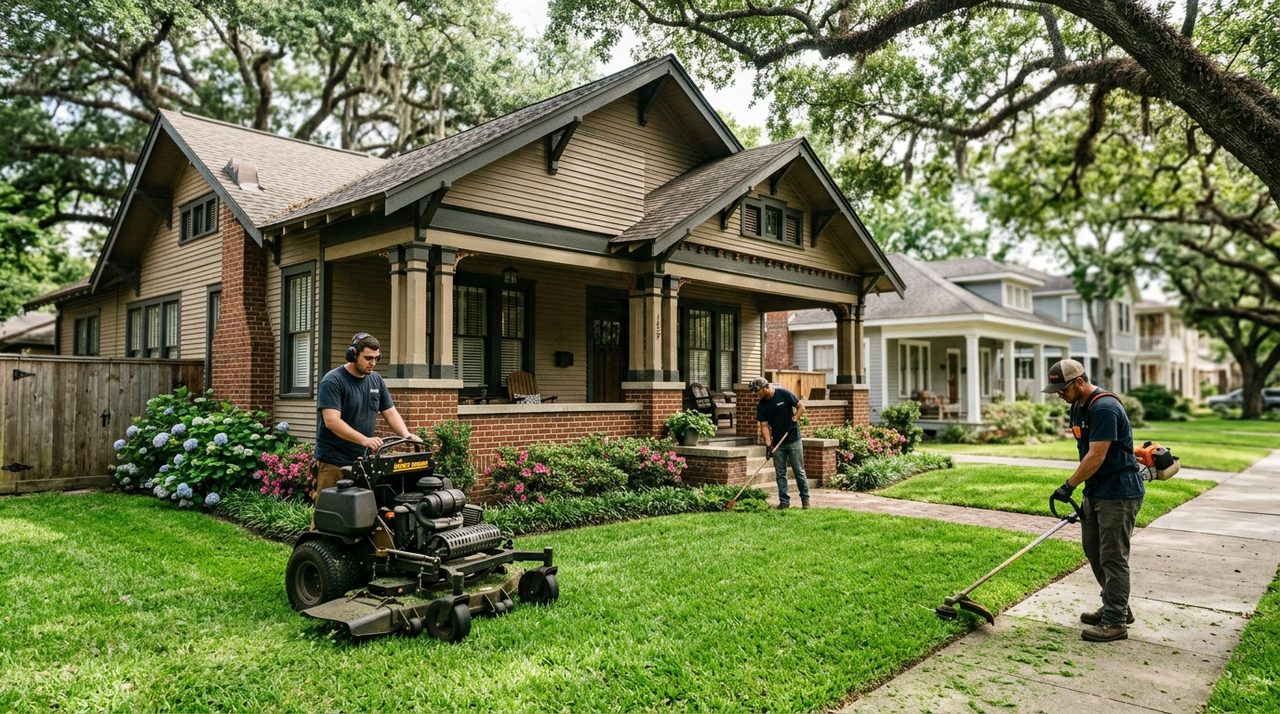
Ranked by verified Google rating × review volume × verification tier. How we rank →
Some highly-rated pros serve EaDo from nearby and may not keep a EaDo street address. Those are listed under "Also serving EaDo" with their real city and distance, so you always know where each business is based.
1231 Hahlo St, Houston, TX 77020
123 N Drennan St, Houston, TX 77003
Highly-rated pros based nearby who cover EaDo. Distance shown from the EaDo area.
Serving EaDo Based in River Oaks · 2 mi away
Serving EaDo Based in Lazybrook / Timbergrove · 2.4 mi away
Serving EaDo Based in Lazybrook / Timbergrove · 2.7 mi away
Serving EaDo Based in The Heights · 3.8 mi away
Serving EaDo Based in Galena Park · 4 mi away
Serving EaDo Based in South Houston · 4.1 mi away
Serving EaDo Based in The Heights · 4.1 mi away
Serving EaDo Based in The Heights · 4.3 mi away
Why it matters to you
EaDo has no single neighborhood-wide HOA. Your townhome may fall under the EaDo Square Townhome Association, the EADO Edge Homeowners Association, or no HOA at all — and the property next door could be governed entirely differently. Exterior landscape changes, including sod species, planting beds along shared fences, and container plantings visible from the street, may trigger an architectural review requirement that catches homeowners off guard after work is already installed.
What a good pro does
Before signing any landscaping contract, pull your parcel's deed restrictions from the Harris County Clerk records to confirm whether a development-specific HOA governs your lot and what its approval process requires. A landscaper experienced in EaDo will request those documents upfront, design to any approved-species or setback language in the covenants, and document HOA approval in writing before installation begins — protecting you from removal orders.
Sources: Local HOA / deed restrictions (see area profile), City of Houston Permitting Center
Why it matters to you
EaDo's modern townhomes were engineered for maximum square footage per parcel, leaving little graded buffer between structures. Houston's expansive Beaumont Black clay absorbs rainwater slowly, and on zero-lot-line sites the overflow from one property's beds or concrete hardscape drains directly into an adjacent owner's ground level. Even in EaDo's predominantly FEMA Zone X classification, Buffalo Bayou's influence means blocks nearest the bayou face sharply elevated parcel-level flash-flood risk after Gulf rain events.
What a good pro does
A qualified landscaper will measure existing grades across your full lot perimeter — not just the front bed — before specifying any drainage correction. For EaDo's tight footprints, channel drains along shared fence lines and direct outfall connections to City of Houston street drainage infrastructure are typically more practical than French drains requiring long horizontal runs. Confirm that any grading alteration affecting adjacent parcels complies with City of Houston drainage ordinances to avoid future liability.
Sources: Harris County Flood Control District, FEMA National Flood Hazard Layer (NFHL), City of Houston Permitting Center
Why it matters to you
The postage-stamp planting areas typical of EaDo townhomes look simple, but installing or modifying an irrigation system — even a small drip system for a front bed — requires a TCEQ-licensed Irrigator and a permit through the City of Houston's Houston Permitting Center. Homeowners frequently assume that because the lot is small or the work is minor, no license or permit applies; that assumption exposes them to unpermitted-work violations that complicate future sales.
What a good pro does
Verify that any landscaper proposing irrigation work either holds a TCEQ Irrigator license or will subcontract that specific scope to someone who does. The backflow prevention device required under TCEQ Chapter 344 must also be tested annually by a separately licensed Backflow Prevention Assembly Tester — ask your landscaper to provide documentation of both licenses and the City of Houston permit number before any irrigation trenching begins.
Sources: Texas Commission on Environmental Quality, City of Houston Permitting Center, Municipal permit office (see area profile)
Why it matters to you
Newer EaDo townhomes are nearly universally slab-on-grade, but older legacy structures on adjacent parcels may be pier-and-beam — and foundation type is not always obvious from the street. Planting a live oak, Chinese tallow, or large crepe myrtle within 10–15 feet of a slab without understanding where that slab actually sits relative to your property boundary can accelerate differential settlement by drawing moisture unevenly from Houston's clay soil, a dynamic that is especially pronounced on narrow EaDo infill lots where trees have limited horizontal root room.
What a good pro does
Request a site sketch from your landscaper that plots any proposed tree or large shrub against your confirmed foundation perimeter and property line — not just an approximation. On EaDo lots where foundation type is uncertain for older structures, a brief foundation assessment before planting a canopy tree is money well spent. Root barriers are a concrete mitigation option for lots where desired planting positions fall close to foundation edges.
Sources: International Residential Code (as adopted by City of Houston), Local HOA / deed restrictions (see area profile)
Hiring landscapers in EaDo? EaDo is a fast-evolving Inner Loop neighborhood dominated by newer townhome and condo developments interspersed with older commercial and residential parcels. Homeowners must verify HOA obligations, deed restrictions, and flood risk on a parcel-by-parcel basis, as there is no single neighborhood-wide governing structure. Contractors working here encounter a wide range of building vintages and systems, from brand-new construction to legacy structures requiring full-system upgrades.
Building era
Not confirmed from available sources — significant newer infill (2010s–2020s townhomes) alongside older legacy structures of varied vintage.
Typical style
Not confirmed neighborhood-wide — newer stock is predominantly modern townhome and condo construction; older parcels vary.
Foundations
Not confirmed — newer townhomes typically slab-on-grade, but older structures may include pier-and-beam; verify per parcel.
Common systems
Newer townhomes typically feature modern HVAC (high-efficiency split systems), PEX or copper plumbing, and updated electrical panels; older structures may have outdated systems requiring upgrades.
What that means for repairs
Renovation activity is driven by older parcels being redeveloped or updated to match the neighborhood's rapid gentrification. Interior remodels, full gut-rehabs of legacy structures, and new-build townhome fit-outs are all common.
Permit jurisdiction
City of Houston — Houston Permitting Center.
HOA & deed restrictions
No single neighborhood-wide mandatory HOA. Multiple development-specific mandatory HOAs exist, including EaDo Square Townhome Association and EADO Edge Homeowners Association. Many older single-family lots have no HOA. Deed restrictions vary by subdivision — check Harris County Clerk records for specific parcels.
Historic districts
No City of Houston historic district designation confirmed. Check the City of Houston historic-district map and parcel records for site-specific status.
Contractor note
Contractors must determine whether a specific property falls under a development HOA with architectural review requirements before beginning exterior work. Always verify deed restrictions and HOA bylaws at the parcel level, as adjacent properties may have entirely different governing structures.
FEMA flood zone
FEMA Zone X (low flood risk). EaDo is located east of Downtown Houston in proximity to Buffalo Bayou and its tributaries; while the FEMA designation indicates low risk, site-specific elevation and drainage conditions should be verified, especially for parcels closer to bayou corridors.
Hurricane Harvey impact
Not confirmed from available research whether EaDo experienced significant flooding during Hurricane Harvey 2017. Flood impact should be evaluated parcel-by-parcel using FEMA flood maps, elevation certificates, and Harris County Flood Control District records. No specific recurring-flood streets were identified in research.
Heat & humidity load
Houston's extreme summer heat and humidity place heavy demand on HVAC systems in newer townhomes with large window expanses and flat roofs. Newer construction generally handles moisture well, but older structures may face condensation, mold, and drainage issues. Flat-roof townhome designs require vigilant roof maintenance and drainage inspections during heavy summer rain events.
Working with contractors here
Contractors in EaDo most commonly work on newer townhome warranty-period punch lists, HVAC optimization for multi-story townhome layouts, and full renovations of older legacy structures being brought up to modern standards. The mix of building vintages means job scoping must account for whether a property is a 2020s new-build with builder-grade finishes or an older structure potentially requiring foundation evaluation, re-plumbing, and electrical panel upgrades. Multi-story townhome access can present challenges for exterior work, particularly with tight lot lines and shared walls. Contractors should always confirm HOA approval requirements before exterior modifications, as development-specific HOAs may require architectural review even for seemingly minor changes.
Local Tip
Always ask for a written estimate before work begins. Texas contractors are required to provide one on jobs over $1,000.
EaDo is a fast-evolving Inner Loop neighborhood dominated by newer townhome and condo developments interspersed with older commercial and residential parcels. Homeowners must verify HOA obligations, deed restrictions, and flood risk on a parcel-by-parcel basis, as there is no single neighborhood-wide governing structure. Contractors working here encounter a wide range of building vintages and systems, from brand-new construction to legacy structures requiring full-system upgrades.
Source: U.S. Census Bureau, ACS 5-Year 2023
Most of EaDo maps to FEMA Zone X (low mapped flood risk), but Houston's flash-flood reality means even low-risk blocks benefit from smart drainage and storm-hardened installs; risk climbs sharply on blocks nearest Buffalo Bayou, where it varies parcel to parcel.
Source: FEMA National Flood Hazard Layer (NFHL). Flood zones vary by parcel — verify your individual FIRM panel.
Sources: City of Houston Permitting Center
Sources: Local HOA / deed restrictions (see area profile)
Sources: FEMA National Flood Hazard Layer (NFHL)Harris County Flood Control District