Open Now
1014 61st St Ste 1, Galveston, TX 77551
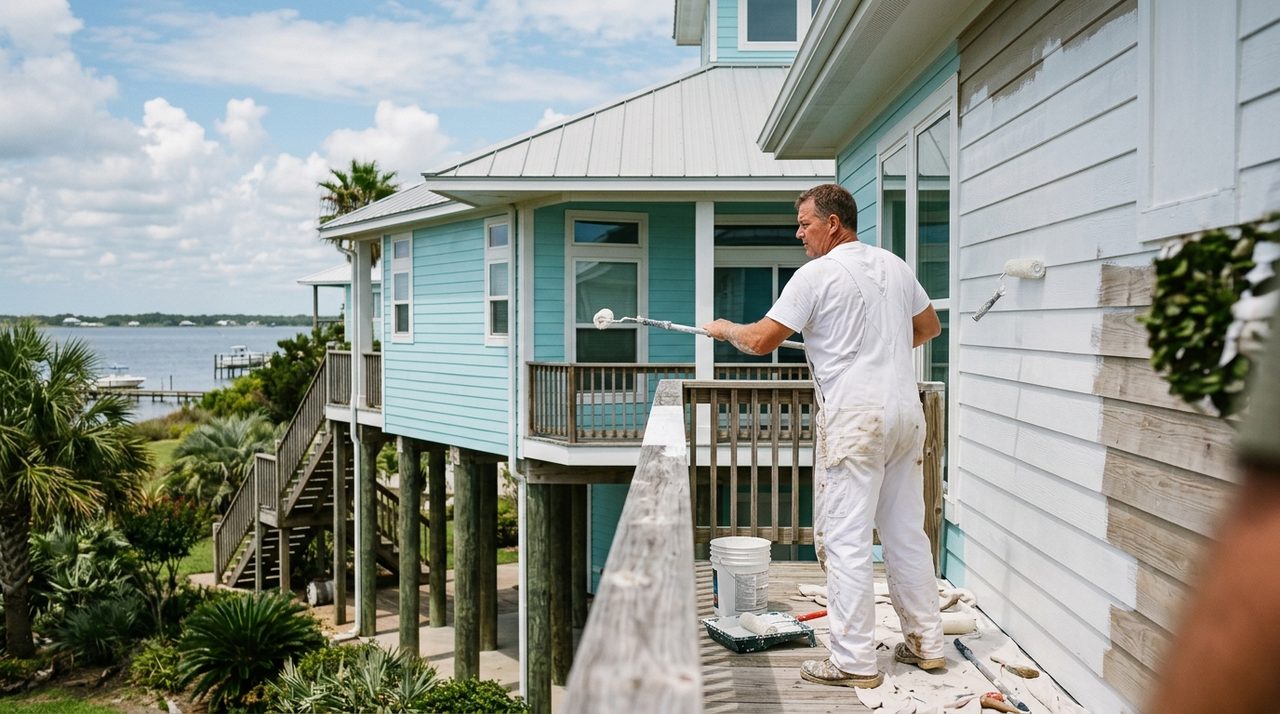
Painting a home on Galveston Island means fighting salt air, coastal humidity, and storm-driven flood damage simultaneously — conditions that can strip an exterior paint job in 18 months if materials and prep aren't chosen for marine-adjacent exposure. With a housing stock ranging from 1880s Victorian landmarks in the historic core to modern raised beach houses, and permit authority resting with the City of Galveston Development Services Department rather than any Houston office, the right approach here looks nothing like an inland repaint.
Ranked by verified Google rating × review volume × verification tier. How we rank →
Some highly-rated pros serve Galveston from nearby and may not keep a Galveston street address. Those are listed under "Also serving Galveston" with their real city and distance, so you always know where each business is based.
1014 61st St Ste 1, Galveston, TX 77551
3004 Kleimann Ave, Galveston, TX 77551
622 Kempner St Suite 212, Galveston, TX 77550
6341 Stewart Rd #400, Galveston, TX 77551
2128 Postoffice St, Galveston, TX 77550
1428 23rd St, Galveston, TX 77550
Highly-rated pros based nearby who cover Galveston. Distance shown from the Galveston area.
Serving Galveston Based in La Marque · 5.5 mi away
Why it matters to you
Galveston's proximity to the Gulf means airborne salt aerosols continuously deposit on exterior surfaces, accelerating oxidation of paint binders and causing blistering, chalking, and delamination on the island's abundant wood-clad Victorian and Gulf Coast vernacular homes. South- and east-facing elevations facing the prevailing onshore breeze are particularly vulnerable; homeowners in the East End and Strand historic neighborhoods routinely see paint failure in under two years when standard interior-grade latex is applied without proper priming.
What a good pro does
A qualified painter working on Galveston Island should specify a marine-grade or 100% acrylic elastomeric topcoat rated for coastal salt exposure — products in this category are formulated with UV-stable resins and tighter film builds than standard exterior latex. Surface prep must include a thorough pressure-wash to remove salt residue and chalking before any primer is applied; skipping this step means the new coating bonds to contaminated substrate and fails at the same rate as the old paint. All bare wood should receive a penetrating alkyd primer before topcoating, since alkyd primers resist moisture vapor migration better than latex-only systems in the island's persistently high relative humidity.
Sources: International Residential Code (as adopted by City of Houston), Municipal permit office (see area profile)
Why it matters to you
Galveston sits entirely within FEMA Zone AE, and repeated Gulf surge events — Harvey 2017, Imelda 2019, and Beryl 2024 — have left mineral tide lines, mold-stained drywall paper, and compromised gypsum board facing throughout the island's lower-elevation housing stock. Painting over these surfaces without moisture testing and mold-encapsulant primer leads to bleed-through staining and recurring mold growth within months, a failure pattern documented extensively in post-Harvey gut-and-repaint jobs across the Texas coast. With 46.7 percent owner-occupancy on the island, many affected homes are also rental or seasonal properties where damage may go undetected between visits.
What a good pro does
Before any paint is applied in a post-flood Galveston interior, a competent painter should verify that drywall moisture readings are at or below 12 percent using a calibrated moisture meter — painting over wet or damp gypsum simply traps the problem. All surfaces with visible mold or tide-line staining should receive an antimicrobial encapsulant primer (such as Zinsser Mold Killing Primer or equivalent) before finish coats; this is separate from and in addition to drywall replacement where paper facing is delaminated. Post-flood repaint jobs bundled with drywall replacement may trigger a permit from the City of Galveston Development Services Department, so homeowners should confirm the scope with that office before work begins.
Sources: FEMA National Flood Hazard Layer (NFHL), Municipal permit office (see area profile), International Residential Code (as adopted by City of Houston)
Why it matters to you
The island's historic residential neighborhoods — the East End, Midtown, and the Broadway corridor — contain substantial numbers of homes built well before 1978, and the median year built for Galveston's housing stock is 1973, meaning a significant share of the city's homes fall under EPA Renovation, Repair, and Painting (RRP) Rule requirements. Under 40 CFR 745, any firm disturbing painted surfaces in a pre-1978 home must be EPA Lead-Safe Certified, and individual renovators must hold an RRP Renovator credential — rules that apply regardless of whether the home is in a City of Galveston local historic district or not. Homeowners preparing Victorian properties for resale have additional disclosure obligations if lead-based paint is known or reasonably assumed to be present.
What a good pro does
Verify that any painting contractor you hire for a pre-1978 Galveston home holds current EPA Lead-Safe Firm certification, which is searchable on the EPA's online database. The firm must use containment systems, HEPA vacuuming, and proper waste disposal — not just masking tape and a drop cloth — when stripping, sanding, or cutting through old painted surfaces. These protocols add real cost to surface prep, typically pushing exterior repaint estimates toward the upper end of the $4,500–$8,500 range for older island homes, but they are legally required and protect both your family and future buyers.
Sources: EPA Lead Renovation, Repair and Painting (RRP) Rule, Municipal permit office (see area profile)
Why it matters to you
The City of Galveston maintains its own local historic preservation program with designated historic districts governed entirely by Galveston's municipal ordinances — this is completely separate from Houston's Historic Preservation Office or the Houston Archaeological and Historical Commission, which have no jurisdiction on the island. Homeowners in designated Galveston historic districts who want to repaint with a new color scheme may need approval from the City's preservation review process before work begins; submitting the wrong color palette or starting without review can result in required correction at the homeowner's expense. Unlike some Houston-area HOA communities where approval delays run two to six weeks, Galveston's historic review timeline and required documentation vary by district and should be confirmed directly with the City of Galveston Development Services Department.
What a good pro does
Before selecting exterior paint colors for a home in one of Galveston's local historic districts, contact the City of Galveston Development Services Department to determine whether your specific property requires preservation review and what color documentation — paint chips, product data sheets, or a formal color submittal — is required. A painter experienced on the island will know which blocks and street corridors fall within designated areas and can factor the review timeline into the project schedule rather than discovering the requirement after materials are purchased. Texas does not license painters as a standalone trade through TDLR, so the only formal checkpoints on a Galveston repaint job are the City's own permit and preservation review requirements.
Sources: Municipal permit office (see area profile), Local HOA / deed restrictions (see area profile), Texas Department of Licensing & Regulation
Hiring painters in Galveston? Galveston's housing stock spans from historic 19th-century Victorian homes to modern beach developments, creating an exceptionally diverse home service landscape. Homeowners must contend with persistent salt air corrosion, high flood risk across much of the island, and hurricane exposure that drives demand for wind-resistant roofing, elevated foundations, and robust moisture management. Permit jurisdiction falls under the City of Galveston Development Services Department or Galveston County, never the City of Houston Permitting Center.
Building era
Highly mixed — 1800s historic core through 21st-century beach and master-planned construction.
Typical style
Mix of Victorian, Gulf Coast vernacular, raised beach houses, mid-century ranch, and modern coastal developments; no single dominant style across the area.
Foundations
Mixed — many historic and coastal homes on pier-and-beam or raised pilings; newer mainland construction often slab-on-grade. Not confirmed at subdivision level — check property records.
Common systems
Older homes may have outdated electrical and galvanized plumbing requiring upgrades; coastal properties require corrosion-resistant HVAC equipment rated for salt air environments; newer builds typically feature modern central HVAC and PEX or copper plumbing.
What that means for repairs
Historic restoration is common in Galveston's core; coastal properties frequently undergo elevation projects, hurricane hardening, and replacement of salt-air-corroded exterior systems. Flood damage repair drives significant renovation activity across all housing types.
Permit jurisdiction
City of Galveston Development Services Department (within city limits); individual incorporated cities handle their own permitting elsewhere in Galveston County; unincorporated areas fall under Galveston County jurisdiction. Not the City of Houston Permitting Center.
HOA & deed restrictions
No county-wide mandatory HOA. HOAs exist at the subdivision, condo, and master-planned community level. Many single-family homes in Galveston have no HOA. Check deed restrictions recorded with the Galveston County Clerk for specific properties.
Historic districts
No City of Houston historic district designation — Galveston is outside Houston's jurisdiction. The City of Galveston maintains its own historic preservation program and local historic districts, governed by Galveston's ordinances separate from Houston's HAHC.
Contractor note
Contractors must verify whether work falls within City of Galveston, another incorporated Galveston County city, or unincorporated county jurisdiction, as permitting requirements and floodplain regulations differ significantly. Properties in local historic districts within the City of Galveston may require additional preservation review separate from any Houston process.
FEMA flood zone
FEMA Zone AE (high flood risk) — source: fema_nfhl. Galveston's island geography and coastal exposure create significant flood risk from both storm surge and rainfall. Proximity to the Gulf of Mexico and Galveston Bay compounds risk across most of the area.
Hurricane Harvey impact
Hurricane Harvey's flood impacts in Galveston County were highly localized and varied by precise location — bayfront vs. mainland interior, creek proximity, and elevation. Specific street-level flooding data for this area could not be confirmed without a more precise subdivision or address — check FEMA Harvey flood inundation maps and Galveston County floodplain administrator reports for property-specific history.
Heat & humidity load
Extreme humidity and salt air accelerate corrosion of HVAC condensers, metal roofing components, and exterior fasteners. Summer heat combined with coastal moisture drives high demand for dehumidification, mold remediation, and HVAC maintenance. Prolonged UV exposure degrades exterior paint and sealants faster than inland areas.
Working with contractors here
Contractors in Galveston most commonly work on flood damage repair, foundation elevation projects, hurricane-hardening (impact windows, fortified roofing), and replacement of salt-air-corroded exterior systems including HVAC condensers, metal railings, and fasteners. The wide range of housing eras means contractors must be prepared for both historic restoration requiring period-appropriate materials and modern coastal construction techniques. Job scoping should always include assessment of flood history, current elevation relative to base flood elevation, and whether the property falls within a City of Galveston historic district requiring preservation review. Corrosion-resistant materials and marine-grade hardware should be specified as standard for any exterior work.
Local Tip
Always ask for a written estimate before work begins. Texas contractors are required to provide one on jobs over $1,000.
Galveston's housing stock spans from historic 19th-century Victorian homes to modern beach developments, creating an exceptionally diverse home service landscape. Homeowners must contend with persistent salt air corrosion, high flood risk across much of the island, and hurricane exposure that drives demand for wind-resistant roofing, elevated foundations, and robust moisture management. Permit jurisdiction falls under the City of Galveston Development Services Department or Galveston County, never the City of Houston Permitting Center.
Source: U.S. Census Bureau, ACS 5-Year 2023
On Galveston Island, storm surge and Gulf wind are the defining hazards: much of Galveston sits in FEMA Zone AE coastal high-hazard territory, so wind-rated, elevation- and surge-aware work is the baseline, not an upgrade.
Source: FEMA National Flood Hazard Layer (NFHL). Flood zones vary by parcel — verify your individual FIRM panel.
Sources: Municipal permit office (see area profile)
Sources: EPA Lead Renovation, Repair and Painting (RRP) Rule
Sources: Local HOA / deed restrictions (see area profile)Municipal permit office (see area profile)