Closed
9835 Whithorn Dr, Houston, TX 77095
Jersey Village's housing stock — predominantly 1960s–1980s brick ranch and two-story homes sitting on slab-on-grade foundations in FEMA Zone AE — creates a precise set of painting challenges that go well beyond picking a color: White Oak Bayou flood events leave mineral tide lines and mold-stained drywall that bleed through standard primers, while the Houston Black clay soil under every slab telegraphs seasonal cracks straight through exterior brick mortar joints and interior drywall. Because Jersey Village is an independent municipality, any painting work bundled with moisture remediation or structural patching requires permits pulled through the City of Jersey Village's own building office — not the Houston Permitting Center, not Harris County.
Ranked by verified Google rating × review volume × verification tier. How we rank →
Some highly-rated pros serve Jersey Village from nearby and may not keep a Jersey Village street address. Those are listed under "Also serving Jersey Village" with their real city and distance, so you always know where each business is based.
9835 Whithorn Dr, Houston, TX 77095
9742 Whithorn Dr suite a, Houston, TX 77095
9818 La Vista Dr, Houston, TX 77041
9627 Cedar Bluff Dr, Houston, TX 77064
10670 Jones Rd, Houston, TX 77065
Highly-rated pros based nearby who cover Jersey Village. Distance shown from the Jersey Village area.
Serving Jersey Village Based in NW Houston · 0.3 mi away
Serving Jersey Village Based in NW Houston · 0.9 mi away
Serving Jersey Village Based in NW Houston · 4.5 mi away
Serving Jersey Village Based in Champions Forest · 5.5 mi away
Serving Jersey Village Based in Spring Branch · 5.6 mi away
Why it matters to you
Because much of Jersey Village sits in FEMA Zone AE along White Oak Bayou tributaries, homes here have repeatedly taken on water — from Harvey (2017) to Beryl (2024). Standard latex paint rolled over mineral tide lines or mold-discolored drywall paper will show the stain again within months, and mold spores embedded in compromised gypsum facing will continue growing behind the finish coat. In a 1970s ranch home where original drywall paper facing has been wetted multiple times, this is not a cosmetic shortcut — it is a health and structural issue.
What a good pro does
A qualified painter working in Jersey Village's flood-prone sections should moisture-test wall cavities before any primer goes on, apply a mold-encapsulant primer (such as Zinsser Mold Killing Primer or equivalent) to all affected surfaces, and use a stain-blocking oil-based or shellac primer over mineral tide lines before finish coats. If drywall paper facing has separated or the core is soft, the section needs replacement before paint — post-flood gut-and-repaint work with encapsulant treatment typically runs $4–$8 per square foot of treated wall surface, separate from drywall replacement costs (estimate only). Any repair work that includes drywall replacement requires a permit from the City of Jersey Village's building department, not from Houston.
Sources: FEMA National Flood Hazard Layer (NFHL), Municipal permit office (see area profile)
Why it matters to you
Every home in Jersey Village sits on the same expansive Houston Black clay that shifts up to an inch or two seasonally as the soil wets and dries. That movement telegraphs through slab-on-grade foundations into interior drywall — hairline cracks at ceiling corners, step cracks at door headers — and through brick veneer mortar joints on the exterior. Homeowners who fill and repaint these cracks with standard joint compound and rigid paint find them reopening within a single dry season, often within months of the job.
What a good pro does
Interior crack repairs in 1960s–80s Jersey Village homes should use a fiber-mesh tape embed with a flexible setting compound before paint, not a simple skim coat. On brick-veneer exteriors, failed mortar joints should be tuckpointed before any paint or sealer is applied; painting over open mortar channels traps moisture that accelerates the next crack cycle. Where stucco or painted masonry is involved, elastomeric coatings rated for crack-bridging (typically 0.020 inches or greater) are the appropriate finish product. These prep steps add cost but are the difference between a repaint that lasts two years and one that lasts eight.
Sources: International Residential Code (as adopted by City of Houston)
Why it matters to you
Jersey Village's most established neighborhoods were built in the 1960s and 1970s — well before the 1978 federal ban on residential lead paint. If a painter sands, scrapes, or otherwise disturbs painted surfaces in these homes, the EPA Renovation, Repair, and Painting (RRP) Rule under 40 CFR 745 requires the firm to be EPA Lead-Safe Certified and the on-site renovator to hold an individual RRP Renovator certification. This applies to the brick window surrounds, interior trim, doors, and painted walls common in these ranch-style homes — not just obvious peeling paint. Families with children under 6 or pregnant occupants face the greatest exposure risk, and sellers have disclosure obligations.
What a good pro does
Before signing any contract for exterior prep or interior repaint in a pre-1978 Jersey Village home, confirm that the painting firm holds a current EPA Lead-Safe Certification — verifiable through the EPA's online contractor search. Certified renovators use plastic sheeting containment, HEPA vacuums, and regulated waste disposal rather than shop vacs and curbside trash bags. This adds legitimate cost; exterior lead-paint encapsulation or prep on a 1970s brick ranch pushes exterior repaint estimates toward the higher end of the $3,500–$7,500 range (estimate only). Texas does not license painters through TDLR, so EPA RRP certification is the primary credential to verify on pre-1978 homes.
Sources: EPA Lead Renovation, Repair and Painting (RRP) Rule, Texas Department of Licensing & Regulation
Why it matters to you
Jersey Village is an independent city with its own building codes, permit desk, and inspection schedule — contractors who default to the Houston Permitting Center or assume Harris County unincorporated rules apply here will cause delays and potential stop-work orders. Most standalone cosmetic repaints (walls only, no substrate repair) do not require a permit. But in post-flood restoration work — which is extremely common in this FEMA AE community — painting is almost always bundled with drywall replacement, framing repairs, or moisture-barrier installation, all of which do require permits from the City of Jersey Village.
What a good pro does
When scoping a post-flood or major renovation repaint in Jersey Village, ask the contractor explicitly which portions of the work require a permit and whether they are registered to pull permits through the City of Jersey Village building department. A firm that only knows the Houston Permitting Center's online portal will need extra lead time to navigate Jersey Village's process. Budget 1–2 weeks for permit issuance on combination repair-and-repaint jobs, and confirm the final inspection is scheduled before the job is considered closed. This is procedural, not onerous — it simply requires a contractor who has done work in this specific city before.
Sources: Municipal permit office (see area profile), City of Houston Permitting Center
Hiring painters in Jersey Village? Jersey Village is an independent municipality with a housing stock predominantly built between the 1960s and 1980s, featuring ranch-style and traditional brick homes on concrete slab foundations. Homeowners face significant flood risk due to proximity to White Oak Bayou and tributaries, making drainage, foundation maintenance, and flood mitigation among the most critical home service needs. The city handles its own code enforcement and permitting, so contractors must work through the City of Jersey Village rather than Houston or Harris County offices.
Building era
1960s–1980s, with some later infill construction.
Typical style
Ranch-style and traditional two-story brick homes with attached garages; suburban production architecture typical of northwest Houston.
Foundations
Slab-on-grade (dominant); pier-and-beam may exist on rare older or custom structures but is not documented.
Common systems
Original homes likely have copper or galvanized steel plumbing (transitioning to CPVC/PEX in later builds), R-22 refrigerant HVAC systems nearing or past end of life, and 100–200 amp electrical panels. Many systems in this era are candidates for full replacement.
What that means for repairs
Kitchen and bathroom remodels are common as homeowners update 40–60-year-old finishes. Re-piping from galvanized to PEX, HVAC upgrades to modern refrigerant systems, and flood-related restoration work (raised electrical panels, moisture-resistant materials) are frequent renovation drivers.
Permit jurisdiction
City of Jersey Village Permitting (independent municipality – permits are not issued through Houston Permitting Center or Harris County).
HOA & deed restrictions
No mandatory city-wide HOA for core Jersey Village neighborhoods; property standards are enforced through city code enforcement and deed restrictions. The Park at Jersey Village HOA exists but appears to be a separate, newer subdivision not located in the traditional Jersey Village city limits. Specific section-level deed restrictions may exist but were not confirmed in public records.
Historic districts
No City of Houston historic district designation confirmed. Jersey Village is an independent city and not subject to HAHC review.
Contractor note
Contractors must obtain permits through the City of Jersey Village, which has its own building codes, inspections, and zoning requirements separate from both Houston and Harris County. Familiarity with the city's specific permit process and code enforcement standards is essential.
FEMA flood zone
FEMA Zone AE (high flood risk) — source: fema_nfhl. Jersey Village is situated near White Oak Bayou and associated tributaries, placing much of the community in a designated high-risk floodplain with base flood elevations established.
Hurricane Harvey impact
Jersey Village is in a bayou-adjacent northwest Harris County area that experienced flooding during Hurricane Harvey, though a precise street-by-street damage assessment specific to the City of Jersey Village was not confirmed in available public records. The White Oak Bayou corridor and tributaries in this area flooded significantly. Homeowners should check HCFCD flood layers, FEMA FIRM maps, and property-level flood loss history (CLUE reports) for individual address risk.
Heat & humidity load
Houston's extreme summer heat and humidity place heavy demand on aging HVAC systems common in 1960s–80s homes, often triggering emergency repairs or full system replacements. Slab foundations in clay-heavy soils can shift with summer drought cycles, and prolonged moisture from summer storms combined with Zone AE flood risk can lead to mold, moisture intrusion, and recurring drainage issues.
Working with contractors here
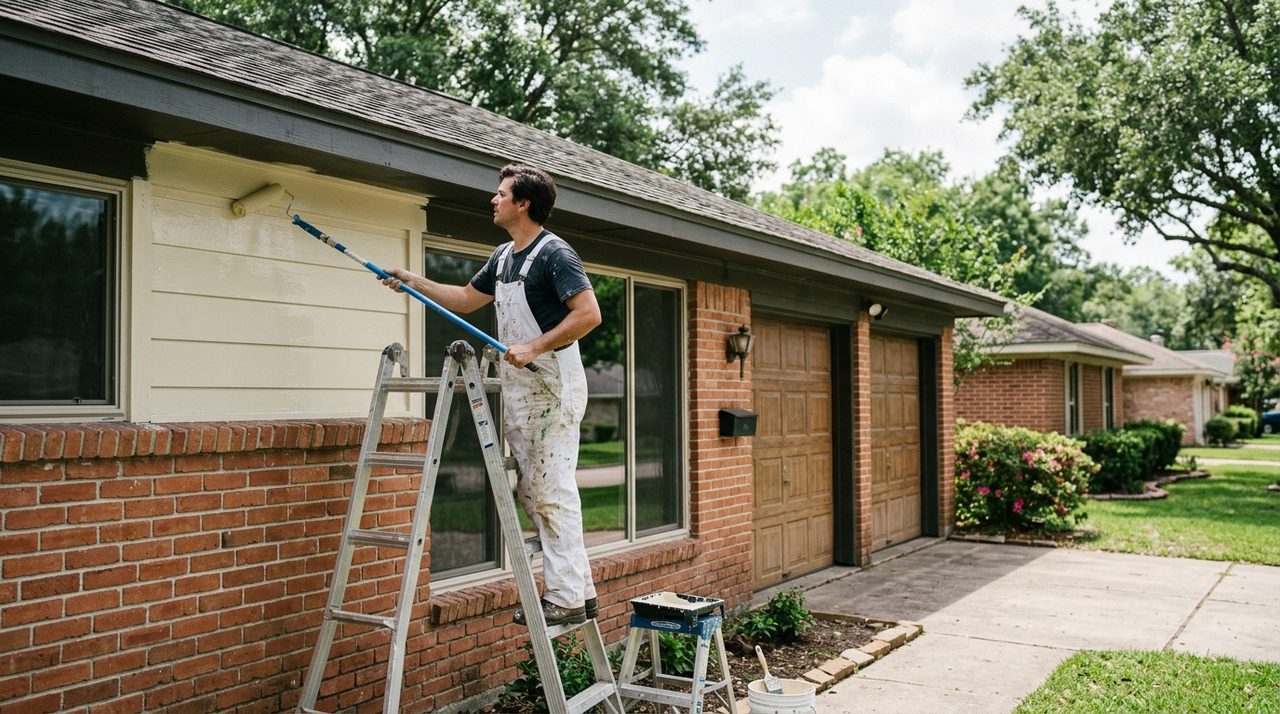
Contractors in Jersey Village most commonly work on HVAC replacement, re-piping, foundation repair, and flood damage restoration driven by the aging 1960s–80s housing stock and high flood risk. Slab foundation repair is a frequent need as expansive clay soils shift seasonally, and many homes still have original galvanized plumbing requiring full re-pipes. Flood mitigation work—including raising electrical panels, installing sump systems, and replacing flood-damaged drywall and flooring with moisture-resistant materials—is a significant segment of the local market. Because Jersey Village is an incorporated city with its own permitting authority, contractors unfamiliar with the area should budget time for the city's specific inspection and permit processes rather than defaulting to Houston or Harris County procedures. Roofing and exterior work on 40–60-year-old brick veneer homes is also common, particularly after severe weather events.
Local Tip
Always ask for a written estimate before work begins. Texas contractors are required to provide one on jobs over $1,000.
Jersey Village is an independent municipality with a housing stock predominantly built between the 1960s and 1980s, featuring ranch-style and traditional brick homes on concrete slab foundations. Homeowners face significant flood risk due to proximity to White Oak Bayou and tributaries, making drainage, foundation maintenance, and flood mitigation among the most critical home service needs. The city handles its own code enforcement and permitting, so contractors must work through the City of Jersey Village rather than Houston or Harris County offices.
Source: U.S. Census Bureau, ACS 5-Year 2023
Much of Jersey Village maps to FEMA Zone AE (high flood risk), so flood-resilient detailing -- elevated equipment, water-tolerant materials, and drainage-first thinking -- is essential here, not optional.
Source: FEMA National Flood Hazard Layer (NFHL). Flood zones vary by parcel — verify your individual FIRM panel.
Sources: Municipal permit office (see area profile)
Sources: EPA Lead Renovation, Repair and Painting (RRP) Rule
Sources: Local HOA / deed restrictions (see area profile)