Closed
Serving Clute Based in Lake Jackson · 1.7 mi away
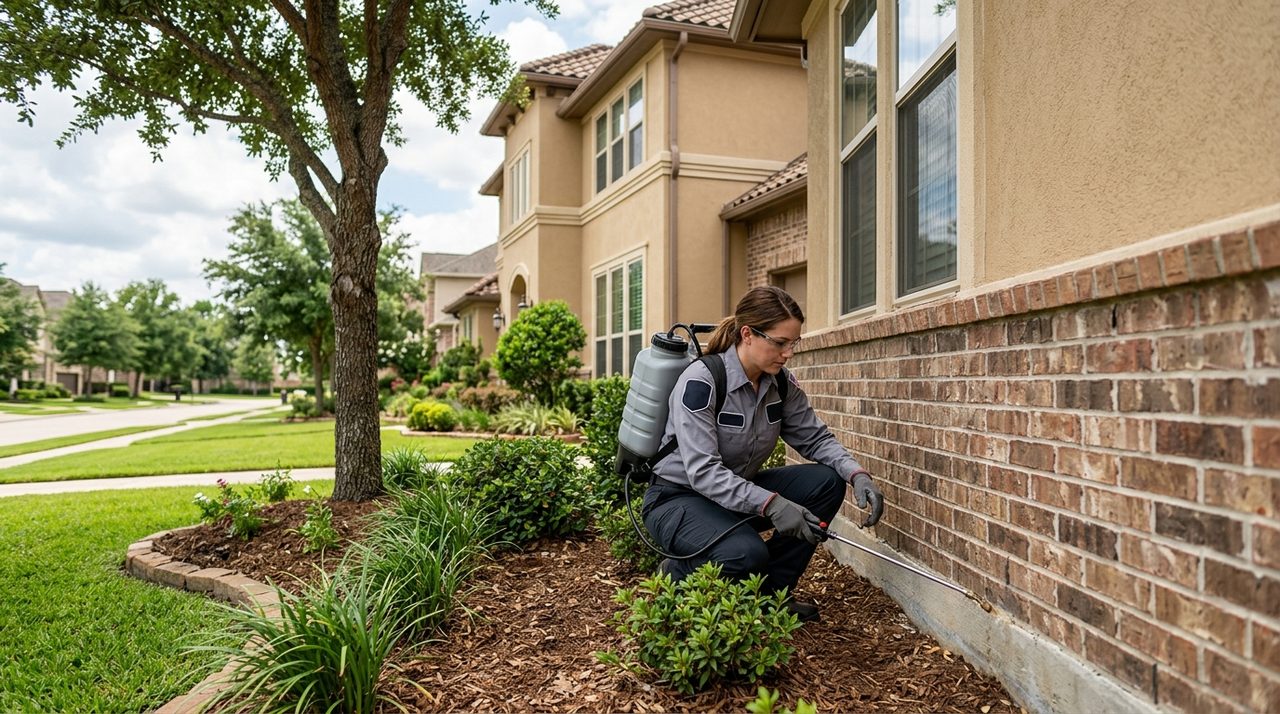
Clute's 1950s–1980s brick ranch homes on Brazoria County's coastal clay sit at the crossroads of Gulf humidity, aging slab-on-grade construction, and a Brazosport petrochemical landscape where standing water after Gulf storms lingers for days — conditions that make pest pressure a year-round operational reality, not a seasonal afterthought. Brick veneer weep holes, original galvanized plumbing penetrations, and decades-old expansion joints give termites and rodents direct soil-to-structure access in ways newer homes rarely experience. Understanding which pressures are specific to Clute's housing era and low-lying coastal setting helps homeowners spend their pest-control dollars where they actually matter.
Ranked by verified Google rating × review volume × verification tier. How we rank →
Some highly-rated pros serve Clute from nearby and may not keep a Clute street address. Those are listed under "Also serving Clute" with their real city and distance, so you always know where each business is based.
Highly-rated pros based nearby who cover Clute. Distance shown from the Clute area.
Serving Clute Based in Lake Jackson · 1.7 mi away
Why it matters to you
Clute's predominant housing stock — single-story brick ranch homes built between the 1950s and 1980s — was constructed before modern termiticide pre-treatment standards were common in Brazoria County. Decades of Beaumont/Houston clay movement have widened expansion joints and plumbing penetrations in these slab-on-grade homes, giving Coptotermes formosanus and Reticulitermes species direct, unobstructed soil-to-wood pathways. Houston sits in USDA termite pressure Zone 5, and Clute's proximity to the Gulf means soil stays warm and moist enough to support colony activity well outside spring swarm season.
What a good pro does
A TDLR-licensed pest control operator with a termite category endorsement should perform a thorough slab-perimeter inspection, checking weep holes, plumbing sleeves, and any post-Uri or post-Harvey repaired utility chases for evidence of mud tubes or frass. Liquid barrier treatment (Termidor-type, estimated $800–$1,800 for a typical Clute ranch footprint) or a Sentricon-type bait station program (estimated $1,200–$2,000 installed plus $300–$500/year monitoring) are both viable; the right choice depends on existing conducive conditions around each home's specific foundation perimeter.
Sources: Texas Department of Licensing & Regulation, FEMA National Flood Hazard Layer (NFHL)
Why it matters to you
Homes built in Clute during the 1960s and 1970s frequently retain original galvanized or early copper drain lines with aging floor-penetration seals — exactly the entry points Periplaneta americana use to migrate indoors after heavy Gulf Coast rain events displace them from storm and sanitary sewer lines. Clute's flat coastal topography means post-storm drainage moves slowly, keeping sewer infrastructure saturated longer than it would in a higher-elevation community, prolonging the displacement pressure that drives roaches inside. Interior spray treatments alone cannot resolve an infestation that re-enters continuously through unsealed slab penetrations.
What a good pro does
An effective treatment plan for a 1960s–1970s Clute ranch home combines exterior perimeter exclusion — sealing weep holes and plumbing penetrations with copper mesh and appropriate caulk — with drain-pipe gel bait applications and a targeted residual treatment along the foundation. A TDLR-licensed technician working under a Certified Applicator should inspect the utility-side of the slab before treating, since re-infestation rates drop sharply when the entry pathway itself is addressed rather than just the interior population. Quarterly recurring service (estimated $40–$70 per visit) is more cost-effective than repeated one-time treatments in homes with unresolved penetration gaps.
Why it matters to you
Even though most of Clute maps to FEMA Zone X (low mapped flood risk), the area's coastal clay soil holds standing water in low spots and along fence lines for 72 hours or more after a Gulf tropical event — prime habitat for Aedes aegypti and Culex quinquefasciatus. Beryl's July 2024 track through the Brazosport coast and the recurring named-storm pattern in Brazoria County mean this is not a hypothetical: after each event, stagnant water in yard depressions, clogged downspout splash zones, and pooled slab-adjacent areas can sustain mosquito breeding cycles for weeks. Harris County Mosquito Control District aerial spraying does not extend to Brazoria County private yards, leaving Clute homeowners with no public backstop for their own property.
What a good pro does
A licensed pest control operator should begin with a property-specific source-reduction walkthrough — identifying clay-retention low spots, debris-holding landscape features, and any slab-adjacent soil grading that concentrates water near the structure — before applying larvicide to standing water that cannot be eliminated and a barrier perimeter spray to vegetation. Monthly barrier spray programs during mosquito season typically run $75–$150 per application and are more effective in Clute's clay-retention environment when paired with homeowner action on drainage grading. Confirm the operator holds a TDLR general household pest or public health pest control category endorsement covering mosquito services.
Sources: Texas Department of Licensing & Regulation, FEMA National Flood Hazard Layer (NFHL), Harris County Flood Control District
Why it matters to you
Clute's brick veneer ranch homes — built when weep hole design prioritized wall drainage over pest exclusion — present an almost continuous ground-level entry opportunity for Rattus norvegicus and Mus musculus. Clay-soil seasonal movement in Brazoria County repeatedly reopens gaps around plumbing penetrations and garage slab edges, and homes that underwent post-Harvey or post-Beryl utility repairs may have utility chases that were never properly resealed after the remediation work. Active construction in Clute's newer 1990s–2020s tracts nearby displaces rodent populations that then probe older ranch-home perimeters for harborage.
What a good pro does
Rodent exclusion in a Clute brick ranch should address the weep-hole line systematically — commercially available weep-hole covers allow drainage while blocking entry — and include a physical inspection of every plumbing sleeve and garage door sweep for gaps exceeding a quarter inch. A TDLR-licensed rodent-category operator should set tamper-resistant exterior bait stations and interior snap traps as a population reduction measure, then revisit slab-perimeter sealing after the first follow-up inspection confirms active pathways. Full exclusion plus interior treatment in a typical Clute home is estimated at $400–$900, and skipping the exclusion step reliably leads to re-infestation within one season on these soil-movement-prone slabs.
Sources: Texas Department of Licensing & Regulation, Texas Windstorm Insurance Association (TWIA)
Hiring pest control in Clute? Clute is an incorporated Brazoria County city anchored by the Brazosport petrochemical corridor, with a housing stock largely built from the 1950s through the 1980s. Homeowners here contend with Gulf Coast humidity, low-lying drainage challenges, and aging ranch-style homes that frequently need roof, HVAC, and plumbing updates. Permit work runs through the City of Clute rather than Houston or the county, and individual subdivisions may carry their own deed restrictions or HOAs.
Building era
Primarily 1950s–1980s, with some newer 1990s–2020s subdivisions.
Typical style
Single-story ranch-style brick veneer homes dominate; later tracts feature contemporary suburban brick-and-siding designs; manufactured homes appear on semi-rural parcels.
Foundations
Predominantly slab-on-grade for post-1960 tract homes; some older pre-1960 frame houses and manufactured homes use pier-and-beam or block/pier systems.
Common systems
Original homes often have galvanized or copper plumbing, aging electrical panels (60–100 amp in older stock), and central HVAC units that may be undersized or past service life. Ductwork in attics is common and vulnerable to heat-related deterioration.
What that means for repairs
Kitchen and bathroom remodels in 1960s–1970s ranch homes are common, along with full HVAC replacements, re-roofing, and plumbing repiping to replace galvanized lines. Some homeowners elevate or flood-proof structures after repeated storm events.
Permit jurisdiction
City of Clute Permitting — Clute is an incorporated city with its own building codes, permits, and inspections independent of Houston or Brazoria County.
HOA & deed restrictions
No single city-wide mandatory HOA governs Clute. Individual subdivisions (e.g., Woodshore and others) may have their own mandatory HOAs or deed restrictions. Some older areas have no active association and rely solely on city code enforcement. Specific subdivision names are needed to confirm HOA status.
Historic districts
No City of Houston historic district designation confirmed. Clute is an independent city with no known local historic district overlay.
Contractor note
Contractors must pull permits through the City of Clute and comply with local building codes. Individual subdivisions may impose additional architectural or material restrictions via deed covenants, so confirming HOA requirements before starting exterior work is advisable.
FEMA flood zone
FEMA Zone X (low flood risk) per official NFHL data. However, Clute is relatively low-lying and traversed by drainageways; some parcels elsewhere in the city fall within Special Flood Hazard Areas. Proximity to Oyster Creek and coastal drainage corridors warrants parcel-level verification.
Hurricane Harvey impact
Brazoria County experienced major flooding during Hurricane Harvey in 2017, particularly along the Brazos River corridor and low-lying areas. Clute, in the Brazosport area, saw flooding but was not among the most devastated Brazoria County communities (Rosharon, parts of Angleton, and rural Brazos River subdivisions were harder hit). Specific street-level Harvey flood data for Clute is not well-documented in public sources — parcel-level FEMA claims data or Brazoria County records should be consulted for individual addresses.
Heat & humidity load
Gulf Coast humidity and extreme summer heat stress aging HVAC systems and accelerate attic ductwork deterioration in slab-on-grade ranch homes. Condensation issues and mold risk are elevated, especially in homes with original insulation and ventilation. Coastal proximity increases salt-air corrosion on exterior metals and roofing fasteners.
Working with contractors here
The most common jobs in Clute involve HVAC replacement, roof replacement, and plumbing repiping in 1960s–1980s ranch homes where original systems have reached or exceeded useful life. Slab foundation repair is a recurring need given the expansive clay soils and low-lying terrain. Exterior painting and siding repair are frequent due to Gulf Coast humidity and salt air exposure. Contractors should scope jobs assuming slab-on-grade construction unless confirmed otherwise, and should verify whether a specific subdivision's HOA requires architectural approval before beginning exterior modifications. Flood mitigation work — including French drains, grading improvements, and sump pump installations — is an emerging service need given the area's drainage challenges.
Local Tip
Always ask for a written estimate before work begins. Texas contractors are required to provide one on jobs over $1,000.
Clute is an incorporated Brazoria County city anchored by the Brazosport petrochemical corridor, with a housing stock largely built from the 1950s through the 1980s. Homeowners here contend with Gulf Coast humidity, low-lying drainage challenges, and aging ranch-style homes that frequently need roof, HVAC, and plumbing updates. Permit work runs through the City of Clute rather than Houston or the county, and individual subdivisions may carry their own deed restrictions or HOAs.
Source: U.S. Census Bureau, ACS 5-Year 2023
Most of Clute maps to FEMA Zone X (low mapped flood risk), but Houston's flash-flood reality means even low-risk blocks benefit from smart drainage and storm-hardened installs; as a Brazoria County coastal community, tropical surge and wind add a layer generic guidance misses.
Source: FEMA National Flood Hazard Layer (NFHL). Flood zones vary by parcel — verify your individual FIRM panel.
Houston-specific estimators to plan your project before you call a pro. All results are planning estimates — a licensed local pro confirms the details on site.
| Pest | Cadence | Active window |
|---|---|---|
Mosquito control A standard 4-week barrier treatment holds a typical suburban lot through Houston's core mosquito season. | Every 28 days | April – October |
Termite (subterranean) A once-a-year spring inspection is the baseline for a drier, sunnier Houston lot — catch mud tubes and swarmer wings before damage compounds. | Annual inspection | Spring |
General pest guard (roaches, ants, spiders) Houston's year-round warmth means general pests never fully die off — a quarterly perimeter treatment is the standard maintenance rhythm. | Quarterly | Mar · Jun · Sep · Dec |
This is a planning estimate only — actual requirements depend on an on-site assessment by a licensed Houston pro. Texas requires an SPCB-licensed applicator for chemical treatment — ask for the technician's license number.
Sources: Texas Commission on Environmental QualityLocal HOA / deed restrictions (see area profile)
Sources: Texas Department of Licensing & RegulationTexas Windstorm Insurance Association (TWIA)