Closed
5903 Genoa Red Bluff Rd, Pasadena, TX 77507
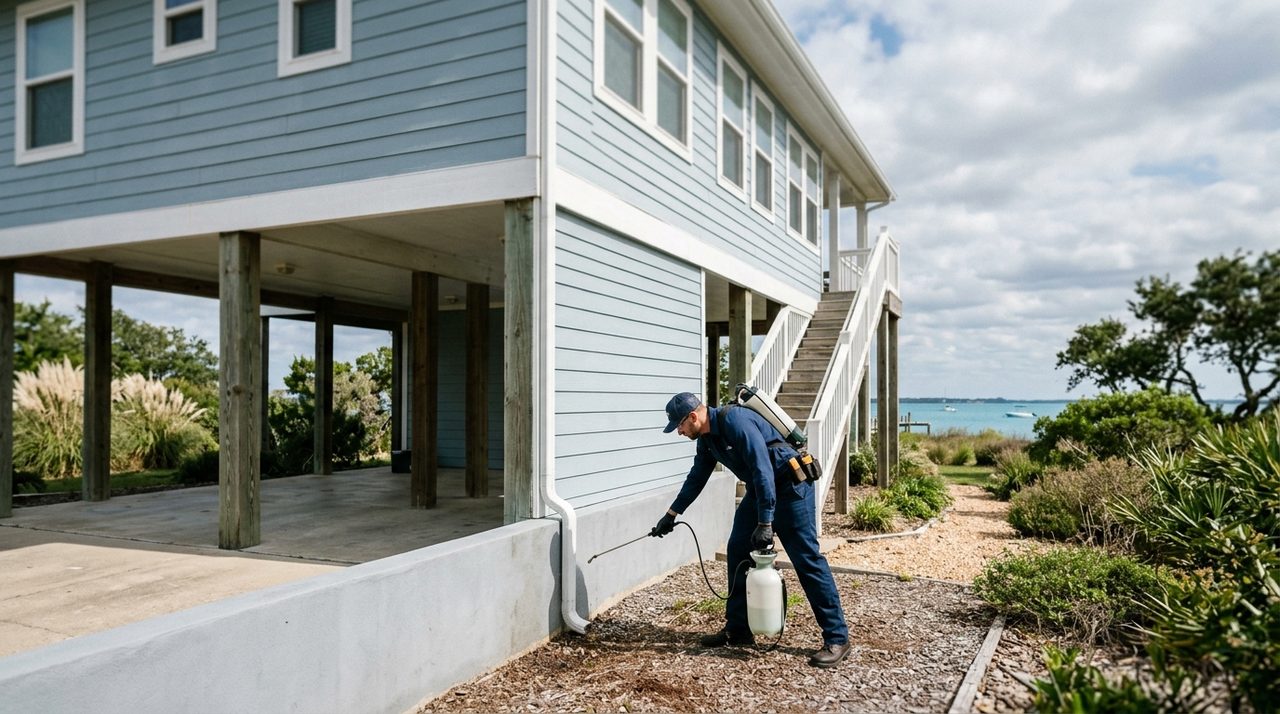
La Porte sits where Galveston Bay humidity, expansive Gulf Coast clay soil, and a housing stock spanning 1950s pier-and-beam bungalows to 2010s Morgan's Landing slab homes all converge — a combination that keeps pest pressure elevated year-round and shifts depending on which block you live on. Formosan termites exploit the same plumbing penetrations and expansion joints that La Porte's clay-driven slab movement constantly reopens, while bay-proximity moisture and post-storm conditions accelerate everything from cockroach sewer migration to wildlife attic intrusion. Any pest control operator working here must hold a Texas Department of Licensing and Regulation (TDLR) Structural Pest Control license with the appropriate category endorsements — no separate City of La Porte permit is required for routine service, but fumigation requires coordination with the local fire marshal.
Ranked by verified Google rating × review volume × verification tier. How we rank →
Some highly-rated pros serve La Porte from nearby and may not keep a La Porte street address. Those are listed under "Also serving La Porte" with their real city and distance, so you always know where each business is based.
5903 Genoa Red Bluff Rd, Pasadena, TX 77507
812 S 8th St, La Porte, TX 77571
1701 S Broadway St, La Porte, TX 77571
Highly-rated pros based nearby who cover La Porte. Distance shown from the La Porte area.
Serving La Porte Based in Baytown · 5.8 mi away
Serving La Porte Based in Baytown · 6.4 mi away
Serving La Porte Based in Deer Park · 6.4 mi away
Why it matters to you
La Porte's predominant slab-on-grade construction — built across multiple eras from the 1960s ranch-home core through 2010s communities like Morgan's Landing — sits on expansive Beaumont/Houston Black clay that cycles through wet-season heave and dry-season shrink. That movement routinely reopens gaps around plumbing penetrations, post-tension cable sleeves, and expansion joints, giving Coptotermes formosanus (Formosan subterranean termites) direct soil-to-wood pathways with no crawlspace barrier to slow them. Older La Porte homes from the 1950s–1970s near the historic core are especially vulnerable because pre-1990 slabs generally lacked modern termiticide pre-treatment at pour.
What a good pro does
A TDLR-licensed termite operator with a separate Termite category endorsement should conduct a full slab perimeter inspection, probing expansion joints and all utility entry points. Liquid barrier treatment with a non-repellent termiticide (Termidor-type) applied by drilling through the slab at penetrations typically runs an estimated $800–$1,800 depending on linear footage; bait station (Sentricon-type) installation is an alternative at an estimated $1,200–$2,000 plus an annual monitoring contract. No City of La Porte building permit is required for chemical soil treatment, but the operator's TDLR license and category endorsement should be verified before work begins.
Why it matters to you
La Porte's 1950s–1970s ranch homes and bungalows near the historic core and bayfront areas were commonly built with galvanized water supply lines and cast-iron drain lines — plumbing that many owners have already begun re-piping to PEX for water supply but that often retains original drain infrastructure. Periplaneta americana (the American cockroach, locally called the 'waterbug') lives in La Porte's warm sewer system and migrates indoors through deteriorating cast-iron joints, floor drains, and slab weep holes — especially after heavy rainfall displaces them from storm sewers. The flat bay-adjacent topography means water sits in sewers and low spots longer than in inland neighborhoods, extending the displacement events.
What a good pro does
A TDLR-licensed operator should treat interior floor drains and slab penetrations with residual products approved for drain application, combined with exterior perimeter exclusion and sealing of identified entry points. Interior spray alone will not break the cycle — the harborage pressure from the sewer system is continuous, making a recurring quarterly service plan (typically an estimated $40–$70 per visit) more cost-effective than repeated one-time treatments. Homeowners planning a galvanized-to-PEX re-pipe should alert the pest control operator so any newly opened wall or slab chases can be inspected and sealed before close-out.
Sources: Texas Department of Licensing & Regulation, Harris County Flood Control District
Why it matters to you
Hurricane Beryl made Category 1 landfall in July 2024, and the May 2024 derecho produced 100-plus mph gusts across the SE Houston metro — both events stripped roof fascia, soffit panels, and ridge caps from La Porte homes across all housing eras. Older La Porte homes with wood soffit and mature bay-area tree canopy providing roof access are prime targets for roof rats, raccoons, Virginia opossums, and Mexican free-tailed bats moving into opened attic spaces within days of a storm. Texas Parks and Wildlife Department (TPWD) protocols require specific handling procedures for bats and certain protected bird species, which means not every general pest control operator is equipped to complete the full scope without a wildlife exclusion specialist.
What a good pro does
A TDLR-licensed operator performing post-storm attic work should document all entry points with photos before sealing — this documentation supports TWIA or homeowners insurance claims for the associated structural damage. Exclusion of active bat colonies must follow TPWD seasonal guidelines and cannot simply be sealed shut during maternity season (typically June through mid-August). Homeowners in Morgan's Landing and Pelican Bay with mandatory HOAs should also verify whether the HOA architectural review committee requires notification before exterior fascia or soffit repair work begins, since pest exclusion often requires patching or replacing those same components.
Sources: Texas Windstorm Insurance Association (TWIA), Local HOA / deed restrictions (see area profile), Texas Department of Licensing & Regulation
Why it matters to you
La Porte's newer master-planned communities — Morgan's Landing, Pelican Bay, and similar subdivisions — feature irrigated turf, community greenspace, and the dense Gulf Coast clay soil that Solenopsis invicta (red imported fire ant) prefers for mound construction near irrigation heads, electrical junction boxes serving HVAC and landscape systems, and foundation edges. TAMU Extension classifies the entire La Porte area as high-density RIFA territory, and re-infestation from neighboring lots or HOA common areas is essentially certain without perimeter broadcast treatment on a seasonal schedule. HOAs with shared greenspace sometimes contract community-wide fire ant programs that may overlap or conflict with individual homeowner service contracts.
What a good pro does
Homeowners in HOA-governed subdivisions like Morgan's Landing should check whether the community has an existing pest management contract for common areas before signing an individual service agreement, since duplicate treatments can create liability and may violate deed restriction terms. A TDLR-licensed operator should apply a broadcast two-step treatment — broadcast bait followed by individual mound treatment — timed to spring and early fall when RIFA foraging is most active on La Porte's clay-heavy lots. Estimated cost for a seasonal perimeter broadcast program is included within typical quarterly service plans running an estimated $40–$70 per visit; standalone mound treatments are generally less effective long-term in high-pressure suburban environments.
Sources: Texas Department of Licensing & Regulation, Local HOA / deed restrictions (see area profile)
Hiring pest control in La Porte? La Porte is an incorporated city along Galveston Bay with housing stock ranging from 1950s ranch homes to modern master-planned communities like Morgan's Landing. Homeowners face a mix of coastal humidity challenges, slab foundation maintenance, and subdivision-specific HOA requirements that vary widely across the city. Proximity to petrochemical facilities and the bay means exterior materials and HVAC systems require extra attention to corrosion and salt-air exposure.
Building era
1950s–1970s in older core neighborhoods; 1980s–2000s suburban expansion; 2010s–present in master-planned communities like Morgan's Landing.
Typical style
Single-story ranch and bungalow styles in older areas; two-story brick-and-siding tract homes from the 1980s–2000s; contemporary Texas traditional brick/stone homes in newer planned communities.
Foundations
Predominantly slab-on-grade for post-1960 construction; some pier-and-beam in pre-1960 homes near the historic core and bayfront areas.
Common systems
Central AC is universal; older homes (1950s–1970s) may have original copper or galvanized plumbing and outdated electrical panels requiring upgrades; newer subdivisions use PEX plumbing and modern 200-amp electrical service.
What that means for repairs
Older ranch homes near the historic core frequently undergo kitchen and bathroom remodels, plumbing re-pipes from galvanized to PEX, and electrical panel upgrades. Exterior hardening against coastal humidity and storm damage is common across all eras. Newer homes in Morgan's Landing and similar communities see relatively little renovation but may need cosmetic updates and landscaping work.
Permit jurisdiction
City of La Porte Building and Permits Department (incorporated city with its own permitting authority).
HOA & deed restrictions
No city-wide HOA. Individual subdivisions vary: Morgan's Landing has a mandatory HOA with assessments, deed restriction enforcement, and community amenities. Pelican Bay also has a mandatory HOA. Older central La Porte neighborhoods may have recorded deed restrictions but no active HOA or only a voluntary civic association. Property-specific verification through the deed and Harris County Clerk records is necessary.
Historic districts
No City of Houston historic district designation confirmed. La Porte is a separate incorporated city and is not subject to HAHC oversight.
Contractor note
Contractors must pull permits through the City of La Porte, not Harris County or Houston. Subdivision-specific HOA architectural review committees (e.g., Morgan's Landing) may require pre-approval for exterior modifications, fencing, and roofing material changes before work begins.
FEMA flood zone
FEMA Zone X (low flood risk) per official NFHL data. However, La Porte is bay-adjacent and low-lying; individual parcels closer to Galveston Bay, Taylor Bayou, or drainage channels may carry higher flood designations. Property-specific FEMA panel review is recommended.
Hurricane Harvey impact
La Porte experienced flooding during Hurricane Harvey (2017), particularly in low-lying areas near the bay and along drainage channels. Specific street-level flood data for individual La Porte subdivisions was not confirmed in available research; homeowners should consult Harris County Flood Control District records and the city's post-Harvey damage assessments for parcel-level detail. Bay-adjacent properties and older neighborhoods with inadequate drainage infrastructure were generally more affected.
Heat & humidity load
Extreme heat and humidity combined with salt-air proximity to Galveston Bay accelerate exterior paint failure, metal corrosion on HVAC condensers and fasteners, and mold growth in poorly ventilated attics and crawlspaces. HVAC systems run near-continuously from May through October, making seasonal maintenance and refrigerant checks critical. Pier-and-beam homes in older areas are particularly susceptible to moisture-related subfloor and joist deterioration.
Working with contractors here
Contractors in La Porte most commonly handle HVAC maintenance and replacement, re-roofing after storm damage, plumbing re-pipes in 1950s–1970s homes, and foundation repair on slab-on-grade structures affected by expansive Gulf Coast clay soils. Coastal humidity and salt-air exposure drive significant exterior painting, siding repair, and metal corrosion remediation work. In newer communities like Morgan's Landing, work tends toward warranty-era cosmetic items, fence installation, and landscape hardscaping, but HOA architectural committee approval is typically required before starting. For older La Porte homes, electrical panel upgrades from outdated fuse boxes to modern breaker panels are a frequent scope item. Contractors should confirm La Porte city permit requirements early in the bidding process, as turnaround times and inspection schedules differ from Houston and unincorporated Harris County.
Local Tip
Always ask for a written estimate before work begins. Texas contractors are required to provide one on jobs over $1,000.
La Porte is an incorporated city along Galveston Bay with housing stock ranging from 1950s ranch homes to modern master-planned communities like Morgan's Landing. Homeowners face a mix of coastal humidity challenges, slab foundation maintenance, and subdivision-specific HOA requirements that vary widely across the city. Proximity to petrochemical facilities and the bay means exterior materials and HVAC systems require extra attention to corrosion and salt-air exposure.
Source: U.S. Census Bureau, ACS 5-Year 2023
Most of La Porte maps to FEMA Zone X (low mapped flood risk), but Houston's flash-flood reality means even low-risk blocks benefit from smart drainage and storm-hardened installs; risk climbs sharply on blocks nearest Galveston Bay, where it varies parcel to parcel.
Source: FEMA National Flood Hazard Layer (NFHL). Flood zones vary by parcel — verify your individual FIRM panel.
Houston-specific estimators to plan your project before you call a pro. All results are planning estimates — a licensed local pro confirms the details on site.
| Pest | Cadence | Active window |
|---|---|---|
Mosquito control A standard 4-week barrier treatment holds a typical suburban lot through Houston's core mosquito season. | Every 28 days | April – October |
Termite (subterranean) A once-a-year spring inspection is the baseline for a drier, sunnier Houston lot — catch mud tubes and swarmer wings before damage compounds. | Annual inspection | Spring |
General pest guard (roaches, ants, spiders) Houston's year-round warmth means general pests never fully die off — a quarterly perimeter treatment is the standard maintenance rhythm. | Quarterly | Mar · Jun · Sep · Dec |
This is a planning estimate only — actual requirements depend on an on-site assessment by a licensed Houston pro. Texas requires an SPCB-licensed applicator for chemical treatment — ask for the technician's license number.
Sources: FEMA National Flood Hazard Layer (NFHL)Harris County Flood Control District
Sources: Local HOA / deed restrictions (see area profile)
Sources: Texas Department of Licensing & RegulationTexas Windstorm Insurance Association (TWIA)