Closed
1012 Morton St, Richmond, TX 77469
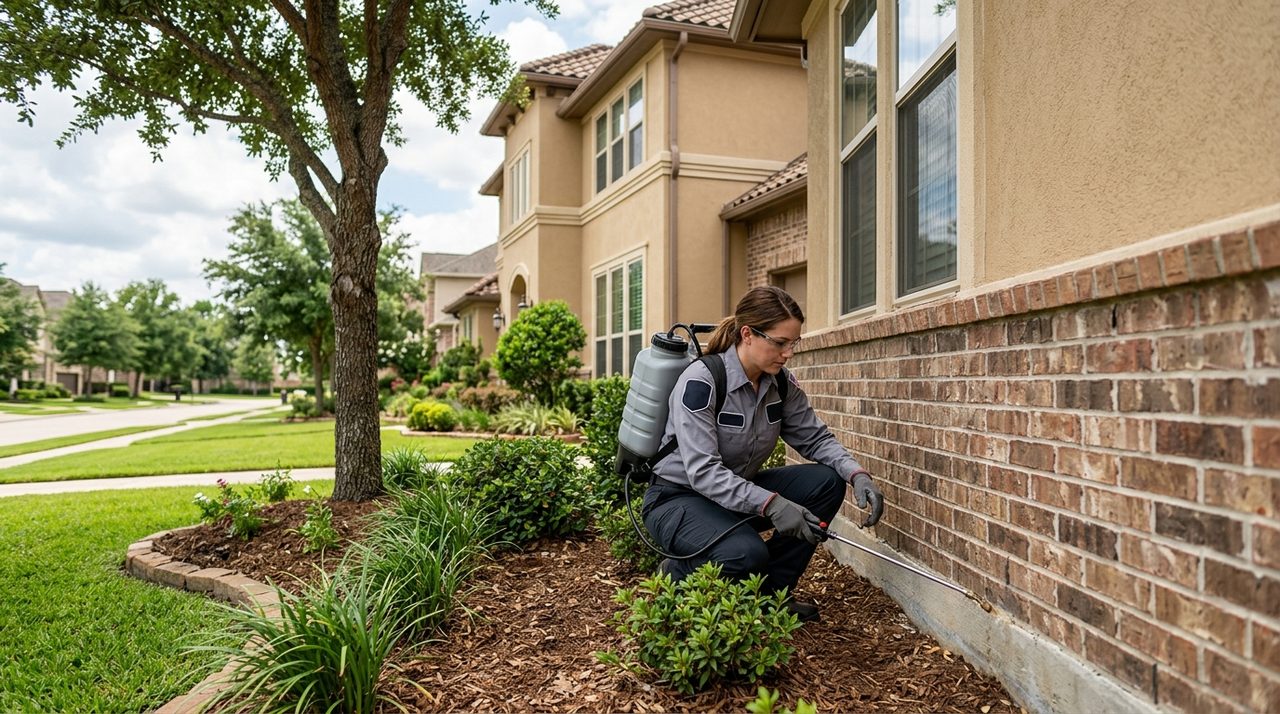
Richmond's sprawling Fort Bend County subdivisions — from 1980s Pecan Grove and Greatwood homes to brand-new Harvest Green phases still under construction — sit on expansive Houston Black clay soil that shifts seasonally, reopening plumbing penetrations and brick weep holes that serve as prime pest entry points year after year. The same clay that challenges foundations also holds standing water long enough after Fort Bend's periodic flash-flood events to generate significant mosquito and cockroach pressure, even in FEMA Zone X blocks well away from the Brazos River. If you live in one of Richmond's mandatory-HOA master-planned communities, exterior bait stations and broadcast lawn treatments require a coordination step with your architectural review committee before a pest control operator sets foot in the yard.
Ranked by verified Google rating × review volume × verification tier. How we rank →
1012 Morton St, Richmond, TX 77469
3123 McCrary Rd, Richmond, TX 77406
1511 Minonite Rd, Richmond, TX 77469
8315 Farm to Market Rd 723 Suite 36, Richmond, TX 77406
301 S 9th St Ste 227, Richmond, TX 77469
1118 E Hwy 90 Alt A, Richmond, TX 77406
6115 FM 762 Rd STE 800, Richmond, TX 77469
1421 FM359, Richmond, TX 77406
2006 Thompson Rd, Richmond, TX 77469
4834 FM 2218 Rd, Richmond, TX 77469
Why it matters to you
Richmond's heaviest housing construction wave ran through the 1990s and 2000s across communities like Pecan Grove, Greatwood, and Long Meadow Farms — slab-on-grade post-tension homes that are now 20–35 years old and aging past their original termiticide pre-treatment window. Formosan and native subterranean termites operate year-round in Fort Bend County's USDA Zone 5 high-pressure territory, using plumbing penetrations and expansion joints in these slabs as direct soil-to-wood highways. Mulched foundation beds, which are nearly universal in Richmond's HOA-manicured front yards, provide exactly the moisture and cellulose cover these colonies need.
What a good pro does
A TDLR-licensed termite operator with a Category 2 (termite) endorsement should perform a full slab perimeter inspection, probe all plumbing penetrations, and apply a liquid termiticide barrier (Termidor-type) or install a bait station monitoring system (Sentricon-type) along the foundation's linear footage — estimates run $800–$1,800 for liquid treatment or $1,200–$2,000 for bait installation plus $300–$500 annually for required monitoring contracts. Request a written termite warranty that specifies retreatment obligations, and verify the operator's TDLR license and category endorsements before signing any multi-year contract.
Why it matters to you
Fort Bend County's irrigated suburban turf — standard in Richmond master-planned communities including Del Webb Sweetgrass, Old Orchard, and Harvest Green — creates near-ideal RIFA mound conditions: clay soil with periodic moisture, warm temperatures, and food sources near HVAC junction boxes and irrigation controllers. TAMU Extension classifies the entire Richmond area as high-density fire ant territory, and mound recolonization from neighboring lots and HOA common areas is essentially guaranteed without perimeter broadcast treatment on a seasonal schedule. Children and pets in these communities face meaningful sting risk, and RIFA colonies have shorted irrigation and HVAC electrical components in Fort Bend homes.
What a good pro does
Effective control requires a two-step approach — broadcast bait across the full lot (not just visible mounds) followed by individual mound treatments — repeated on a spring and fall schedule to align with RIFA activity peaks in Fort Bend's climate. Before any HOA common-area or front-yard broadcast treatment, homeowners in Richmond's mandatory-HOA communities should pull their subdivision's deed restrictions and confirm architectural committee requirements, since visible bait placements near shared amenities may require pre-approval; the 2026 Texas HOA transparency laws now require governing documents to be publicly posted for associations with 60+ lots, making this verification easier.
Sources: Local HOA / deed restrictions (see area profile), Texas Department of Licensing & Regulation
Why it matters to you
Richmond's historic city-center properties and early suburban stock built before 1985 — some with cast-iron drain lines and pier-and-beam foundations — face persistent American cockroach ('waterbug') pressure from sewer and storm infrastructure, especially after Fort Bend's heavy summer rain events displace colonies from saturated ground. Even newer Richmond slab homes on Houston Black clay experience seasonal foundation micro-movement that reopens gaps around drain lines and utility chases; post-Uri pipe repairs completed in 2021 on plumbing that froze and cracked are a known weak point, as utility chases were not always properly resealed during emergency repairs. Interior spraying alone cannot break the cycle without exterior exclusion at weep holes and drain treatment.
What a good pro does
A TDLR-licensed general household pest operator should combine interior crack-and-crevice treatment with exterior perimeter exclusion — sealing weep holes with pest-rated mesh, treating floor drains with appropriately labeled gel or foam, and applying a residual exterior barrier after inspecting every plumbing penetration at the slab edge. For Richmond's older pier-and-beam homes near the historic downtown, a crawlspace inspection for harborage conditions is warranted; one-time treatments typically run $150–$300 for a 2,000-square-foot home, but recurring quarterly service ($40–$70 per visit) is almost always necessary to stay ahead of reinfestation pressure from surrounding clay-saturated soil.
Sources: Texas Department of Licensing & Regulation, Harris County Flood Control District
Why it matters to you
Most of Richmond's dominant subdivisions — Harvest Green, Greatwood, Pecan Grove, Long Meadow Farms, Del Webb Sweetgrass, and others — operate under mandatory HOAs with active architectural review committees that regulate visible exterior modifications, including permanent bait station installations and scheduled broadcast spray programs on front-yard turf. Homeowners who skip this step risk violation notices and forced removal of recently installed termite monitoring stations, negating the cost of installation. The split permit jurisdiction between the City of Richmond and unincorporated Fort Bend County does not affect routine pest control service directly, but fumigation (tenting) in either jurisdiction requires fire marshal notification and should be coordinated with the HOA's management company.
What a good pro does
Before scheduling any exterior perimeter treatment, bait station installation, or broadcast lawn application, pull your subdivision's recorded deed restrictions — now required to be publicly posted by HOA associations with 60+ lots under 2026 Texas transparency law — and submit a written description of the proposed treatment to the architectural control committee with the pest operator's TDLR license number included. Routine interior service and spot mound treatments typically fall below HOA review thresholds, but when in doubt, a one-page written request to the committee protects both you and the operator from after-the-fact disputes.
Sources: Local HOA / deed restrictions (see area profile), Texas Department of Licensing & Regulation
Hiring pest control in Richmond? Richmond encompasses a wide range of housing from historic city-center properties to modern master-planned communities, each with its own HOA and deed restrictions. Homeowners must identify their specific subdivision's governing documents before initiating exterior modifications. The mix of newer construction and rapid growth means contractors frequently handle warranty-era repairs, energy efficiency upgrades, and landscape compliance work.
Building era
Mixed: historic Richmond core dates to pre-1970s; dominant suburban stock built 1980s–2020s, with heaviest construction in the 2000s–2020s across master-planned communities.
Typical style
Traditional suburban brick, brick-and-stone Texas traditional, and contemporary transitional elevations in newer master-planned phases; one- and two-story production homes with front-loaded attached garages.
Foundations
Predominantly slab-on-grade (post-tension concrete) for suburban tract homes; some older historic Richmond homes may have pier-and-beam foundations.
Common systems
Central HVAC (heat pump and gas furnace split systems common), copper and PEX plumbing in newer homes (possible polybutylene in 1980s–early 1990s stock), 200-amp electrical panels standard in post-2000 construction.
What that means for repairs
Kitchen and bathroom remodels are common in 1990s–2000s homes reaching their second-owner cycle. Exterior modifications (fences, patios, driveways, generators) require HOA architectural review in most subdivisions. Older Pecan Grove and Greatwood-era homes often need HVAC replacements and roof upgrades.
Permit jurisdiction
City of Richmond permits office for properties within city limits; Fort Bend County Engineering Department for unincorporated Fort Bend County areas surrounding Richmond.
HOA & deed restrictions
No single mandatory HOA covers all of Richmond. Most master-planned communities (Harvest Green, Old Orchard, Pecan Grove, Greatwood, Long Meadow Farms, Del Webb Sweetgrass, etc.) have mandatory HOAs with recorded deed restrictions and architectural review committees. Some older or rural tracts have no HOA. HOA status is strictly subdivision-by-subdivision.
Historic districts
No City of Houston historic district designation confirmed. Richmond has its own historic downtown area, but formal historic district protections and review processes should be verified with the City of Richmond.
Contractor note
Contractors must determine whether a property is within Richmond city limits or unincorporated Fort Bend County, as permit jurisdiction and inspection requirements differ. Most subdivisions require HOA architectural approval before exterior work begins, and 2026 Texas HOA transparency laws require governing documents to be publicly posted for associations with 60+ lots.
FEMA flood zone
FEMA Zone X (low flood risk) per official NFHL data. Richmond is situated along the Brazos River, and some areas near the river and Rabbs Bayou carry higher flood risk than the Zone X designation of the sampled point; homeowners should verify their specific lot's flood zone.
Hurricane Harvey impact
Hurricane Harvey (2017) caused significant flooding in parts of Fort Bend County, particularly along the Brazos River corridor. The Barker Reservoir controlled releases and Brazos River flooding impacted numerous Richmond-area subdivisions. Specific impact varied greatly by subdivision and proximity to waterways — homeowners should check individual property flood history through Fort Bend County records.
Heat & humidity load
Extreme summer heat and humidity drive heavy HVAC demand across Richmond's slab-on-grade homes. Expansive clay soils common in Fort Bend County cause seasonal foundation movement, increasing demand for foundation inspection and repair services. Newer homes with large roof spans require periodic inspection for heat-related shingle degradation.
Working with contractors here
Contractors in Richmond work across a wide spectrum of housing ages, from 1980s master-planned homes needing full system replacements to brand-new construction warranty work. HVAC replacement and repair is the most consistent demand driver due to the extreme Fort Bend County summers and the aging of 2000s-era equipment. Foundation monitoring and repair are common given the expansive clay soils, particularly for homes built on slab-on-grade foundations. Exterior work — fencing, patio covers, roofing — almost always requires HOA architectural committee pre-approval, so contractors should build submission lead time into project schedules. The split jurisdiction between City of Richmond and unincorporated Fort Bend County means permit requirements and inspection timelines can differ significantly even between adjacent subdivisions.
Local Tip
Always ask for a written estimate before work begins. Texas contractors are required to provide one on jobs over $1,000.
Richmond encompasses a wide range of housing from historic city-center properties to modern master-planned communities, each with its own HOA and deed restrictions. Homeowners must identify their specific subdivision's governing documents before initiating exterior modifications. The mix of newer construction and rapid growth means contractors frequently handle warranty-era repairs, energy efficiency upgrades, and landscape compliance work.
Source: U.S. Census Bureau, ACS 5-Year 2023
Most of Richmond maps to FEMA Zone X (low mapped flood risk), but Houston's flash-flood reality means even low-risk blocks benefit from smart drainage and storm-hardened installs; risk climbs sharply on blocks nearest the Brazos River, where it varies parcel to parcel.
Source: FEMA National Flood Hazard Layer (NFHL). Flood zones vary by parcel — verify your individual FIRM panel.
Houston-specific estimators to plan your project before you call a pro. All results are planning estimates — a licensed local pro confirms the details on site.
| Pest | Cadence | Active window |
|---|---|---|
Mosquito control A standard 4-week barrier treatment holds a typical suburban lot through Houston's core mosquito season. | Every 28 days | April – October |
Termite (subterranean) A once-a-year spring inspection is the baseline for a drier, sunnier Houston lot — catch mud tubes and swarmer wings before damage compounds. | Annual inspection | Spring |
General pest guard (roaches, ants, spiders) Houston's year-round warmth means general pests never fully die off — a quarterly perimeter treatment is the standard maintenance rhythm. | Quarterly | Mar · Jun · Sep · Dec |
This is a planning estimate only — actual requirements depend on an on-site assessment by a licensed Houston pro. Texas requires an SPCB-licensed applicator for chemical treatment — ask for the technician's license number.
Sources: Local HOA / deed restrictions (see area profile)
Sources: Harris County Flood Control DistrictFEMA National Flood Hazard Layer (NFHL)
Sources: Texas Department of Licensing & RegulationLocal HOA / deed restrictions (see area profile)