10611 Harwin Dr. Suite 420, Houston, TX 77036
Best Pest Control in Sharpstown
Sharpstown's late-1950s and 1960s ranch homes sit on concrete slabs over Houston's expansive Black clay soil, and that combination — aging cast-iron drain lines, brick veneer with original weep holes, and six decades of clay-driven slab movement — creates pest entry points that newer subdivisions simply don't have. Add a renter-majority neighborhood (only about 22% owner-occupied per ACS 2023) where interior moisture and maintenance deferred across tenancies can accelerate infestations, and Sharpstown homeowners face a pest-control picture shaped as much by building vintage as by anything crawling outside. This page walks through the four challenges that actually drive service calls here, with specifics on what a qualified TDLR-licensed operator should do about each.
Verified against Google Business data
Updated 2026
See the 10 Pest Control Serving Sharpstown 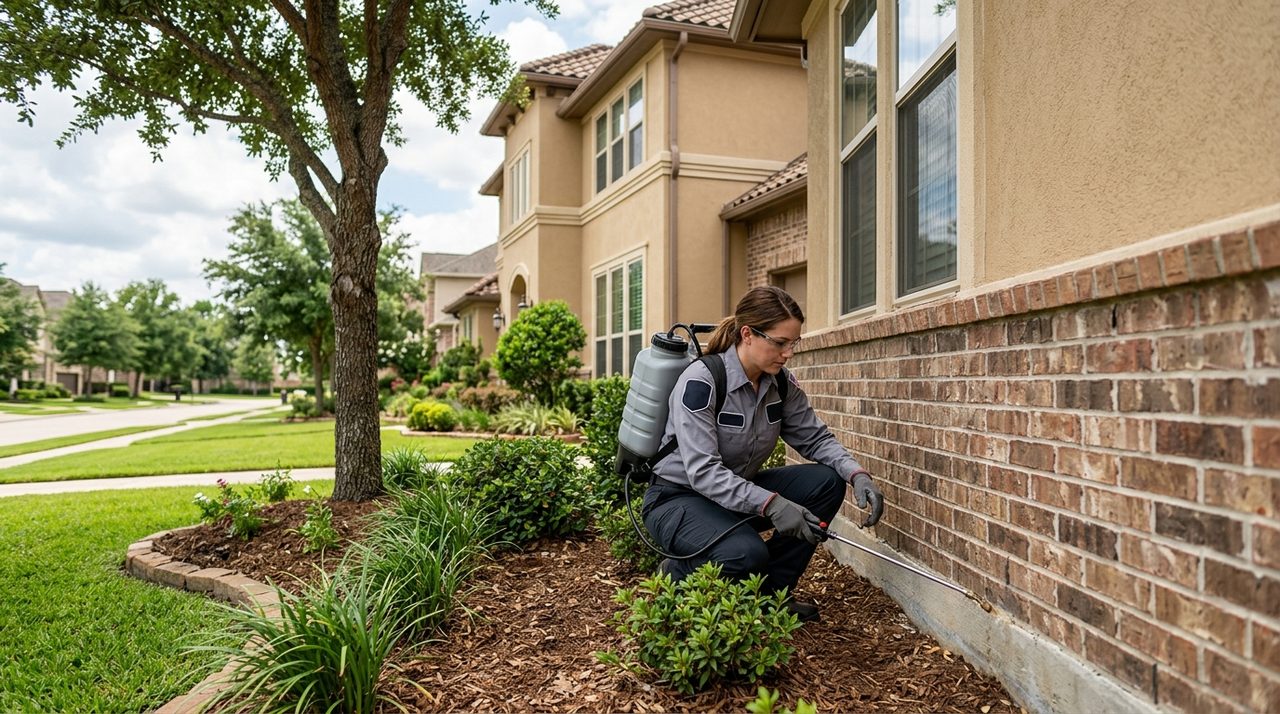
- Median home built
- 1976
- Median home value
- $212,156
- FEMA flood zone
- X (low)
- Typical pest control cost (est.)
- $150–$1,800
- Most common local issue
- American cockroach sewer intrusion through aging cast-iron slab penetrations
Ranked by verified Google rating × review volume × verification tier. How we rank →
Some highly-rated pros serve Sharpstown from nearby and may not keep a Sharpstown street address. Those are listed under "Also serving Sharpstown" with their real city and distance, so you always know where each business is based.
Min rating:
10 resultsBased in Sharpstown
Closed
11023 Southwest Fwy, Houston, TX 77074
Closed
8707 Cadawac Rd, Houston, TX 77074
Also serving Sharpstown
Highly-rated pros based nearby who cover Sharpstown. Distance shown from the Sharpstown area.
Open Now
Serving Sharpstown Based in Meyerland · 1.7 mi away
Closed
Serving Sharpstown Based in Meyerland · 1.8 mi away
Open Now
Serving Sharpstown Based in Briargrove · 2.2 mi away
Closed
Serving Sharpstown Based in Briargrove · 2.5 mi away
Closed
Serving Sharpstown Based in Bellaire · 2.8 mi away
Open Now
Serving Sharpstown Based in Alief · 3 mi away
Open Now
Serving Sharpstown Based in Alief · 3 mi away
Pest Control in Sharpstown: What You Should Know
Cast-Iron Drain Lines Funnel American Cockroaches Straight Into Your Slab
Why it matters to you
Sharpstown homes built in the late 1950s and early 1960s almost universally started with cast-iron drain lines that are now at or well past their functional lifespan. Where those lines have cracked, corroded, or separated at joints beneath the slab, Houston's warm sewer infrastructure gives Periplaneta americana — the oversized 'waterbug' species — a direct, sheltered highway into living spaces through plumbing penetrations, floor drains, and utility chases. Because Sharpstown is largely flat and clay-heavy, heavy rain that displaces roaches from street-level storm sewers sends them looking for higher ground, and the path of least resistance is often a gap where a 60-year-old cast-iron stack meets the slab.
What a good pro does
A thorough operator will inspect and treat floor drain traps, apply residual gel bait in sub-slab-accessible voids, and use expanding foam or hydraulic cement to seal identifiable penetrations around plumbing — not just spray baseboards. If a re-pipe to PVC is already planned (a common project on Sharpstown homes), a pest pro should coordinate timing so exclusion sealing happens immediately after new pipe connections are set. All operators performing structural pest work in Texas must hold the appropriate TDLR Structural Pest Control license category; confirm their TDLR credential before hiring.
Subterranean Termites Exploit Slab Expansion Joints in 60-Year-Old Concrete
Why it matters to you
Houston sits in USDA termite pressure Zone 5 — the highest in the continental U.S. — and Sharpstown's original slabs were poured without modern termiticide pre-treatment barriers that became standard practice in later decades. After six decades of clay-soil movement opening and closing expansion joints and plumbing sleeve gaps, Coptotermes formosanus (Formosan subterranean termites) and native Reticulitermes species have multiple soil-to-wood pathways with no crawlspace barrier to interrupt them. The brick veneer common on Sharpstown ranch homes also means termites can travel inside the cavity wall largely undetected until structural damage is significant.
What a good pro does
A licensed termite specialist should conduct a full perimeter inspection probing the slab edge and brick veneer weep holes, then recommend either a Termidor-type liquid barrier treatment injected at the slab perimeter (typically $800–$1,800 estimated for a Sharpstown-sized ranch) or a Sentricon-type bait station network ($1,200–$2,000 installed, plus $300–$500/year monitoring). Given that many Sharpstown homes are undergoing re-piping, any open trench work is an opportunity for the termite operator to inspect and treat exposed soil before the slab is patched. The operator must hold a TDLR termite category endorsement — not just a general household pest license.
Clay-Soil Slab Movement Keeps Reopening Rodent Entry Points Around Brick Weep Holes
Why it matters to you
Houston's Beaumont/Houston Black clay soil expands and contracts seasonally, and USGS data documents vertical slab movement that can reach roughly two inches of differential across a single foundation — enough to cycle brick weep holes and utility chases from sealed to open and back again across a year. In Sharpstown's single-story brick-veneer ranch homes, this means rodent exclusion is not a one-time fix: Rattus norvegicus (Norway rats) and Mus musculus (house mice) exploit freshly opened gaps at the brick coursing, garage door sweeps that have shifted off-level, and any utility chase left improperly resealed after the plumbing or HVAC work that is common in this aging housing stock. Post-Uri pipe repairs and post-Harvey remediation in particular often left new gaps in homes that were otherwise reasonably well sealed.
What a good pro does
Effective rodent work here starts with a clay-soil-aware exclusion audit: checking weep holes with appropriately sized copper mesh (not steel wool, which corrodes), inspecting garage thresholds for level and contact, and tracing every utility penetration through the slab and exterior walls. Operators should set tamper-resistant bait stations on the exterior perimeter and interior snap traps in identified runways, then schedule a 30-day follow-up specifically to re-check any points that may have shifted. Exclusion plus interior treatment in this size home typically estimates $400–$900; get a written scope that distinguishes exclusion labor from chemical treatment.
Deed Restrictions Govern What Exterior Pest-Control Equipment Can Look Like
Why it matters to you
Sharpstown's deed restrictions — enforced by the Sharpstown Civic Association regardless of whether a homeowner pays the voluntary $90/year dues — govern exterior appearance, which matters more for pest control than most homeowners realize. Visible bait station boxes along the foundation line, above-grade termite bait stations staked in the front yard, and even the placement of rodent bait station cabinets near the street can draw deed-restriction scrutiny in a community with an active architectural control process. Because the Civic Association enforces these restrictions as covenants running with the land, non-compliance can result in legal action independent of the City of Houston's permitting process — which itself requires no municipal permit for routine pest control service.
What a good pro does
Before installing a perimeter termite bait station network or visible rodent exclusion hardware, ask your pest control operator specifically whether the placement meets Sharpstown Civic Association standards — and get it in writing if there is any doubt. Sentricon-type in-ground bait stations flush to grade are generally less visible than above-ground systems and less likely to conflict with deed restrictions. The City of Houston Permitting Center is not involved in routine pest service, but fumigation (tenting) does require fire marshal notification regardless of HOA status. A TDLR-licensed operator familiar with inner-loop Houston neighborhoods will know to ask about deed restrictions before staking equipment.
Sources: Texas Department of Licensing & Regulation, Local HOA / deed restrictions (see area profile)
Pest Control in Sharpstown: What You Should Know
Hiring pest control in Sharpstown? Sharpstown is one of Houston's earliest master-planned communities, with most homes dating to the late 1950s and 1960s. Homeowners here face the typical aging-systems trifecta: original cast-iron drain lines approaching or past their useful life, aging HVAC systems struggling with Houston summers, and slab foundations susceptible to differential settlement in expansive clay soils. Deed restrictions enforced by the Sharpstown Civic Association govern exterior modifications, so contractors should verify compliance before beginning visible work.
- Housing era
- Mid-1950s through 1960s (median year built 1959)
- Foundation
- Predominantly concrete slab-on-grade (inferred from era and regional building patterns
- Flood zone
- FEMA Zone X (low flood risk) per official NFHL data
- Permits
- City of Houston Permitting Center (Houston Public Works)
Housing stock & systems
Building era
Mid-1950s through 1960s (median year built 1959).
Typical style
Post-war ranch and mid-century suburban — predominantly single-story, low-pitch rooflines, brick veneer.
Foundations
Predominantly concrete slab-on-grade (inferred from era and regional building patterns; some earliest sections may have pier-and-beam).
Common systems
Original homes likely have galvanized steel or cast-iron drain lines, copper supply lines, R-22 refrigerant HVAC systems (many now replaced), and fuse panels or early breaker panels upgraded over time to 200-amp service. Older homes may still have original single-pane aluminum windows.
What that means for repairs
Kitchen and bathroom remodels are common as homeowners update 60+ year-old layouts. Foundation repair and re-piping (replacing cast-iron drains with PVC) are frequent major projects. Many homes have had incremental upgrades — roof replacements, HVAC conversions to R-410A, and window upgrades — but full gut renovations are also seen as investors enter the market.
Permits & restrictions
Permit jurisdiction
City of Houston Permitting Center (Houston Public Works). Sharpstown is within City of Houston limits, Council Districts F and J.
HOA & deed restrictions
Sharpstown Civic Association serves as the primary neighborhood organization for deed restriction enforcement and architectural control. Membership dues are voluntary (approximately $90/year plus optional security fee), but deed restrictions run with the land and are enforceable regardless of membership. Individual condo and townhome complexes within Sharpstown (e.g., Sharpstown Green Condominium Association) may have separate mandatory HOAs.
Historic districts
No City of Houston historic district designation confirmed. Sharpstown does not appear on HAHC-designated district lists and does not require Certificates of Appropriateness for exterior work.
Contractor note
Contractors must pull permits through the City of Houston Permitting Center. Exterior modifications — fences, paint colors, carport additions — should be checked against Sharpstown deed restrictions enforced by the Sharpstown Civic Association before work begins.
Flood & weather
FEMA flood zone
FEMA Zone X (low flood risk) per official NFHL data. No specific bayou or creek proximity concerns were identified in available research for the core Sharpstown single-family areas.
Hurricane Harvey impact
Sharpstown did not appear among the highest-profile catastrophically flooded neighborhoods during Hurricane Harvey. Localized street ponding and some home flooding may have occurred, but specific street-level impact data for Sharpstown was not confirmed in available sources. Not confirmed at the parcel level — homeowners should check Harris County Flood Control District records for individual property flood history.
Heat & humidity load
1950s–60s homes with original insulation and single-pane windows place heavy loads on HVAC systems during Houston's extended cooling season (May–October). Slab-on-grade foundations are susceptible to differential movement during summer drought cycles as expansive clay soils shrink, which can crack plumbing lines running beneath or through the slab. Contractors should anticipate high demand for HVAC tune-ups, duct sealing, and attic insulation upgrades.
Working with contractors here
The most common service calls in Sharpstown involve foundation evaluation and repair, cast-iron drain line replacement (re-piping to PVC), and HVAC system replacement on homes still running original or second-generation equipment. Roof replacements are frequent given the age of the housing stock and Houston's hail exposure. Because Sharpstown was built as a mass-production subdivision, floor plans repeat across many blocks, which allows experienced contractors to develop efficient scoping templates. However, six decades of piecemeal upgrades mean electrical panels, plumbing materials, and HVAC configurations can vary significantly even between identical floor plans — thorough pre-job inspections are essential. Contractors should also be aware that the Sharpstown Civic Association actively enforces deed restrictions on exterior appearance, so visible work such as siding, fencing, or accessory structures should be verified for compliance before installation.
Local Tip
Always ask for a written estimate before work begins. Texas contractors are required to provide one on jobs over $1,000.
About Sharpstown
Sharpstown is one of Houston's earliest master-planned communities, with most homes dating to the late 1950s and 1960s. Homeowners here face the typical aging-systems trifecta: original cast-iron drain lines approaching or past their useful life, aging HVAC systems struggling with Houston summers, and slab foundations susceptible to differential settlement in expansive clay soils. Deed restrictions enforced by the Sharpstown Civic Association govern exterior modifications, so contractors should verify compliance before beginning visible work.
- Median year built
- 1976
- Median home value
- $212,156
- Owner-occupied
- 22.5%
- Population
- 108,503
- Housing units
- 45,662
- Median income
- $45,033
Source: U.S. Census Bureau, ACS 5-Year 2023
Flood & storm risk
FEMA Zone XLow flood riskMost of Sharpstown maps to FEMA Zone X (low mapped flood risk), but Houston's flash-flood reality means even low-risk blocks benefit from smart drainage and storm-hardened installs.
Source: FEMA National Flood Hazard Layer (NFHL). Flood zones vary by parcel — verify your individual FIRM panel.
Free Sharpstown Tools & Calculators
Houston-specific estimators to plan your project before you call a pro. All results are planning estimates — a licensed local pro confirms the details on site.
Houston Subtropical Pest Treatment Planner
Open full tool & FAQ →Your Houston treatment schedule
| Pest | Cadence | Active window |
|---|---|---|
Mosquito control A standard 4-week barrier treatment holds a typical suburban lot through Houston's core mosquito season. | Every 28 days | April – October |
Termite (subterranean) A once-a-year spring inspection is the baseline for a drier, sunnier Houston lot — catch mud tubes and swarmer wings before damage compounds. | Annual inspection | Spring |
General pest guard (roaches, ants, spiders) Houston's year-round warmth means general pests never fully die off — a quarterly perimeter treatment is the standard maintenance rhythm. | Quarterly | Mar · Jun · Sep · Dec |
This is a planning estimate only — actual requirements depend on an on-site assessment by a licensed Houston pro. Texas requires an SPCB-licensed applicator for chemical treatment — ask for the technician's license number.
Frequently Asked Questions
Do I need a permit from the City of Houston to have my Sharpstown home fumigated or tented for termites?
Routine liquid termiticide barrier treatments and bait station installations in Sharpstown do not require a City of Houston Permitting Center permit, but full structural fumigation (tenting) is different — the pest control operator must notify the local fire marshal and coordinate with Houston Public Works before sealing the structure. Your licensed applicator handles this coordination, but confirm it before signing a fumigation contract. All pest control operators working in Sharpstown must hold a current Texas Department of Licensing and Regulation (TDLR) Structural Pest Control license with the appropriate category endorsements for the work being performed.
Sharpstown is in FEMA Zone X, so how bad is my mosquito risk compared to neighborhoods closer to the bayous?
Zone X designation means Sharpstown sits outside the mapped 100-year floodplain, so you won't see the prolonged multi-day inundation that drives the worst mosquito surges in AE-zone neighborhoods near Brays Bayou — but Houston's clay soil still holds standing water in low spots for 72 or more hours after a heavy rain event, which is enough time for Aedes aegypti to begin a breeding cycle. Harris County Mosquito Control District aerial and truck spraying covers public rights-of-way but not private yards, so backyard larviciding and barrier spray programs remain the homeowner's responsibility. The 2024 Beryl rainfall and the flat topography of Sharpstown's 1950s-era lots — designed before modern detention requirements — mean even 'low-risk' blocks can accumulate nuisance-level mosquito pressure after any significant storm.
Sources: Harris County Flood Control DistrictFEMA National Flood Hazard Layer (NFHL)
My Sharpstown home was built in 1961 and still has some original cast-iron plumbing. Does that change which pest control treatments will actually work long-term for cockroaches?
Yes — in aging cast-iron drain systems common to Sharpstown's late-1950s and early 1960s build vintage, interior gel baiting and perimeter sprays suppress visible populations but rarely break the cycle because roaches are continuously migrating up through corroded pipe joints and slab penetrations from the storm sewer system below. An effective long-term program in a home like yours should include interior drain treatment (enzyme or insecticide flush), exterior perimeter exclusion around weep holes and utility entry points, and an honest conversation with your pest operator about whether a plumbing camera inspection to locate cracked cast-iron segments makes sense before re-treating. Expect recurring quarterly service — estimates run $40–$70 per visit — rather than a one-time fix.
Will the Sharpstown Civic Association have any say over where a pest control company installs termite bait stations in my front yard?
Sharpstown's deed restrictions enforced by the Sharpstown Civic Association focus primarily on exterior appearance — fences, paint colors, accessory structures — and do not typically regulate below-grade termite bait stations that sit flush with the lawn. However, above-ground station housings or conspicuous monitoring equipment near the street-facing perimeter could draw scrutiny under general aesthetics provisions, so it is worth asking your pest control operator to use low-profile in-ground station caps and to place any above-ground components on the non-street sides of the foundation. Deed restrictions run with the land in Sharpstown and are enforceable regardless of whether you pay voluntary Civic Association dues, so a quick written confirmation from your operator documenting station placement is good practice.
Sources: Local HOA / deed restrictions (see area profile)
What time of year is termite swarming season in Sharpstown, and when should I schedule a preventive inspection?
Formosan subterranean termites and native Reticulitermes species are most visible in Sharpstown from February through June, when warm soil temperatures and humidity trigger alate (swarm) flights — often in the evenings after a warm rain. A secondary swarm pulse can occur in October–November after fall rain events. Schedule your preventive inspection in January or early February before swarm season peaks, giving time to complete a liquid barrier or bait station installation (typically a one-to-two day job, with a 30-day soil-settlement waiting period sometimes recommended before full barrier continuity is confirmed) before the heaviest flight activity begins in March and April.
Sharpstown has a lot of rental properties — if I'm a landlord here, am I responsible for pest control between tenants, and does it affect what treatment options I can use?
Texas property code does not mandate a specific pest control schedule for landlords, but habitability standards require that a rental unit be free of conditions that materially affect health and safety at move-in — persistent cockroach or rodent infestations can qualify. With Sharpstown's owner-occupancy rate at roughly 22% per ACS 2023 data, landlord-driven service calls are common, and experienced local operators often offer landlord accounts with between-tenancy inspection packages. One practical consideration: if an adjacent unit in a duplex or small multifamily structure needs treatment, TDLR-licensed operators must treat each legally distinct unit separately and cannot blanket-treat a neighboring tenant's space without access permission, so coordinate timing with your property manager before booking.