Closed
6381 Westheimer Rd #5103, Houston, TX 77057
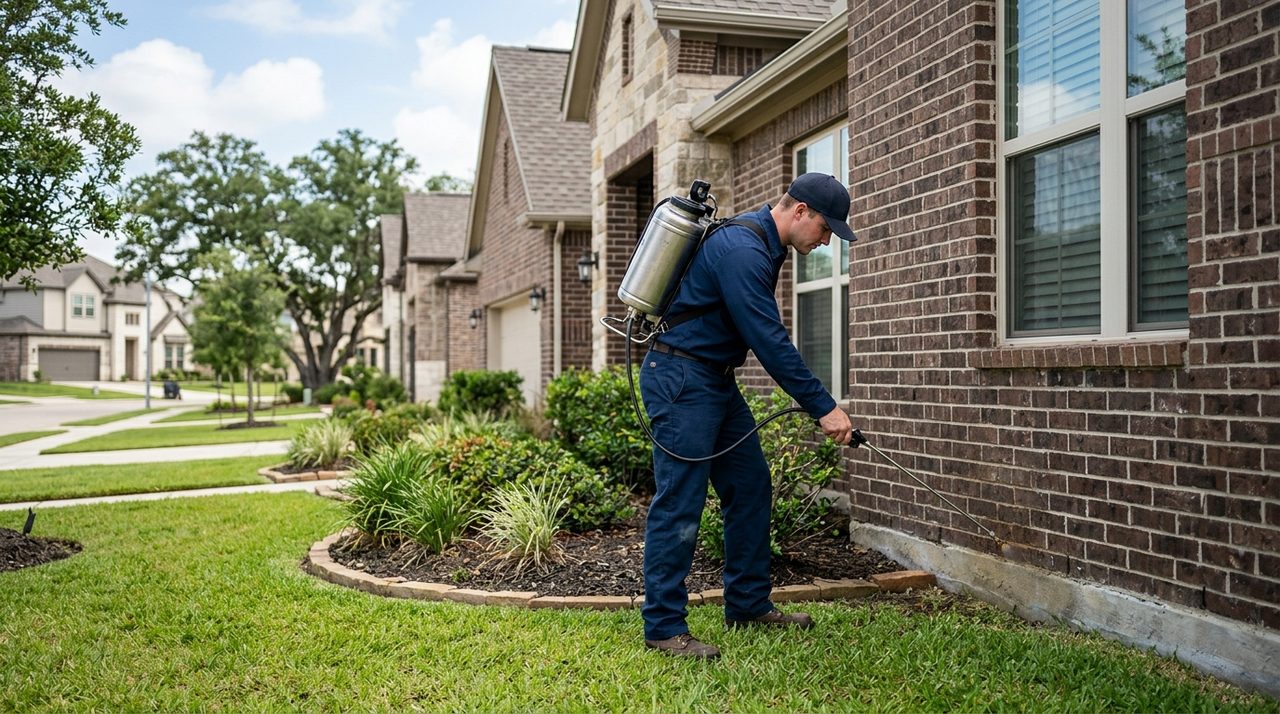
Tanglewood's mix of 1950s–1960s original ranch homes — many with aging cast-iron drain lines and older slab penetrations — sitting alongside newly rebuilt luxury custom homes on the same block creates unusually varied pest pressure across a single street. The neighborhood's mandatory Tanglewood Homes Association (THA) governs all exterior work, which means visible bait stations, perimeter treatment equipment, and even mound treatments near the street-side turf require awareness of deed restriction obligations before a technician sets foot in the yard. City of Houston permitting does not apply to routine pest control, but THA architectural controls add a layer of coordination that most Houston neighborhoods skip entirely.
Ranked by verified Google rating × review volume × verification tier. How we rank →
Some highly-rated pros serve Tanglewood from nearby and may not keep a Tanglewood street address. Those are listed under "Also serving Tanglewood" with their real city and distance, so you always know where each business is based.
6381 Westheimer Rd #5103, Houston, TX 77057
2323 S Voss Rd Suite 107, Houston, TX 77057
5830 Dolores St, Houston, TX 77057
Highly-rated pros based nearby who cover Tanglewood. Distance shown from the Tanglewood area.
Serving Tanglewood Based in Briargrove · 1.6 mi away
Serving Tanglewood Based in Briargrove · 1.9 mi away
Serving Tanglewood Based in Briargrove · 2.2 mi away
Serving Tanglewood Based in Bellaire · 2.2 mi away
Serving Tanglewood Based in Lazybrook / Timbergrove · 3.8 mi away
Serving Tanglewood Based in Lazybrook / Timbergrove · 3.8 mi away
Serving Tanglewood Based in Lazybrook / Timbergrove · 3.8 mi away
Why it matters to you
Tanglewood's original 1950s–1960s ranch homes were built on slab-on-grade foundations long before modern termiticide pre-treatment protocols were standard — leaving expansion joints, cast-iron plumbing sleeves, and post-tension cable voids as direct soil-to-wood highways for Formosan and Reticulitermes subterranean termites. Houston sits in USDA termite pressure Zone 5, the highest in the continental U.S., and the mature tree canopy that defines Tanglewood's streetscape adds mulch and moisture conditions that favor year-round colony activity. On a block where a surviving 1962 ranch sits next to a 2015 custom rebuild, termite pressure from the older home can bridge directly to the newer structure.
What a good pro does
A qualified operator holding a TDLR Structural Pest Control license with a termite category endorsement should perform a full slab-perimeter inspection, probing expansion joints and plumbing penetrations for mud tubes before proposing either a liquid Termidor-type barrier treatment (estimated $800–$1,800 for a typical Tanglewood slab, depending on linear footage) or a Sentricon-type bait station program (estimated $1,200–$2,000 installed, plus $300–$500/year monitoring). On surviving original homes, the operator should document all prior repair work — post-Uri pipe repairs in particular often left utility chases improperly resealed, creating new entry points. Annual monitoring contracts are strongly advisable given the neighborhood's persistent pressure.
Why it matters to you
A meaningful share of Tanglewood's surviving original homes still carry cast-iron drain lines beneath the slab — the same aging infrastructure that across Houston's inner loop creates persistent American cockroach (Periplaneta americana, locally called waterbugs) harborage pressure. These roaches migrate from warm sewer voids into living spaces through floor drains, slab plumbing penetrations, and weep holes in brick veneer after heavy rain displaces them from storm sewers — a dynamic that plays out even on Tanglewood's FEMA Zone X blocks, which still experience Houston's routine flash-flood rain events. Interior spray treatments alone cannot break the cycle without exterior exclusion work and drain treatment targeting the actual harborage.
What a good pro does
An effective program for a pre-1980 Tanglewood original combines exterior perimeter exclusion — sealing weep holes with pest-rated mesh, caulking slab penetrations, and treating the base of brick veneer — with gel bait or dust treatment at floor drains and under-slab voids. The operator must hold a TDLR general household pest endorsement; no City of Houston permit is required for this service category. Expect a one-time treatment for a 2,000 sq ft home to run an estimated $150–$300, with quarterly recurring service at $40–$70 per visit to prevent reinfestation from the sewer system.
Sources: Texas Department of Licensing & Regulation, Harris County Flood Control District
Why it matters to you
Tanglewood's extensive teardown-and-rebuild activity — which has replaced dozens of mid-century originals with large custom residences since the 1990s — creates a recurring rodent vulnerability that is easy to overlook on newer homes: utility chases and plumbing penetrations roughed in during construction are sometimes sealed to a builder standard that does not account for Houston's Beaumont/Houston Black clay soil movement. Seasonal slab shifting, which USGS measurements show can reach up to two inches of vertical differential in Harris County clay, reopens gaps around PEX stub-outs and conduit entries that Rattus norvegicus can exploit within a season. Active nearby construction — and Tanglewood's block-by-block rebuild cycle means there is almost always nearby construction — displaces existing rodent populations directly toward established homes.
What a good pro does
A TDLR-licensed operator performing a rodent exclusion program for a Tanglewood custom home should inspect all foundation penetrations, garage door sweep seals, and roofline utility entries, then use copper mesh and expanding foam rated for rodent exclusion before setting interior snap or tamper-resistant bait stations. Professional rodent exclusion plus initial treatment is estimated at $400–$900 for a typical Tanglewood-sized home. Because THA deed restrictions govern exterior modifications, discuss visible exterior bait box placement with THA before installation to confirm compliance — the Tanglewood Homes Association actively enforces restrictions on visible equipment at the property perimeter.
Sources: Texas Department of Licensing & Regulation, Local HOA / deed restrictions (see area profile)
Why it matters to you
Unlike most City of Houston neighborhoods that lack zoning and have minimal HOA oversight, Tanglewood's mandatory Tanglewood Homes Association (THA) — which has governed roughly 1,220 lots across 23 sections since 1948 — actively enforces strict deed restrictions that can directly affect pest control work. Visible bait stations placed along foundation edges, treated mounds near street-side turf, and perimeter application equipment left in place between service visits are all potential deed restriction issues that THA's architectural control process may flag. Homeowners who sign a quarterly pest service contract without checking THA requirements first can find themselves caught between an operator's standard installation and a THA compliance notice.
What a good pro does
Before signing any recurring service contract that includes exterior bait stations or perimeter broadcast treatments, confirm the proposed equipment placement and treatment schedule with THA directly — the association's deed restriction language governs visible alterations to the exterior of the property and grounds. Reputable TDLR-licensed operators familiar with Tanglewood will offer low-profile or flush-mounted bait station options and can schedule treatments within windows that minimize visible equipment time. No City of Houston permit is required for pest control service itself, but THA coordination is a real pre-work step that should be built into the service setup timeline.
Sources: Local HOA / deed restrictions (see area profile), Texas Department of Licensing & Regulation
Hiring pest control in Tanglewood? Tanglewood is one of Houston's most prestigious single-family neighborhoods, with roughly 1,220 lots governed by the mandatory Tanglewood Homes Association and strict deed restrictions. The housing stock spans original 1950s–1960s ranch homes and extensive new-construction luxury builds, creating a wide range of home service needs from aging-system upgrades to high-end custom installations. Contractors working here must navigate HOA architectural controls in addition to City of Houston permitting requirements.
Building era
1950s–1960s original construction with significant teardown and new-construction activity from the 1990s to present.
Typical style
Mix of original mid-century ranch-style homes and newer traditional and contemporary luxury builds.
Foundations
Likely predominantly slab-on-grade, especially on newer and replacement homes — not explicitly confirmed in sources; verify on a property-by-property basis.
Common systems
Original homes may retain older copper or galvanized plumbing, older electrical panels, and aging central HVAC systems. Newer builds typically feature modern high-efficiency HVAC, PEX or copper plumbing, and 200-amp electrical service. The wide era range means system conditions vary dramatically from lot to lot.
What that means for repairs
Teardown-and-rebuild is extremely common, replacing original 1950s–1960s homes with large custom residences. Whole-home renovations and major additions on surviving original structures are also frequent, often requiring full mechanical system upgrades to meet modern codes and homeowner expectations.
Permit jurisdiction
City of Houston — Houston Permitting Center. Tanglewood is within Houston city limits in Harris County.
HOA & deed restrictions
Mandatory HOA — Tanglewood Homes Association (THA), founded 1948, governing approximately 1,220 residential lots across 23 sections. THA actively enforces strict deed restrictions covering design, construction, and property use. Note: nearby communities such as Tanglewood Park and Tanglewood West have separate HOAs.
Historic districts
No City of Houston historic district designation confirmed. Tanglewood is not listed among HAHC-designated historic districts; no Certificate of Appropriateness is required for exterior work solely due to location in Tanglewood.
Contractor note
Contractors must obtain City of Houston permits for all applicable work and should confirm all exterior modifications and new construction plans with the Tanglewood Homes Association before beginning work, as THA enforces strict architectural and design deed restrictions that may exceed or differ from municipal code requirements.
FEMA flood zone
FEMA Zone X (low flood risk) per official NFHL data. Tanglewood is not immediately adjacent to a major bayou, though its general West Houston location places it in the broader Buffalo Bayou watershed.
Hurricane Harvey impact
No authoritative source documents significant neighborhood-wide structure flooding in Tanglewood during Hurricane Harvey. Available real estate and community descriptions do not flag flood-prone status as a major concern, suggesting Tanglewood did not experience the widespread damage seen in bayou-adjacent neighborhoods. However, this is inference rather than documented fact — flood risk should be evaluated on an address-specific basis using Harris County Flood Control District tools and seller disclosures.
Heat & humidity load
Houston's extreme summer heat and humidity place heavy demand on HVAC systems across all eras of Tanglewood housing stock. Original 1950s–1960s homes may have undersized ductwork and aging insulation, leading to higher cooling costs and more frequent HVAC service calls. Newer luxury builds with large square footage require properly sized multi-zone systems. Prolonged heat also accelerates weathering of exterior materials and drives demand for irrigation system maintenance on Tanglewood's characteristically large, wooded lots.
Working with contractors here
Contractors in Tanglewood most commonly handle full teardown-and-rebuild projects, converting mid-century ranch homes into large custom residences, as well as major whole-home renovations on surviving original structures. Plumbing and electrical upgrades are frequent on pre-1970s homes that still have original galvanized or cast-iron drain lines and older panels. The mandatory Tanglewood Homes Association requires architectural review and approval for exterior work, so contractors should build THA coordination into project timelines. High-end finish expectations are the norm — clients in this neighborhood typically expect premium materials, meticulous workmanship, and detailed project management. Job scoping should account for large lot sizes, mature tree protection, and potential underground utility complications on properties that have been modified over multiple decades.
Local Tip
Always ask for a written estimate before work begins. Texas contractors are required to provide one on jobs over $1,000.
Tanglewood is one of Houston's most prestigious single-family neighborhoods, with roughly 1,220 lots governed by the mandatory Tanglewood Homes Association and strict deed restrictions. The housing stock spans original 1950s–1960s ranch homes and extensive new-construction luxury builds, creating a wide range of home service needs from aging-system upgrades to high-end custom installations. Contractors working here must navigate HOA architectural controls in addition to City of Houston permitting requirements.
Source: U.S. Census Bureau, ACS 5-Year 2023
Most of Tanglewood maps to FEMA Zone X (low mapped flood risk), but Houston's flash-flood reality means even low-risk blocks benefit from smart drainage and storm-hardened installs.
Source: FEMA National Flood Hazard Layer (NFHL). Flood zones vary by parcel — verify your individual FIRM panel.
Houston-specific estimators to plan your project before you call a pro. All results are planning estimates — a licensed local pro confirms the details on site.
| Pest | Cadence | Active window |
|---|---|---|
Mosquito control A standard 4-week barrier treatment holds a typical suburban lot through Houston's core mosquito season. | Every 28 days | April – October |
Termite (subterranean) A once-a-year spring inspection is the baseline for a drier, sunnier Houston lot — catch mud tubes and swarmer wings before damage compounds. | Annual inspection | Spring |
General pest guard (roaches, ants, spiders) Houston's year-round warmth means general pests never fully die off — a quarterly perimeter treatment is the standard maintenance rhythm. | Quarterly | Mar · Jun · Sep · Dec |
This is a planning estimate only — actual requirements depend on an on-site assessment by a licensed Houston pro. Texas requires an SPCB-licensed applicator for chemical treatment — ask for the technician's license number.
Sources: FEMA National Flood Hazard Layer (NFHL)Harris County Flood Control District
Sources: Local HOA / deed restrictions (see area profile)