Closed
Houston, TX 77272
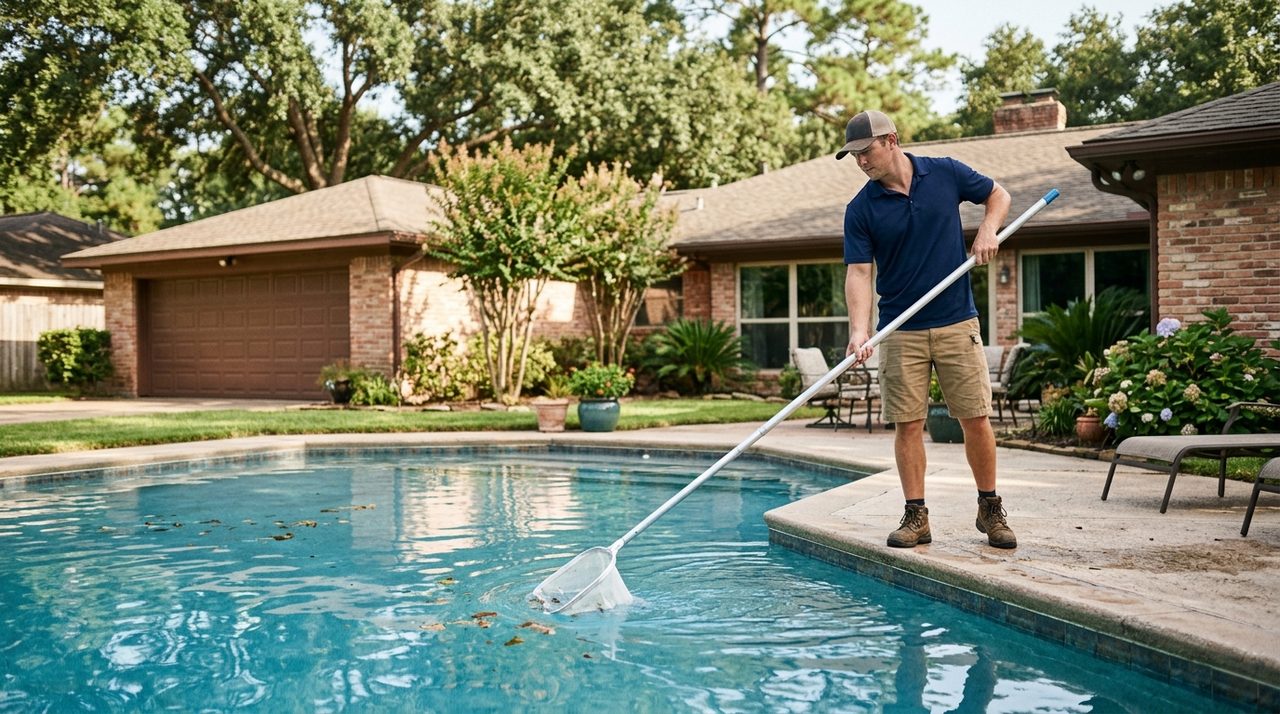
Oak Forest's mid-century lots — many lined with mature oaks and pecans planted in the 1950s and '60s — create a year-round organic loading problem for pool owners that newer subdivisions simply don't face: leaf litter, pollen, and seed pods feed algae and clog filters faster than Houston's subtropical heat alone would. Add in the neighborhood's mix of original 1940s–1960s-era pool equipment on some properties alongside recently rebuilt pools on teardown lots, and you get a wide span of maintenance needs on the same block. Understanding which challenges are specific to Oak Forest's tree canopy, Harris County clay soil, and City of Houston permit rules will save you money and keep your water safe.
Ranked by verified Google rating × review volume × verification tier. How we rank →
Some highly-rated pros serve Oak Forest from nearby and may not keep a Oak Forest street address. Those are listed under "Also serving Oak Forest" with their real city and distance, so you always know where each business is based.
Houston, TX 77272
Highly-rated pros based nearby who cover Oak Forest. Distance shown from the Oak Forest area.
Serving Oak Forest Based in Lazybrook / Timbergrove · 0.1 mi away
Serving Oak Forest Based in Lazybrook / Timbergrove · 1.1 mi away
Serving Oak Forest Based in Lazybrook / Timbergrove · 1.3 mi away
Serving Oak Forest Based in Independence Heights · 1.6 mi away
Serving Oak Forest Based in Lazybrook / Timbergrove · 1.7 mi away
Serving Oak Forest Based in Brookhollow · 3 mi away
Serving Oak Forest Based in Lazybrook / Timbergrove · 4.1 mi away
Serving Oak Forest Based in NW Houston · 4.5 mi away
Serving Oak Forest Based in Lazybrook / Timbergrove · 4.6 mi away
Why it matters to you
The large specimen trees that give Oak Forest its name and character — many planted when the neighborhood was built out between the 1940s and 1960s — shed leaves, pollen, and seed hulls directly into pools for nine or more months of the year. Organic debris decomposes quickly in Houston's subtropical heat, spiking phosphate levels that feed algae blooms even in a properly chlorinated pool. With Houston water temperatures staying above 70°F from roughly March through November, there is almost no seasonal reset.
What a good pro does
A pool technician servicing Oak Forest homes should test phosphate levels at every visit — not just monthly — and apply a phosphate remover as a standing protocol rather than a reactive measure. Skimmer baskets and pump basket inspections need to happen weekly during peak canopy-drop seasons (spring pollen and fall leaf drop). Cyanuric acid levels should be kept in the 50–80 ppm range to stabilize chlorine against Houston's UV index, which regularly hits 10–11 from May through September, reducing chlorine burn-off between visits.
Why it matters to you
Some Oak Forest pools were installed alongside the original 1950s–1960s homes and still run on equipment that predates modern automated freeze-protection controllers. Winter Storm Uri in February 2021 cracked pump housings, split exposed PVC plumbing, and destroyed salt cells across Harris County; pools without freeze guards were the hardest hit. Even a single hard freeze — common enough in a Harris County winter — can split an uninsulated pump housing or crack a heater manifold on equipment that old.
What a good pro does
A thorough service tech should document whether your pool equipment has an operational freeze guard and flag any pump, heater, or PVC plumbing run that lacks insulation or is positioned on an exposed north-facing wall. If a pump motor or heater needs replacement after freeze damage, note that equipment swaps — particularly anything involving electrical connections — may require a permit filed with the City of Houston Permitting Center, since Oak Forest falls within Houston city limits. Expect pump motor replacement to run $300–$600 and heater repair or replacement to reach $1,500 or more depending on extent of damage.
Sources: City of Houston Permitting Center, Texas Department of Licensing & Regulation
Why it matters to you
Oak Forest sits on the same expansive Houston Black clay that underlies most of NW Harris County. During Houston's boom-and-bust rainfall cycles — wet springs followed by baking summer droughts — the soil swells and contracts enough to displace pool coping, pop tile off the waterline, and in some cases shift a pool shell enough to crack return line fittings or stress plaster. This is especially relevant on lots where teardown-rebuilds have disturbed and regraded the original soil, potentially creating inconsistent bearing beneath an older adjacent pool.
What a good pro does
A pool cleaning professional doing regular service is often the first person to notice hairline cracks in plaster, lifted coping stones, or tile grout separating at the waterline — all early signs of soil movement. Catching these early matters because a crack that lets water migrate under the shell accelerates further movement. The tech should document and photograph any structural change visit-to-visit and recommend a pool contractor evaluation before a cosmetic issue becomes a structural one. Plaster repair and coping resets are contractor-level work requiring a TDLR-licensed residential pool and spa contractor.
Sources: Texas Department of Licensing & Regulation, Harris County Flood Control District
Why it matters to you
Oak Forest is solidly in FEMA Zone X — low mapped flood risk — so direct floodwater intrusion into pools is less common here than in Meyerland or Kingwood. But the May 2024 derecho and Hurricane Beryl in July 2024 still dropped massive debris loads and, in Beryl's case, left much of NW Houston without power for days. A pool pump that sat idle during an extended outage — with no circulation, no sanitizer turnover, and a full load of storm debris — can go from clear to green in 48–72 hours in Houston's summer heat.
What a good pro does
After any significant storm event, pool owners in Oak Forest should prioritize circulation restoration first: run the pump as soon as power returns and check that no debris has blocked the pump basket or impeller before starting. Green-pool remediation — shock treatment, clarifier application, and multiple filter backwashes — typically runs $250–$600 and is best handled by a professional who can test for metal contamination (from debris and sediment) before shocking, since chlorine can oxidize metals and stain plaster. Because Oak Forest is in Houston city limits, any electrical repair to pool equipment requires permits pulled at the City of Houston Permitting Center, not a suburban MUD or city office.
Sources: FEMA National Flood Hazard Layer (NFHL), City of Houston Permitting Center, Harris County Flood Control District
Hiring pool cleaning in Oak Forest? Oak Forest is a large, deed-restricted neighborhood of 1940s–1960s homes experiencing significant renovation and new construction activity. Homeowners here navigate a mix of aging original systems and modern rebuilds, with no mandatory HOA but recorded deed restrictions that vary by section. Contractors should expect a wide range of project scopes, from updating original mid-century infrastructure to full teardown-and-rebuild jobs.
Building era
1940s–1960s, with ongoing new construction infill.
Typical style
Mid-century ranch-style homes predominate among original stock; newer construction varies in style. Specific architectural breakdown not confirmed in available sources.
Foundations
Not confirmed from available sources. Likely a mix of slab-on-grade and pier-and-beam consistent with the era, but homeowners should verify on a per-property basis.
Common systems
Original homes may have galvanized or cast-iron drain plumbing, older electrical panels (60–100 amp), and window-unit or early central HVAC systems. Updated and rebuilt homes typically feature modern systems.
What that means for repairs
Oak Forest sees heavy renovation activity driven by the desirability of the location and the aging of original 1950s–1960s housing stock. Common projects include full kitchen and bathroom remodels, re-plumbing from galvanized to copper or PEX, electrical panel upgrades, and complete teardown-rebuilds on original lots.
Permit jurisdiction
City of Houston Permitting Center (Oak Forest is within Houston city limits).
HOA & deed restrictions
No mandatory HOA. The Oak Forest Homeowners Association (OFHA) is a voluntary, non-mandatory civic association covering 18 sections. Recorded deed restrictions exist across most sections and vary by block/section.
Historic districts
No City of Houston historic district designation confirmed. HAHC Certificates of Appropriateness are not known to be required.
Contractor note
Contractors should review the applicable section's recorded deed restrictions before beginning exterior work or additions, as restrictions vary across Oak Forest's 18 sections and may govern setbacks, outbuildings, and use. No HAHC review is required, but City of Houston permitting rules apply in full.
FEMA flood zone
FEMA Zone X (low flood risk) per official NFHL data. However, buyers and contractors are advised to verify flood zone status on a per-property basis, especially for lots near bayous or drainage channels.
Hurricane Harvey impact
Specific Harvey 2017 flood impact data for Oak Forest was not confirmed in available sources. Neighborhood guides advise verifying flood zone status near bayous, suggesting some pockets may carry elevated risk, but widespread significant flooding was not documented in the research reviewed.
Heat & humidity load
Original 1950s–1960s homes with aging HVAC systems are particularly vulnerable during Houston's extreme summer heat. Contractors should expect seasonal demand spikes for AC repair, attic insulation upgrades, and weatherization projects. Older pier-and-beam foundations may also see moisture-related issues during humid summer months.
Working with contractors here
Oak Forest's mid-century housing stock drives steady demand for whole-house updates including re-plumbing, electrical upgrades, and HVAC replacement. The neighborhood's popularity and rising property values fuel frequent teardown-rebuild projects, requiring contractors to navigate City of Houston permitting for new construction. Renovation jobs on original homes often uncover outdated wiring, galvanized plumbing, and inadequate insulation, so thorough pre-project inspections are essential for accurate scoping. Contractors should also be aware that deed restrictions vary across Oak Forest's 18 sections, potentially affecting fence heights, accessory structures, and exterior modifications. The voluntary nature of the HOA means enforcement of deed restrictions may be driven by individual neighbors or section-level efforts rather than a centralized authority.
Local Tip
Always ask for a written estimate before work begins. Texas contractors are required to provide one on jobs over $1,000.
Oak Forest is a large, deed-restricted neighborhood of 1940s–1960s homes experiencing significant renovation and new construction activity. Homeowners here navigate a mix of aging original systems and modern rebuilds, with no mandatory HOA but recorded deed restrictions that vary by section. Contractors should expect a wide range of project scopes, from updating original mid-century infrastructure to full teardown-and-rebuild jobs.
Source: U.S. Census Bureau, ACS 5-Year 2023
Most of Oak Forest maps to FEMA Zone X (low mapped flood risk), but Houston's flash-flood reality means even low-risk blocks benefit from smart drainage and storm-hardened installs.
Source: FEMA National Flood Hazard Layer (NFHL). Flood zones vary by parcel — verify your individual FIRM panel.
Sources: City of Houston Permitting Center
Sources: Local HOA / deed restrictions (see area profile)