Closed
7937 Woodway Dr, Houston, TX 77063
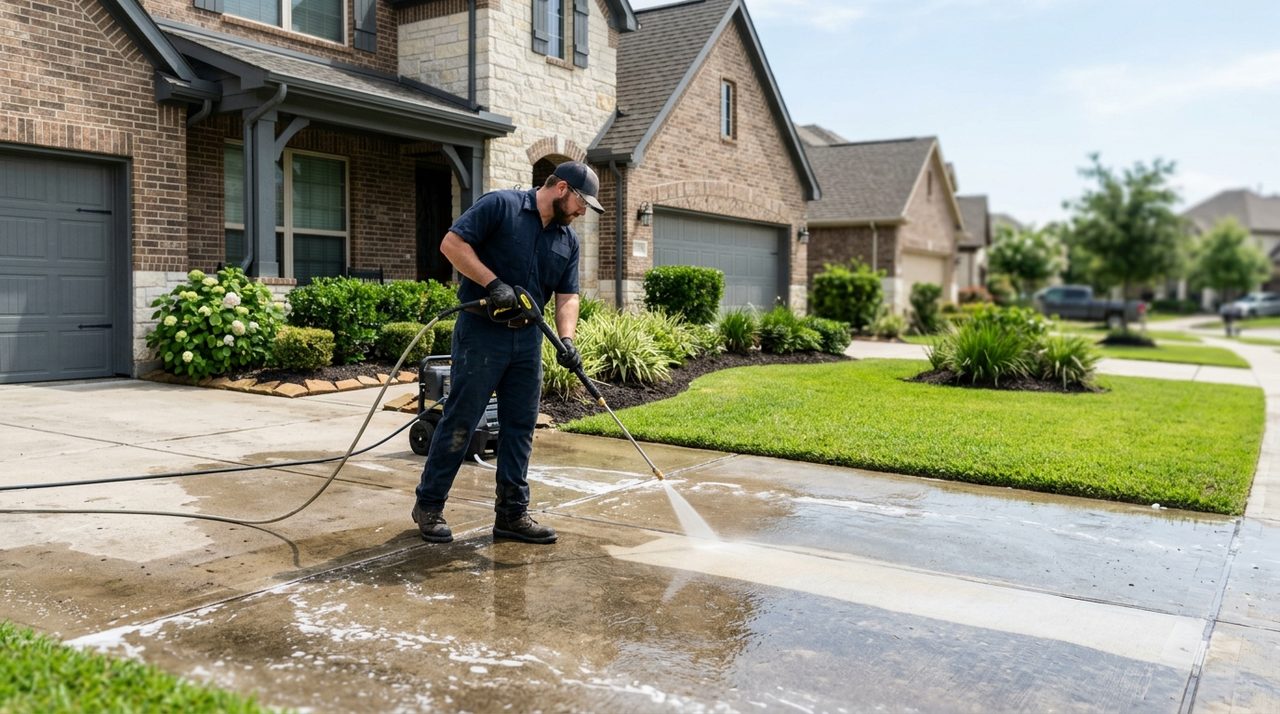
Briargrove's tree-canopied streets and dense 1950s housing stock create a pressure-washing environment unlike newer subdivisions: decades-old brick and concrete surfaces sit under mature oak and pine canopy that accelerates mold and algae growth year-round, while the neighborhood's mandatory HOA actively monitors exterior appearance and can issue cure notices for algae-stained driveways or discolored fences. Whether your home is an original mid-century ranch or a recent teardown-rebuild, understanding which surfaces need soft-wash chemistry versus direct pressure — and what the Briargrove HOA expects — will save you money and prevent costly surface damage.
Ranked by verified Google rating × review volume × verification tier. How we rank →
Some highly-rated pros serve Briargrove from nearby and may not keep a Briargrove street address. Those are listed under "Also serving Briargrove" with their real city and distance, so you always know where each business is based.
7937 Woodway Dr, Houston, TX 77063
8950 Westpark Dr, Houston, TX 77063
Highly-rated pros based nearby who cover Briargrove. Distance shown from the Briargrove area.
Serving Briargrove Based in Tanglewood · 0.9 mi away
Serving Briargrove Based in Tanglewood · 1 mi away
Serving Briargrove Based in Tanglewood · 2.1 mi away
Serving Briargrove Based in Tanglewood · 2.2 mi away
Serving Briargrove Based in Spring Branch · 2.9 mi away
Serving Briargrove Based in Bellaire · 3 mi away
Serving Briargrove Based in Westchase · 3.1 mi away
Serving Briargrove Based in Bellaire · 3.3 mi away
Why it matters to you
Briargrove's signature tree-lined streets keep surfaces shaded and damp for hours after rain, giving Gloeocapsa magma black algae and green mold near-constant conditions to thrive on the original brick facades and aged concrete driveways that characterize the neighborhood's 1950s-era homes. Unlike newer subdivisions built on cleared lots, these surfaces have accumulated decades of organic material in their pores, meaning visible regrowth can return within six to twelve months of a cleaning if no post-treatment biocide is applied.
What a good pro does
A qualified operator will apply a low-pressure soft-wash solution — sodium hypochlorite at appropriate dilution combined with a surfactant — directly to brick and mortar rather than blasting it at high pressure, which can erode aged mortar joints on 70-year-old masonry. Following the wash, a downstream-applied algaecide treatment extends the clean surface period significantly; ask your operator specifically about post-treatment for shaded north and east-facing elevations, which are the hardest hit in this neighborhood. Texas does not require a state license for pressure washing itself, but operators applying algaecide products classified as pesticides should hold a Texas Department of Agriculture (TDA) pesticide applicator credential.
Sources: Local HOA / deed restrictions (see area profile), Texas Commission on Environmental Quality
Why it matters to you
The Briargrove Homeowners Association actively enforces deed restrictions and can issue written violation notices for algae-stained driveways, discolored wood fences, or green-tinted exterior surfaces — with cure windows that can be as short as 30 days. Because Briargrove sits within Houston city limits and has no City zoning overlay, the HOA's deed restrictions are the primary exterior appearance authority, making proactive cleaning a practical necessity rather than an optional upgrade for homeowners here.
What a good pro does
Schedule a full-property wash — house exterior, driveway, walkways, and fence — before receiving a notice rather than in response to one; reactive cleaning under a cure deadline often means paying a premium for rushed scheduling. For wood privacy fences common to post-renovation lots in Briargrove, keep pressure below 1,200 PSI on weathered pine to avoid splintering the grain, and follow with a penetrating sealant or stain to slow re-graying. Document the completed work with dated photographs in case you need to respond to an HOA inquiry — the Briargrove HOA deed restrictions are recorded with the Harris County Clerk and your operator should be aware of any material-specific restrictions before beginning.
Sources: Local HOA / deed restrictions (see area profile), City of Houston Permitting Center
Why it matters to you
Many Briargrove driveways still feature original 1950s concrete pours — or replacements from the 1970s and 1980s — that are highly porous and have absorbed decades of vehicle oil and oxidation. Winter Storm Uri in February 2021 introduced freeze-thaw stress unusual for Houston, accelerating surface spalling on driveways across the metro, including in west Houston neighborhoods like Briargrove where concrete was never engineered for repeated freeze cycles.
What a good pro does
Oil and grease stains baked into porous, aged concrete require hot-water equipment and a chemical degreaser pre-treatment well before the pressure wand makes contact — cold-water rinsing alone will not break the bond. Operators using degreasers must contain and properly dispose of wash water rather than letting it sheet-flow to the street drain, because TCEQ rules and Houston city ordinance prohibit chemically contaminated wash water from entering storm drains that flow to local bayous. Estimated cost for a driveway with oil-stain treatment runs $180–$490 for a typical Briargrove lot, with a 20–40% premium over a standard rinse job; that is an estimate and varies with surface condition and degreaser chemistry required.
Sources: Texas Commission on Environmental Quality, City of Houston Permitting Center
Why it matters to you
Briargrove's blend of original mid-century homes and recent teardown-rebuilds means roof ages vary widely on the same block, but both older 3-tab shingles and architectural shingles installed on renovated homes accumulate Gloeocapsa magma black streaks rapidly under Houston's humidity — often within two to three years of installation. The Briargrove HOA monitors exterior appearance including roofs, and a visibly streaked roof can trigger a deed-restriction inquiry even on a home that was otherwise recently remodeled.
What a good pro does
Asphalt shingles of any age lose granules — and void manufacturer warranties — if hit with pressure above roughly 500 PSI; the only correct method is a true low-pressure soft-wash, typically 50–150 PSI, paired with a sodium hypochlorite solution that kills the algae colony at the root rather than just rinsing the surface. Operators applying this chemistry at concentrations that classify the product as a pesticide under Texas Department of Agriculture rules should carry the appropriate TDA applicator credential. Estimated cost for a single-story Briargrove roof soft-wash is $300–$600; two-story homes or steeply pitched roofs will carry additional access charges.
Sources: Local HOA / deed restrictions (see area profile), Texas Commission on Environmental Quality
Hiring pressure washing in Briargrove? Briargrove is a well-established 1950s subdivision in west Houston with tree-lined streets, an active mandatory HOA, and a housing stock that increasingly blends original mid-century construction with significant modern updates. Homeowners here frequently navigate renovation projects that must satisfy both City of Houston permitting requirements and Briargrove HOA deed restrictions. The aging infrastructure—plumbing, electrical, and HVAC—drives steady demand for upgrades and whole-home remodels.
Building era
1950s, with ongoing renovations and some teardown-rebuilds in subsequent decades.
Typical style
Older homes with modern updates; specific architectural style breakdown (ranch, traditional, mid-century modern) not confirmed in available research.
Foundations
Not confirmed - check with local inspectors; both slab-on-grade and pier-and-beam are common in 1950s-era Houston subdivisions.
Common systems
Homes of this era typically feature galvanized or cast-iron drain lines, copper supply piping, older electrical panels (potentially 100-amp or fuse boxes in un-renovated homes), and central HVAC systems that may have been retrofitted or replaced multiple times.
What that means for repairs
Significant teardown and rebuild activity is common in established west Houston neighborhoods like Briargrove, alongside whole-home remodels that modernize kitchens, bathrooms, and mechanical systems while preserving lot footprints under HOA guidelines.
Permit jurisdiction
City of Houston Permitting Center (Briargrove is within Houston city limits).
HOA & deed restrictions
Mandatory HOA: Briargrove Homeowners Association, Inc. (also referenced as Briargrove Property Owners Association). The association actively enforces deed restrictions and community rules. Specific recorded deed restriction details not confirmed - check Harris County Clerk records.
Historic districts
No City of Houston historic district designation confirmed.
Contractor note
Contractors must obtain City of Houston permits for structural, electrical, plumbing, and mechanical work, and should verify project plans comply with Briargrove HOA deed restrictions before beginning exterior modifications or new construction.
FEMA flood zone
FEMA Zone X (low flood risk) - source: fema_nfhl. Briargrove is located in west Houston; specific bayou or creek proximity details were not confirmed in available research.
Hurricane Harvey impact
Specific Hurricane Harvey (2017) flooding data for Briargrove was not confirmed in available research. Recurring flood-prone streets or blocks could not be identified from provided sources. Homeowners should check Harris County Flood Control District records and individual property flood history for site-specific risk.
Heat & humidity load
Houston's extreme summer heat and humidity place heavy demands on HVAC systems in 1950s-era homes, which may have inadequate insulation, single-pane windows, or undersized ductwork. Contractors should expect high seasonal demand for AC repairs, attic insulation upgrades, and weatherization work. Foundation movement from clay soil expansion and contraction during summer drought cycles is also a recurring concern.
Working with contractors here
Briargrove's 1950s housing stock generates consistent demand for plumbing re-pipes (replacing galvanized and cast-iron lines), electrical panel upgrades, and HVAC system replacements. Whole-home remodels and teardown-rebuilds are common as homeowners invest in modernizing aging properties on desirable lots. Contractors should be prepared to coordinate with the Briargrove HOA on exterior work, including fencing, roofing materials, and driveway modifications. Foundation repair is a frequent need given the age of homes and Houston's expansive clay soils. Job scoping should account for potential asbestos or lead paint in original construction materials, requiring proper testing and abatement procedures.
Local Tip
Always ask for a written estimate before work begins. Texas contractors are required to provide one on jobs over $1,000.
Briargrove is a well-established 1950s subdivision in west Houston with tree-lined streets, an active mandatory HOA, and a housing stock that increasingly blends original mid-century construction with significant modern updates. Homeowners here frequently navigate renovation projects that must satisfy both City of Houston permitting requirements and Briargrove HOA deed restrictions. The aging infrastructure—plumbing, electrical, and HVAC—drives steady demand for upgrades and whole-home remodels.
Source: U.S. Census Bureau, ACS 5-Year 2023
Most of Briargrove maps to FEMA Zone X (low mapped flood risk), but Houston's flash-flood reality means even low-risk blocks benefit from smart drainage and storm-hardened installs.
Source: FEMA National Flood Hazard Layer (NFHL). Flood zones vary by parcel — verify your individual FIRM panel.
Sources: City of Houston Permitting Center
Sources: Local HOA / deed restrictions (see area profile)