505 Cresline St, Houston, TX 77076
Best Roofers in Garden Oaks
Garden Oaks's split housing stock — original 1930s–1950s Craftsman bungalows sitting next to 2000s-era custom rebuilds on the same block — means no two roofing jobs here are alike, and the Garden Oaks Civic Club's deed restriction enforcement adds a compliance layer that catches homeowners off guard when they change roofing materials. All roofing work falls under the City of Houston's permitting jurisdiction at the Houston Permitting Center, and the nuances of when a permit is actually required versus optional are worth understanding before you sign a contract.
Verified against Google Business data
Updated 2026
See the 10 Roofers Serving Garden Oaks 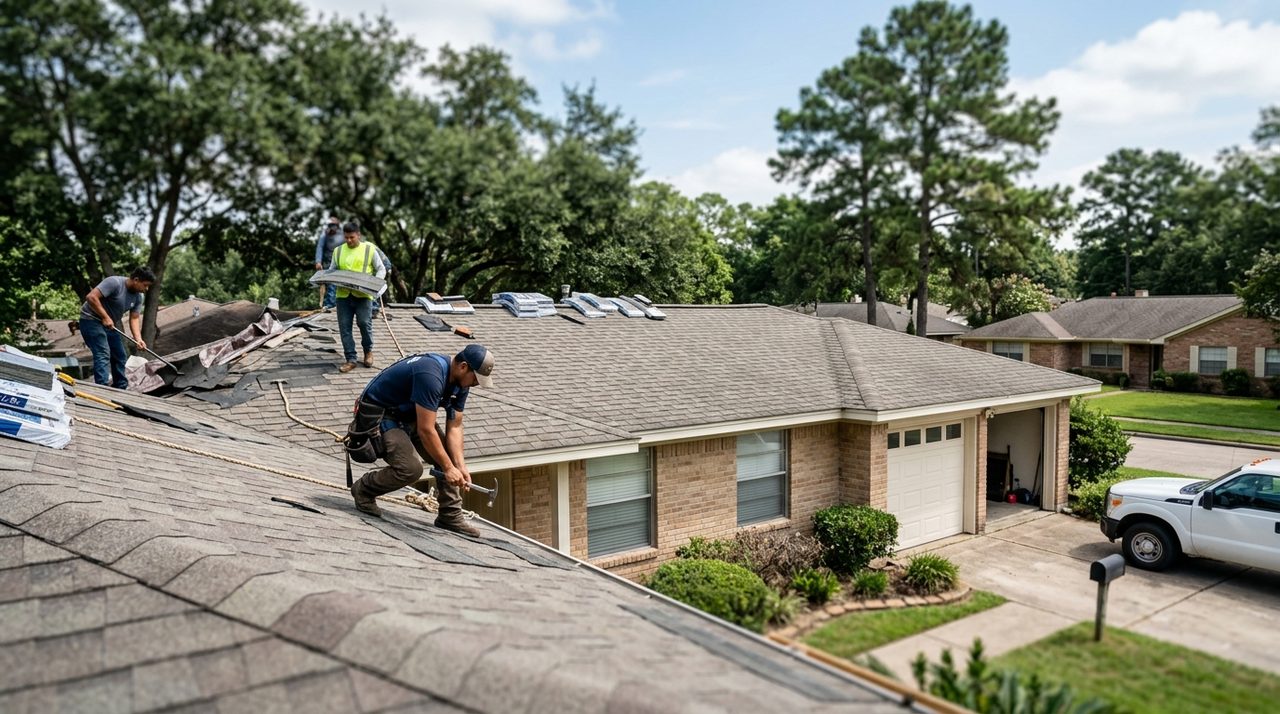
- Median home built
- 1963
- Median home value
- $147,700
- FEMA flood zone
- X (low)
- Typical re-roof cost (est.)
- $9,000–$16,000
- Most common local issue
- Aged low-slope bungalow roofs with deck rot from Houston's year-round humidity
Ranked by verified Google rating × review volume × verification tier. How we rank →
Some highly-rated pros serve Garden Oaks from nearby and may not keep a Garden Oaks street address. Those are listed under "Also serving Garden Oaks" with their real city and distance, so you always know where each business is based.
Min rating:
10 resultsBased in Garden Oaks
Also serving Garden Oaks
Highly-rated pros based nearby who cover Garden Oaks. Distance shown from the Garden Oaks area.
Serving Garden Oaks Based in Lazybrook / Timbergrove · 0.5 mi away
Open Now
Serving Garden Oaks Based in Lazybrook / Timbergrove · 1.1 mi away
Serving Garden Oaks Based in Lazybrook / Timbergrove · 1.5 mi away
Open Now
Serving Garden Oaks Based in Lazybrook / Timbergrove · 1.6 mi away
Closed
Serving Garden Oaks Based in Lazybrook / Timbergrove · 1.6 mi away
Open Now
Serving Garden Oaks Based in The Heights · 1.6 mi away
Serving Garden Oaks Based in Lazybrook / Timbergrove · 1.6 mi away
Closed
Serving Garden Oaks Based in Acres Homes · 1.7 mi away
Open Now
Serving Garden Oaks Based in Acres Homes · 2 mi away
Roofers in Garden Oaks: What You Should Know
Deck rot hiding beneath 1930s–1950s bungalow shingles
Why it matters to you
Garden Oaks's original Craftsman cottages were built decades before modern ridge-and-soffit ventilation standards existed. Many still rely on original gable or box vents that fail to meet IRC R806 balanced ventilation ratios, allowing Houston's annual average relative humidity — which exceeds 75% — to condense on the OSB or board-sheathed decking year-round. By the time a leak is visible on the ceiling, the deck underneath may have been silently delaminating for years, and a cosmetic shingle replacement without addressing ventilation will rot a new deck within five to eight years.
What a good pro does
A qualified roofer should perform a physical deck inspection — not just a shingle-surface assessment — before quoting any job on a pre-1960 Garden Oaks home. Ask for a written ventilation calculation showing intake and exhaust square footage against the attic floor area per IRC R806. If the roofer proposes adding a continuous ridge vent on a bungalow with original gable ends, confirm they are also closing off the competing gable vents so the airflow path is not short-circuited.
Sources: International Residential Code (as adopted by City of Houston), City of Houston Permitting Center
Deed restriction review before you change a single shingle color
Why it matters to you
The Garden Oaks Civic Club enforces deed restrictions across most of the neighborhood, and at least three mandatory HOAs are registered within Garden Oaks's boundaries per Texas Real Estate Commission filings. A homeowner who upgrades from a standard 3-tab to a Class 4 impact-resistant shingle in a different color profile, or who installs standing-seam metal roofing on a contemporary rebuild, risks a deed-restriction challenge that can require a forced re-roof at personal expense — even if the City of Houston's permit office has no objection.
What a good pro does
Before signing any roofing contract for a material or color change, pull the deed restrictions applicable to your specific section and submit the proposed product's color sample and spec sheet to the Garden Oaks Civic Club for written acknowledgment. A good local roofer familiar with inner-loop Houston deed-restriction neighborhoods will have this process built into their pre-job checklist and can flag which shingle lines have previously been approved on nearby homes. Budget 10–30 days for this review if you are mid-storm-damage cycle.
Sources: Local HOA / deed restrictions (see area profile), Municipal permit office (see area profile)
May 2024 derecho and recurring hail: invisible shingle bruising on mid-age roofs
Why it matters to you
Many of Garden Oaks's contemporary rebuilds installed between 2000 and 2015 are now carrying 10–20 year-old architectural shingles that absorbed both the May 2024 derecho's 100-plus mph straight-line winds across Harris County and multiple significant hail events in the years preceding it. Granule loss and fiberglass mat bruising from hail are invisible at ground level but void manufacturer warranties and dramatically accelerate UV degradation under Houston's sustained summer heat — a roof that looks functional from the curb may already be past its effective service life.
What a good pro does
Request an in-person, on-the-roof inspection — not a drive-by estimate — after any wind or hail event. A competent roofer will check for lifted tabs, damaged ridge cap, exposed fastener heads along field sections, and will use a downward-light technique or moisture meter to identify granule-depleted zones. If the home is insured under a TWIA wind policy, confirm the roofer is familiar with TWIA's documentation requirements for supplement claims before work begins, as inadequate photo documentation at the time of repair is the leading reason TWIA supplements are denied.
Sources: Texas Windstorm Insurance Association (TWIA), International Residential Code (as adopted by City of Houston)
Flat and low-slope rear additions on bungalows: the hidden ponding risk
Why it matters to you
A large share of Garden Oaks's 1930s–1950s cottages were expanded over the decades with rear additions, covered porches, or enclosed sunrooms that ended up under flat or low-slope (under 2:12 pitch) modified bitumen or built-up membrane sections. Houston's rainfall intensity — Harvey deposited 60 inches in four days in 2017, and even routine summer storms routinely produce three or more inches per hour — overwhelms interior drains and scuppers on these additions, causing prolonged ponding that accelerates membrane delamination and introduces moisture to the original home's wall framing where the addition ties in.
What a good pro does
A roofer quoting a bungalow in Garden Oaks should walk the full roofline, including any addition sections, and separately scope flat or low-slope areas at the correct material pricing — modified bitumen and TPO replacement runs approximately $4.50–$7.50 per square foot installed, distinct from the shingle field pricing. Confirm the drain or scupper sizing is adequate for Harris County's design rainfall intensity, and ask whether the membrane termination at the wall-to-roof tie-in has been detailed with proper step flashing rather than caulk, which fails within two to three Houston wet seasons.
Sources: FEMA National Flood Hazard Layer (NFHL), International Residential Code (as adopted by City of Houston), City of Houston Permitting Center
Roofers in Garden Oaks: What You Should Know
Hiring roofers in Garden Oaks? Garden Oaks presents a split housing stock of original 1930s–1950s bungalows and modern custom homes, creating two distinct home-service profiles on the same streets. Deed restrictions enforced by the Garden Oaks Civic Club govern exterior modifications, so contractors should verify compliance before starting work. The neighborhood sits in FEMA Zone X with low flood risk, but aging plumbing and electrical in vintage homes drive steady renovation demand.
- Housing era
- 1930s–1950s (original stock), with significant contemporary infill from 2000s–present
- Foundation
- Not confirmed from available sources — likely mixed pier-and-beam (older bungalows) and slab-on-grade (newer…
- Flood zone
- FEMA Zone X (low flood risk) per official NFHL data
- Permits
- City of Houston — Houston Permitting Center (HPW)
Housing stock & systems
Building era
1930s–1950s (original stock), with significant contemporary infill from 2000s–present.
Typical style
Craftsman-style bungalows and cottages (original); contemporary and transitional custom builds (newer).
Foundations
Not confirmed from available sources — likely mixed pier-and-beam (older bungalows) and slab-on-grade (newer construction). Verify on a per-property basis.
Common systems
Original homes may have galvanized or cast-iron drain lines, older copper supply lines, 60–100 amp electrical panels, and aging forced-air or window-unit HVAC. Newer builds typically have PEX plumbing, 200-amp panels, and modern high-efficiency HVAC systems.
What that means for repairs
Teardown-and-rebuild activity is very common due to the large lot sizes and high land values. Older bungalows undergo kitchen and bath remodels, electrical panel upgrades, and re-plumbing. Foundation repair on pier-and-beam vintage homes is a recurring need.
Permits & restrictions
Permit jurisdiction
City of Houston — Houston Permitting Center (HPW).
HOA & deed restrictions
Most of Garden Oaks operates under the Garden Oaks Civic Club / Garden Oaks Maintenance Organization (GOMO), which enforces deed restrictions but does not charge a mandatory annual HOA fee. Section 4 specifically has no transfer fee. However, three mandatory HOAs are registered in the Garden Oaks area per Texas Real Estate Commission filings — exact names and boundaries not confirmed.
Historic districts
No City of Houston historic district designation confirmed. No references to HAHC review or Certificates of Appropriateness were found for Garden Oaks, though a formal city historic-district list was not available in research — verify with Houston Planning & Development if exterior changes are planned.
Contractor note
Deed restrictions enforced by the civic club may regulate exterior materials, setbacks, and accessory structures. Contractors should review the applicable section's deed restrictions before beginning exterior work, and confirm whether the specific property falls under one of the three registered mandatory HOAs.
Flood & weather
FEMA flood zone
FEMA Zone X (low flood risk) per official NFHL data. Garden Oaks is not immediately adjacent to a major bayou, though Little White Oak Bayou runs to the neighborhood's general south/southeast.
Hurricane Harvey impact
No source in the available research directly addresses Hurricane Harvey flooding specific to Garden Oaks. No quantified damage figures, flooded-street lists, or recurring flood problem areas were identified. Not confirmed — check Harris County Flood Control District records and FEMA claims data for property-level Harvey impact.
Heat & humidity load
Original 1930s bungalows with limited insulation and older HVAC systems face heavy cooling loads during Houston summers, driving frequent AC repair and duct-sealing calls. Mature tree canopy helps shade but produces debris that clogs gutters and stresses roofing. Newer builds with modern insulation and high-efficiency systems fare better but still demand annual HVAC maintenance.
Working with contractors here
Garden Oaks generates two parallel workstreams: full teardown-and-rebuild projects replacing aging bungalows with contemporary custom homes, and deep renovations of vintage 1930s–1950s cottages. Older homes frequently need foundation leveling on pier-and-beam systems, full re-plumbing to replace galvanized lines, and electrical panel upgrades from 60-amp to 200-amp service. The civic club's deed restriction enforcement means exterior remodels — roofing material changes, fence styles, and additions — should be reviewed for compliance before permitting. Large lot sizes and mature landscaping often complicate equipment access and staging, so job scoping should account for tree protection and limited driveway widths on older properties.
Local Tip
Always ask for a written estimate before work begins. Texas contractors are required to provide one on jobs over $1,000.
About Garden Oaks
Garden Oaks presents a split housing stock of original 1930s–1950s bungalows and modern custom homes, creating two distinct home-service profiles on the same streets. Deed restrictions enforced by the Garden Oaks Civic Club govern exterior modifications, so contractors should verify compliance before starting work. The neighborhood sits in FEMA Zone X with low flood risk, but aging plumbing and electrical in vintage homes drive steady renovation demand.
- Median year built
- 1963
- Median home value
- $147,700
- Owner-occupied
- 51.3%
- Population
- 32,641
- Housing units
- 10,650
- Median income
- $39,895
Source: U.S. Census Bureau, ACS 5-Year 2023
Flood & storm risk
FEMA Zone XLow flood riskMost of Garden Oaks maps to FEMA Zone X (low mapped flood risk), but Houston's flash-flood reality means even low-risk blocks benefit from smart drainage and storm-hardened installs.
Source: FEMA National Flood Hazard Layer (NFHL). Flood zones vary by parcel — verify your individual FIRM panel.
Houston Storm Readiness in Garden Oaks
Hurricane & flooding
Wind uplift at the roof-to-wall connection is the structural failure mode that matters most in Garden Oaks since flooding is not the primary risk here. Ask your roofer to inspect the starter-course fastening pattern and, if your home was built before the 2009 IRC updates, discuss installing supplemental ring-shank nails along all perimeter rows before the next major storm. Much of the housing stock predates modern wind codes (median build year 1963), so retrofits matter more here. Confirm the current FEMA panel for your Garden Oaks parcel — the area maps to Zone X, but adjacent lots can differ.
Severe storms & hail
The May 2024 derecho showed that 80-mph straight-line winds can strip improperly fastened ridge caps from roofs across the Houston metro regardless of flood zone, so have a licensed roofer inspect and hand-nail any ridge shingles that feel loose or show lifted leading edges in Garden Oaks. A secure ridge cap also prevents the attic air-pressure equalization that accelerates uplift on field shingles during a pressure drop. In-city Garden Oaks work falls under City of Houston floodplain and permitting rules.
Ice storms & freezes
Even in lower-flood-risk Garden Oaks, a hard freeze following a rainstorm can trap water under lifted perimeter shingles and expand it into cracks in the decking, a failure mode that became widespread during Uri 2021. Ask a roofer to hand-seal any perimeter shingles showing daylight beneath them before December so freeze-water expansion does not open your deck to spring rains. With a median build year of 1963, the older building stock here is more exposed to hard-freeze damage than newer construction. Confirm the current FEMA panel for your Garden Oaks parcel — the area maps to Zone X, but adjacent lots can differ.
Sources: FEMA National Flood Hazard Layer (NFHL), Ready.gov -- Hurricanes, CenterPoint Energy -- Storm Center, City of Houston -- Emergency Preparedness, Ready.gov -- Winter Weather, Harris County Flood Control District
Free Garden Oaks Tools & Calculators
Houston-specific estimators to plan your project before you call a pro. All results are planning estimates — a licensed local pro confirms the details on site.
Hurricane Roof Wind-Load & TDI/WPI-8 Estimator
Open full tool & FAQ →115–120 mph
Estimated design wind speed for your zone
Outside the TDI catastrophe area, so a WPI-8 is generally not mandated — but Houston still sees hurricane-force gusts (Beryl, 2024). Insist on properly rated shingles installed to the manufacturer's high-wind nailing pattern (6 nails) and starter strips, or a wind claim can be denied for improper installation.
Find a Houston roofer →This is a planning estimate only — actual requirements depend on an on-site assessment by a licensed Houston pro. Wind-speed zones are approximate; your exact TDI/WPI-8 obligation depends on your address's designation. Verify with the Texas Department of Insurance before contracting.
Houston Freeze Prep & Pipe Insulation Checklist
Open full tool & FAQ →Your freeze checklist — 4 tasks
- 1
Disconnect & drain every outdoor hose bib
Remove hoses, drain the spigots, and cover each with an insulated faucet sock. Un-drained hose bibs are the #1 burst point in a Houston freeze.
- 2
Insulate exposed pipes in the attic & garage
Wrap any pipe in an unconditioned space (attic runs, garage walls) with foam sleeves. Houston homes rarely insulate these because they only matter a few nights a year — which is exactly why they burst.
- 3
Open cabinet doors & keep a pencil-width drip
On hard-freeze nights, open kitchen/bath cabinets so warm air reaches the pipes and let faucets on exterior walls drip to relieve pressure.
- 4
Protect the attic/garage water heater & its lines
An attic or garage tank sits in unconditioned space. Insulate the cold-inlet and hot-outlet lines and confirm the emergency drain pan is clear so a leak doesn't reach the ceiling.
This is a planning estimate only — actual requirements depend on an on-site assessment by a licensed Houston pro. If a pipe has already burst, shut off your main water supply and call a licensed Houston plumber immediately — freeze bursts flood fast.
Frequently Asked Questions
Does my Garden Oaks re-roof actually require a permit from the City of Houston, or can the roofer just do it?
For a like-for-like shingle replacement with no structural deck work, the City of Houston does not require a roofing permit — but the moment your roofer replaces damaged decking, changes roof framing, or installs a new skylight, a permit through the Houston Permitting Center is required and the contractor must be registered with the city to pull it. Because so many Garden Oaks bungalows have rotted OSB or board-and-batten decking discovered mid-job, structural deck repairs are more the rule than the exception here, so ask your contractor upfront whether they anticipate any deck replacement and whether they hold a current City of Houston Contractor Registration.
Sources: City of Houston Permitting CenterMunicipal permit office (see area profile)
My 1940s Garden Oaks bungalow has a pier-and-beam foundation — does that affect how a roofer stages equipment or accesses the roof?
Pier-and-beam homes sit elevated 18–36 inches off grade, which means ladders and equipment staging at the eave line can be trickier than on a slab home, and dumpster placement on Garden Oaks's typically narrow driveways and landscaped yards needs to be planned so it doesn't crack the perimeter piers or damage mature trees. Ask the roofing crew specifically how they plan to protect the soffit boards and exposed rafter tails that are common on original Craftsman-era bungalows, since those details are expensive to replace and integral to the home's character.
Do Garden Oaks deed restrictions actually control what color or material I can put on my roof, and who enforces that?
Yes — the Garden Oaks Civic Club (GOMO) enforces deed restrictions that can govern exterior material types and, in some sections, color palettes, and violation can result in demands to re-roof at your expense. Before signing a roofing contract, pull your specific section's deed restrictions from Harris County property records and submit a written request to GOMO confirming your chosen material and color are compliant; some areas of Garden Oaks also fall under one of three registered mandatory HOAs whose approval process may differ.
Sources: Local HOA / deed restrictions (see area profile)
Garden Oaks is in FEMA Zone X, so do I still need to worry about how my roofer handles drainage and gutters?
Zone X means your parcel carries low mapped flood risk from bayou or creek overflow, but Houston's intense rainfall intensity — the metro regularly sees 4–6 inches in a single afternoon — can overwhelm gutters and downspouts on any property regardless of flood zone, sending water behind fascia boards and into aging bungalow eaves. When replacing a roof on an older Garden Oaks home, confirm the contractor resets or replaces gutters to current capacity, re-pitches downspouts away from the pier-and-beam perimeter, and reseals all drip-edge flashing, since these details fail silently and produce interior water damage well before the next mapped-flood event.
What is a realistic timeline for a full re-roof in Garden Oaks after a storm event like the May 2024 derecho, and should I expect higher prices?
After a major metro-wide storm event, roofing contractor backlogs in inner-loop neighborhoods like Garden Oaks typically run 4–12 weeks for a full re-roof appointment, and material and labor costs have historically run 15–25 percent above baseline for 6–18 months post-event as demand surges across Harris County. As an estimate, a standard architectural shingle re-roof on a 1,500–2,000 square foot Garden Oaks bungalow is likely to run $9,000–$16,000 in normal market conditions, so budget higher if you're scheduling within a year of a major storm; get at minimum two written bids and confirm each contractor's City of Houston registration before signing.
Sources: Municipal permit office (see area profile)
My Garden Oaks bungalow was built in the 1940s — does the roofer need to worry about lead paint when tearing off old fascia or soffit boards during a re-roof?
Yes — homes built before 1978 are presumed to have lead-based paint on exterior wood surfaces including fascia, rake boards, and soffit boards, and if any of that painted wood is disturbed, cut, or removed during the roofing job, federal EPA Renovation, Repair, and Painting (RRP) rules require the contractor to be EPA Lead-Safe Certified and to follow containment and disposal protocols. At your Garden Oaks home's likely construction date in the 1940s, this is essentially a certainty rather than a maybe, so ask any bidding contractor to confirm their RRP certification status before work starts.
Sources: EPA Lead Renovation, Repair and Painting (RRP) Rule