Open Now
515 Sheldon Rd, Channelview, TX 77530
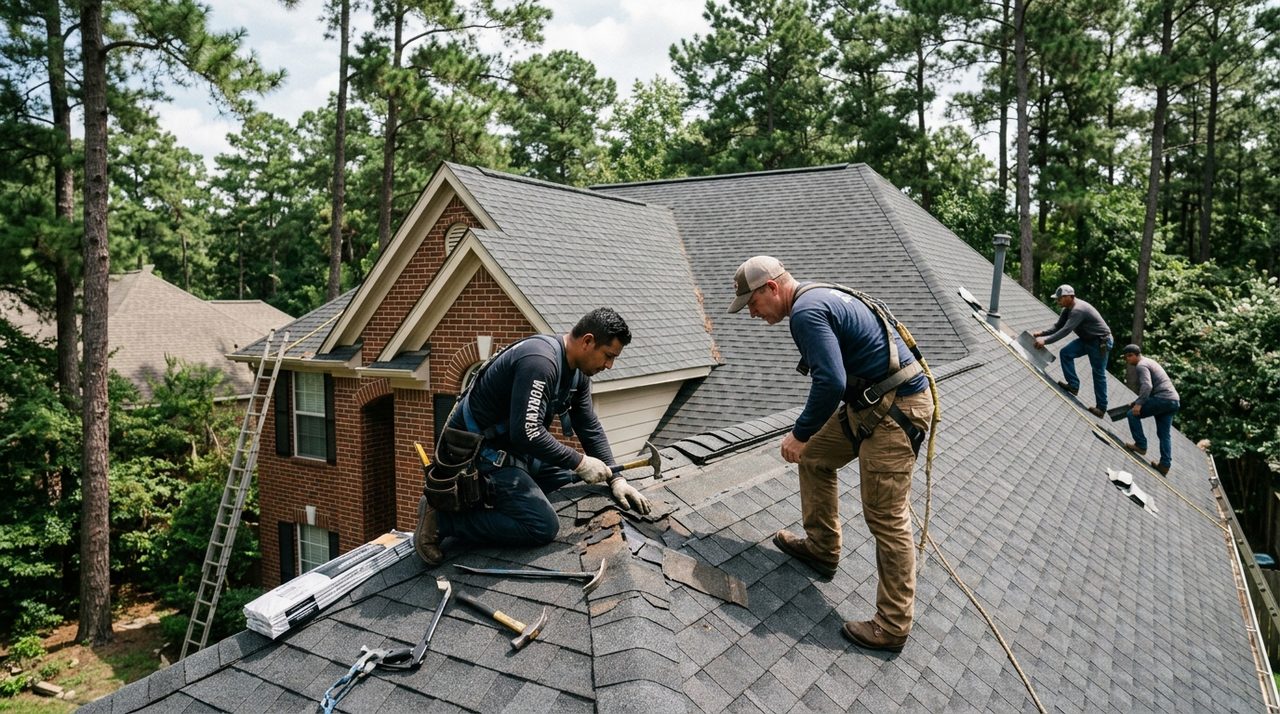
Highlands is an unincorporated northeast Harris County community where most of the roughly 5,700 owner-occupied homes were built between 1960 and 1985 — meaning roofs are aging out just as Houston's storm cycle is intensifying. Ranch-style homes with low-pitch slab construction, Harris County permitting (not City of Houston), and a location directly in the May 2024 derecho's northeast Harris County damage path make roofing decisions here consequential and specific. This page explains the four roofing challenges that actually matter to Highlands homeowners, with concrete guidance on what to ask and what to expect.
Ranked by verified Google rating × review volume × verification tier. How we rank →
Some highly-rated pros serve Highlands from nearby and may not keep a Highlands street address. Those are listed under "Also serving Highlands" with their real city and distance, so you always know where each business is based.
515 Sheldon Rd, Channelview, TX 77530
16023 E Freeway Service Rd Suite 2, Channelview, TX 77530
211 S Main St, Highlands, TX 77562
Highly-rated pros based nearby who cover Highlands. Distance shown from the Highlands area.
Serving Highlands Based in Baytown · 5.3 mi away
Serving Highlands Based in Crosby · 5.9 mi away
Serving Highlands Based in Crosby · 6.2 mi away
Serving Highlands Based in Baytown · 6.6 mi away
Serving Highlands Based in Galena Park · 6.8 mi away
Serving Highlands Based in Baytown · 6.8 mi away
Serving Highlands Based in NE Houston · 7 mi away
Why it matters to you
Highlands' signature one-story ranch and brick homes — the majority built in the 1960s through 1980s — commonly feature low-pitch roof sections of 2:12 or less, often over rear additions, covered carports, and enclosed patios. Houston's extreme rainfall intensity (Harvey 2017 deposited tens of inches in days across Harris County) overwhelms standard shingle drainage on these shallow planes, allowing water to pond long enough to degrade underlayment and rot OSB decking. On a 1978-vintage home (the area's census median year built), that original deck may already be delaminating silently.
What a good pro does
A qualified roofer scoping a Highlands low-pitch section should probe the decking at the eave and any visible low points before pricing the job — deck replacement is a separate cost that must be quoted upfront, not discovered mid-tear-off. For slopes under 2:12, the correct system is modified bitumen or TPO membrane, not architectural shingles; insisting on a membrane system with properly sized interior drains or functional scuppers is the technically correct answer. Because Highlands is unincorporated, permits and inspections go through the Harris County Engineering Department, not a City of Houston inspector — confirm that the contractor's scope of work is filed there.
Sources: International Residential Code (as adopted by City of Houston), FEMA National Flood Hazard Layer (NFHL), Municipal permit office (see area profile)
Why it matters to you
The May 2024 derecho produced 100-plus mph straight-line winds across northeast Harris County — the exact footprint covering Highlands — lifting ridge caps, stripping shingle tabs, and in some cases delaminating field sections on open-lot ranch homes with minimal tree windbreak. Homes built before the 2006 IRC wind-resistance revisions were nailed to older fastening standards that allow uplift at far lower wind speeds than current code requires. With a census median year built of 1978, most Highlands homes fall squarely into this vulnerable pre-2006 cohort.
What a good pro does
A thorough post-storm inspection on a Highlands ranch home should include checking nail patterns and fastener pull-through at the deck — not just surface shingle condition — because hidden fastener failure is what causes the next wind event to take the whole field. When replacing, specifying a six-nail pattern and a minimum Class D wind-resistance rating per current IRC standards is the correct upgrade path. Texas has no state roofing contractor license through TDLR, so homeowners should require proof of general liability and workers' compensation insurance and verify the contractor registers with Harris County before pulling a permit.
Sources: International Residential Code (as adopted by City of Houston), Texas Windstorm Insurance Association (TWIA), Municipal permit office (see area profile)
Why it matters to you
Highlands' wide, unshaded ranch-home roof planes face the full force of Houston's 2,700-plus annual cooling degree days and sustained ambient temperatures of 95–105°F from May through September. Original or early-replacement 3-tab shingles common on 1960s–1980s homes — already near or past their practical lifespan — suffer accelerated asphalt binder oxidation and granule loss that strips UV protection and voids manufacturer warranties long before homeowners notice a leak. At a census median home value of $191,400, a premature roof failure is a proportionally large financial event.
What a good pro does
A roofer replacing shingles on a Highlands home should assess the existing ventilation balance — many original ranch homes have only box or gable vents, not a balanced ridge-and-soffit system — because installing new shingles over a heat-trapping attic deck accelerates the same degradation cycle all over again. Upgrading to Class 4 impact-resistant architectural shingles (which also carry better heat-reflective granule options) adds an estimated $1,500–$3,500 to a typical re-roof but extends service life and may reduce insurance premiums. Energy Star cool-roof shingle options qualify for utility incentives and are worth discussing with the bidding contractor.
Sources: ENERGY STAR / U.S. Dept. of Energy, International Residential Code (as adopted by City of Houston)
Why it matters to you
In Highlands' 1960s–1980s housing stock, it is common to find two or even three shingle layers stacked without a tear-off — a shortcut that was once code-allowed and is still widespread on homes that have never been fully re-roofed. Houston's annual average relative humidity exceeds 75%, and without balanced ridge-and-soffit ventilation, moisture accumulates between stacked layers and against the original deck, silently delaminating OSB and plywood in a climate that never gives decking a dry season to recover. When a storm finally strips the top layer, the rot underneath is revealed at the worst possible time.
What a good pro does
Any full re-roof bid on a Highlands home should specify a complete tear-off to bare deck so the deck can be visually and physically inspected before new material goes down; a responsible roofer will walk the homeowner through any soft spots or delaminated panels found. If the original ventilation is limited to gable or box vents only, adding continuous ridge and soffit venting to meet IRC R806 balanced ratios is the correct companion work — not optional. Because Highlands falls under Harris County Engineering Department jurisdiction rather than a City of Houston inspector, confirm the permit scope covers deck repairs if they are identified during tear-off.
Sources: International Residential Code (as adopted by City of Houston), Municipal permit office (see area profile), EPA Lead Renovation, Repair and Painting (RRP) Rule
Hiring roofers in Highlands? Highlands is an unincorporated community in northeast Harris County with a housing stock dominated by 1960s–1980s ranch-style homes on slab foundations. Proximity to the San Jacinto River and Cedar Bayou creates significant flood risk for many parcels despite some areas mapping outside the 100-year floodplain. Homeowners here frequently need foundation work, aging HVAC replacement, and flood-related repairs, with permits handled through Harris County rather than the City of Houston.
Building era
Primarily 1960s–1980s, with scattered pre-1960 homes and post-2000 infill.
Typical style
One-story ranch and traditional brick homes with low-pitch roofs and attached carports or garages; some manufactured/mobile homes on larger rural lots.
Foundations
Predominantly concrete slab-on-grade; pier-and-beam found on older pre-1960 structures and homes in low-lying areas near bayous and the San Jacinto River.
Common systems
Original or first-generation replacement central HVAC systems; copper or galvanized steel plumbing in older homes transitioning to PEX in renovations; 100–150 amp electrical panels common in pre-1980s homes, often in need of upgrade.
What that means for repairs
Kitchen and bathroom updates are common as original finishes from the 1960s–1970s age out. Flood damage remediation drives significant gut-renovation and elevation work in lower-lying parcels. Electrical panel upgrades are frequently triggered by insurance requirements or HVAC replacements.
Permit jurisdiction
Harris County Engineering Department (unincorporated Harris County).
HOA & deed restrictions
No single area-wide mandatory HOA exists for Highlands. HOA presence is subdivision-specific; many properties have no HOA but may have recorded deed restrictions at the plat or lot level. Verify HOA status on a parcel-by-parcel basis through Harris County Clerk records.
Historic districts
No City of Houston historic district designation confirmed. Highlands is unincorporated Harris County with no known local historic protections.
Contractor note
Highlands is unincorporated, so Harris County building codes and permitting apply rather than City of Houston rules. Contractors should verify floodplain status for each parcel through HCFCD, as substantial improvement thresholds may trigger elevation or flood-proofing requirements even if the sampled point shows Zone X.
FEMA flood zone
FEMA Zone X (low flood risk) at the sampled point per official NFHL API. However, the Highlands area includes significant 100-year and 500-year floodplain zones near the San Jacinto River and Cedar Bayou channels. Flood risk varies dramatically by parcel; individual FEMA determinations should be obtained for any specific property.
Hurricane Harvey impact
East Harris County near the San Jacinto River experienced significant flooding during Hurricane Harvey in 2017. While public summaries do not explicitly isolate Highlands by name with street-level detail, the community's proximity to the San Jacinto River and Cedar Bayou strongly suggests moderate to significant impact in low-lying portions. Not confirmed at the street level — check Harris County Flood Control District records and individual property disclosure histories.
Heat & humidity load
Aging HVAC systems in 1960s–1980s homes struggle with Houston's extreme summer heat and humidity, driving high service call volume from May through October. Poor attic ventilation and original single-pane windows in unrenovated homes increase cooling loads. Humidity-related issues including mold, wood rot, and condensation in ductwork are common given proximity to waterways.
Working with contractors here
Contractors in Highlands most commonly handle HVAC replacement, re-roofing, plumbing re-pipes, and foundation repair on aging 1960s–1980s slab homes. Flood damage restoration and mold remediation are recurring specialties given the area's proximity to the San Jacinto River and low-lying bayou corridors. Many homes still have original galvanized plumbing and undersized electrical panels, so whole-house re-pipes and panel upgrades are frequent companion jobs during renovations. Scoping should account for the mix of slab and pier-and-beam foundations, as access and repair methods differ significantly. Because the area is unincorporated, contractors must navigate Harris County permitting processes, which differ from City of Houston requirements in inspection scheduling and code interpretations.
Local Tip
Always ask for a written estimate before work begins. Texas contractors are required to provide one on jobs over $1,000.
Highlands is an unincorporated community in northeast Harris County with a housing stock dominated by 1960s–1980s ranch-style homes on slab foundations. Proximity to the San Jacinto River and Cedar Bayou creates significant flood risk for many parcels despite some areas mapping outside the 100-year floodplain. Homeowners here frequently need foundation work, aging HVAC replacement, and flood-related repairs, with permits handled through Harris County rather than the City of Houston.
Source: U.S. Census Bureau, ACS 5-Year 2023
Most of Highlands maps to FEMA Zone X (low mapped flood risk), but Houston's flash-flood reality means even low-risk blocks benefit from smart drainage and storm-hardened installs; risk climbs sharply on blocks nearest the San Jacinto River, where it varies parcel to parcel.
Source: FEMA National Flood Hazard Layer (NFHL). Flood zones vary by parcel — verify your individual FIRM panel.
For homeowners in Highlands, TX: beryl 2024 stripped unsealed ridge vents and attic ventilators off roofs across low-flood-risk Houston neighborhoods, creating interior soaking before homeowners even knew there was an opening. Have a roofer install hurricane-rated ridge vent covers or temporarily cap off-ridge ventilators if a storm is within 72 hours of landfall. Because Highlands drains toward the San Jacinto River, block-level runoff can differ sharply from the mapped zone.
Hail damage to roofs in Highlands, TX is often invisible from the ground but destroys the granule layer that blocks UV degradation, cutting shingle life by half without a single active leak. Ask a TDLR-licensed roofer to inspect after any storm that produced hail an inch or larger in diameter and document findings for your insurer before the one-year claim deadline passes. As a Harris County community, Highlands may follow county rather than City of Houston storm rebuild rules.
Ice loading in Highlands, TX is infrequent but disproportionately damaging because Houston roofs and their fastening systems are designed for wind, not sustained dead weight. Ask a licensed roofer to inspect your ridge board connections and confirm that collar ties or rafter ties are present in the attic, since Uri 2021 produced several ridge-sag failures in well-maintained Houston homes where the framing had no freeze-load margin. With a median build year of 1978, the older building stock here is more exposed to hard-freeze damage than newer construction. Because Highlands drains toward the San Jacinto River, block-level runoff can differ sharply from the mapped zone.
Sources: FEMA National Flood Hazard Layer (NFHL), Ready.gov -- Hurricanes, CenterPoint Energy -- Storm Center, City of Houston -- Emergency Preparedness, Ready.gov -- Winter Weather, Harris County Flood Control District
Houston-specific estimators to plan your project before you call a pro. All results are planning estimates — a licensed local pro confirms the details on site.
Estimated design wind speed for your zone
Outside the TDI catastrophe area, so a WPI-8 is generally not mandated — but Houston still sees hurricane-force gusts (Beryl, 2024). Insist on properly rated shingles installed to the manufacturer's high-wind nailing pattern (6 nails) and starter strips, or a wind claim can be denied for improper installation.
Find a Houston roofer →This is a planning estimate only — actual requirements depend on an on-site assessment by a licensed Houston pro. Wind-speed zones are approximate; your exact TDI/WPI-8 obligation depends on your address's designation. Verify with the Texas Department of Insurance before contracting.
Disconnect & drain every outdoor hose bib
Remove hoses, drain the spigots, and cover each with an insulated faucet sock. Un-drained hose bibs are the #1 burst point in a Houston freeze.
Insulate exposed pipes in the attic & garage
Wrap any pipe in an unconditioned space (attic runs, garage walls) with foam sleeves. Houston homes rarely insulate these because they only matter a few nights a year — which is exactly why they burst.
Open cabinet doors & keep a pencil-width drip
On hard-freeze nights, open kitchen/bath cabinets so warm air reaches the pipes and let faucets on exterior walls drip to relieve pressure.
Protect the attic/garage water heater & its lines
An attic or garage tank sits in unconditioned space. Insulate the cold-inlet and hot-outlet lines and confirm the emergency drain pan is clear so a leak doesn't reach the ceiling.
This is a planning estimate only — actual requirements depend on an on-site assessment by a licensed Houston pro. If a pipe has already burst, shut off your main water supply and call a licensed Houston plumber immediately — freeze bursts flood fast.
Sources: Municipal permit office (see area profile)
Sources: EPA Lead Renovation, Repair and Painting (RRP) Rule
Sources: Local HOA / deed restrictions (see area profile)