2310 E Lonesome Dove, Deer Park, TX 77536
Best Tree Removal in Deer Park, TX
Deer Park's 1950s–1980s brick-veneer ranch homes sit on slab-on-grade foundations over Gulf Coastal Plain clay, and the mature water oaks, live oaks, and volunteer Chinese tallow trees that shade those slabs are also quietly stressing them. Add the City of Deer Park's independent permit jurisdiction and subdivision-level HOA rules in places like Villages of Deer Park, and a tree removal that looks simple can have layers homeowners don't anticipate. This page covers what actually matters for tree work on a mid-century Deer Park property.
Verified against Google Business data
Updated 2026
See the 10 Tree Removal Serving Deer Park 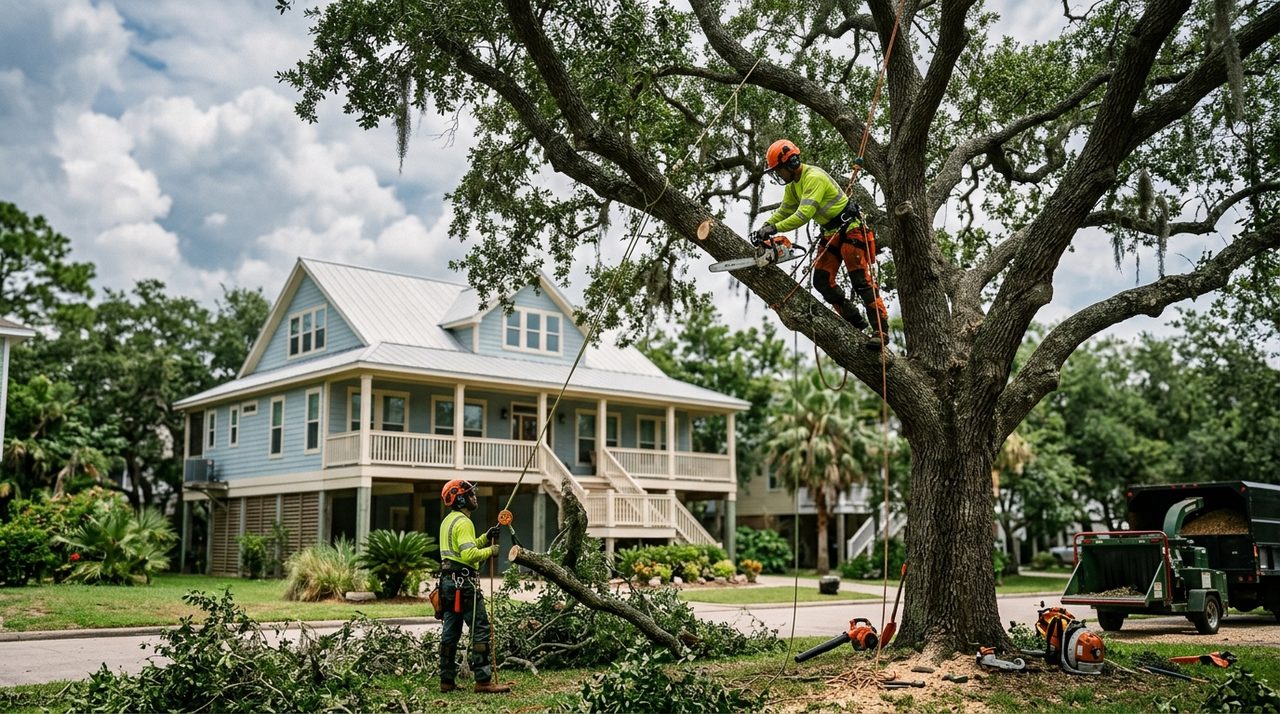
- Median home built
- 1981
- Median home value
- $238,900
- FEMA flood zone
- X (low)
- Typical removal cost (est.)
- $750–$5,000+
- Most common local issue
- Mature oak and tallow roots stressing aging slab edges on mid-century homes
Ranked by verified Google rating × review volume × verification tier. How we rank →
Some highly-rated pros serve Deer Park from nearby and may not keep a Deer Park street address. Those are listed under "Also serving Deer Park" with their real city and distance, so you always know where each business is based.
Min rating:
10 resultsBased in Deer Park
Open Now
1915 Center St, Deer Park, TX 77536
Open Now
1014 S Kaufman Dr, Deer Park, TX 77536
Closed
5919 Pine Ave, Pasadena, TX 77503
Closed
3203 Preston Ave Ste.. B, Pasadena, TX 77505
Closed
7414 Elbridge Ln, Deer Park, TX 77536
Also serving Deer Park
Highly-rated pros based nearby who cover Deer Park. Distance shown from the Deer Park area.
Closed
Serving Deer Park Based in Pasadena · 4.9 mi away
Closed
Serving Deer Park Based in Galena Park · 5.4 mi away
Serving Deer Park Based in Highlands · 5.9 mi away
Serving Deer Park Based in Galena Park · 6 mi away
Tree Removal in Deer Park: What You Should Know
Oak and Tallow Roots vs. Your 1950s–1980s Slab
Why it matters to you
Deer Park's slab-on-grade homes were built directly on Gulf Coastal Plain clay that shrinks and swells with every wet-dry cycle, and surface-feeding roots from mature water oaks or live oaks within 20 feet of the foundation accelerate that movement by drawing moisture unevenly from the soil. Homes built before roughly 1975 are also likely to have original clay sewer laterals that tree roots can infiltrate, turning a cosmetic problem into a sewage backup. Because the median year built in Deer Park is 1981, a significant share of the housing stock falls right in this vulnerable window.
What a good pro does
A qualified ISA Certified Arborist should assess root direction and canopy spread before any saw runs, so you understand whether the root system is already pressing against the slab edge or footer. Full stump grinding to at least 12 inches below grade — quoted separately at roughly $150–$400 per stump — is essential here because tallow and water oak stumps resprout aggressively and will redevelop a root system if only surface-cut. Ask the contractor to probe the clay for existing heave before and after removal so you have a baseline for any foundation monitoring.
Sources: Municipal permit office (see area profile), Harris County Flood Control District
Chinese Tallow Takes Over Near Deer Park's Drainage Channels
Why it matters to you
Deer Park sits close to the ship channel industrial corridor, and its low-lying lots and roadside drainage swales create exactly the disturbed, moist soil where Chinese tallow (Triadica sebifera) reseeds itself relentlessly — it is a state-listed invasive in Texas. A single tallow cut at ground level without stump treatment will resprout from the root crown, sometimes sending up a dozen shoots within one growing season, and the seeds spread to adjacent lots and drainage infrastructure. Properties backing up to any drainage easement or undeveloped strip should expect tallow to be a recurring issue, not a one-time removal.
What a good pro does
Reputable contractors treating tallow in Deer Park should apply a cut-stump herbicide treatment (typically a concentrated triclopyr formula) immediately after felling — within minutes of the cut, before the wound seals — to suppress resprouting from the root collar. Confirm the contractor disposes of tallow wood and seed-bearing material at an appropriate facility, because some green-waste recyclers refuse it due to its invasive status; ask for disposal documentation. Budget $350–$750 for a small tallow and plan for a follow-up inspection at six months.
Sources: Texas Commission on Environmental Quality, Harris County Flood Control District
Post-Storm Removal Surge After Gulf Events
Why it matters to you
Deer Park's position southeast of Houston puts it in the direct path of Gulf Coast hurricanes and the kind of fast-moving squall lines that produce localized 70–100 mph gusts; the May 2024 derecho and Hurricane Beryl in July 2024 both delivered significant wind damage across Harris County. After a named event, every reputable tree company in the metro is booked for weeks, and unlicensed out-of-state operators advertise aggressively in neighborhoods like Deer Park, sometimes demanding large cash deposits before disappearing. Even legitimate contractors in surge conditions routinely quote 40–80% above normal rates.
What a good pro does
In the days immediately after a storm, prioritize only trees that pose an imminent structural threat to occupied living space; document all damage with timestamped photos before any work begins in case an insurance claim is needed. Verify that any contractor carries current general liability and workers' compensation insurance — ask for certificates naming you as an additional interested party — and get a written scope and price before signing anything. Texas does not require a state tree-removal license through TDLR, so ISA Certified Arborist credential is the primary third-party vetting tool available to you.
Sources: Municipal permit office (see area profile), FEMA National Flood Hazard Layer (NFHL)
City of Deer Park Permits and HOA Approval in Governed Subdivisions
Why it matters to you
Deer Park is an independent incorporated city, so all contractor permits are pulled through the City of Deer Park Building Inspections Department — not the City of Houston or Harris County — and code interpretations and inspection schedules are managed independently. On top of that, if your home is in Villages of Deer Park or Deer Park Estates, the HOA's architectural review process may require written approval before any tree above a specified trunk diameter (often 6–8 inches DBH) can be removed; violating that process can result in fines and mandatory replanting. Many older platted areas of Deer Park have no active HOA, but deed restrictions on those lots may still restrict removal of large specimen trees.
What a good pro does
Before scheduling any removal, look up your subdivision name on the deed or plat and contact the HOA directly if one is listed to confirm whether an architectural committee application is required and what the turnaround time is — this can take two to four weeks and cannot be skipped after the fact. For contractor-pulled work permits, your tree service should confirm with the City of Deer Park Building Inspections whether the scope of work (especially if associated with a fence, driveway, or drainage modification) triggers a permit requirement. Keeping paper records of HOA approval, permit numbers, and contractor insurance certificates protects you if a neighbor or HOA disputes the removal.
Sources: Municipal permit office (see area profile), Local HOA / deed restrictions (see area profile), City of Houston Permitting Center
Tree Removal in Deer Park: What You Should Know
Hiring tree removal in Deer Park? Deer Park is an incorporated city east of Houston with a housing stock built primarily from the 1950s through the 1980s. Homeowners here contend with aging HVAC systems, original plumbing in older homes, and foundation maintenance on slab-on-grade construction typical of coastal plain development. The mix of HOA-governed subdivisions and unrestricted older neighborhoods means contractor requirements vary block by block.
- Housing era
- 1950s–1980s, with some later infill development through the 1990s and 2000s
- Foundation
- Slab-on-grade (inferred from era and region
- Flood zone
- FEMA Zone X (low flood risk) per official NFHL data
- Permits
- City of Deer Park Building Inspections Department (independent incorporated city with its own permitting…
Housing stock & systems
Building era
1950s–1980s, with some later infill development through the 1990s and 2000s.
Typical style
One- and two-story brick veneer ranch and traditional suburban tract homes.
Foundations
Slab-on-grade (inferred from era and region; not formally documented in public records).
Common systems
Older homes likely have original galvanized or copper plumbing, R-22 refrigerant HVAC systems nearing or past end of life, and fuse or early breaker-panel electrical in pre-1970s builds. Homes from the 1980s onward more commonly have copper supply lines and 200-amp panels.
What that means for repairs
Kitchen and bath remodels, HVAC system replacements (R-22 to R-410A conversions), and re-piping of galvanized lines are common in the older mid-century housing stock. Some homeowners undertake foundation leveling due to expansive clay soils.
Permits & restrictions
Permit jurisdiction
City of Deer Park Building Inspections Department (independent incorporated city with its own permitting office).
HOA & deed restrictions
HOA status is subdivision-specific. Confirmed mandatory HOAs include Villages of Deer Park Homeowner Association, Inc. and Deer Park Estates Homeowners Association. Many older platted areas have no organized HOA and market homes with no HOA fees. Deed restrictions likely exist in platted subdivisions but no city-wide compilation is publicly available.
Historic districts
No City of Houston or local historic district designation confirmed. Deer Park is an independent incorporated city and does not fall under HAHC jurisdiction.
Contractor note
Contractors must pull permits through the City of Deer Park, not Houston or Harris County. HOA-governed subdivisions such as Villages of Deer Park and Deer Park Estates may require architectural review or pre-approval for exterior modifications.
Flood & weather
FEMA flood zone
FEMA Zone X (low flood risk) per official NFHL data. Deer Park sits on relatively flat terrain in southeast Harris County near the San Jacinto River basin and Buffalo Bayou watershed; localized drainage issues may still occur despite the Zone X designation.
Hurricane Harvey impact
Research indicates Deer Park experienced some flooding during Hurricane Harvey but was not among the most catastrophically impacted areas in Harris County. No verifiable official source naming specific repeatedly flooded streets within Deer Park was identified. Homeowners should consult Harris County Flood Control District repetitive-loss maps and FEMA records for parcel-level flood history.
Heat & humidity load
Prolonged summer heat and humidity stress aging HVAC systems common in 1950s–1980s homes. Condensation and moisture intrusion can cause attic mold and soffit deterioration in brick veneer construction. Slab-on-grade foundations on expansive clay soils are susceptible to seasonal movement during summer drought cycles.
Working with contractors here
The most common contractor work in Deer Park involves HVAC replacement on mid-century and 1980s-era systems, whole-house re-piping of galvanized supply lines, and slab foundation repair driven by clay soil movement. Roof replacements are frequent given the age of the housing stock and Gulf Coast storm exposure. Contractors should confirm whether a property falls within an HOA-governed subdivision, as Villages of Deer Park and Deer Park Estates enforce appearance standards. All permits must be pulled through the City of Deer Park's own building department, which maintains separate inspection schedules and code interpretations from Houston or Harris County.
Local Tip
Always ask for a written estimate before work begins. Texas contractors are required to provide one on jobs over $1,000.
About Deer Park
Deer Park is an incorporated city east of Houston with a housing stock built primarily from the 1950s through the 1980s. Homeowners here contend with aging HVAC systems, original plumbing in older homes, and foundation maintenance on slab-on-grade construction typical of coastal plain development. The mix of HOA-governed subdivisions and unrestricted older neighborhoods means contractor requirements vary block by block.
- Median year built
- 1981
- Median home value
- $238,900
- Owner-occupied
- 78.6%
- Population
- 33,823
- Housing units
- 12,569
- Median income
- $95,233
Source: U.S. Census Bureau, ACS 5-Year 2023
Flood & storm risk
FEMA Zone XLow flood riskMost of Deer Park maps to FEMA Zone X (low mapped flood risk), but Houston's flash-flood reality means even low-risk blocks benefit from smart drainage and storm-hardened installs.
Source: FEMA National Flood Hazard Layer (NFHL). Flood zones vary by parcel — verify your individual FIRM panel.
Houston Storm Readiness in Deer Park
Hurricane & flooding
Wind is the primary tree hazard in lower-risk Deer Park, TX neighborhoods during a Gulf hurricane, so focus pre-storm efforts on removing dead or structurally weak trees that could reach your roof line or power drop. A TDLR-licensed contractor can perform a hazard assessment and complete removal well before a storm's 72-hour watch window, when crews become unavailable across the Houston metro. Confirm the current FEMA panel for your Deer Park parcel — the area maps to Zone X, but adjacent lots can differ.
Severe storms & hail
Proactive removal of trees with significant deadwood or structural defects in Deer Park, TX costs a fraction of the emergency extraction and roof repair that follows a thunderstorm failure. Severe storms in the Houston area can produce 70-plus mph gusts with almost no advance warning, which means the pre-storm window is the only realistic time to act before a low-flood-risk yard becomes a debris field. Confirm the current FEMA panel for your Deer Park parcel — the area maps to Zone X, but adjacent lots can differ.
Ice storms & freezes
Wind loading on ice-coated canopies in Deer Park, TX during a hard freeze creates the same failure risk as a severe windstorm, and lower flood-risk areas are just as exposed to ice-storm tree damage as any other part of the Houston metro. Uri 2021 left neighborhoods across the city dealing with fallen trees on homes and vehicles for weeks, primarily because no pre-storm removal of structurally weak specimens had been completed. With a median build year of 1981, the older building stock here is more exposed to hard-freeze damage than newer construction. Confirm the current FEMA panel for your Deer Park parcel — the area maps to Zone X, but adjacent lots can differ.
Sources: FEMA National Flood Hazard Layer (NFHL), Ready.gov -- Hurricanes, CenterPoint Energy -- Storm Center, City of Houston -- Emergency Preparedness, Ready.gov -- Winter Weather, Harris County Flood Control District
Free Deer Park Tools & Calculators
Houston-specific estimators to plan your project before you call a pro. All results are planning estimates — a licensed local pro confirms the details on site.
Houston Soil & Tree Proximity Risk Calculator
Open full tool & FAQ →Grouped by mature root aggression & water demand.
Trunk center to the nearest exterior wall.
Moderate risk
The root zone likely reaches your foundation's soil during Houston's dry summers, when clay shrinks most. Watch for sticking doors and diagonal cracks, keep soil moisture even with a soaker hose during drought, and have a foundation pro evaluate if you see any movement.
Find a Houston foundation pro →This is a planning estimate only — actual requirements depend on an on-site assessment by a licensed Houston pro. Guidance is based on general species root behavior in expansive clay, not a soil test.
Houston Freeze Prep & Pipe Insulation Checklist
Open full tool & FAQ →Your freeze checklist — 4 tasks
- 1
Disconnect & drain every outdoor hose bib
Remove hoses, drain the spigots, and cover each with an insulated faucet sock. Un-drained hose bibs are the #1 burst point in a Houston freeze.
- 2
Insulate exposed pipes in the attic & garage
Wrap any pipe in an unconditioned space (attic runs, garage walls) with foam sleeves. Houston homes rarely insulate these because they only matter a few nights a year — which is exactly why they burst.
- 3
Open cabinet doors & keep a pencil-width drip
On hard-freeze nights, open kitchen/bath cabinets so warm air reaches the pipes and let faucets on exterior walls drip to relieve pressure.
- 4
Protect the attic/garage water heater & its lines
An attic or garage tank sits in unconditioned space. Insulate the cold-inlet and hot-outlet lines and confirm the emergency drain pan is clear so a leak doesn't reach the ceiling.
This is a planning estimate only — actual requirements depend on an on-site assessment by a licensed Houston pro. If a pipe has already burst, shut off your main water supply and call a licensed Houston plumber immediately — freeze bursts flood fast.
Frequently Asked Questions
Does the City of Deer Park require a permit to remove a tree from my private property?
Deer Park operates its own Building Inspections Department independent from Houston or Harris County, and currently there is no city-wide tree removal permit required for work on private residential property in Deer Park. However, if your home is in Villages of Deer Park or Deer Park Estates, your HOA's architectural committee may still require written approval before any tree over a threshold caliper is removed, so check your deed restrictions before scheduling work.
Sources: Municipal permit office (see area profile)Local HOA / deed restrictions (see area profile)
My 1960s Deer Park home almost certainly has clay sewer laterals — can I find out if tree roots have already invaded before I remove the tree?
Homes built in Deer Park's primary construction era of the 1950s through early 1970s commonly used vitrified clay sewer laterals, which are prone to root intrusion from water oaks and live oaks whose roots track moisture toward joints. Before removing a mature tree near the house, ask your tree company or a plumber to run a sewer scope camera through the lateral so you know whether the line is already compromised — removal stops new root growth but won't repair an existing crack, and clay-line replacement is a separate cost you'll want to budget for.
Deer Park is mapped FEMA Zone X, so am I in the clear on debris disposal after a storm-damaged tree comes down?
Zone X status means most of Deer Park carries low mapped flood risk, which also means storm-damaged tree debris typically does not fall under FEMA Public Assistance reimbursement programs that apply to higher-risk flood zones after a declared disaster — that cost is almost always private-pay for Zone X homeowners. After a Gulf hurricane or a derecho like the May 2024 event, the City of Deer Park may coordinate curbside debris pickup windows, but those are time-limited and usually cover brush piles placed at the right-of-way, not contractor hauling fees.
Sources: FEMA National Flood Hazard Layer (NFHL)Municipal permit office (see area profile)
When is the least expensive and least backlogged time of year to schedule a routine tree removal in Deer Park?
Late fall through February is generally the best window: Gulf storm season has wound down, demand is at its lowest, and deciduous trees like water oaks have dropped leaves, making it easier for crews to assess structure and work efficiently. Avoid scheduling in the weeks immediately after any named Gulf storm or major wind event, when regional demand spikes drive pricing estimates 40–80% above normal rates and out-of-state operators with unknown credentials flood the market.
I'm removing a large water oak on the west side of my brick-veneer ranch in Deer Park — what should I ask the tree company about protecting my AC condenser and west wall during the cut?
Ask the crew specifically how they plan to section and lower limbs on the condenser side — directional felling toward an open yard is preferable, but on a typical Deer Park lot with close setbacks, sectional rigging is often necessary to avoid dropping heavy wood onto equipment. Also ask whether they will protect the condenser unit with plywood or move it temporarily, since a dropped branch can bend fins or crack refrigerant lines and add an unplanned HVAC service call to your day. Get that protection plan in writing before work starts.
What credentials should I verify before hiring a tree crew in Deer Park, and does Texas license them?
Texas does not issue a state license for tree removal through TDLR, so there is no state license number to check the way you would for an electrician or plumber. The recognized professional credential is ISA Certified Arborist, which you can verify by name on the ISA's public directory at trees.isa-arbor.com. Beyond certification, ask to see a current certificate of liability insurance naming your address for the job — this matters especially in Deer Park because crews working near CenterPoint Energy distribution lines along older residential streets must coordinate utility clearance, and an uninsured crew working close to energized lines puts the liability on you.