Cullen Pkwy, Pearland, TX 77581
Best Tree Removal in Pearland, TX
Pearland's master-planned subdivisions — most built between 1995 and 2015 on Brazoria County's expansive clay soils — are now old enough that their original Bradford pears, water oaks, and Chinese tallow volunteers are reaching problematic size relative to post-tensioned concrete slabs and brick-veneer facades. Tree removal here runs through the City of Pearland's own permitting office and almost always requires a separate HOA architectural review before any chainsaw touches a tree, adding lead time that catches homeowners off guard. This page explains the four challenges that actually matter for Pearland tree work — so you can plan the process, budget accurately, and avoid the fines that come with skipping the approval queue.
Verified against Google Business data
Updated 2026
See the 8 Tree Removal Serving Pearland 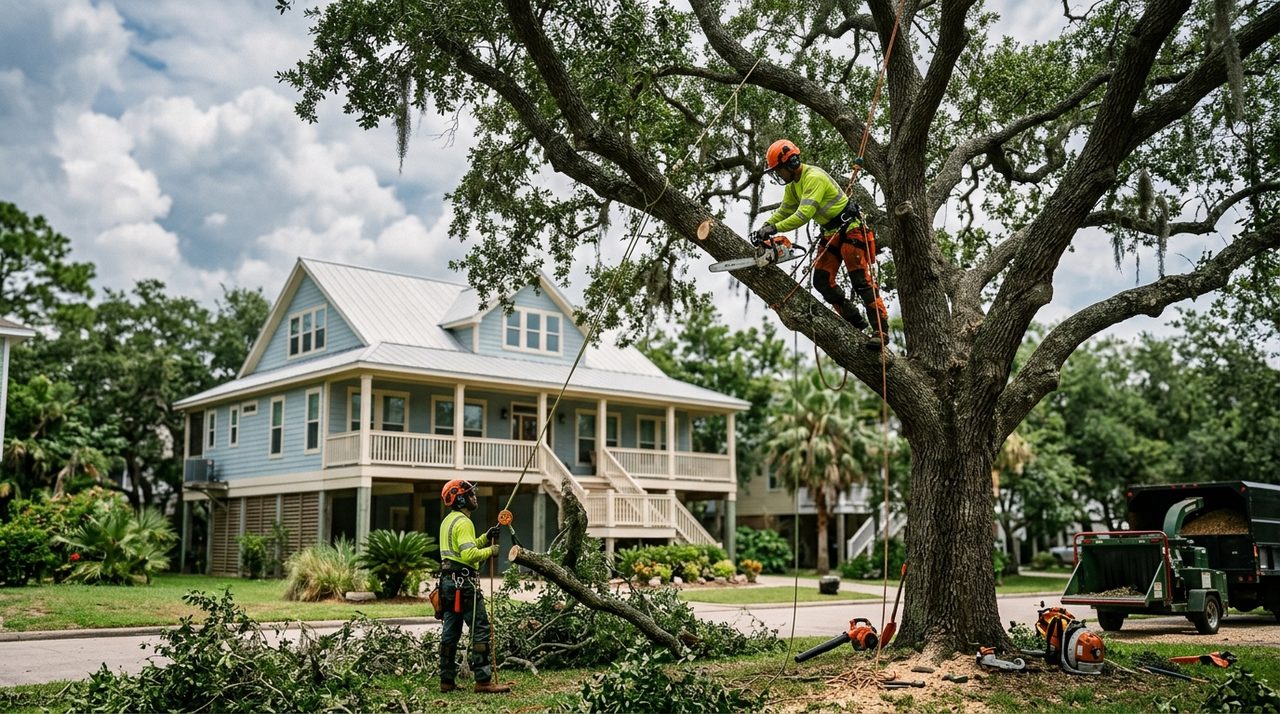
- Median home built
- 2003
- Median home value
- $330,900
- FEMA flood zone
- X (low)
- Typical removal cost (est.)
- $750–$5,000+
- Most common local issue
- HOA approval required before removal in nearly all Pearland subdivisions
Ranked by verified Google rating × review volume × verification tier. How we rank →
Some highly-rated pros serve Pearland from nearby and may not keep a Pearland street address. Those are listed under "Also serving Pearland" with their real city and distance, so you always know where each business is based.
Min rating:
8 resultsBased in Pearland
17425 Harkey Rd, Pearland, TX 77584
Open Now
2914 Hatfield Rd, Pearland, TX 77584
Closed
17717 County Rd 127, Pearland, TX 77581
Open Now
3301 Monarch Meadow Ln, Pearland, TX 77581
Also serving Pearland
Highly-rated pros based nearby who cover Pearland. Distance shown from the Pearland area.
Open Now
Serving Pearland Based in Alvin · 4.5 mi away
Closed
Serving Pearland Based in South Houston · 5.2 mi away
Serving Pearland Based in Braeswood · 6.3 mi away
Tree Removal in Pearland: What You Should Know
HOA Architectural Review Adds Weeks — Know the Process Before You Book a Crew
Why it matters to you
Virtually every major Pearland subdivision — Silverlake, Springfield, Shadow Creek Ranch, and dozens of others built since the 1990s — operates under recorded CC&Rs that require written architectural committee approval before removing any tree above a threshold trunk diameter, commonly 6–8 inches DBH. Scheduling a crew without that approval letter in hand can result in stop-work orders, fines, and mandatory replanting at the homeowner's expense. Review cycles typically run 2–6 weeks, which matters enormously if you're responding to storm damage or a contractor's window of availability.
What a good pro does
Contact your subdivision's HOA management company — for example, Crest Management at 281-272-6377 for Silverlake — and submit the removal request with a site plan and arborist justification before booking any crew. A reputable Pearland tree-removal company will ask for your HOA approval documentation upfront and factor the review timeline into the project schedule rather than pressuring you to proceed without it. Confirm your specific subdivision's CC&Rs, since HOA status and rules vary by subdivision and must be verified via resale certificate.
Sources: Local HOA / deed restrictions (see area profile), Municipal permit office (see area profile)
City of Pearland Permitting Is Separate From Houston — Don't Assume No Permit Is Needed
Why it matters to you
The City of Houston does not require a homeowner permit for routine private-property tree removal, but Pearland is a fully incorporated city in Brazoria County with its own permitting office and code enforcement — and those rules are not the same as Houston's. While Pearland does not currently mandate a city permit for every private-lot tree removal, work that involves utility-adjacent trees, right-of-way trimming, or removal that triggers drainage or grading changes may require City of Pearland review. Contractors who primarily work Houston often default to Houston's rules and assume no oversight applies, which can create compliance issues on Pearland jobs.
What a good pro does
Before any work begins, confirm current requirements directly with the City of Pearland Permitting Division, since municipal ordinances can be updated and the rules differ from the Houston Permitting Center's process. Any tree within the drip line of CenterPoint Energy distribution lines requires utility coordination regardless of city, and the contractor should document that coordination in writing. Ask your contractor whether they routinely pull permits in Pearland specifically — not just Houston — as the inspection process is distinct.
Sources: Municipal permit office (see area profile), City of Houston Permitting Center
Root-to-Slab Conflicts on 1990s–2010s Post-Tensioned Slabs
Why it matters to you
Pearland's production homes built from the mid-1990s through the 2010s sit on post-tensioned concrete slabs over Brazoria County's heavy clay soils, which shrink in dry summers and swell after Gulf Coast rainfall events. Water oaks and Chinese tallow trees — both common volunteer species in Pearland's back lots and drainage buffers — develop aggressive surface root systems that can exploit slab edge movement, heave driveways, and crack brick-veneer mortar joints. By the time a home built in 2003 (the area's census median year) is 20+ years old, a nearby water oak that looked manageable at planting can have a trunk diameter well over 12 inches and roots extending well past the foundation perimeter.
What a good pro does
A qualified arborist should assess root proximity before removal to determine whether stump grinding alone is sufficient or whether root barriers need to be installed to prevent continued lateral growth from remaining root mass. Stump grinding in Pearland typically runs $150–$400 per stump (estimate), but skipping it on a tallow tree almost guarantees resprouting within one growing season given the species' aggressive regrowth habit. If foundation cracking is already visible, have a structural engineer evaluate the slab before and after removal, since soil moisture rebalancing after a large tree is removed can itself cause differential movement on clay.
Sources: Harris County Flood Control District, Municipal permit office (see area profile)
Post-Storm Demand Surges Hit Pearland Hard — Budget and Verify Credentials Accordingly
Why it matters to you
Pearland sits in the direct path of Gulf Coast tropical systems and experienced significant wind impacts from both Hurricane Beryl in 2024 and the May 2024 derecho that tracked across the SE Houston suburbs. After named events, regional tree-removal demand spikes immediately, backlogs stretch weeks out, and out-of-state crews with no local track record arrive soliciting door-to-door work. Post-storm pricing in the Houston metro routinely runs 40–80% above normal rates (estimate), meaning a mid-size water oak removal that might cost $750–$1,800 under normal conditions could be quoted at $1,200–$3,200 in the weeks following a major storm. Pearland maps predominantly to FEMA Zone X, so FEMA Public Assistance debris reimbursement is less likely to apply here than in AE-zone neighborhoods, making private-pay cost management especially important.
What a good pro does
Get at least two written quotes from companies with verifiable Pearland or Brazoria County work history, confirm they carry general liability and workers' compensation insurance (request certificates, not just verbal assurances), and check ISA Certified Arborist credentials through the ISA's public verification tool. Texas does not issue a state tree-removal license through TDLR, so ISA certification is the recognized voluntary credential that signals professional training. Avoid any contractor demanding full cash payment upfront or unable to provide a local business address — both are red flags that become far more common in the weeks after a major Gulf storm.
Sources: FEMA National Flood Hazard Layer (NFHL), Municipal permit office (see area profile), Local HOA / deed restrictions (see area profile)
Tree Removal in Pearland: What You Should Know
Hiring tree removal in Pearland? Pearland is a large, incorporated suburban city in Brazoria County comprising dozens of master-planned subdivisions built primarily from the 1990s through the 2010s. Most homes are brick-veneer traditional construction on post-tensioned concrete slabs, meaning contractors here deal heavily with slab foundation movement, composition roof replacements, and HVAC systems aging into their first or second major service cycle. Permitting runs through the City of Pearland—not Houston or the county—and most subdivisions carry mandatory HOAs with architectural review requirements that affect exterior work.
- Housing era
- Primarily 1990s–2010s, with continued new construction in some subdivisions
- Foundation
- Post-tensioned concrete slab-on-grade (dominant for post-1970s production housing in this area)
- Flood zone
- FEMA Zone X (low flood risk) — source
- Permits
- City of Pearland Permitting (incorporated city — not Houston Permitting Center or Brazoria County…
Housing stock & systems
Building era
Primarily 1990s–2010s, with continued new construction in some subdivisions.
Typical style
Suburban brick or brick-veneer traditional single-family homes, typically 1- and 2-story, with composition asphalt shingle roofs.
Foundations
Post-tensioned concrete slab-on-grade (dominant for post-1970s production housing in this area).
Common systems
Central HVAC (gas furnace with split-system AC or heat pump), copper or CPVC supply plumbing with ABS/PVC drain lines, 200-amp electrical panels. Homes from the 1990s may have original R-410A or older R-22 refrigerant systems nearing end of life.
What that means for repairs
Kitchen and bathroom remodels are common as 1990s–early 2000s homes age past 20 years. Roof replacements are a major recurring need due to Gulf Coast hail and wind events. Some homeowners add outdoor living spaces, but HOA architectural guidelines often require pre-approval for additions, fencing, and exterior changes.
Permits & restrictions
Permit jurisdiction
City of Pearland Permitting (incorporated city — not Houston Permitting Center or Brazoria County Engineering).
HOA & deed restrictions
Most Brazoria County Pearland subdivisions have mandatory HOAs with recorded CC&Rs and architectural review committees. Examples include Silverlake HOA (Crest Management, 281-272-6377) and Springfield HOA. Older or more central Pearland areas may have voluntary associations or simpler deed restrictions. HOA dues typically range from $200–$900/year for smaller neighborhoods up to $600–$2,400+/year for amenity-rich master-planned communities. Specific HOA status must be verified per subdivision via resale certificate.
Historic districts
No historic district designation confirmed. Pearland is a relatively modern suburban city with no known HAHC or local historic overlays.
Contractor note
Contractors must pull permits through the City of Pearland, which has its own inspection process separate from Houston and Brazoria County. Nearly all subdivisions require HOA architectural approval for exterior modifications before work begins, so contractors should factor approval timelines into project scheduling.
Flood & weather
FEMA flood zone
FEMA Zone X (low flood risk) — source: fema_nfhl. However, portions of Pearland near Clear Creek and associated tributaries may carry higher flood risk designations; buyers and contractors should verify zone status at the parcel level, especially in western Pearland areas closer to waterways.
Hurricane Harvey impact
Parts of Pearland experienced flooding during Hurricane Harvey (2017), particularly areas near Clear Creek and low-lying bayou tributaries. Some master-planned communities in western Pearland reported significant water intrusion. Specific street-level impact varies widely by subdivision and proximity to drainage channels — not confirmed at a granular level from available research. Homeowners should check individual property flood history through Brazoria County records.
Heat & humidity load
Extended 95°F+ summers with high humidity stress HVAC systems heavily in these slab-on-grade homes. Attic temperatures can exceed 140°F, accelerating shingle degradation and demanding adequate attic ventilation and radiant barrier consideration. Expansive clay soils undergo seasonal shrink-swell cycles that can cause slab movement and related cosmetic or structural cracking, making foundation watering programs and drainage management important recurring service needs.
Working with contractors here
The dominant work in Pearland centers on maintaining 1990s–2010s production homes: HVAC replacements and repairs (original systems from the 1990s and early 2000s are reaching end of life), roof replacements driven by Gulf Coast storm damage and aging shingles, and kitchen/bath remodels as homes pass the 20-year mark. Slab foundation repair and drainage correction are recurring needs due to Brazoria County's expansive clay soils. Contractors should be aware that nearly every major subdivision requires HOA architectural approval for exterior work—including roof material and color, fence installation, and additions—which can add 2–6 weeks to project timelines. City of Pearland permits and inspections follow their own code enforcement process, and contractors accustomed to Houston's permitting system should confirm local requirements before starting work.
Local Tip
Always ask for a written estimate before work begins. Texas contractors are required to provide one on jobs over $1,000.
About Pearland
Pearland is a large, incorporated suburban city in Brazoria County comprising dozens of master-planned subdivisions built primarily from the 1990s through the 2010s. Most homes are brick-veneer traditional construction on post-tensioned concrete slabs, meaning contractors here deal heavily with slab foundation movement, composition roof replacements, and HVAC systems aging into their first or second major service cycle. Permitting runs through the City of Pearland—not Houston or the county—and most subdivisions carry mandatory HOAs with architectural review requirements that affect exterior work.
- Median year built
- 2003
- Median home value
- $330,900
- Owner-occupied
- 76.6%
- Population
- 125,983
- Housing units
- 46,105
- Median income
- $112,470
Source: U.S. Census Bureau, ACS 5-Year 2023
Flood & storm risk
FEMA Zone XLow flood riskMost of Pearland maps to FEMA Zone X (low mapped flood risk), but Houston's flash-flood reality means even low-risk blocks benefit from smart drainage and storm-hardened installs; as a Brazoria County coastal community, tropical surge and wind add a layer generic guidance misses.
Source: FEMA National Flood Hazard Layer (NFHL). Flood zones vary by parcel — verify your individual FIRM panel.
Houston Storm Readiness in Pearland
Hurricane & flooding
Beryl 2024 left tens of thousands of trees down across the Houston area, and lower-flood-risk zones like Pearland, TX were not spared from wind-throw damage that crushed vehicles, fences, and rooflines. Scheduling removal of any large tree with a cavity, dead crown, or proximity to your home now means you are not competing for post-storm crews when wait times stretch to weeks. As a Brazoria County community, Pearland may follow county rather than City of Houston storm rebuild rules.
Severe storms & hail
Wind and lightning are the dominant tree hazards in Pearland, TX during severe Houston thunderstorms, and the May 2024 derecho proved that low-flood-risk areas are not insulated from widespread tree-on-structure damage when straight-line winds exceed 75 mph. A pre-season inspection by a licensed tree removal contractor focused on dead wood, weak branch attachments, and trees leaning toward structures is the most direct mitigation step available. Confirm the current FEMA panel for your Pearland parcel — the area maps to Zone X, but adjacent lots can differ.
Ice storms & freezes
Wind loading on ice-coated canopies in Pearland, TX during a hard freeze creates the same failure risk as a severe windstorm, and lower flood-risk areas are just as exposed to ice-storm tree damage as any other part of the Houston metro. Uri 2021 left neighborhoods across the city dealing with fallen trees on homes and vehicles for weeks, primarily because no pre-storm removal of structurally weak specimens had been completed. As a Brazoria County community, Pearland may follow county rather than City of Houston storm rebuild rules.
Sources: FEMA National Flood Hazard Layer (NFHL), Ready.gov -- Hurricanes, CenterPoint Energy -- Storm Center, City of Houston -- Emergency Preparedness, Ready.gov -- Winter Weather, Harris County Flood Control District
Free Pearland Tools & Calculators
Houston-specific estimators to plan your project before you call a pro. All results are planning estimates — a licensed local pro confirms the details on site.
Houston Soil & Tree Proximity Risk Calculator
Open full tool & FAQ →Grouped by mature root aggression & water demand.
Trunk center to the nearest exterior wall.
Moderate risk
The root zone likely reaches your foundation's soil during Houston's dry summers, when clay shrinks most. Watch for sticking doors and diagonal cracks, keep soil moisture even with a soaker hose during drought, and have a foundation pro evaluate if you see any movement.
Find a Houston foundation pro →This is a planning estimate only — actual requirements depend on an on-site assessment by a licensed Houston pro. Guidance is based on general species root behavior in expansive clay, not a soil test.
Houston Freeze Prep & Pipe Insulation Checklist
Open full tool & FAQ →Your freeze checklist — 4 tasks
- 1
Disconnect & drain every outdoor hose bib
Remove hoses, drain the spigots, and cover each with an insulated faucet sock. Un-drained hose bibs are the #1 burst point in a Houston freeze.
- 2
Insulate exposed pipes in the attic & garage
Wrap any pipe in an unconditioned space (attic runs, garage walls) with foam sleeves. Houston homes rarely insulate these because they only matter a few nights a year — which is exactly why they burst.
- 3
Open cabinet doors & keep a pencil-width drip
On hard-freeze nights, open kitchen/bath cabinets so warm air reaches the pipes and let faucets on exterior walls drip to relieve pressure.
- 4
Protect the attic/garage water heater & its lines
An attic or garage tank sits in unconditioned space. Insulate the cold-inlet and hot-outlet lines and confirm the emergency drain pan is clear so a leak doesn't reach the ceiling.
This is a planning estimate only — actual requirements depend on an on-site assessment by a licensed Houston pro. If a pipe has already burst, shut off your main water supply and call a licensed Houston plumber immediately — freeze bursts flood fast.
Frequently Asked Questions
Does the City of Pearland require a permit to remove a Chinese tallow tree from my backyard?
Pearland has its own tree-preservation ordinance administered through the City of Pearland Permitting office — not Houston's Permitting Center — so you need to confirm with them directly whether the trunk diameter of your tallow triggers a removal permit, even for an invasive species on private property. Chinese tallow is state-listed invasive in Texas, but that classification does not automatically exempt it from local ordinance requirements. Call the City of Pearland Development Services before scheduling a crew, because a permit violation can result in fines that dwarf the cost of the removal itself.
Sources: Municipal permit office (see area profile)Texas Commission on Environmental Quality
My Pearland subdivision's HOA says I need architectural committee approval — how long does that typically take, and can the tree company start while I wait?
Most Pearland HOA architectural review committees meet on a set cycle — often every two to four weeks — so from submission to approval you should budget a minimum of two to six weeks depending on your specific subdivision's CC&Rs. No reputable crew should start removal until written approval is in hand, because HOA fines and mandatory replanting requirements are enforceable under your recorded deed restrictions. Submit your request with the tree's species, trunk diameter, and a site photo to give the committee everything they need in one pass and avoid a round-trip delay.
Sources: Local HOA / deed restrictions (see area profile)
My 2003-built Pearland home is in FEMA Zone X — does that mean I don't need to worry about storm-debris pickup rules after a hurricane?
Zone X means your property carries low mapped flood risk, but it does not exempt you from Brazoria County or City of Pearland debris-pickup rules after a declared disaster event. Storm-debris curbside collection windows are strictly time-limited and require debris to be separated by type (vegetative versus construction waste), so a tree crew that hauls everything to the curb in mixed piles may leave you responsible for a pile the city won't collect. Confirm the current debris rules with the City of Pearland Public Works before a storm season or immediately after a named event.
Sources: FEMA National Flood Hazard Layer (NFHL)Municipal permit office (see area profile)
Bradford pear trees are everywhere in older Pearland subdivisions — are they harder or cheaper to remove than water oaks?
Bradford pears in 1990s–2010s Pearland neighborhoods are typically 25–40 feet tall with a narrow canopy, which generally puts removal in the $750–$1,500 estimated range — somewhat easier to access and rig than a sprawling water oak of the same height. However, Bradford pears are notorious for splitting at the central crotch before a crew can cut them down, which introduces unpredictable fall lines and can add a hazard premium to the quote. Always get a written line-item quote that separates tree removal, stump grinding, and debris hauling so you can compare bids accurately.
Is fall or winter the best time to book tree removal in Pearland to avoid post-storm price surges and long wait times?
November through February is generally the lowest-demand window for tree work in the Houston metro, which means Pearland homeowners can typically get faster scheduling and closer-to-normal pricing — estimates suggest you may pay 20–30% less than peak post-storm rates during that window. Hurricane season runs June through November, and the May–June derecho risk period (as seen in the May 2024 event) means late spring bookings can also get squeezed. If your HOA approval and any City of Pearland permit are already in hand, scheduling removal in the off-season is the most cost-effective strategy for non-emergency work.
A tree company from out of state knocked on my door after the last storm — what should I specifically ask before letting them work on my Pearland property?
Ask for a Texas-issued Certificate of Insurance showing general liability and workers' compensation, with your name and address listed as additional insured for the job — out-of-state crews that flooded into the Houston market after Beryl 2024 and the May 2024 derecho frequently carry inadequate or lapsed coverage. Also ask whether they will pull any required City of Pearland permit and whether they are familiar with your subdivision's HOA approval requirement, because a crew that skips either step leaves you exposed to fines and liability. Voluntary ISA Certified Arborist credential is a useful baseline for competence, though Texas does not mandate a state license for tree work.
Sources: Municipal permit office (see area profile)Local HOA / deed restrictions (see area profile)