Closed
101 Wellington St, Houston, TX 77076
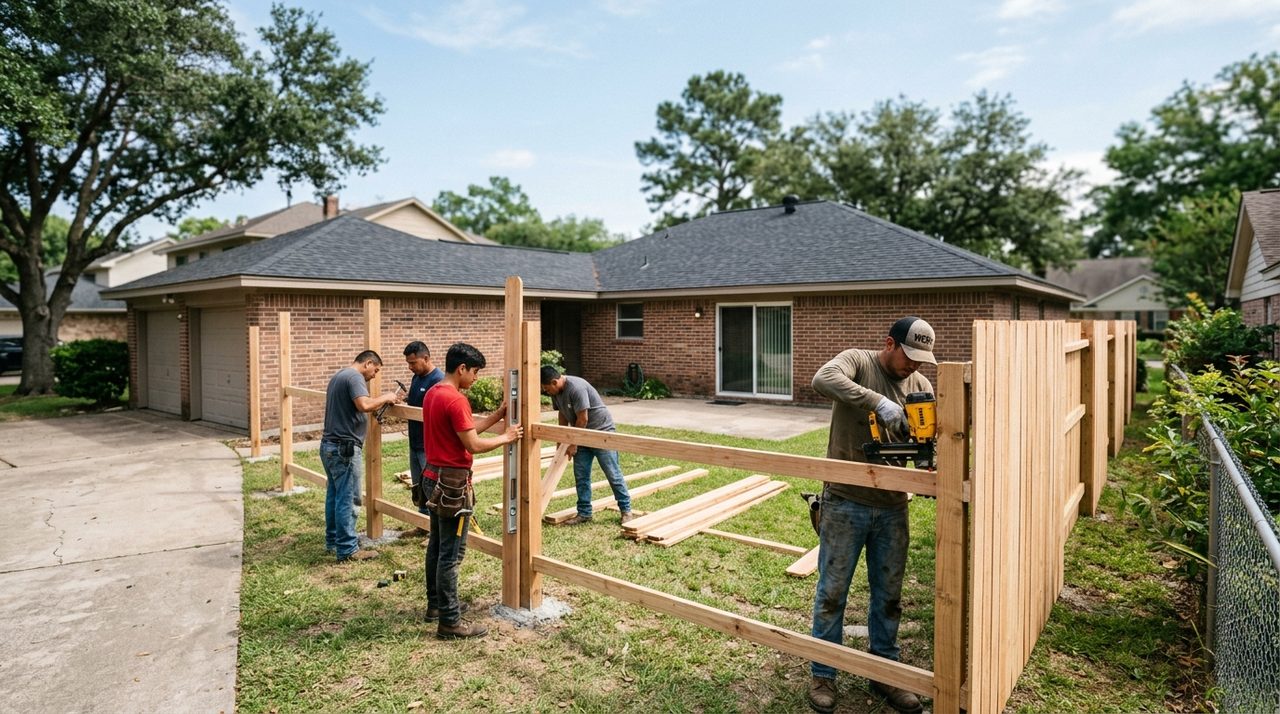
Garden Oaks is a rare inner-loop neighborhood where a 1940s cedar-board fence on a bungalow lot sits two doors from a 2018 custom rebuild surrounded by ornamental iron — and both properties fall under the Garden Oaks Civic Club's deed restrictions before a single post is dug. Pile on the City of Houston permit requirement for fences over six feet, a native Houston Black clay subsoil that heaves posts seasonally, and a mixed housing stock running from pier-and-beam cottages to modern slabs, and fence work here demands more upfront research than in most of the suburbs. This page breaks down the four issues that actually determine whether a Garden Oaks fence job goes smoothly or ends in a forced removal.
Ranked by verified Google rating × review volume × verification tier. How we rank →
Some highly-rated pros serve Garden Oaks from nearby and may not keep a Garden Oaks street address. Those are listed under "Also serving Garden Oaks" with their real city and distance, so you always know where each business is based.
101 Wellington St, Houston, TX 77076
Highly-rated pros based nearby who cover Garden Oaks. Distance shown from the Garden Oaks area.
Serving Garden Oaks Based in Lazybrook / Timbergrove · 0.6 mi away
Serving Garden Oaks Based in Lazybrook / Timbergrove · 1.5 mi away
Serving Garden Oaks Based in The Heights · 1.6 mi away
Serving Garden Oaks Based in Acres Homes · 2.9 mi away
Serving Garden Oaks Based in The Heights · 3.2 mi away
Serving Garden Oaks Based in Independence Heights · 3.6 mi away
Serving Garden Oaks Based in Lazybrook / Timbergrove · 3.7 mi away
Serving Garden Oaks Based in Spring Branch · 3.8 mi away
Serving Garden Oaks Based in Independence Heights · 4.1 mi away
Why it matters to you
Garden Oaks is not a typical HOA neighborhood, but the Garden Oaks Civic Club and the Garden Oaks Maintenance Organization (GOMO) actively enforce deed restrictions on exterior work — including fence materials, heights, and placement. With three registered mandatory HOAs also mapped within the neighborhood's boundaries, the rules that apply to your specific address can differ from those applying to the house next door, making it easy for an uninformed contractor to install the wrong material or height and trigger a removal demand.
What a good pro does
Before any permit application is filed or any post is ordered, a knowledgeable fence contractor should pull the recorded deed restrictions for your specific section, confirm whether your parcel falls under GOMO or one of the three mandatory HOAs, and get written architectural approval if required. That step is separate from — and must precede — any City of Houston permit filing, and skipping it can mean removing a finished fence at full owner expense.
Sources: Local HOA / deed restrictions (see area profile), City of Houston Permitting Center
Why it matters to you
Garden Oaks sits on native Houston Black clay, the same expansive Beaumont-series soil that causes the foundation problems common in the neighborhood's 1930s–1950s pier-and-beam bungalows. The clay shrinks dramatically during Houston's dry summers and swells after heavy rain, and standard concrete footings — poured shallow and wide the way many crews do them — transfer that soil movement directly into the post, causing lean and cracking within a few seasons, especially on the longer fence runs that the neighborhood's generous lot sizes demand.
What a good pro does
A well-executed install on Garden Oaks clay uses deeper, narrower tube-form footings — typically 36 inches or more — and avoids oversized concrete bells that give the expanding clay more surface area to push against. Spacing gate and corner posts with extra embedment depth is particularly important, since those posts carry asymmetric loads that amplify heave damage. Estimated wood post-and-footing replacement runs $150–$300 per post once heave damage occurs, so getting depth right upfront is the cheaper path.
Sources: International Residential Code (as adopted by City of Houston), Harris County Flood Control District
Why it matters to you
Garden Oaks falls entirely within City of Houston jurisdiction, meaning the Houston Permitting Center (HPW) is the single permit authority — there is no suburban building department, MUD permit office, or county overlay to navigate. The City requires a permit for any fence exceeding six feet in height, and Texas does not license fence contractors at the state level through TDLR, so there is no contractor credential to check as a quality proxy. Work that proceeds without a required permit can be cited and result in forced removal, leaving the homeowner responsible for all costs.
What a good pro does
For a standard six-foot privacy fence — the most common request on Garden Oaks bungalow lots — confirm the finished height stays at or below six feet to avoid the permit trigger, or budget for the HPW permit process if you want a taller structure. Any competent contractor working in the neighborhood should be able to show familiarity with HPW's online permit portal and confirm the height calculation method used, since the measurement is taken from grade — relevant on lots where grade changes across the fence line.
Sources: City of Houston Permitting Center, Municipal permit office (see area profile)
Why it matters to you
Garden Oaks bungalows were built in an era before modern grading standards, and many original lots have marginal drainage that pools water against fence posts for days after heavy rain. Combined with Houston's year-round average relative humidity above 70 percent, ground-contact pine posts on these lots routinely rot from the bottom up within three to five years — a timeline that catches homeowners off guard when they assumed a wood fence had a longer service life.
What a good pro does
On lots with any sign of slow drainage or low spots — common on the older sections of Garden Oaks where grade was never corrected — specify pressure-treated pine rated for ground contact (UC4B or better) or cedar heartwood posts rather than standard SPF framing lumber. Alternatively, steel or aluminum post sleeves with wood infill boards eliminate the ground-contact rot point entirely and hold up significantly better on low-lying sections of the neighborhood without changing the cedar aesthetic that the civic club's deed restrictions may require.
Sources: International Residential Code (as adopted by City of Houston), Local HOA / deed restrictions (see area profile)
Hiring fence builders in Garden Oaks? Garden Oaks presents a split housing stock of original 1930s–1950s bungalows and modern custom homes, creating two distinct home-service profiles on the same streets. Deed restrictions enforced by the Garden Oaks Civic Club govern exterior modifications, so contractors should verify compliance before starting work. The neighborhood sits in FEMA Zone X with low flood risk, but aging plumbing and electrical in vintage homes drive steady renovation demand.
Building era
1930s–1950s (original stock), with significant contemporary infill from 2000s–present.
Typical style
Craftsman-style bungalows and cottages (original); contemporary and transitional custom builds (newer).
Foundations
Not confirmed from available sources — likely mixed pier-and-beam (older bungalows) and slab-on-grade (newer construction). Verify on a per-property basis.
Common systems
Original homes may have galvanized or cast-iron drain lines, older copper supply lines, 60–100 amp electrical panels, and aging forced-air or window-unit HVAC. Newer builds typically have PEX plumbing, 200-amp panels, and modern high-efficiency HVAC systems.
What that means for repairs
Teardown-and-rebuild activity is very common due to the large lot sizes and high land values. Older bungalows undergo kitchen and bath remodels, electrical panel upgrades, and re-plumbing. Foundation repair on pier-and-beam vintage homes is a recurring need.
Permit jurisdiction
City of Houston — Houston Permitting Center (HPW).
HOA & deed restrictions
Most of Garden Oaks operates under the Garden Oaks Civic Club / Garden Oaks Maintenance Organization (GOMO), which enforces deed restrictions but does not charge a mandatory annual HOA fee. Section 4 specifically has no transfer fee. However, three mandatory HOAs are registered in the Garden Oaks area per Texas Real Estate Commission filings — exact names and boundaries not confirmed.
Historic districts
No City of Houston historic district designation confirmed. No references to HAHC review or Certificates of Appropriateness were found for Garden Oaks, though a formal city historic-district list was not available in research — verify with Houston Planning & Development if exterior changes are planned.
Contractor note
Deed restrictions enforced by the civic club may regulate exterior materials, setbacks, and accessory structures. Contractors should review the applicable section's deed restrictions before beginning exterior work, and confirm whether the specific property falls under one of the three registered mandatory HOAs.
FEMA flood zone
FEMA Zone X (low flood risk) per official NFHL data. Garden Oaks is not immediately adjacent to a major bayou, though Little White Oak Bayou runs to the neighborhood's general south/southeast.
Hurricane Harvey impact
No source in the available research directly addresses Hurricane Harvey flooding specific to Garden Oaks. No quantified damage figures, flooded-street lists, or recurring flood problem areas were identified. Not confirmed — check Harris County Flood Control District records and FEMA claims data for property-level Harvey impact.
Heat & humidity load
Original 1930s bungalows with limited insulation and older HVAC systems face heavy cooling loads during Houston summers, driving frequent AC repair and duct-sealing calls. Mature tree canopy helps shade but produces debris that clogs gutters and stresses roofing. Newer builds with modern insulation and high-efficiency systems fare better but still demand annual HVAC maintenance.
Working with contractors here
Garden Oaks generates two parallel workstreams: full teardown-and-rebuild projects replacing aging bungalows with contemporary custom homes, and deep renovations of vintage 1930s–1950s cottages. Older homes frequently need foundation leveling on pier-and-beam systems, full re-plumbing to replace galvanized lines, and electrical panel upgrades from 60-amp to 200-amp service. The civic club's deed restriction enforcement means exterior remodels — roofing material changes, fence styles, and additions — should be reviewed for compliance before permitting. Large lot sizes and mature landscaping often complicate equipment access and staging, so job scoping should account for tree protection and limited driveway widths on older properties.
Local Tip
Always ask for a written estimate before work begins. Texas contractors are required to provide one on jobs over $1,000.
Garden Oaks presents a split housing stock of original 1930s–1950s bungalows and modern custom homes, creating two distinct home-service profiles on the same streets. Deed restrictions enforced by the Garden Oaks Civic Club govern exterior modifications, so contractors should verify compliance before starting work. The neighborhood sits in FEMA Zone X with low flood risk, but aging plumbing and electrical in vintage homes drive steady renovation demand.
Source: U.S. Census Bureau, ACS 5-Year 2023
Most of Garden Oaks maps to FEMA Zone X (low mapped flood risk), but Houston's flash-flood reality means even low-risk blocks benefit from smart drainage and storm-hardened installs.
Source: FEMA National Flood Hazard Layer (NFHL). Flood zones vary by parcel — verify your individual FIRM panel.
Sources: City of Houston Permitting CenterLocal HOA / deed restrictions (see area profile)
Sources: International Residential Code (as adopted by City of Houston)
Sources: FEMA National Flood Hazard Layer (NFHL)Harris County Flood Control District
Sources: City of Houston Permitting CenterLocal HOA / deed restrictions (see area profile)