Closed
Serving Montrose Based in Midtown · 1.6 mi away
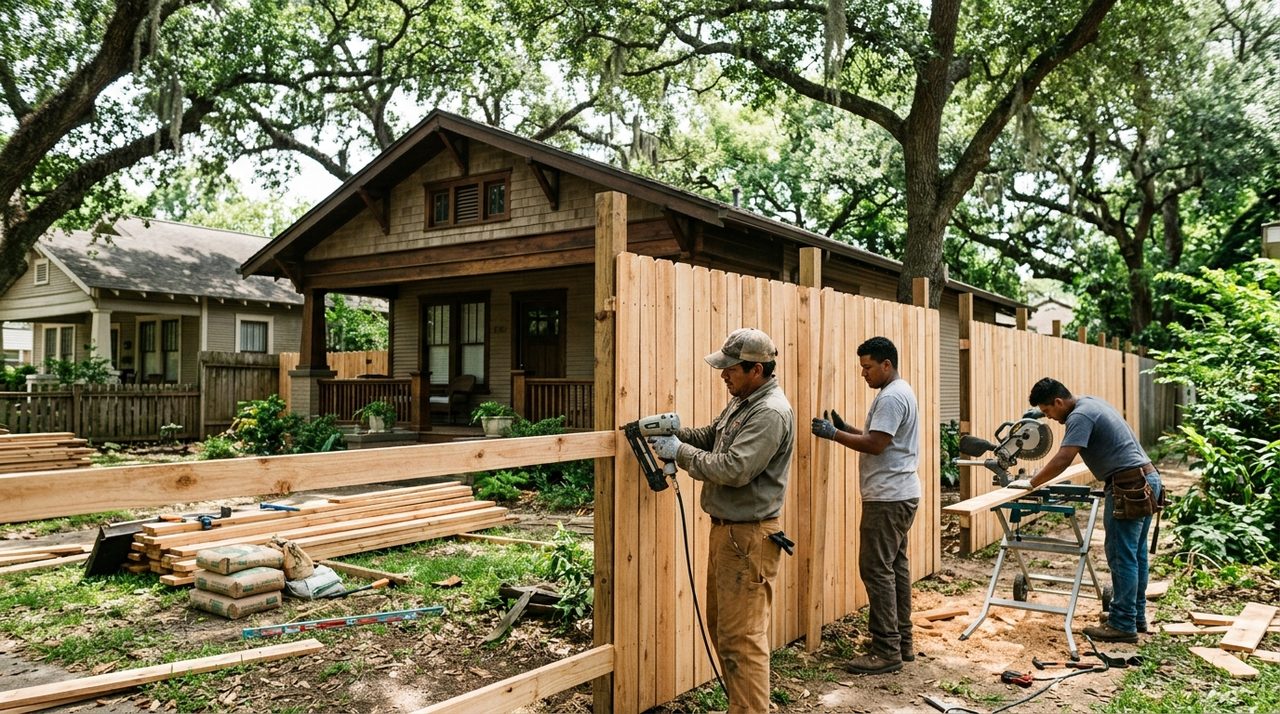
Montrose's block-by-block mix of 1920s pier-and-beam bungalows, mid-century apartments, and 2000s-era infill townhomes means fence projects here rarely follow a simple template — the same street can hold three different sets of recorded deed restrictions, a possible historic district overlay, and native Houston Black clay that quietly destroys standard concrete footings over time. Because Montrose falls entirely within Houston city limits, the City of Houston Permitting Center is the sole permit authority, but individual plat covenants and Houston Archaeological and Historical Commission (HAHC) review rules can add layers that many fence contractors miss. Reading this page will help you ask the right questions before a post is ever set.
Ranked by verified Google rating × review volume × verification tier. How we rank →
Some highly-rated pros serve Montrose from nearby and may not keep a Montrose street address. Those are listed under "Also serving Montrose" with their real city and distance, so you always know where each business is based.
Highly-rated pros based nearby who cover Montrose. Distance shown from the Montrose area.
Serving Montrose Based in Midtown · 1.6 mi away
Serving Montrose Based in Midtown · 2 mi away
Serving Montrose Based in Lazybrook / Timbergrove · 2.6 mi away
Serving Montrose Based in The Heights · 3.8 mi away
Serving Montrose Based in Spring Branch · 4.3 mi away
Serving Montrose Based in EaDo · 4.4 mi away
Serving Montrose Based in EaDo · 4.4 mi away
Serving Montrose Based in EaDo · 4.4 mi away
Serving Montrose Based in The Heights · 4.5 mi away
Serving Montrose Based in Lazybrook / Timbergrove · 5.2 mi away
Why it matters to you
Many Montrose bungalows from the 1920s–1940s sit on native Houston Black clay that has never been excavated or amended, and that clay shrinks dramatically in Houston's dry summers then swells with the first significant rain — a cycle that steadily tilts or cracks fence posts set in standard shallow concrete collars. Homeowners on these older lots frequently find a cedar privacy fence leaning noticeably within three to five years of installation, especially along property lines where drainage concentrates.
What a good pro does
A knowledgeable contractor will dig posts to at least 36 inches in native clay — deeper than the 24-inch minimum common in drier Texas markets — and use a tapered or 'floating' footing design that allows slight soil movement without transmitting full heave force up the post. Specifying pressure-treated posts rated for ground contact (UC4B minimum) and a gravel drainage bed at the base extends useful life significantly in Montrose's wet-dry climate cycles.
Sources: International Residential Code (as adopted by City of Houston)
Why it matters to you
Montrose has no single master HOA, but recorded plat covenants on individual lots can restrict fence height, material, and setbacks in ways that differ even between adjacent properties on the same block — a fence that is perfectly legal next door may violate your specific deed restrictions. Portions of Montrose also fall within City of Houston locally designated historic districts, where the Houston Archaeological and Historical Commission requires design review and approval before any exterior change, including new fencing, and skipping that step can mean a stop-work order or forced removal.
What a good pro does
Before scoping or pricing any fence job, a thorough contractor will pull the current deed restrictions on file at the Harris County Clerk's office and verify with the City of Houston Historic Preservation Office whether the parcel sits within an HAHC-regulated district. The City of Houston Permitting Center also requires a permit for fences exceeding 6 feet, so the contractor should confirm height compliance with both the permit office and any applicable deed covenants before a contract is signed.
Sources: City of Houston Permitting Center, Local HOA / deed restrictions (see area profile), Municipal permit office (see area profile)
Why it matters to you
Montrose lots — many originally platted in the 1920s and later subdivided for townhome infill — carry a dense network of recorded drainage and utility easements that frequently run exactly along the rear or side property lines where fences are planned. Houston's alley-served blocks in Montrose often have overhead power lines and buried gas or water laterals within feet of the fence line, and installing posts through an undisclosed easement can result in a city-ordered removal at the homeowner's expense.
What a good pro does
A responsible contractor will submit an 811 call-before-you-dig request at least three business days before breaking ground and will review the recorded plat — obtainable from the Harris County Appraisal District or County Clerk — to identify any mapped drainage or utility easements. Where an easement bisects the planned fence line, the contractor should adjust post spacing or propose a removable panel section rather than a fixed footing that could block future utility access.
Sources: Harris County Flood Control District, City of Houston Permitting Center
Why it matters to you
Houston averages more than 70 percent relative humidity year-round, and Montrose lots — especially those surrounding the older bungalows whose grades predate modern drainage engineering — can trap standing water against fence posts for days after a storm. Untreated or under-treated pine posts in this environment routinely begin rotting at the ground line within three to five years, a failure mode that often isn't visible until the post snaps at the base during a wind event like the May 2024 derecho that swept through Harris County.
What a good pro does
Contractors working in Montrose should specify No. 2 or better southern yellow pine posts that carry a UC4B pressure-treatment rating (0.40 pcf preservative retention) for any member in ground contact, and cedar boards with a factory-applied water repellent for the fence face. Regrading the immediate fence base to shed water away from posts — even a modest 1-inch slope over 12 inches — meaningfully reduces fungal exposure. Estimated post replacement, if rot is caught early, runs $150–$300 per post including concrete removal and reset.
Sources: International Residential Code (as adopted by City of Houston)
Hiring fence builders in Montrose? Montrose is one of Houston's most architecturally diverse inner-loop neighborhoods, with housing stock ranging from early-20th-century bungalows to modern townhomes and mid-rise condos. Homeowners and contractors must navigate a complex overlay of deed restrictions, possible historic district review, and varied foundation types that change block by block. The absence of a single mandatory HOA means individual plat covenants and city codes are the primary regulatory framework.
Building era
Mixed — ranging from 1920s–1940s original bungalows and cottages to 1970s–1980s apartment conversions and 2000s–present new-construction townhomes.
Typical style
Highly heterogeneous: Craftsman bungalows, mid-century ranch, Victorian-era homes, contemporary townhomes, and multi-family conversions coexist within the same blocks.
Foundations
Mixed — older homes are frequently pier-and-beam; newer townhomes and infill construction are typically slab-on-grade.
Common systems
Older pier-and-beam homes often have galvanized or cast-iron plumbing, outdated electrical panels, and window-unit or older central HVAC systems. Newer townhomes feature modern HVAC, PEX plumbing, and updated electrical. The wide era range means system conditions vary dramatically by property.
What that means for repairs
Renovation activity is extremely common due to the prevalence of aging bungalows on high-value lots. Whole-home gut renovations, kitchen and bath modernizations, and foundation leveling on pier-and-beam structures are frequent. New-construction townhome infill on subdivided lots is also a major activity driver.
Permit jurisdiction
City of Houston Permitting Center (Montrose is within Houston city limits).
HOA & deed restrictions
No single mandatory HOA governs all of Montrose. Specific sub-areas and condo regimes (e.g., Montrose Place Townhomes Owners Association, Montrose Place Homeowners Association) have mandatory membership. Deed restrictions are common and vary by plat — buyers and contractors should review recorded covenants at the Harris County Clerk's office.
Historic districts
Parts of Montrose fall within City of Houston locally designated historic districts, requiring HAHC design review and approval for exterior changes, demolitions, and new construction. Specific district names not confirmed in available research — check the City of Houston Historic Preservation Office for parcel-level status.
Contractor note
Contractors must verify whether a property sits within a locally designated historic district before beginning exterior work or demolition, as HAHC approval may be required. Additionally, individual deed restrictions may impose setback, height, or use limitations that differ from adjacent properties on the same street.
FEMA flood zone
FEMA Zone X (low flood risk) per official NFHL data. However, Montrose's proximity to Buffalo Bayou and various drainage channels means flood risk can vary sharply by block and lot elevation. Property-level flood zone verification is strongly recommended.
Hurricane Harvey impact
Neighborhood-wide Harvey flood impact could not be confirmed from available research. Montrose is an inner-loop area where flooding during Harvey varied significantly by block and proximity to bayous and drainage infrastructure. Homeowners should check individual property flood history through Harris County Flood Control District records and FEMA claim databases.
Heat & humidity load
Older pier-and-beam homes in Montrose are prone to moisture intrusion, subfloor mildew, and HVAC strain during Houston's extreme summer humidity. Aging galvanized plumbing in pre-war homes is susceptible to condensation-related corrosion. Modern townhomes with tight building envelopes benefit from efficient HVAC but may require dehumidification support.
Working with contractors here
Montrose's extreme housing diversity means contractors encounter everything from 1920s pier-and-beam bungalow foundation repair to cutting-edge townhome warranty work. Plumbing repiping is common in pre-war homes still running galvanized or cast-iron lines. Electrical panel upgrades are frequently needed in older homes not designed for modern load demands. Historic district properties require HAHC coordination, which can add weeks to project timelines for exterior work. Contractors should always pull deed restrictions before scoping additions or accessory structures, as setback and height limits vary from lot to lot even on the same block.
Local Tip
Always ask for a written estimate before work begins. Texas contractors are required to provide one on jobs over $1,000.
Montrose is one of Houston's most architecturally diverse inner-loop neighborhoods, with housing stock ranging from early-20th-century bungalows to modern townhomes and mid-rise condos. Homeowners and contractors must navigate a complex overlay of deed restrictions, possible historic district review, and varied foundation types that change block by block. The absence of a single mandatory HOA means individual plat covenants and city codes are the primary regulatory framework.
Source: U.S. Census Bureau, ACS 5-Year 2023
Most of Montrose maps to FEMA Zone X (low mapped flood risk), but Houston's flash-flood reality means even low-risk blocks benefit from smart drainage and storm-hardened installs.
Source: FEMA National Flood Hazard Layer (NFHL). Flood zones vary by parcel — verify your individual FIRM panel.
Sources: City of Houston Permitting CenterMunicipal permit office (see area profile)
Sources: Local HOA / deed restrictions (see area profile)
Sources: FEMA National Flood Hazard Layer (NFHL)Harris County Flood Control District
Sources: Municipal permit office (see area profile)
Sources: Local HOA / deed restrictions (see area profile)