Closed
Serving Waller Based in Hempstead · 5.9 mi away
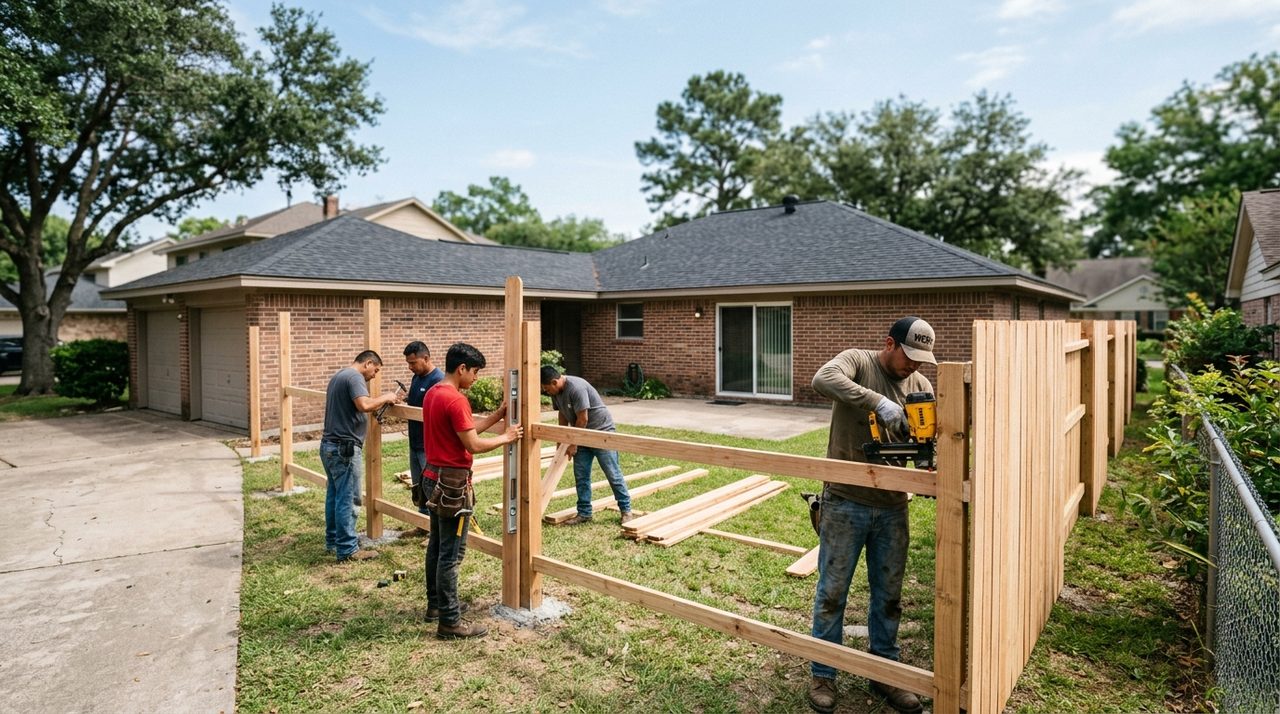
Waller, TX sits at the edge of Houston's northwest suburban fringe in Waller County, where clay-heavy soils, a split permit landscape between the City of Waller and unincorporated county land, and a mix of aging rural properties alongside newer Beacon Hill-era subdivisions create a fence-installation environment that's more complicated than it first appears. Whether you're replacing a ranch-property perimeter that's been heaving for decades or putting up a first privacy fence on a 2010s subdivision lot, knowing the local soil, jurisdiction, and wind realities before you dig saves real money. This page covers the challenges that actually apply in Waller — not boilerplate Houston advice.
Ranked by verified Google rating × review volume × verification tier. How we rank →
Some highly-rated pros serve Waller from nearby and may not keep a Waller street address. Those are listed under "Also serving Waller" with their real city and distance, so you always know where each business is based.
Highly-rated pros based nearby who cover Waller. Distance shown from the Waller area.
Serving Waller Based in Hempstead · 5.9 mi away
Why it matters to you
Waller County sits on the same expansive Beaumont/Houston Black clay series that plagues the wider northwest Houston corridor. On the older rural properties that dominate the area's median 1987 housing stock, you can often see fence lines that have been slowly pushed out of plumb over multiple wet-dry cycles — a post that looks fine after a wet spring can lean noticeably by August. Newer Beacon Hill subdivision fences aren't immune either, since the clay underneath those slab-on-grade lots is just as active.
What a good pro does
A knowledgeable fence installer in Waller will set posts at a minimum 36-inch depth — deeper than the Houston-area default of 24 inches — and use a tube-formed concrete collar that isolates the post base from direct clay contact rather than packing loose concrete flush to grade. For corner posts and gate posts, which bear the most lateral load, diameter should step up to a 4x6 or larger, with concrete extended to at least one-third of the post's above-ground height. Ask your contractor specifically what depth and footing method they use before signing a quote.
Sources: International Residential Code (as adopted by City of Houston)
Why it matters to you
The May 2024 derecho tracked directly across the northwest Houston suburbs, producing gusts exceeding 80–100 mph in some corridors, and Beryl 2024 added another round of wind damage to the region. Waller's position along the US-290 corridor puts it squarely in the path of these inland-tracking storm systems. Large-lot rural properties in Waller often have long, unbroken fence runs with no windbreak, which increases panel loading dramatically compared to a tight urban backyard.
What a good pro does
For a 6-ft cedar board-on-board privacy fence on Waller's larger rural lots, a well-qualified installer will space posts no more than 6–8 feet apart, embed them at least 36 inches deep given the clay soil, and design panel sections with a small reveal gap between boards to reduce wind load on the face. Full storm-damage replacement on an average suburban lot runs an estimated $3,000–$8,000 after a major event — proactive post spacing and embedment depth reduce the odds of total panel failure. TWIA wind insurance covers most of this county, so confirm your policy limits before a storm, not after.
Sources: Texas Windstorm Insurance Association (TWIA), International Residential Code (as adopted by City of Houston)
Why it matters to you
Unlike most Houston suburbs with a single clear permit authority, Waller properties fall into one of two distinct regulatory environments: parcels within the incorporated City of Waller use that city's permit office, while properties in unincorporated Waller County fall under a different set of county-level rules — and the boundary is not always obvious from an address alone. Getting this wrong can mean unpermitted work that triggers removal demands or title issues when you sell.
What a good pro does
Before any post is set, confirm your parcel's jurisdiction by checking the property's appraisal district record through the Waller County Appraisal District and calling the applicable permit office directly — City of Waller for incorporated lots, Waller County Engineering for unincorporated parcels. Texas does not issue state-level fence contractor licenses, so no TDLR registration exists for this trade; permit compliance is the primary legal check. A reputable contractor will pull the correct permit before breaking ground and provide you with the inspection record at job completion.
Sources: Municipal permit office (see area profile)
Why it matters to you
Many of Waller's older rural properties — some dating well before the area's 1987 median build year — have existing wood fence posts in ground contact that were never pressure-treated to today's standards, or were treated to an older, lower-retention specification. Gulf humidity averages above 70% year-round across the region, and Waller's clay soils hold moisture at the post base long after a rain event, creating persistent fungal conditions. Posts installed this way commonly show significant rot within 3–5 years at the ground line.
What a good pro does
When replacing or extending existing fence lines on older Waller properties, insist on pressure-treated lumber graded at a minimum UC4B retention level for ground-contact applications — not the lighter UC3B commonly sold at big-box stores, which is intended for above-ground use only. Post caps on the top of each post prevent water infiltration from above, and gravel backfill around the bottom 6 inches of the post-hole concrete collar improves drainage at the most vulnerable point. Budget an estimated $150–$300 per post including concrete for replacement work on an existing run.
Sources: International Residential Code (as adopted by City of Houston)
Hiring fence builders in Waller? Waller sits in unincorporated and incorporated areas of Waller County northwest of Houston, featuring a mix of older rural properties and newer subdivision development. Homeowners here benefit from relatively low flood risk but should verify deed restrictions and permit jurisdiction on a parcel-by-parcel basis, as the regulatory landscape varies significantly across the area.
Building era
Not confirmed - housing stock spans multiple decades, with newer construction (2010s–2020s) appearing in subdivisions like Beacon Hill alongside older rural properties.
Typical style
Not confirmed - likely a mix of ranch-style homes on larger lots and newer suburban construction in master-planned communities.
Foundations
Not confirmed - slab-on-grade is typical for newer construction in the region; older properties may include pier-and-beam.
Common systems
Not confirmed - newer homes likely feature modern central HVAC and PEX plumbing; older rural properties may have aging systems requiring updates.
What that means for repairs
Not confirmed - older rural properties in the area likely drive demand for system upgrades (HVAC, plumbing, electrical), while newer subdivision homes may require cosmetic updates and outdoor living additions.
Permit jurisdiction
Not confirmed with certainty. Properties within the City of Waller would use the City of Waller permit office; properties in unincorporated Waller County would fall under Waller County engineering. Verify jurisdiction by parcel address.
HOA & deed restrictions
Not confirmed - some subdivisions in the Waller area may have mandatory HOAs or POAs, but no specific HOA was identified for the broader Waller community. Check deed and Waller County real property records or the TREC HOA Management Certificate database.
Historic districts
No City of Houston historic district designation confirmed. Waller is outside the City of Houston and HAHC jurisdiction.
Contractor note
Contractors should verify whether each job site falls within the City of Waller or unincorporated Waller County, as permit requirements and inspection processes differ. Deed restrictions, if any, should be confirmed through Waller County Clerk records before beginning exterior modifications.
FEMA flood zone
FEMA Zone X (low flood risk) - source: fema_nfhl. Specific bayou or creek proximity for individual parcels should be verified, but the overall area carries minimal federally designated flood risk.
Hurricane Harvey impact
Not confirmed - no street-level flood data or Harvey inundation records were found for the specific Waller neighborhood area. Check Harris County and Waller County flood claim records for parcel-specific Harvey impact.
Heat & humidity load
Houston-area summers bring sustained high heat and humidity. Homes in Waller, particularly older rural structures, may experience increased HVAC strain, moisture intrusion issues, and foundation movement during prolonged dry spells. Newer subdivision homes benefit from modern insulation and drainage but still require regular HVAC maintenance and attic ventilation checks.
Working with contractors here
Contractors working in Waller encounter a split market: newer subdivision homes needing warranty-era repairs, outdoor living additions, and fence installations, alongside older rural properties requiring full system overhauls including HVAC replacement, re-plumbing, and electrical panel upgrades. The low flood risk reduces demand for flood mitigation work, but foundation monitoring remains important given the expansive clay soils common across Waller County. Job scoping should account for potentially longer material delivery times given the area's distance from central Houston supply hubs, and contractors must confirm the applicable permit jurisdiction before starting work.
Local Tip
Always ask for a written estimate before work begins. Texas contractors are required to provide one on jobs over $1,000.
Waller sits in unincorporated and incorporated areas of Waller County northwest of Houston, featuring a mix of older rural properties and newer subdivision development. Homeowners here benefit from relatively low flood risk but should verify deed restrictions and permit jurisdiction on a parcel-by-parcel basis, as the regulatory landscape varies significantly across the area.
Source: U.S. Census Bureau, ACS 5-Year 2023
Most of Waller maps to FEMA Zone X (low mapped flood risk), but Houston's flash-flood reality means even low-risk blocks benefit from smart drainage and storm-hardened installs.
Source: FEMA National Flood Hazard Layer (NFHL). Flood zones vary by parcel — verify your individual FIRM panel.
Sources: Municipal permit office (see area profile)
Sources: Local HOA / deed restrictions (see area profile)
Sources: FEMA National Flood Hazard Layer (NFHL)Harris County Flood Control District
Sources: Municipal permit office (see area profile)International Residential Code (as adopted by City of Houston)