Serving Oak Forest Based in Lazybrook / Timbergrove · 1.1 mi away
Best Foundation Repair in Oak Forest
Oak Forest's 1940s–1960s ranch-style homes sit on Harris County's expansive Beaumont and Houston Black clay, and decades of wet-dry cycles have quietly stressed the slabs and pier-and-beam foundations beneath them — long before the current wave of teardown-rebuilds began. Because the entire neighborhood falls within City of Houston limits, every underpinning or mudjacking job triggers a COH permit through the Development Services Department, a step that many of the neighborhood's high-volume renovation contractors overlook. Understanding exactly which failure mode is at work under your mid-century home — soil shrinkage, an old cast-iron drain leak, or asymmetric tree-root moisture loss — determines whether a $4,000 fix holds for 20 years or fails inside five.
Verified against Google Business data
Updated 2026
See the 10 Foundation Repair Serving Oak Forest 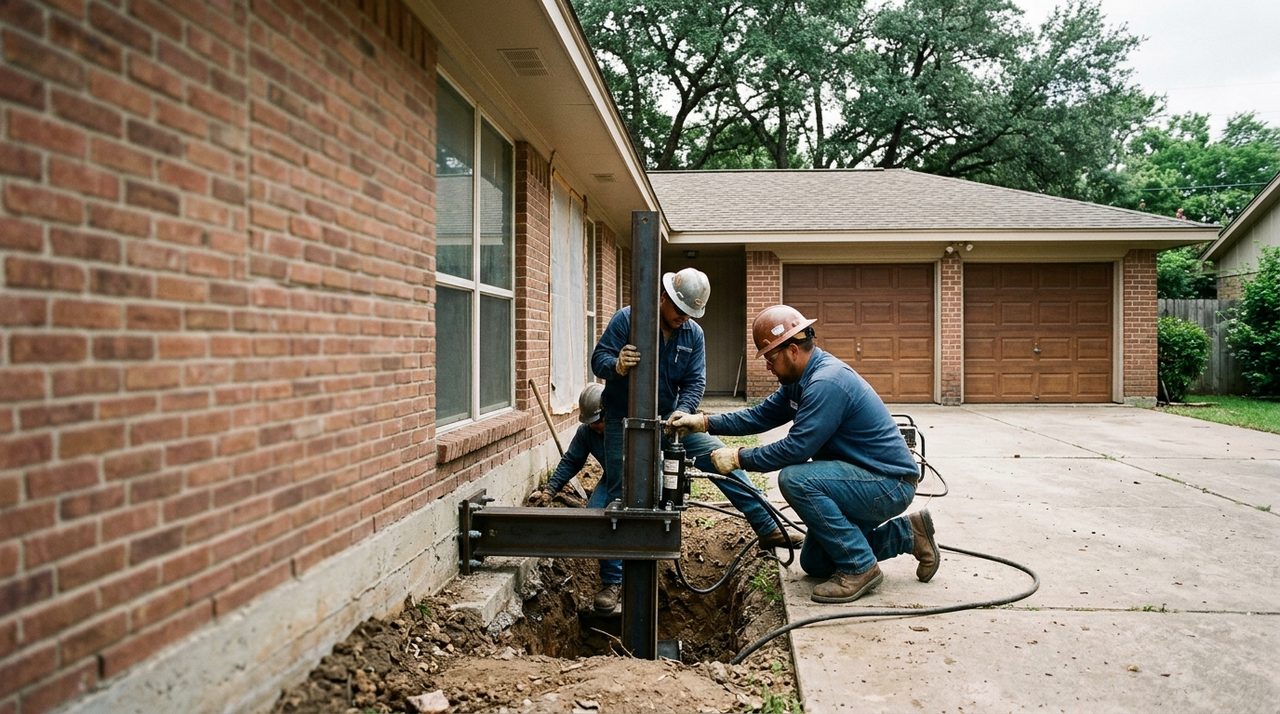
- Median home built
- 1967
- Median home value
- $543,800
- FEMA flood zone
- X (low)
- Typical repair cost (est.)
- $3,500–$25,000 depending on pier type and count
- Most common local issue
- Seasonal clay shrink-swell under aging 1950s–1960s slabs and pier-and-beam frames
Ranked by verified Google rating × review volume × verification tier. How we rank →
Some highly-rated pros serve Oak Forest from nearby and may not keep a Oak Forest street address. Those are listed under "Also serving Oak Forest" with their real city and distance, so you always know where each business is based.
Min rating:
10 resultsAlso serving Oak Forest
Highly-rated pros based nearby who cover Oak Forest. Distance shown from the Oak Forest area.
Serving Oak Forest Based in Brookhollow · 2 mi away
Closed
Serving Oak Forest Based in Lazybrook / Timbergrove · 2 mi away
Serving Oak Forest Based in Brookhollow · 2.1 mi away
Closed
Serving Oak Forest Based in Garden Oaks · 2.3 mi away
Closed
Serving Oak Forest Based in Independence Heights · 2.5 mi away
Closed
Serving Oak Forest Based in Brookhollow · 2.6 mi away
Closed
Serving Oak Forest Based in Brookhollow · 2.8 mi away
Closed
Serving Oak Forest Based in Lazybrook / Timbergrove · 3.5 mi away
Closed
Serving Oak Forest Based in Lazybrook / Timbergrove · 3.7 mi away
Foundation Repair in Oak Forest: What You Should Know
Clay Soil Cycling Under Oak Forest's Mid-Century Foundations
Why it matters to you
Oak Forest homes built in the 1950s and 1960s were designed and sized for a Harris County clay environment that was already demanding, but decades of Houston's wet-dry swings have compounded the original stress. The 2022–2023 La Niña drought baked perimeter clay away from slab edges and pier bases alike, and when rains returned the water rushed into those voids rather than soaking in gradually — the classic condition that sends one corner of a 60-year-old slab or pier-and-beam frame moving while the rest stays put. Stair-step cracks in brick veneer, doors that won't latch, and diagonal drywall cracks at window corners are the visible signatures on homes of this era.
What a good pro does
A qualified contractor should probe the perimeter for void depth before recommending any repair method, and should provide written specifications listing exact pier locations, depths, and target bearing stratum — not just a total piling count. For pier-and-beam homes (common in Oak Forest's earliest sections), shimming and beam sister-work should be documented separately from any underpinning scope. All underpinning work in Oak Forest requires a City of Houston permit issued through the Development Services Department; confirm the permit number before work begins.
Sources: City of Houston Permitting Center, Municipal permit office (see area profile)
Cast-Iron Under-Slab Drains from Winter Storm Uri Still Leaking
Why it matters to you
Oak Forest's original construction era — largely 1947 through the mid-1960s — means a significant share of the neighborhood's unupdated homes still have cast-iron under-slab drain lines. Winter Storm Uri in February 2021 froze and fractured these lines across Houston's older neighborhoods, and many Oak Forest homeowners patched visible interior damage without ever testing whether the underground pipes were compromised. A slow drip from a cracked 4-inch drain line directly under the slab saturates the clay, causes localized heave, and then settlement as the soil structure breaks down — a process that can mimic pure clay-movement damage and lead to a repair contract that addresses the wrong problem.
What a good pro does
Before signing any foundation repair proposal, commission a standalone hydrostatic plumbing test — a licensed plumber fills the under-slab drain system under pressure and monitors for pressure loss. At a typical cost of $250–$400 (est.), it is the single most cost-effective diagnostic step an Oak Forest homeowner can take on a pre-1980 home. Under Texas law, any re-routing or repair of the under-slab plumbing must be performed or overseen by a plumber licensed through the Texas State Board of Plumbing Examiners; the foundation contractor cannot perform that scope.
Sources: Texas State Board of Plumbing Examiners, City of Houston Permitting Center
Oak Forest's Mature Tree Canopy Drawing Moisture Unevenly from the Soil
Why it matters to you
The large live oaks and water oaks that define Oak Forest's streetscape are also its most underappreciated foundation risk. Trees with canopy spreads of 40–60 feet have root systems extending well past the drip line, and on Houston's expansive clay those roots aggressively extract moisture during dry months — pulling the soil away from the foundation on the tree side while the shaded opposite side retains more moisture. This asymmetric drying tilts slabs and pier-and-beam frames gradually, and it tends to be worst on the south and west sides of homes where sun and root competition are most intense. Oak Forest's deed restrictions, which vary across its 18 recorded sections, may limit what you can do about a heritage-sized tree even when it is clearly contributing to foundation movement.
What a good pro does
A foundation professional working in Oak Forest should walk the lot and map tree locations relative to the foundation before writing a repair scope — the pier layout should be heavier on the tree side to compensate for ongoing moisture depletion. Equally important is a post-repair soaker-hose irrigation protocol around the perimeter: maintaining consistent soil moisture on the dry side of the foundation is the primary tool for slowing recurrence, especially during Houston's summer drought windows. Review the recorded deed restrictions for your specific Oak Forest section before removing or root-pruning any large tree, as enforcement can come from neighboring property owners rather than a centralized HOA.
Sources: Local HOA / deed restrictions (see area profile)
City of Houston Permits and Oak Forest's Patchwork Deed Restrictions
Why it matters to you
Oak Forest sits entirely within City of Houston limits, which means foundation repair involving underpinning — steel push piers, helical piers, or pressed concrete pilings — requires a permit from the COH Development Services Department, along with inspection before backfilling. This is a step that contractors accustomed to working unincorporated Harris County or suburban permit offices sometimes skip, leaving homeowners with unpermitted structural work that surfaces as a red flag on pre-sale inspections. Separately, Oak Forest's 18 sections each carry their own recorded deed restrictions; some sections include language on setbacks and exterior alterations that could affect perimeter trenching or the placement of visible pier caps.
What a good pro does
Require your contractor to provide the COH permit number before any excavation begins — you can verify permit status independently through the city's online permit portal. Before finalizing the repair contract, pull the recorded deed restrictions for your specific Oak Forest section from Harris County Appraisal District records and confirm whether perimeter trenching or exterior structural modification triggers any notice or setback requirement. Because Texas has no standalone state license for foundation repair contractors, verifying general liability and workers' compensation insurance coverage is the primary financial protection available to Oak Forest homeowners beyond the permit process itself.
Sources: City of Houston Permitting Center, Municipal permit office (see area profile), Local HOA / deed restrictions (see area profile), Texas Department of Licensing & Regulation
Foundation Repair in Oak Forest: What You Should Know
Hiring foundation repair in Oak Forest? Oak Forest is a large, deed-restricted neighborhood of 1940s–1960s homes experiencing significant renovation and new construction activity. Homeowners here navigate a mix of aging original systems and modern rebuilds, with no mandatory HOA but recorded deed restrictions that vary by section. Contractors should expect a wide range of project scopes, from updating original mid-century infrastructure to full teardown-and-rebuild jobs.
- Housing era
- 1940s–1960s, with ongoing new construction infill
- Foundation
- Not confirmed from available sources
- Flood zone
- FEMA Zone X (low flood risk) per official NFHL data
- Permits
- City of Houston Permitting Center (Oak Forest is within Houston city limits)
Housing stock & systems
Building era
1940s–1960s, with ongoing new construction infill.
Typical style
Mid-century ranch-style homes predominate among original stock; newer construction varies in style. Specific architectural breakdown not confirmed in available sources.
Foundations
Not confirmed from available sources. Likely a mix of slab-on-grade and pier-and-beam consistent with the era, but homeowners should verify on a per-property basis.
Common systems
Original homes may have galvanized or cast-iron drain plumbing, older electrical panels (60–100 amp), and window-unit or early central HVAC systems. Updated and rebuilt homes typically feature modern systems.
What that means for repairs
Oak Forest sees heavy renovation activity driven by the desirability of the location and the aging of original 1950s–1960s housing stock. Common projects include full kitchen and bathroom remodels, re-plumbing from galvanized to copper or PEX, electrical panel upgrades, and complete teardown-rebuilds on original lots.
Permits & restrictions
Permit jurisdiction
City of Houston Permitting Center (Oak Forest is within Houston city limits).
HOA & deed restrictions
No mandatory HOA. The Oak Forest Homeowners Association (OFHA) is a voluntary, non-mandatory civic association covering 18 sections. Recorded deed restrictions exist across most sections and vary by block/section.
Historic districts
No City of Houston historic district designation confirmed. HAHC Certificates of Appropriateness are not known to be required.
Contractor note
Contractors should review the applicable section's recorded deed restrictions before beginning exterior work or additions, as restrictions vary across Oak Forest's 18 sections and may govern setbacks, outbuildings, and use. No HAHC review is required, but City of Houston permitting rules apply in full.
Flood & weather
FEMA flood zone
FEMA Zone X (low flood risk) per official NFHL data. However, buyers and contractors are advised to verify flood zone status on a per-property basis, especially for lots near bayous or drainage channels.
Hurricane Harvey impact
Specific Harvey 2017 flood impact data for Oak Forest was not confirmed in available sources. Neighborhood guides advise verifying flood zone status near bayous, suggesting some pockets may carry elevated risk, but widespread significant flooding was not documented in the research reviewed.
Heat & humidity load
Original 1950s–1960s homes with aging HVAC systems are particularly vulnerable during Houston's extreme summer heat. Contractors should expect seasonal demand spikes for AC repair, attic insulation upgrades, and weatherization projects. Older pier-and-beam foundations may also see moisture-related issues during humid summer months.
Working with contractors here
Oak Forest's mid-century housing stock drives steady demand for whole-house updates including re-plumbing, electrical upgrades, and HVAC replacement. The neighborhood's popularity and rising property values fuel frequent teardown-rebuild projects, requiring contractors to navigate City of Houston permitting for new construction. Renovation jobs on original homes often uncover outdated wiring, galvanized plumbing, and inadequate insulation, so thorough pre-project inspections are essential for accurate scoping. Contractors should also be aware that deed restrictions vary across Oak Forest's 18 sections, potentially affecting fence heights, accessory structures, and exterior modifications. The voluntary nature of the HOA means enforcement of deed restrictions may be driven by individual neighbors or section-level efforts rather than a centralized authority.
Local Tip
Always ask for a written estimate before work begins. Texas contractors are required to provide one on jobs over $1,000.
About Oak Forest
Oak Forest is a large, deed-restricted neighborhood of 1940s–1960s homes experiencing significant renovation and new construction activity. Homeowners here navigate a mix of aging original systems and modern rebuilds, with no mandatory HOA but recorded deed restrictions that vary by section. Contractors should expect a wide range of project scopes, from updating original mid-century infrastructure to full teardown-and-rebuild jobs.
- Median year built
- 1967
- Median home value
- $543,800
- Owner-occupied
- 71.1%
- Population
- 33,651
- Housing units
- 13,335
- Median income
- $121,658
Source: U.S. Census Bureau, ACS 5-Year 2023
Flood & storm risk
FEMA Zone XLow flood riskMost of Oak Forest maps to FEMA Zone X (low mapped flood risk), but Houston's flash-flood reality means even low-risk blocks benefit from smart drainage and storm-hardened installs.
Source: FEMA National Flood Hazard Layer (NFHL). Flood zones vary by parcel — verify your individual FIRM panel.
Houston Storm Readiness in Oak Forest
Hurricane & flooding
Houston's flash-flood reality means even low-mapped-risk areas like Oak Forest can see sheet flow accumulate against a foundation during a slow-moving Gulf system, so verify that your perimeter drainage is clear and properly sloped before hurricane season opens. A TDLR-licensed foundation contractor can add or reposition surface drains to intercept runoff before it softens the clay bearing layer beneath your slab. Much of the housing stock predates modern wind codes (median build year 1967), so retrofits matter more here. Confirm the current FEMA panel for your Oak Forest parcel — the area maps to Zone X, but adjacent lots can differ.
Severe storms & hail
The May 2024 derecho caused structural racking in thousands of Houston homes, and racking places diagonal tension on slab corners that can widen existing hairline cracks into visible gaps in Oak Forest over the following weeks. Schedule a foundation survey within 30 days of any severe wind event to establish a post-storm baseline before summer drying compounds any movement. In-city Oak Forest work falls under City of Houston floodplain and permitting rules.
Ice storms & freezes
Ice loading from roof accumulation during a hard freeze transfers compressive stress to your foundation corners, and in Oak Forest that added load on clay subgrade that has stiffened from cold can create corner settlement that persists after the thaw. A TDLR-licensed foundation contractor should inspect visible brick-to-foundation transitions and interior door frames after any multi-day freeze event, even if no pipe damage occurred. With a median build year of 1967, the older building stock here is more exposed to hard-freeze damage than newer construction. In-city Oak Forest work falls under City of Houston floodplain and permitting rules.
Sources: FEMA National Flood Hazard Layer (NFHL), Ready.gov -- Hurricanes, CenterPoint Energy -- Storm Center, City of Houston -- Emergency Preparedness, Ready.gov -- Winter Weather, Harris County Flood Control District
Free Oak Forest Tools & Calculators
Houston-specific estimators to plan your project before you call a pro. All results are planning estimates — a licensed local pro confirms the details on site.
Houston Soil & Tree Proximity Risk Calculator
Open full tool & FAQ →Grouped by mature root aggression & water demand.
Trunk center to the nearest exterior wall.
Moderate risk
The root zone likely reaches your foundation's soil during Houston's dry summers, when clay shrinks most. Watch for sticking doors and diagonal cracks, keep soil moisture even with a soaker hose during drought, and have a foundation pro evaluate if you see any movement.
Find a Houston foundation pro →This is a planning estimate only — actual requirements depend on an on-site assessment by a licensed Houston pro. Guidance is based on general species root behavior in expansive clay, not a soil test.
Houston Freeze Prep & Pipe Insulation Checklist
Open full tool & FAQ →Your freeze checklist — 4 tasks
- 1
Disconnect & drain every outdoor hose bib
Remove hoses, drain the spigots, and cover each with an insulated faucet sock. Un-drained hose bibs are the #1 burst point in a Houston freeze.
- 2
Insulate exposed pipes in the attic & garage
Wrap any pipe in an unconditioned space (attic runs, garage walls) with foam sleeves. Houston homes rarely insulate these because they only matter a few nights a year — which is exactly why they burst.
- 3
Open cabinet doors & keep a pencil-width drip
On hard-freeze nights, open kitchen/bath cabinets so warm air reaches the pipes and let faucets on exterior walls drip to relieve pressure.
- 4
Protect the attic/garage water heater & its lines
An attic or garage tank sits in unconditioned space. Insulate the cold-inlet and hot-outlet lines and confirm the emergency drain pan is clear so a leak doesn't reach the ceiling.
This is a planning estimate only — actual requirements depend on an on-site assessment by a licensed Houston pro. If a pipe has already burst, shut off your main water supply and call a licensed Houston plumber immediately — freeze bursts flood fast.
Frequently Asked Questions
Do I need a City of Houston permit for foundation repair on my Oak Forest home, and who inspects it?
Yes — because Oak Forest sits entirely within Houston city limits, underpinning work such as steel push piers or helical pier installation requires a permit through the City of Houston Development Services Department, not a suburban permit office. An inspector from the city must approve the work at key stages before the contractor backfills the excavation. Contractors who skip this step leave you with unpermitted work that a buyer's inspector will flag on resale, which is a real liability given Oak Forest's median home value of roughly $544,000.
Sources: City of Houston Permitting CenterMunicipal permit office (see area profile)
My Oak Forest home was built in 1958 — does that mean I have a slab or a pier-and-beam foundation, and does the repair approach differ?
Oak Forest's original 1940s–1960s stock includes both slab-on-grade and pier-and-beam construction, and you need to confirm which type you have before accepting any repair proposal — the methods are completely different. Pier-and-beam homes can often be shimmed or have damaged wood members sistered from underneath the crawl space, while slab homes require external underpinning or interior void-fill depending on the failure mode. Ask your contractor to document the foundation type in writing before they scope the repair, and verify it against your original survey or permit records at the COH Development Services Department.
Sources: City of Houston Permitting Center
Oak Forest isn't in a flood zone — does that mean I don't need to worry about soil saturation affecting my foundation after a major storm like Beryl?
Most of Oak Forest maps to FEMA Zone X, which reflects low mapped riverine flood risk, but that designation does not mean your soil is immune to saturation-driven settlement after multi-day rainfall events like Hurricane Beryl in 2024. Houston's Beaumont and Houston Black clay absorbs large volumes of water and loses bearing capacity when fully saturated, which can cause settlement weeks after the storm even on lots that never took on interior water. If your home showed new cracks or door misalignment in the months after Beryl, get a structural evaluation before attributing it to normal seasonal movement.
Sources: FEMA National Flood Hazard Layer (NFHL)Harris County Flood Control District
How do Oak Forest's deed restrictions affect exterior foundation repair work — do I need approval before a contractor starts trenching along my perimeter?
Oak Forest has no mandatory HOA, so there is no architectural review board whose sign-off you need before foundation work begins, but recorded deed restrictions do vary across its 18 sections and some govern exterior modifications or site disturbance. Your contractor should pull the applicable section's deed restrictions from Harris County real property records before starting any perimeter trenching or visible exterior work, since enforcement can come from neighboring property owners rather than a central authority. The City of Houston permit process is your primary compliance obligation here.
Sources: Local HOA / deed restrictions (see area profile)City of Houston Permitting Center
I've gotten bids ranging from $7,000 to $22,000 for the same Oak Forest foundation job — why is the spread so wide, and what should I be comparing?
The spread almost always comes down to pier type, pier count, and depth specifications — compare proposals line by line on those three numbers, not just the total price. Pressed concrete pilings (a legacy Houston method) typically run $3,500–$9,000 for an average job but carry a higher long-term failure rate on clay than steel push piers, which run an estimated $1,200–$1,800 per pier installed; a 10-pier steel pier job therefore lands around $12,000–$18,000 and those are estimates only. Ask each contractor to specify in writing how deep their piers reach and why that depth is sufficient given your specific soil conditions, and reject any proposal that doesn't include those details.
What time of year is best to schedule foundation repair on an Oak Forest home, and is there a season when I should hold off?
Late fall through early winter — roughly November through January — is typically the most stable window for foundation repair in Oak Forest because Houston's clay soils are in a more uniform moisture state after summer drought ends but before spring rains create new differential swelling. Scheduling repair during an active drought or immediately after a multi-day rain event can mean the slab is not at a representative elevation when piers are set, potentially leading to over- or under-correction. Avoid signing contracts during or immediately after a major flood event like Beryl, when soils are still reconsolidating and any movement reading will be misleading.