Serving Third Ward Based in Midtown · 1.9 mi away
Best Foundation Repair in Third Ward
Third Ward's foundation landscape is genuinely split in two: pre-1960s pier-and-beam bungalows along blocks like Elgin and Holman that need periodic re-leveling as wood deteriorates and clay soils shift, and post-2000 slab-on-grade townhomes scattered through the neighborhood's infill redevelopment that face the same expansive Beaumont clay differentials as the rest of Houston's Inner Loop. All permits for structural repair — whether shimming a pier-and-beam frame or underpinning a slab — run through the Houston Permitting Center, and the neighborhood's high renter share (roughly 62 percent of units are renter-occupied per ACS 2023 data) means owner-occupants bear disproportionate repair backlogs that can compound quietly before they're caught.
Verified against Google Business data
Updated 2026
See the 10 Foundation Repair Serving Third Ward 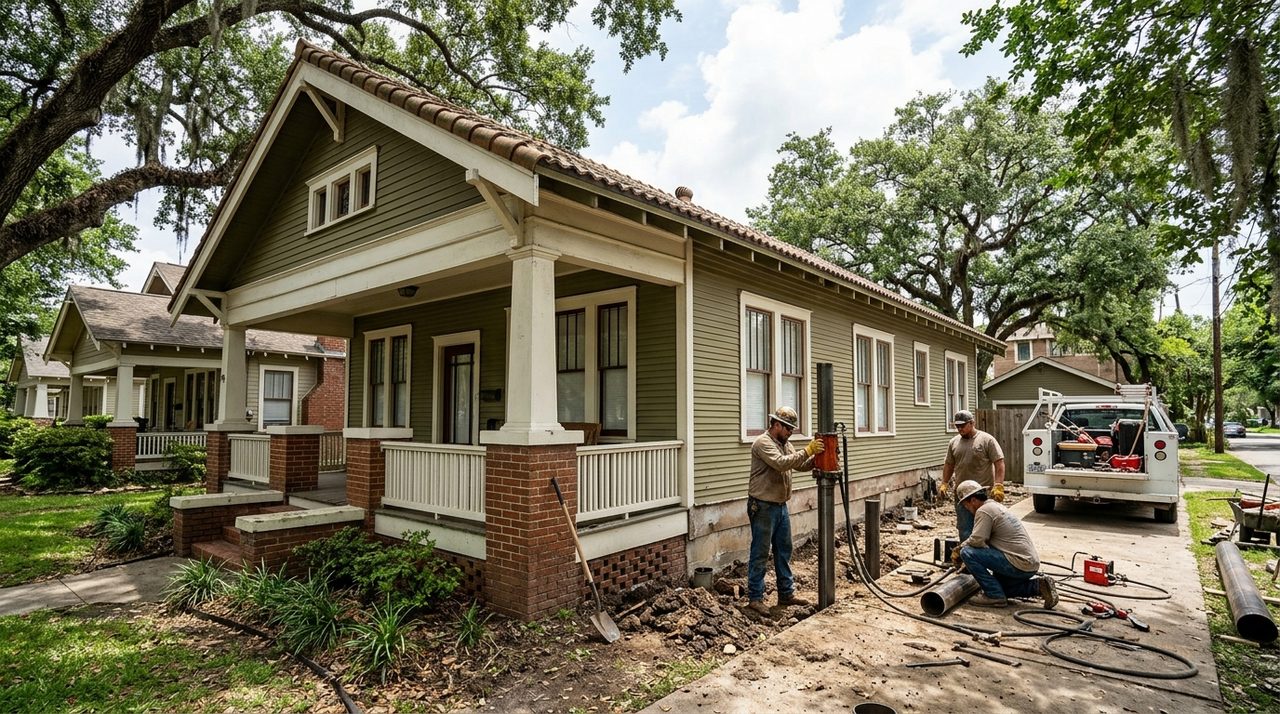
- Median home built
- 1983
- Median home value
- $384,100
- FEMA flood zone
- X (low)
- Typical cost (est.)
- $3,500–$25,000
- Most common local issue
- Pier-and-beam wood deterioration and settlement in pre-1960s bungalows
Ranked by verified Google rating × review volume × verification tier. How we rank →
Some highly-rated pros serve Third Ward from nearby and may not keep a Third Ward street address. Those are listed under "Also serving Third Ward" with their real city and distance, so you always know where each business is based.
Min rating:
10 resultsAlso serving Third Ward
Highly-rated pros based nearby who cover Third Ward. Distance shown from the Third Ward area.
Closed
Serving Third Ward Based in River Oaks · 2.5 mi away
Closed
Serving Third Ward Based in Medical Center · 2.9 mi away
Open Now
Serving Third Ward Based in Upper Kirby · 3 mi away
Serving Third Ward Based in Upper Kirby · 3.4 mi away
Closed
Serving Third Ward Based in The Heights · 4 mi away
Serving Third Ward Based in Lazybrook / Timbergrove · 4.2 mi away
Serving Third Ward Based in EaDo · 4.4 mi away
Serving Third Ward Based in South Houston · 4.7 mi away
Closed
Serving Third Ward Based in Lazybrook / Timbergrove · 5 mi away
Foundation Repair in Third Ward: What You Should Know
Aging Pier-and-Beam Bungalows: Wood Rot, Sunken Piers, and Uneven Floors
Why it matters to you
Third Ward's 1920s–1960s frame cottages and bungalows sit on pier-and-beam foundations — a system that offers access and repairability but degrades over time as wood sills rot in Houston's humidity, brick or concrete piers sink unevenly into the Beaumont clay, and shimming done decades ago shifts. Homeowners often notice sloping floors or sticking doors years before the problem is visible from outside, and because these homes are common renovation targets as the neighborhood gentrifies, an inspection at purchase frequently turns up deferred leveling work.
What a good pro does
A qualified contractor should physically crawl the entire underfloor space, photograph each pier contact point, and measure differential elevation with a laser level before quoting any work. Re-leveling typically involves sistering deteriorated sills, replacing failed piers with adjustable steel or precast concrete, and adding cross-bracing where needed. The City of Houston requires a structural repair permit through the Houston Permitting Center for this scope; confirm permit issuance before work begins rather than relying solely on the contractor's statement.
Sources: City of Houston Permitting Center, International Residential Code (as adopted by City of Houston)
Slab Settlement on Infill Townhomes Built Over Disturbed Fill Soil
Why it matters to you
The wave of 2000s–2020s townhome construction in Third Ward frequently replaced demolished bungalows, meaning slabs were poured over backfilled lots where organic debris, old pier voids, and variable compaction create uneven bearing conditions from day one. Houston's expansive clay amplifies this: seasonal dry spells — including the 2022–2023 La Niña drought — bake the perimeter and create voids along the grade beam edge, while wet cycles from events like Hurricane Beryl (2024) can cause abrupt post-saturation settlement weeks after water recedes.
What a good pro does
For townhome slabs showing diagonal cracking at door corners or separation at brick weep-screed lines, a foundation contractor should propose steel push piers or helical piers sized to reach load-bearing soil below the disturbed fill — typically 15 to 25 feet in Third Ward conditions — rather than surface mudjacking alone. Estimated costs run $1,200–$1,800 per steel push pier with a typical job requiring 8–16 piers. The Houston Permitting Center requires a permit for slab underpinning; project-specific HOAs on some townhome developments may also require written architectural approval before any perimeter trenching begins.
Sources: City of Houston Permitting Center, Local HOA / deed restrictions (see area profile), Harris County Flood Control District
Post-Uri Under-Slab and Under-Floor Plumbing Leaks Silently Eroding Foundations
Why it matters to you
Winter Storm Uri (February 2021) burst cast-iron and older PVC drain lines throughout Houston, and Third Ward's pre-1960s bungalows — many with original cast-iron under-floor drain lines — were hit hard. Many owners repaired visible interior damage but left cracked under-floor pipes in place. Ongoing slow leaks from those lines saturate the clay or deteriorate wood framing directly under the living area, causing localized heave or rot that mimics normal settling. Because the neighborhood's median year built is reported at 1983 (ACS 2023) but the legacy bungalow stock is far older, the cast-iron risk is concentrated in a specific sub-set of the housing that a cursory look at aggregate data would undercount.
What a good pro does
Before signing any foundation repair contract on a pre-1970 Third Ward bungalow, commission a hydrostatic plumbing test — estimated $250–$400 — to confirm drain lines hold pressure. If leaks are found, a plumber licensed by the Texas State Board of Plumbing Examiners must perform or oversee the pipe repair or re-routing. Only after passing a hydrostatic test should the foundation scope be finalized, because unresolved leaks will re-damage any leveling work within a few seasons.
Sources: Texas State Board of Plumbing Examiners, City of Houston Permitting Center
Permit Compliance and Resale Disclosure in a High-Turnover Renovation Market
Why it matters to you
Third Ward's ongoing gentrification means properties frequently change hands after renovation, sometimes within a few years of foundation work. Texas law requires sellers to disclose known foundation movement and prior repairs on the TREC Seller's Disclosure form, and unpermitted foundation work discovered on a pre-listing inspection creates both legal exposure and deal-killing renegotiations. The City of Houston has no zoning, but subdivision-level deed restrictions vary block by block across Third Ward, and some blocks carry restrictions that affect allowable lot grading or accessory work tied to foundation drainage improvements.
What a good pro does
Homeowners should verify that any foundation contractor pulls a permit through the Houston Permitting Center — not through a suburb's office or on a verbal assurance — and should request the finaled inspection record, not just the permit receipt, before final payment. Keep all written proposals, pier count specifications, and inspection cards in a labeled folder with the closing documents; this package directly supports the TREC disclosure and can prevent post-sale disputes. If a project-specific HOA governs a newer townhome development, get HOA approval in writing before perimeter trenching starts.
Sources: City of Houston Permitting Center, Local HOA / deed restrictions (see area profile), Municipal permit office (see area profile)
Foundation Repair in Third Ward: What You Should Know
Hiring foundation repair in Third Ward? Third Ward presents contractors with a split housing stock: early 20th-century pier-and-beam bungalows requiring foundation, plumbing, and electrical upgrades alongside modern slab-on-grade townhomes with contemporary systems. Proximity to Brays Bayou means flood-related remediation and drainage work remain ongoing concerns. The absence of a single mandatory HOA simplifies permitting but project-specific HOAs on newer townhome developments may impose architectural and material requirements.
- Housing era
- 1920s–1960s legacy homes with significant 2000s–2020s infill townhome construction
- Foundation
- Mixed — older bungalows predominantly pier-and-beam
- Flood zone
- FEMA Zone X (low flood risk) per official NFHL data
- Permits
- Houston Permitting Center (City of Houston)
Housing stock & systems
Building era
1920s–1960s legacy homes with significant 2000s–2020s infill townhome construction.
Typical style
Early 20th-century frame bungalows and cottages; contemporary 2- to 3-story townhomes with attached garages; some student-oriented multifamily near UH and TSU.
Foundations
Mixed — older bungalows predominantly pier-and-beam; newer townhomes and infill predominantly slab-on-grade.
Common systems
Older homes: galvanized or cast-iron plumbing, 60–100 amp electrical panels, window units or aging central HVAC. Newer townhomes: PEX or copper plumbing, 200 amp panels, modern central HVAC with multi-zone capability.
What that means for repairs
Gut renovations and full-system upgrades of pre-1960s bungalows are common as the neighborhood gentrifies. Electrical panel upgrades, re-plumbing from galvanized to PEX, and pier-and-beam foundation leveling are frequent scopes. Newer townhomes see comparatively less renovation but occasional warranty-period repairs and cosmetic upgrades.
Permits & restrictions
Permit jurisdiction
Houston Permitting Center (City of Houston).
HOA & deed restrictions
No single mandatory HOA covers the neighborhood. Multiple voluntary civic clubs operate including Canfield Oaks Civic Association, Third Ward is Home Civic Club, and University Village Civic Club. Newer townhome and condo developments commonly have small, project-specific mandatory HOAs governing shared driveways and common areas.
Historic districts
No City of Houston historic district designation confirmed for Third Ward as a whole. Individual structures may have landmark status — check HAHC records for specific addresses.
Contractor note
Houston has no citywide zoning, so building controls depend on subdivision-level deed restrictions that vary block by block. Contractors working on older homes should verify whether the lot is in a deed-restricted subdivision before proposing accessory structures or lot modifications.
Flood & weather
FEMA flood zone
FEMA Zone X (low flood risk) per official NFHL data. However, Third Ward sits directly north of Brays Bayou and includes low-lying areas near bayou tributaries and older storm sewer infrastructure, which can create localized flooding risk not fully captured by Zone X designation.
Hurricane Harvey impact
Third Ward lies within the broader Brays Bayou watershed, which experienced significant flooding during Hurricane Harvey in 2017. However, no neighborhood-specific documentation was found quantifying the extent of Harvey damage or identifying specific flooded streets within Third Ward. Property-level Harvey impact should be verified through FEMA Harvey inundation layers, Harris County Flood Control District mapping tools, and seller's disclosure for any individual address.
Heat & humidity load
Older pier-and-beam bungalows with aging insulation and single-pane windows face extreme summer cooling loads; HVAC systems in these homes are frequently undersized or failing. High humidity under pier-and-beam homes can accelerate subfloor rot and encourage pest infestations. Newer townhomes perform better thermally but three-story designs can struggle with uneven cooling between floors, making multi-zone HVAC balancing a common summer service call.
Working with contractors here
Contractors in Third Ward most commonly handle two categories of work: full-system renovations of pre-1960s bungalows and routine maintenance on post-2000 townhomes. On older homes, pier-and-beam foundation leveling, galvanized plumbing replacement, electrical panel upgrades from 60 to 200 amps, and HVAC installation are the most frequent scopes. Newer townhomes generate calls for HVAC zone balancing, minor foundation settling on slab construction, and cosmetic remodels. Proximity to Brays Bayou means flood damage remediation—including drywall removal, mold treatment, and flooring replacement—remains a recurring need after heavy rain events. Job scoping should account for the wide variance in building age and condition even within a single block, and contractors should verify project-specific HOA requirements on newer developments before beginning exterior work.
Local Tip
Always ask for a written estimate before work begins. Texas contractors are required to provide one on jobs over $1,000.
About Third Ward
Third Ward presents contractors with a split housing stock: early 20th-century pier-and-beam bungalows requiring foundation, plumbing, and electrical upgrades alongside modern slab-on-grade townhomes with contemporary systems. Proximity to Brays Bayou means flood-related remediation and drainage work remain ongoing concerns. The absence of a single mandatory HOA simplifies permitting but project-specific HOAs on newer townhome developments may impose architectural and material requirements.
- Median year built
- 1983
- Median home value
- $384,100
- Owner-occupied
- 37.7%
- Population
- 35,866
- Housing units
- 18,321
- Median income
- $65,901
Source: U.S. Census Bureau, ACS 5-Year 2023
Flood & storm risk
FEMA Zone XLow flood riskMost of Third Ward maps to FEMA Zone X (low mapped flood risk), but Houston's flash-flood reality means even low-risk blocks benefit from smart drainage and storm-hardened installs; risk climbs sharply on blocks nearest Brays Bayou, where it varies parcel to parcel.
Source: FEMA National Flood Hazard Layer (NFHL). Flood zones vary by parcel — verify your individual FIRM panel.
Houston Storm Readiness in Third Ward
Hurricane & flooding
Beryl 2024 reminded Houston homeowners that even neighborhoods with low FEMA flood designations experience localized ponding when storm-sewer inlets back up, and that standing water against a foundation for even 12 hours can trigger clay heave in Third Ward. Before the season, confirm your gutters discharge at least five feet from the foundation and that splash blocks direct water toward the street, keeping clay moisture content consistent beneath the slab. Because Third Ward drains toward Brays Bayou, block-level runoff can differ sharply from the mapped zone.
Severe storms & hail
Hail itself does not crack a concrete foundation, but the insurance repair process — contractors dropping equipment, vibrating compactors near the structure — can disturb marginally stable piers in Third Ward. Coordinate a brief foundation check with a TDLR-licensed contractor before and after any major roof or exterior repair project that involves heavy equipment operating near your home. Confirm the current FEMA panel for your Third Ward parcel — the area maps to Zone X, but adjacent lots can differ.
Ice storms & freezes
In Third Ward, where mapped flood risk is low, the primary post-freeze foundation threat is not surface water but slab-leak-driven soil saturation — Uri 2021 caused widespread pipe failures that fed water silently under slabs for days before homeowners noticed. After any hard freeze, have a plumber pressure-test your lines first, then schedule a foundation elevation check if any under-slab leak is confirmed. With a median build year of 1983, the older building stock here is more exposed to hard-freeze damage than newer construction. Because Third Ward drains toward Brays Bayou, block-level runoff can differ sharply from the mapped zone.
Sources: FEMA National Flood Hazard Layer (NFHL), Ready.gov -- Hurricanes, CenterPoint Energy -- Storm Center, City of Houston -- Emergency Preparedness, Ready.gov -- Winter Weather, Harris County Flood Control District
Free Third Ward Tools & Calculators
Houston-specific estimators to plan your project before you call a pro. All results are planning estimates — a licensed local pro confirms the details on site.
Houston Soil & Tree Proximity Risk Calculator
Open full tool & FAQ →Grouped by mature root aggression & water demand.
Trunk center to the nearest exterior wall.
Moderate risk
The root zone likely reaches your foundation's soil during Houston's dry summers, when clay shrinks most. Watch for sticking doors and diagonal cracks, keep soil moisture even with a soaker hose during drought, and have a foundation pro evaluate if you see any movement.
Find a Houston foundation pro →This is a planning estimate only — actual requirements depend on an on-site assessment by a licensed Houston pro. Guidance is based on general species root behavior in expansive clay, not a soil test.
Houston Freeze Prep & Pipe Insulation Checklist
Open full tool & FAQ →Your freeze checklist — 4 tasks
- 1
Disconnect & drain every outdoor hose bib
Remove hoses, drain the spigots, and cover each with an insulated faucet sock. Un-drained hose bibs are the #1 burst point in a Houston freeze.
- 2
Insulate exposed pipes in the attic & garage
Wrap any pipe in an unconditioned space (attic runs, garage walls) with foam sleeves. Houston homes rarely insulate these because they only matter a few nights a year — which is exactly why they burst.
- 3
Open cabinet doors & keep a pencil-width drip
On hard-freeze nights, open kitchen/bath cabinets so warm air reaches the pipes and let faucets on exterior walls drip to relieve pressure.
- 4
Protect the attic/garage water heater & its lines
An attic or garage tank sits in unconditioned space. Insulate the cold-inlet and hot-outlet lines and confirm the emergency drain pan is clear so a leak doesn't reach the ceiling.
This is a planning estimate only — actual requirements depend on an on-site assessment by a licensed Houston pro. If a pipe has already burst, shut off your main water supply and call a licensed Houston plumber immediately — freeze bursts flood fast.
Frequently Asked Questions
Do I need a permit from the City of Houston to have my Third Ward pier-and-beam foundation re-leveled?
Yes — structural foundation work in Third Ward falls under the City of Houston's jurisdiction and requires a permit through the Houston Permitting Center, whether the scope involves replacing deteriorated wood piers, adding concrete piers, or shimming and adjusting existing supports. The permit triggers at least one inspection, which creates the documentation trail that protects you at resale in a neighborhood where ownership changes frequently. Submit applications through the Development Services portal before any digging or structural work begins; contractors who skip this step can expose you to stop-work orders or costly retroactive compliance.
Sources: City of Houston Permitting CenterMunicipal permit office (see area profile)
My Third Ward bungalow was built around 1940 and a contractor mentioned the piers might be original creosote-treated wood. Is that a different repair than newer concrete piers?
Original creosote or untreated wood piers in 1920s–1940s Third Ward bungalows deteriorate differently than concrete block or precast piers added in later decades — wood can compress, split, or simply rot at grade where the pier contacts moist clay soil, often causing the floor to drop gradually rather than suddenly. Contractors typically replace failing wood piers with concrete tube-form piers or adjustable steel screw-jack systems, and it is common on homes of that era to find a mix of original and previously replaced piers in varying condition. Budget estimates for a full re-leveling of an older bungalow in this range run roughly $3,500–$8,000 depending on pier count and access, though costs vary — get at least three itemized written quotes.
The blocks of Third Ward closest to Brays Bayou flooded during Harvey. Could that old saturation still be affecting a slab-on-grade townhome built in 2005?
Yes, prolonged saturation events like Harvey (2017) and Beryl (2024) can reconsolidate the Beaumont clay fill that many infill townhomes were built on, causing settlement that shows up months or even years after the water recedes rather than immediately. On parcels closest to Brays Bayou, flood risk and soil conditions vary parcel by parcel even within the same block, so your specific FEMA flood zone assignment and elevation certificate matter more than the neighborhood average. If your townhome shows new diagonal cracks at door corners or sticking doors after a major flood event, a foundation inspection combined with a hydrostatic plumbing test — estimated at $250–$400 — is a reasonable first step before assuming the movement is purely soil-driven.
Sources: FEMA National Flood Hazard Layer (NFHL)Harris County Flood Control District
I'm buying a renovated Third Ward bungalow and the seller's TREC disclosure says 'foundation repairs made.' What specifically should I ask about before closing?
Request the original Houston Permitting Center permit number and the final inspection sign-off — if no permit was pulled, you inherit an unpermitted repair that may need retroactive approval when you eventually sell. Ask for the contractor's written scope, pier count, and warranty terms, and confirm whether a hydrostatic plumbing test was performed before repairs, since many Third Ward bungalows have aging cast-iron under-floor drain lines that can leak and destabilize soil independently of the structural repair. If documentation is incomplete, a $250–$400 plumbing test and an independent foundation inspection before closing are low-cost insurance against an expensive surprise.
Sources: City of Houston Permitting CenterTexas State Board of Plumbing Examiners
Is there a better time of year to schedule foundation repair on a Third Ward property, or does Houston's climate make timing irrelevant?
Timing matters more in Third Ward than most homeowners realize: the best window is typically late spring (April–May) or early fall (October–November), when the clay soil has had consistent moisture and is neither bone-dry from summer heat nor oversaturated from a tropical event. Repairs done during an extreme drought — like the 2022–2023 La Niña cycle — can be skewed by abnormally shrunken soil, meaning piers are set to a soil level that will shift again when normal rainfall returns. Conversely, scheduling immediately after a major rain event or flood gives the soil time to drain and restabilize first, which reduces the chance of needing follow-up adjustments within the first year.
My newer Third Ward townhome has a small mandatory HOA for the shared driveway. Do I need HOA approval before a foundation contractor trenches around the perimeter?
Quite possibly — project-specific HOAs on Third Ward townhome developments commonly govern exterior modifications and shared-access areas, and perimeter trenching for pier installation can disturb shared driveways or landscaping that fall under those rules. Review your HOA's architectural guidelines or contact the board in writing before work begins, and keep a copy of any approval; some lenders and title companies flag exterior structural work without documented HOA sign-off during a resale transaction. The City of Houston permit and the HOA approval are separate processes — having one does not substitute for the other.
Sources: Local HOA / deed restrictions (see area profile)City of Houston Permitting Center