Serving Seabrook Based in Kemah · 5.2 mi away
Best Junk Removal in Seabrook, TX
Seabrook sits on Galveston Bay in FEMA Zone AE, meaning flood gut-outs are not a rare emergency here — they are a recurring reality for homeowners in waterfront cottages built in the 1960s and newer subdivision homes alike. When a storm surge or heavy rain event forces a gut-out, the volume of waterlogged drywall, flooring, and appliances can overwhelm standard curbside service, and the City of Seabrook's permit jurisdiction and subdivision-level HOA rules add layers that out-of-area haulers often miss. This page walks through the junk-removal realities specific to Seabrook's coastal housing stock, mixed foundation types, and salt-air environment.
Verified against Google Business data
Updated 2026
See the 5 Junk Removal Serving Seabrook 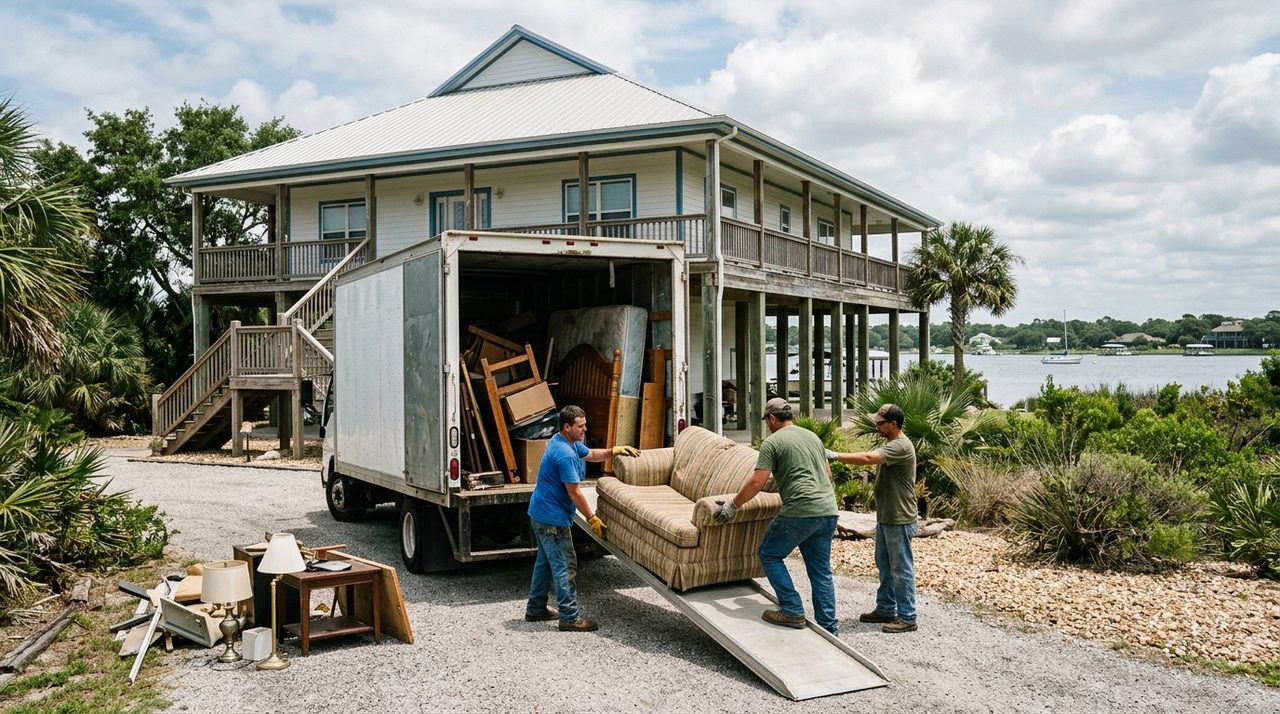
- Median home built
- 1991
- Median home value
- $332,000
- FEMA flood zone
- AE (high)
- Typical cost (est.)
- $400–$900 per full truck
- Most common local issue
- Post-flood gut-out debris from AE-zone waterfront and canal-front homes
Ranked by verified Google rating × review volume × verification tier. How we rank →
Some highly-rated pros serve Seabrook from nearby and may not keep a Seabrook street address. Those are listed under "Also serving Seabrook" with their real city and distance, so you always know where each business is based.
Min rating:
5 resultsAlso serving Seabrook
Highly-rated pros based nearby who cover Seabrook. Distance shown from the Seabrook area.
Closed
Serving Seabrook Based in Clear Lake · 5.5 mi away
Serving Seabrook Based in Dickinson · 5.6 mi away
Serving Seabrook Based in League City · 6.8 mi away
Closed
Serving Seabrook Based in Dickinson · 6.8 mi away
Junk Removal in Seabrook: What You Should Know
AE-Zone Gut-Outs: Waterlogged Debris Volume After Bay-Adjacent Flooding
Why it matters to you
Much of Seabrook maps to FEMA Zone AE, and properties nearest Galveston Bay face parcel-by-parcel surge risk that can leave older 1960s–1970s pier-and-beam waterfront cottages with several feet of standing water inside. A single gut-out in these homes can easily generate 15–20 cubic yards of saturated drywall, original insulation, vinyl flooring, and appliances — material that must be staged and removed within days to prevent mold colonization in Seabrook's high-humidity coastal climate.
What a good pro does
A qualified hauler working Seabrook's waterfront blocks should arrive with a full 10–12 cubic yard truck and plan for weight surcharges, since waterlogged material is far heavier than dry household junk — expect disposal cost estimates of $500–$900 per full truck load at TCEQ-permitted transfer facilities. Confirm the hauler disposes only at a TCEQ-registered solid waste facility; illegal roadside dumping of flood debris is a Class B misdemeanor under Texas Health & Safety Code §365.012 and has been documented in coastal Harris County after storm events.
Sources: FEMA National Flood Hazard Layer (NFHL), Texas Commission on Environmental Quality, Harris County Flood Control District
HOA Debris Staging Rules Vary Block by Block Across Seabrook Subdivisions
Why it matters to you
Seabrook has approximately 16 registered HOA and condo associations — including Lake Cove Community Association, Seascape POA, and Searidge — each with its own deed restrictions governing where roll-off containers can sit, how long curbside debris may remain, and whether prior written architectural review approval is required. A homeowner in one subdivision may be able to stage a dumpster in the driveway for 72 hours; a neighbor two streets over may face a 24-hour limit or a flat prohibition, with fines assessed to the homeowner rather than the hauler.
What a good pro does
Before scheduling a large removal or roll-off drop, contact your specific subdivision's HOA or POA to confirm staging rules and approval requirements — do not rely on a hauler's assumption that 'Seabrook allows it.' Many Seabrook haulers experienced with the area will request your HOA contact before booking so they can coordinate compliant placement and pickup timing. Any permits for associated renovation work must be pulled through the City of Seabrook Building and Permits Department, not the Houston Permitting Center.
Sources: Local HOA / deed restrictions (see area profile), Municipal permit office (see area profile)
Salt-Air-Accelerated HVAC and Appliance Haul-Away in Aging Coastal Homes
Why it matters to you
Seabrook's Galveston Bay proximity means salt-laden air corrodes HVAC condenser coils, cabinet exteriors, and appliance components significantly faster than in inland Houston suburbs. Homes built in the 1980s and 1990s — which represent a large share of Seabrook's housing stock given its median year built of 1991 — are now cycling through second or even third HVAC replacements. Winter Storm Uri in February 2021 accelerated this further, killing water heaters and air handlers across Harris County in a single week, leaving heavy compressor units and air handlers to be removed from slab-on-grade homes with no basement staging area, meaning everything must come through the living space.
What a good pro does
For HVAC and large-appliance haul-away, confirm the hauler has a truck rated for heavy equipment loads and that refrigerants in old AC units will be recovered by an EPA Section 608-certified technician before the compressor is transported — improper refrigerant release is an EPA violation. Single-item appliance pickups in the Houston metro typically run $75–$150 as an estimate, but a wave of Uri-related replacements in a tight subdivision can push costs up if multiple units require a dedicated trip.
Sources: Texas Commission on Environmental Quality, FEMA National Flood Hazard Layer (NFHL)
Estate and Whole-House Clearouts in Seabrook's Older Waterfront Cottages
Why it matters to you
Seabrook's 1960s and 1970s waterfront homes — many owner-occupied for decades — frequently surface items requiring special handling during estate clearouts: CRT televisions, fluorescent tube lighting, old propane tanks used for dock or patio cooking, and pre-1978 painted furniture and cabinetry that falls under EPA lead-safe handling rules. These items cannot go in a standard junk load and, if mixed in, can increase disposal costs and create legal liability for the homeowner when debris is inspected at the transfer station.
What a good pro does
Before a full clearout, walk through with your hauler and flag any CRT screens, fluorescent bulbs, propane cylinders, or furniture that appears to predate 1978 — the hauler should separate these for proper routing. Harris County Household Hazardous Waste drop-off events accept many of these items at no charge. A whole-house clearout from a 1960s Seabrook waterfront cottage runs roughly $400–$650 for standard household junk as a cost estimate, but budget more if significant hazardous-material sorting is needed.
Sources: EPA Lead Renovation, Repair and Painting (RRP) Rule, Texas Commission on Environmental Quality, Local HOA / deed restrictions (see area profile)
Junk Removal in Seabrook: What You Should Know
Hiring junk removal in Seabrook? Seabrook is an incorporated city on Galveston Bay with housing ranging from 1960s waterfront homes to 2000s subdivision development, creating a wide spectrum of home service needs. The coastal location and FEMA AE flood zone designation mean that flood mitigation, elevation considerations, and storm-hardening are central to nearly every major home project. Homeowners should expect subdivision-level HOA requirements that vary block by block and plan for salt-air corrosion on exterior systems.
- Housing era
- 1970s–2000s, with some 1960s waterfront homes and ongoing infill
- Foundation
- Mixed — predominantly slab-on-grade in newer subdivisions
- Flood zone
- FEMA Zone AE (high flood risk) — source
- Permits
- City of Seabrook Building/Permits Department (incorporated city — not Houston Permitting Center or Harris…
Housing stock & systems
Building era
1970s–2000s, with some 1960s waterfront homes and ongoing infill.
Typical style
Production suburban traditional (one- and two-story brick or brick-and-siding) with coastal/contemporary elevated homes along waterfront and canal-front areas.
Foundations
Mixed — predominantly slab-on-grade in newer subdivisions; pier-and-beam or pier-and-pile construction common in older waterfront and canal-front homes due to floodplain and storm-surge requirements.
Common systems
Central HVAC systems typical of 1980s–2000s construction (aging units in older homes); copper and CPVC plumbing in newer builds, galvanized possible in 1960s–1970s stock; standard 200-amp electrical panels in newer homes, potential 100-amp in older homes.
What that means for repairs
Flood damage repair and mitigation retrofits are common drivers of renovation activity. Waterfront homes frequently undergo elevation projects, foundation reinforcement, and storm-resistant window/door upgrades. Older homes often need full plumbing repipes and HVAC replacements due to age and salt-air corrosion.
Permits & restrictions
Permit jurisdiction
City of Seabrook Building/Permits Department (incorporated city — not Houston Permitting Center or Harris County).
HOA & deed restrictions
Subdivision-by-subdivision. Many subdivisions have mandatory HOAs/POAs including Seabrook Island HOA, Lake Cove Community Association (managed by Goodwin & Company), Seascape POA, and Searidge. Approximately 16 HOA/condo communities are registered in Seabrook. Some older or fringe areas may have no active HOA but may still have recorded deed restrictions.
Historic districts
No City of Houston historic district designation confirmed. Seabrook is an independent incorporated city and not subject to HAHC oversight.
Contractor note
Contractors must pull permits through the City of Seabrook and should verify subdivision-specific HOA architectural review requirements before starting exterior work. Coastal building codes and floodplain management regulations apply and may require elevation certificates.
Flood & weather
FEMA flood zone
FEMA Zone AE (high flood risk) — source: fema_nfhl. Seabrook sits directly on Galveston Bay and is subject to both riverine flooding and coastal storm surge, contributing to its very high hazard risk rating.
Hurricane Harvey impact
The Clear Lake/Bay area of southeast Harris County experienced significant flooding during Hurricane Harvey. Seabrook-specific community hazard data rates overall risk as 'Very High.' However, no publicly available subdivision-level or street-level Harvey flood-extent map for Seabrook was identified. Exact street-by-street impact should be verified through Harris County Flood Control District records and individual property seller's disclosures.
Heat & humidity load
Extreme humidity and salt-air proximity accelerate corrosion on HVAC condensers, metal roofing components, and exterior hardware. HVAC systems run at near-continuous capacity May through September, shortening equipment lifespan. Mold and moisture intrusion in slab-on-grade and pier-and-beam homes require proactive dehumidification and ventilation strategies.
Working with contractors here
Contractors working in Seabrook most commonly handle flood damage restoration, foundation repairs (especially on older pier-and-beam waterfront homes), and HVAC replacements accelerated by salt-air corrosion and heavy summer usage. Roofing and exterior siding projects require wind-rated materials compliant with coastal building codes, and many jobs trigger City of Seabrook floodplain management requirements including elevation certificates. The wide range of housing ages — from 1960s waterfront cottages to 2000s subdivision homes — means scoping should always begin with a thorough assessment of existing systems, as plumbing and electrical standards vary significantly across eras. HOA architectural review adds a layer of approval in many subdivisions, so contractors should confirm HOA requirements before beginning visible exterior modifications.
Local Tip
Always ask for a written estimate before work begins. Texas contractors are required to provide one on jobs over $1,000.
About Seabrook
Seabrook is an incorporated city on Galveston Bay with housing ranging from 1960s waterfront homes to 2000s subdivision development, creating a wide spectrum of home service needs. The coastal location and FEMA AE flood zone designation mean that flood mitigation, elevation considerations, and storm-hardening are central to nearly every major home project. Homeowners should expect subdivision-level HOA requirements that vary block by block and plan for salt-air corrosion on exterior systems.
- Median year built
- 1991
- Median home value
- $332,000
- Owner-occupied
- 64.1%
- Population
- 13,617
- Housing units
- 6,138
- Median income
- $109,489
Source: U.S. Census Bureau, ACS 5-Year 2023
Flood & storm risk
FEMA Zone AEHigh flood riskMuch of Seabrook maps to FEMA Zone AE (high flood risk), so flood-resilient detailing -- elevated equipment, water-tolerant materials, and drainage-first thinking -- is essential here, not optional; risk climbs sharply on blocks nearest Galveston Bay, where it varies parcel to parcel.
Source: FEMA National Flood Hazard Layer (NFHL). Flood zones vary by parcel — verify your individual FIRM panel.
Frequently Asked Questions
Do I need a permit from the City of Seabrook to haul away debris from a flood gut-out or major renovation?
Junk removal itself does not require a permit from the City of Seabrook Building/Permits Department, but the demolition or gut-out work that generates the debris often does — particularly when removing drywall, flooring, or structural elements in an AE-zone home undergoing flood damage repair. Your hauler does not pull a permit, but if your renovation contractor hasn't already pulled one through the City of Seabrook (not the Houston Permitting Center or Harris County — Seabrook is its own incorporated city), the debris removal can flag an unpermitted project. Confirm the scope of required permits with the City of Seabrook before the dumpster or truck arrives.
Sources: Municipal permit office (see area profile)
Can a junk removal company legally dump my flood debris at any local facility, or are there rules about where Seabrook waterlogged materials have to go?
Texas requires haulers transporting solid waste for hire beyond a single municipality to register as a municipal solid waste transporter with the TCEQ, and disposal must occur at a TCEQ-permitted facility — waterlogged drywall and flooring from an AE-zone gut-out cannot legally be dumped at an unlicensed site. For Seabrook homeowners, the nearest permitted transfer stations are in the broader Harris County network, including facilities on the west side of the metro, so confirm your hauler's TCEQ registration and ask which facility they use before booking. Illegal dumping of solid waste is a Class B misdemeanor under Texas Health & Safety Code §365.012, and the liability exposure falls on whoever arranged the disposal.
My 1960s waterfront cottage in Seabrook has pier-and-beam construction — does that make appliance and furniture removal harder or more expensive?
Yes, in practice it often does. Older pier-and-beam homes along Seabrook's Galveston Bay and canal-front streets frequently have narrow doorways, no garage access, and elevated entry points that slow the removal of bulky items like old refrigerators, chest freezers, and waterlogged sectionals. Haulers may charge a labor premium for difficult-access jobs — budget an estimated $50–$100 above standard single-item rates as a rough planning figure, though actual quotes will vary. When calling for a quote, describe your access situation explicitly: number of steps, doorway width, and whether the item is on a raised porch or interior room.
What is the fastest realistic timeline to get a full truckload of gut-out debris removed in Seabrook after a storm event?
Under normal conditions, most Seabrook-area junk removal companies can schedule within one to three business days for a full truckload, but after a named storm or widespread flooding event — like Beryl in July 2024 — demand spikes across the entire SE Houston coastal corridor simultaneously and wait times commonly stretch to one to two weeks. Because FEMA AE-zone homes face mold colonization risk within 24–72 hours of water intrusion, staged debris should be moved to the curb (or driveway, subject to your HOA rules) as quickly as possible even if the truck can't come immediately, to get wet material out of the living space. Booking with multiple companies and keeping a waitlist spot is a common strategy Seabrook homeowners use after major events.
My Seabrook home has old fluorescent shop lights in the garage and a CRT television from the 1990s — can a standard junk removal truck take those?
Not all junk haulers accept fluorescent tubes or CRT monitors, and those that do typically charge an e-waste or hazardous materials handling fee — expect an estimated $20–$50 per CRT as a rough range, with fluorescent bulbs sometimes bundled or charged separately. CRT televisions contain lead, and their disposal is governed by EPA guidelines on electronic waste, so ask explicitly whether your hauler is licensed to accept them or if they sub-contract to a certified e-waste recycler. Harris County Pollution Control Services also runs periodic household hazardous waste drop-off events that accept both items at no charge, which is worth checking before paying a premium.
Sources: EPA Lead Renovation, Repair and Painting (RRP) Rule
Does the Lake Cove or Seascape HOA in Seabrook allow a roll-off dumpster in the driveway during a cleanout, or do I need approval first?
Seabrook's subdivision HOAs and POAs — including Lake Cove Community Association and Seascape POA — each have their own deed restrictions, and many require prior written approval from an architectural review committee before placing a roll-off container in a visible driveway location. Some associations limit curbside debris staging to 24–48 hours and prohibit containers on common areas or public streets entirely. Contact your specific HOA management company (Lake Cove is managed by Goodwin & Company) before scheduling any roll-off delivery, because fines for violations fall on the homeowner, not the hauler.
Sources: Local HOA / deed restrictions (see area profile)