23200 Hwy 6, Hempstead, TX 77445
Best Landscapers in Hempstead, TX
Hempstead sits roughly 50 miles northwest of downtown Houston on the US-290 growth corridor, where century-old in-town lots and brand-new Waller County tract subdivisions sit side by side — each presenting a different landscaping reality. The area maps largely to FEMA Zone X, so flood risk is lower than bayou-corridor Houston, but the same expansive Beaumont/Houston Black clay soil underlies most of the county, meaning drainage and root management still matter enormously. Whether your parcel falls within City of Hempstead limits or unincorporated Waller County changes which permitting office governs irrigation and grading work, so verifying jurisdiction before any install is a non-negotiable first step.
Verified against Google Business data
Updated 2026
See the 3 Landscapers Serving Hempstead 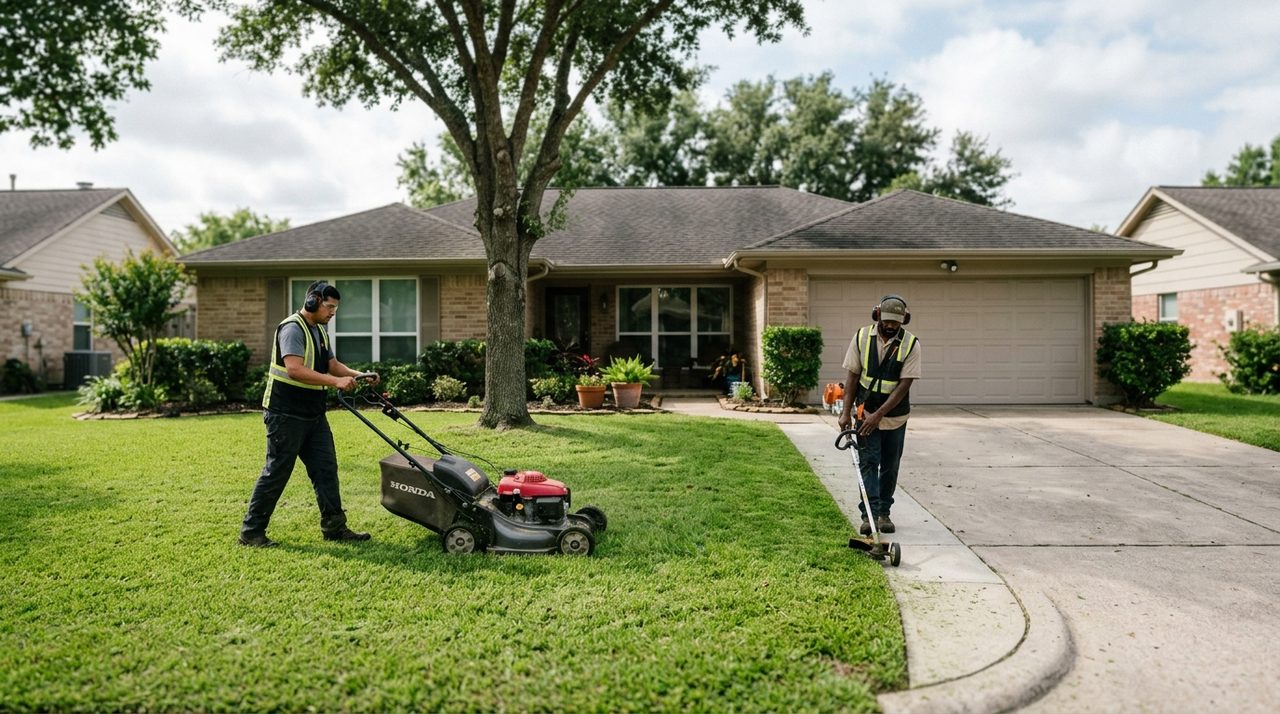
- Median home built
- 1988
- Median home value
- $145,700
- FEMA flood zone
- X (low)
- Typical landscaping cost (est.)
- $45–$90/visit mowing; $4,500–$18,000 design-install
- Most common local issue
- Clay-soil drainage failures on mixed-era lots along US-290 corridor
Ranked by verified Google rating × review volume × verification tier. How we rank →
Min rating:
3 results Closed
820 US-290 BUS N, Hempstead, TX 77445
53447 Hwy 290 E, Hempstead, TX 77445
Landscapers in Hempstead: What You Should Know
Clay Soil Drainage on Lots That Span Two Permit Worlds
Why it matters to you
The Beaumont/Houston Black clay that runs through Waller County absorbs water slowly and swells after rain, creating chronic ponding in both older in-town yards and the newer tract-home subdivisions pressed up against US-290. Even though most Hempstead parcels sit in FEMA Zone X low-risk territory, that classification does not eliminate the standing water that appears within hours of a Gulf storm cell pushing inland — a reality the 2024 Beryl remnants made clear across NW Houston. On older pier-and-beam lots in the historic city core, poor drainage compounds foundation moisture problems that are already a concern.
What a good pro does
A qualified landscaper should evaluate the full clay moisture cycle — not just current slope — before specifying French drains or dry creek beds, since undersized outfalls back up when the soil is already saturated. Drainage correction for a typical Hempstead residential lot runs an estimated $2,500–$7,500 depending on linear footage and outfall options. Grading work that alters drainage patterns may require a permit from either the City of Hempstead Building Department or Waller County Engineering and Development Services depending on which jurisdiction your parcel sits in — confirm before breaking ground.
Sources: Municipal permit office (see area profile), FEMA National Flood Hazard Layer (NFHL), Harris County Flood Control District
Irrigation Permits Split Between City of Hempstead and Waller County
Why it matters to you
Hempstead's unusual dual-jurisdiction reality — City of Hempstead corporate limits versus unincorporated Waller County — means there is no single permitting office for irrigation work across the area. Newer tract subdivisions along the US-290 corridor are more likely to require a formal permit from Waller County Engineering or the City building department before an irrigation system can be installed, while rural tracts farther out may have a different process entirely. Homeowners who skip this step risk failed inspections and having to dig up newly installed lines.
What a good pro does
Texas law requires that any new irrigation system be designed and installed by a TCEQ-licensed Irrigator or an Irrigation Technician working under direct supervision — this applies regardless of whether you are inside city limits or in unincorporated Waller County. Backflow prevention devices must meet TCEQ Chapter 344 requirements and be tested annually by a licensed Backflow Prevention Assembly Tester. Before any contract is signed, ask your landscaper to confirm permit jurisdiction using your parcel address and pull the applicable permit from the correct office.
Sources: Texas Commission on Environmental Quality, Municipal permit office (see area profile)
Tree and Shrub Root Risk on Slab-On-Grade Tract Homes
Why it matters to you
The newer production homes built along the US-290 corridor from the 2000s onward are predominantly slab-on-grade, and the expansive clay beneath those slabs is already prone to differential movement as soil moisture cycles through wet and dry seasons. Planting large-rooted species — live oaks, Chinese tallows, or oversized crepe myrtles — within 10–15 feet of a foundation accelerates uneven clay drying and can contribute to slab settlement. With a census median home value of approximately $145,700, foundation repairs represent a disproportionately large financial hit for Hempstead homeowners.
What a good pro does
A landscaper working on these newer slab homes should specify root barriers for any tree planted within 15 feet of the foundation and favor species with less aggressive lateral root spread, such as desert willow or yaupon holly, for foundation-side beds. On older in-town properties with pier-and-beam construction, moisture-retaining mulch rings around large trees can actually help stabilize soil moisture levels under the structure. Neither root barrier installation nor standard planting requires a state landscaping license in Texas, but herbicide or pesticide application for hire requires a Texas Department of Agriculture Commercial Pesticide Applicator License.
Sources: Texas Department of Licensing & Regulation, International Residential Code (as adopted by City of Houston)
Post-Storm Replanting and Wind-Damage Cleanup After Beryl and the May 2024 Derecho
Why it matters to you
Hempstead and the broader US-290 corridor took wind damage from both Hurricane Beryl (July 2024) and the May 2024 derecho, events that toppled canopy trees whose roots were anchored in saturated clay and revealed how brittle species like Bradford pear behave under high-wind loads. The area's mix of older established trees on in-town lots and newly planted landscaping on subdivision homes means storm debris cleanup and replanting needs vary widely from parcel to parcel. Subdivision-specific deed restrictions recorded with Waller County may govern replacement tree species, placement setbacks, or mulch types, particularly in newer POA-governed communities along the corridor.
What a good pro does
Post-storm canopy tree removal for large damaged specimens typically runs an estimated $800–$3,500 per tree, with demand pricing common immediately after major events — getting quotes before a storm season is wise. When replanting, prioritize wind-resistant native species such as cedar elm or Texas red oak over brittle ornamentals, and confirm placement against any recorded deed restrictions by checking Waller County Clerk filings before install. If your subdivision has an active POA, submit a landscaping plan for approval before purchasing plant material to avoid costly removal orders.
Sources: Local HOA / deed restrictions (see area profile), Municipal permit office (see area profile), FEMA National Flood Hazard Layer (NFHL)
Landscapers in Hempstead: What You Should Know
Hiring landscapers in Hempstead? Hempstead spans historic in-town blocks, newer tract subdivisions along the US-290 growth corridor, and large rural tracts, creating a wide range of home service needs. Homeowners must verify whether their property falls within City of Hempstead limits or unincorporated Waller County, as permit requirements and deed restrictions differ significantly. The mixed housing stock—from pre-WWII frame homes to 2020s production builds—means contractors should be prepared for varied foundation types, electrical systems, and plumbing configurations.
- Housing era
- Mixed
- Foundation
- Mixed — newer subdivision homes are predominantly slab-on-grade consistent with regional practice
- Flood zone
- FEMA Zone X (low flood risk) — source
- Permits
- Properties within City of Hempstead limits
Housing stock & systems
Building era
Mixed: pre-WWII through 2020s; older homes in the original City of Hempstead core, newer tract subdivisions along the US-290 corridor from the 2000s onward.
Typical style
One- and two-story contemporary tract homes (brick veneer with siding) in newer subdivisions; ranch-style and small frame houses in older city blocks and rural areas.
Foundations
Mixed — newer subdivision homes are predominantly slab-on-grade consistent with regional practice; older in-town and rural homes may use pier-and-beam. Not confirmed by a specific local source; verify via Waller County Appraisal District records.
Common systems
Newer homes: central HVAC, PEX or CPVC plumbing, 200-amp electrical panels. Older homes: may have window units or older central systems, galvanized or copper plumbing, and 100-amp or lower electrical service. Manufactured homes on rural tracts may have specialized HVAC and plumbing configurations.
What that means for repairs
Older in-town Hempstead homes often need electrical upgrades, foundation releveling (pier-and-beam), and plumbing replacement. Newer subdivision homes are more likely to need cosmetic updates or warranty-period repairs. Rural properties may require well and septic system maintenance or conversion to municipal utilities where available.
Permits & restrictions
Permit jurisdiction
Properties within City of Hempstead limits: City of Hempstead Building Department. Properties in unincorporated Waller County: Waller County Engineering / Development Services. Houston Permitting Center does NOT apply here.
HOA & deed restrictions
No single mandatory HOA covers Hempstead or the surrounding Waller County area. HOA/POA presence is subdivision-specific; platted subdivisions along the US-290 corridor are more likely to have recorded deed restrictions and a mandatory POA. Older in-town lots and rural tracts often have minimal or no HOA governance. Verify at the parcel level using deed records, Waller County Clerk filings, and the TREC HOA database at hoa.texas.gov.
Historic districts
No City of Houston historic district designation confirmed. Hempstead is outside Houston city limits. No local historic district designation was identified in research; check with the City of Hempstead for any local preservation ordinances.
Contractor note
Contractors must first confirm whether a property is within City of Hempstead corporate limits or unincorporated Waller County, as permit requirements, inspection processes, and code enforcement differ. Septic system work on rural tracts requires coordination with Waller County environmental health.
Flood & weather
FEMA flood zone
FEMA Zone X (low flood risk) — source: fema_nfhl. Hempstead and much of Waller County sit on relatively higher ground northwest of Houston, draining toward the Brazos River watershed and local creeks rather than Houston's urbanized bayou network. Individual parcels near creeks or low-lying areas should still be verified against current FEMA FIRMs.
Hurricane Harvey impact
No sources document significant neighborhood-wide Harvey flooding for Hempstead or the NW Waller County fringe. Media and public discussion of Harvey's catastrophic flooding focused on Harris County and areas along major bayous and reservoirs. Hempstead's higher elevation and Brazos-watershed drainage likely limited impacts, but specific street-level inundation data should be verified through FEMA Harvey high-water layers and seller's disclosure for any given property.
Heat & humidity load
Extreme Houston-area summer heat drives heavy HVAC demand across all housing types. Older pier-and-beam homes may experience greater subfloor moisture issues. Newer slab-on-grade homes in subdivisions with limited tree canopy face intense solar loading, increasing cooling costs and accelerating roof wear. Rural properties relying on well systems may see reduced water pressure during peak summer demand.
Working with contractors here
Hempstead's diverse housing stock means contractors encounter everything from century-old frame homes needing full electrical and plumbing overhauls to brand-new tract builds with warranty callbacks. Foundation work is common on older pier-and-beam homes, while newer slab homes may need post-settlement crack repair. The rural-to-suburban transition creates demand for septic-to-sewer conversions, well maintenance, and land-clearing services alongside standard residential trades. Contractors should confirm permit jurisdiction before starting work, as the City of Hempstead and Waller County have different permitting processes and inspection timelines. Travel time from Houston's inner loop should be factored into bids, as Hempstead is roughly 50 miles northwest of downtown Houston.
Local Tip
Always ask for a written estimate before work begins. Texas contractors are required to provide one on jobs over $1,000.
About Hempstead
Hempstead spans historic in-town blocks, newer tract subdivisions along the US-290 growth corridor, and large rural tracts, creating a wide range of home service needs. Homeowners must verify whether their property falls within City of Hempstead limits or unincorporated Waller County, as permit requirements and deed restrictions differ significantly. The mixed housing stock—from pre-WWII frame homes to 2020s production builds—means contractors should be prepared for varied foundation types, electrical systems, and plumbing configurations.
- Median year built
- 1988
- Median home value
- $145,700
- Owner-occupied
- 33.4%
- Population
- 5,899
- Housing units
- 2,061
- Median income
- $58,288
Source: U.S. Census Bureau, ACS 5-Year 2023
Flood & storm risk
FEMA Zone XLow flood riskMost of Hempstead maps to FEMA Zone X (low mapped flood risk), but Houston's flash-flood reality means even low-risk blocks benefit from smart drainage and storm-hardened installs.
Source: FEMA National Flood Hazard Layer (NFHL). Flood zones vary by parcel — verify your individual FIRM panel.
Frequently Asked Questions
My property is just outside Hempstead city limits in unincorporated Waller County — do I still need a permit before a landscaper installs a new irrigation system?
Yes, irrigation installation still requires a TCEQ-licensed Irrigator regardless of whether you are inside city limits or in unincorporated Waller County, and a permit is typically required before work begins. For unincorporated parcels, that permit goes through Waller County Engineering and Development Services, not the City of Hempstead Building Department — and the two offices have different application forms, inspection timelines, and fee schedules. Confirm your parcel's jurisdiction first by checking your property address against Waller County's district maps, because the boundary between city-limit and county-administered land in the US-290 corridor is not always obvious from the street.
Sources: Texas Commission on Environmental QualityMunicipal permit office (see area profile)
Our Hempstead subdivision was built around 2005 — will landscapers here know how to work around the slab foundations common in those US-290 corridor tract homes?
Most tract subdivisions built along the US-290 corridor in the 2000s used slab-on-grade construction, and the expansive Beaumont/Houston Black clay underneath those slabs means tree and large-shrub placement relative to the foundation is a genuine concern, not a sales pitch. A qualified local landscaper should be advising you to keep large-rooted trees like live oaks or crepe myrtles at least 10–15 feet from the slab perimeter, and may recommend root barriers for plantings closer than that. If your home has already shown any slab cracking or door-frame settling, discuss that history with your landscaper before any new planting goes in near the structure.
Hempstead is in FEMA Zone X, so am I overthinking drainage on my yard, or does clay soil still cause problems even without flood-zone designation?
FEMA Zone X means your parcel is outside the mapped 100-year floodplain, but that classification describes bayou-level flood risk, not your backyard's day-to-day drainage behavior. The same Houston Black clay that causes ponding and root suffocation in Meyerland is present throughout Waller County, and even a routine Gulf storm can drop 3–5 inches overnight that the clay simply cannot absorb quickly enough. A grading correction or short French drain run — estimated at $2,500–$7,500 depending on linear footage — often pays for itself by protecting plant beds and preventing erosion on lots that technically have low mapped flood risk.
Does my Hempstead subdivision's POA need to approve my landscaping plan before I can have work done, or is that only a concern in big master-planned communities?
HOA and POA presence in Hempstead is subdivision-specific, not area-wide — newer platted communities along the US-290 corridor are more likely to have recorded deed restrictions governing turf type, mulch color, fence height, and landscape wall placement, while older in-town lots and rural tracts typically have little or no such governance. You can verify whether your parcel has active deed restrictions by searching the Waller County Clerk's recorded plat and deed records, or checking hoa.texas.gov. If restrictions do exist, get your landscaper's design submitted and approved in writing before any materials are ordered, since removal orders for non-compliant installs are costly.
Sources: Local HOA / deed restrictions (see area profile)
After the May 2024 derecho and Hurricane Beryl, what's a realistic cost and timeline to have large storm-damaged trees removed from a Hempstead-area lot?
Large canopy tree removal after a significant storm event typically runs an estimated $800–$3,500 per tree under normal market conditions, but post-storm demand pricing — common in the weeks following events like the May 2024 derecho or Beryl — can push costs higher and push scheduling out by several weeks as crews work through backlogs across the NW Houston corridor. Hempstead's roughly 50-mile distance from the inner loop can add a travel premium to bids from larger Houston-based tree crews, so reaching out to Waller County-based landscapers and arborists for competitive quotes is practical. Before any tree is taken down, ask the contractor whether a permit is required for removal of specimen-size trees under your specific subdivision's deed restrictions, as some POAs regulate canopy removal.
I lost several sago palms and a bougainvillea in a hard freeze — should I replant the same species, or does Hempstead's climate make that a bad bet?
Hempstead sits in USDA Hardiness Zone 9a, which means hard freezes comparable to Winter Storm Uri (February 2021) are infrequent but real, and species like sago palms and bougainvillea that sail through mild winters can be wiped out in a single severe event. A local landscaper familiar with Waller County conditions should be able to recommend cold-hardier alternatives — such as Mexican sage, Gulf muhly grass, or dwarf yaupon holly — that still provide a lush, semi-tropical look without the full replacement risk after the next hard freeze. If you do replant sensitive tropicals, ask about planting them in microclimate positions (south-facing walls, sheltered courtyards) and budgeting for frost cloth or container options that can be moved indoors.