Closed
35057 Mayer Dr, Hempstead, TX 77445
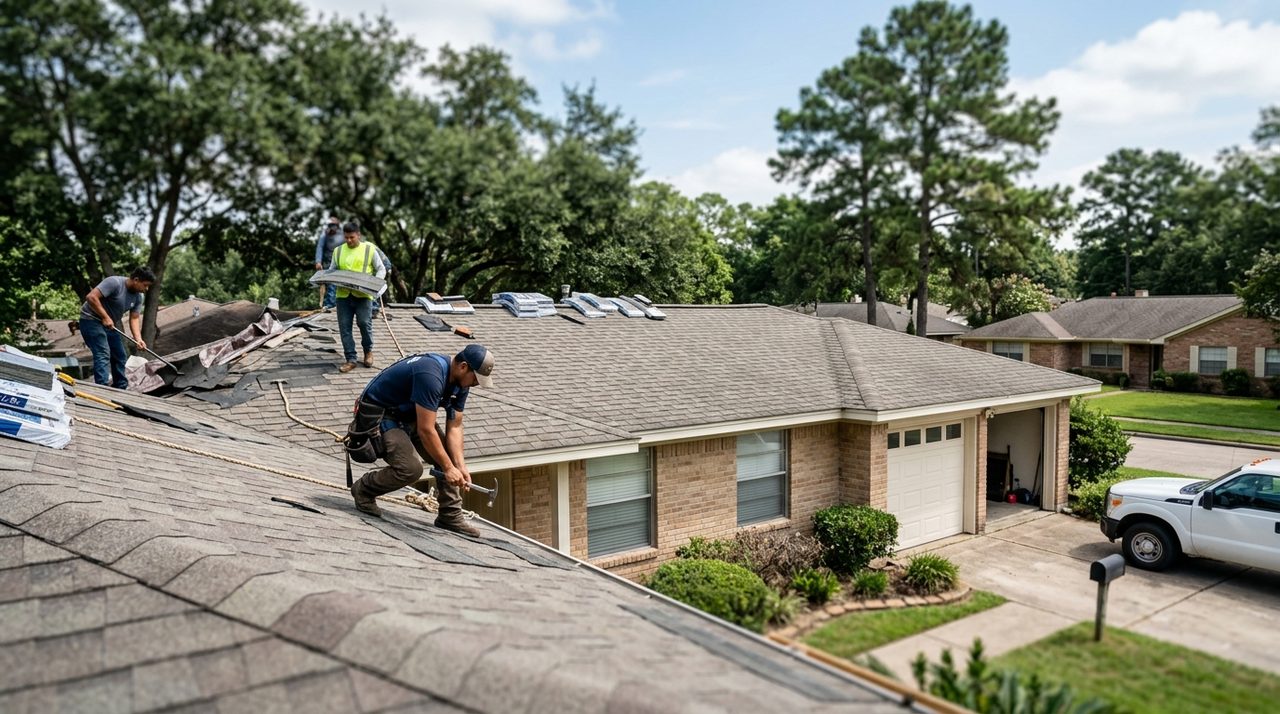
Hempstead's housing stock spans a full century — from pre-WWII wood-frame houses in the historic city core to 2020s brick-veneer tract homes along the US-290 corridor — meaning roofing contractors and homeowners face fundamentally different challenges depending on which street they're on. With a 1988 median build year, a significant share of Hempstead roofs are in the age bracket (15–25 years old) where asphalt shingles are approaching the end of their practical Houston lifespan, accelerated by the region's brutal UV load and heat cycling. Add in the fact that permit requirements split between the City of Hempstead Building Department and Waller County Development Services depending on your parcel, and getting a re-roof done correctly here demands more pre-project homework than in most Houston suburbs.
Ranked by verified Google rating × review volume × verification tier. How we rank →
35057 Mayer Dr, Hempstead, TX 77445
Laura Ln, Hempstead, TX 77445
Why it matters to you
The bulk of Hempstead's US-290 corridor subdivisions were built between the mid-1990s and early 2010s, putting many original architectural shingles squarely in the 15–25 year range. In Houston's climate — 2,700-plus cooling degree days annually, attic deck temps that can exceed 160°F — standard 25–30 year shingles realistically degrade in 15–18 years. Granule loss on south- and west-facing planes is the first visible sign, but UV-oxidized asphalt binder and brittle fiberglass mats are already failing by then. At a median home value of roughly $145,700 (ACS 2023), delaying a re-roof until active interior leaks appear risks deck damage that sharply escalates total project cost.
What a good pro does
A qualified roofer will perform a close-range inspection — not just a drive-by assessment — checking for granule loss in gutters, mat bruising, and ridge cap separation on all roof planes, not just those visible from the street. Upgrading to a Class 4 impact-resistant shingle (adding an estimated $1,500–$3,500 to the project) is worth evaluating at re-roof time because it can improve insurability in a market where carriers are increasingly scrutinizing roof age and material. Confirm the roofer's scope includes a full tear-off rather than an overlay, since stacking a second layer traps moisture against aging decking in Hempstead's humidity.
Sources: International Residential Code (as adopted by City of Houston), ENERGY STAR / U.S. Dept. of Energy
Why it matters to you
Hempstead is one of the few areas in the Houston metro where two entirely separate permit systems govern roofing work within a short drive of each other: properties inside City of Hempstead corporate limits fall under the City of Hempstead Building Department, while those in unincorporated Waller County go through Waller County Engineering and Development Services. The Houston Permitting Center has no authority here. A roofing contractor who routinely works Harris County jobs and assumes the same rules apply in Hempstead can inadvertently pull the wrong permit — or none at all — leaving you exposed to code-compliance issues at resale.
What a good pro does
Before signing any roofing contract, confirm your parcel's jurisdiction using the Waller County Appraisal District's online records or by contacting both offices directly. A contractor working in Hempstead should be able to tell you immediately which office they'll be filing with and show you the permit before work begins. Texas has no state-issued roofing contractor license through TDLR, so verifying local registration, general liability insurance, and workers' compensation coverage is your primary consumer protection mechanism regardless of which jurisdiction applies.
Sources: Municipal permit office (see area profile), City of Houston Permitting Center
Why it matters to you
Hempstead's newer subdivisions along US-290 were carved out of open agricultural land, leaving roofs with minimal tree windbreak — exactly the exposure profile that makes wind uplift and hail damage worse. The May 2024 derecho tracked through the broader NW Houston corridor and produced 100-plus mph straight-line winds in Harris and surrounding counties. Waller County's open terrain means gusts lose little energy before reaching rooftop level. NOAA records show Harris County — and the communities along its western edge — average 3–5 significant hail events per year, with granule-stripping bruising that is invisible from the ground but voids shingle manufacturer warranties.
What a good pro does
After any significant storm, commission a physical roof inspection by a roofer who will get on the roof and document impact points with photos — not a contractor who quotes replacement from the curb. Wind uplift on low-slope sections and ridge cap blow-off are the first things to check on newer tract homes. If damage is confirmed, file promptly with your insurer; post-storm demand surges (as seen after Harvey in 2017 and the 2024 derecho) routinely push contractor prices 15–25% above baseline for 6–18 months, so documented early filing protects your claim timeline.
Sources: Texas Windstorm Insurance Association (TWIA), International Residential Code (as adopted by City of Houston), FEMA National Flood Hazard Layer (NFHL)
Why it matters to you
The oldest blocks of in-town Hempstead contain wood-frame houses built before modern attic ventilation standards existed — many with only gable vents or box vents and no continuous ridge-soffit system. Houston's annual average relative humidity exceeds 75%, and without properly balanced ventilation meeting IRC R806 ratios, moisture condenses on decking year-round, silently delaminating OSB or soft-rotting original plank sheathing. On pier-and-beam homes (more common on these older in-town lots), there is no slab to act as a vapor barrier below, compounding the moisture load the attic system must handle.
What a good pro does
Any roofer bidding a full re-roof on a pre-WWII Hempstead home should include a deck inspection and ventilation audit as part of the scope — not an optional add-on. Replacing shingles over rotted decking wastes the entire investment within a few years. Upgrading from box vents to a balanced ridge-and-soffit ventilation system (sized to IRC R806 minimums) should be part of the contract, and the roofer should photograph deck condition before sheathing is covered. Given that Texas has no state roofing license, ask specifically for references from similar older-home projects in Waller County or adjacent areas.
Sources: International Residential Code (as adopted by City of Houston), Municipal permit office (see area profile)
Hiring roofers in Hempstead? Hempstead spans historic in-town blocks, newer tract subdivisions along the US-290 growth corridor, and large rural tracts, creating a wide range of home service needs. Homeowners must verify whether their property falls within City of Hempstead limits or unincorporated Waller County, as permit requirements and deed restrictions differ significantly. The mixed housing stock—from pre-WWII frame homes to 2020s production builds—means contractors should be prepared for varied foundation types, electrical systems, and plumbing configurations.
Building era
Mixed: pre-WWII through 2020s; older homes in the original City of Hempstead core, newer tract subdivisions along the US-290 corridor from the 2000s onward.
Typical style
One- and two-story contemporary tract homes (brick veneer with siding) in newer subdivisions; ranch-style and small frame houses in older city blocks and rural areas.
Foundations
Mixed — newer subdivision homes are predominantly slab-on-grade consistent with regional practice; older in-town and rural homes may use pier-and-beam. Not confirmed by a specific local source; verify via Waller County Appraisal District records.
Common systems
Newer homes: central HVAC, PEX or CPVC plumbing, 200-amp electrical panels. Older homes: may have window units or older central systems, galvanized or copper plumbing, and 100-amp or lower electrical service. Manufactured homes on rural tracts may have specialized HVAC and plumbing configurations.
What that means for repairs
Older in-town Hempstead homes often need electrical upgrades, foundation releveling (pier-and-beam), and plumbing replacement. Newer subdivision homes are more likely to need cosmetic updates or warranty-period repairs. Rural properties may require well and septic system maintenance or conversion to municipal utilities where available.
Permit jurisdiction
Properties within City of Hempstead limits: City of Hempstead Building Department. Properties in unincorporated Waller County: Waller County Engineering / Development Services. Houston Permitting Center does NOT apply here.
HOA & deed restrictions
No single mandatory HOA covers Hempstead or the surrounding Waller County area. HOA/POA presence is subdivision-specific; platted subdivisions along the US-290 corridor are more likely to have recorded deed restrictions and a mandatory POA. Older in-town lots and rural tracts often have minimal or no HOA governance. Verify at the parcel level using deed records, Waller County Clerk filings, and the TREC HOA database at hoa.texas.gov.
Historic districts
No City of Houston historic district designation confirmed. Hempstead is outside Houston city limits. No local historic district designation was identified in research; check with the City of Hempstead for any local preservation ordinances.
Contractor note
Contractors must first confirm whether a property is within City of Hempstead corporate limits or unincorporated Waller County, as permit requirements, inspection processes, and code enforcement differ. Septic system work on rural tracts requires coordination with Waller County environmental health.
FEMA flood zone
FEMA Zone X (low flood risk) — source: fema_nfhl. Hempstead and much of Waller County sit on relatively higher ground northwest of Houston, draining toward the Brazos River watershed and local creeks rather than Houston's urbanized bayou network. Individual parcels near creeks or low-lying areas should still be verified against current FEMA FIRMs.
Hurricane Harvey impact
No sources document significant neighborhood-wide Harvey flooding for Hempstead or the NW Waller County fringe. Media and public discussion of Harvey's catastrophic flooding focused on Harris County and areas along major bayous and reservoirs. Hempstead's higher elevation and Brazos-watershed drainage likely limited impacts, but specific street-level inundation data should be verified through FEMA Harvey high-water layers and seller's disclosure for any given property.
Heat & humidity load
Extreme Houston-area summer heat drives heavy HVAC demand across all housing types. Older pier-and-beam homes may experience greater subfloor moisture issues. Newer slab-on-grade homes in subdivisions with limited tree canopy face intense solar loading, increasing cooling costs and accelerating roof wear. Rural properties relying on well systems may see reduced water pressure during peak summer demand.
Working with contractors here
Hempstead's diverse housing stock means contractors encounter everything from century-old frame homes needing full electrical and plumbing overhauls to brand-new tract builds with warranty callbacks. Foundation work is common on older pier-and-beam homes, while newer slab homes may need post-settlement crack repair. The rural-to-suburban transition creates demand for septic-to-sewer conversions, well maintenance, and land-clearing services alongside standard residential trades. Contractors should confirm permit jurisdiction before starting work, as the City of Hempstead and Waller County have different permitting processes and inspection timelines. Travel time from Houston's inner loop should be factored into bids, as Hempstead is roughly 50 miles northwest of downtown Houston.
Local Tip
Always ask for a written estimate before work begins. Texas contractors are required to provide one on jobs over $1,000.
Hempstead spans historic in-town blocks, newer tract subdivisions along the US-290 growth corridor, and large rural tracts, creating a wide range of home service needs. Homeowners must verify whether their property falls within City of Hempstead limits or unincorporated Waller County, as permit requirements and deed restrictions differ significantly. The mixed housing stock—from pre-WWII frame homes to 2020s production builds—means contractors should be prepared for varied foundation types, electrical systems, and plumbing configurations.
Source: U.S. Census Bureau, ACS 5-Year 2023
Most of Hempstead maps to FEMA Zone X (low mapped flood risk), but Houston's flash-flood reality means even low-risk blocks benefit from smart drainage and storm-hardened installs.
Source: FEMA National Flood Hazard Layer (NFHL). Flood zones vary by parcel — verify your individual FIRM panel.
Wind uplift at the roof-to-wall connection is the structural failure mode that matters most in Hempstead, TX since flooding is not the primary risk here. Ask your roofer to inspect the starter-course fastening pattern and, if your home was built before the 2009 IRC updates, discuss installing supplemental ring-shank nails along all perimeter rows before the next major storm. Confirm the current FEMA panel for your Hempstead parcel — the area maps to Zone X, but adjacent lots can differ.
The May 2024 derecho showed that 80-mph straight-line winds can strip improperly fastened ridge caps from roofs across the Houston metro regardless of flood zone, so have a licensed roofer inspect and hand-nail any ridge shingles that feel loose or show lifted leading edges in Hempstead, TX. A secure ridge cap also prevents the attic air-pressure equalization that accelerates uplift on field shingles during a pressure drop. As a Waller County community, Hempstead may follow county rather than City of Houston storm rebuild rules.
Ice loading in Hempstead, TX is infrequent but disproportionately damaging because Houston roofs and their fastening systems are designed for wind, not sustained dead weight. Ask a licensed roofer to inspect your ridge board connections and confirm that collar ties or rafter ties are present in the attic, since Uri 2021 produced several ridge-sag failures in well-maintained Houston homes where the framing had no freeze-load margin. As a Waller County community, Hempstead may follow county rather than City of Houston storm rebuild rules.
Sources: FEMA National Flood Hazard Layer (NFHL), Ready.gov -- Hurricanes, CenterPoint Energy -- Storm Center, City of Houston -- Emergency Preparedness, Ready.gov -- Winter Weather, Harris County Flood Control District
Houston-specific estimators to plan your project before you call a pro. All results are planning estimates — a licensed local pro confirms the details on site.
Estimated design wind speed for your zone
Outside the TDI catastrophe area, so a WPI-8 is generally not mandated — but Houston still sees hurricane-force gusts (Beryl, 2024). Insist on properly rated shingles installed to the manufacturer's high-wind nailing pattern (6 nails) and starter strips, or a wind claim can be denied for improper installation.
Find a Houston roofer →This is a planning estimate only — actual requirements depend on an on-site assessment by a licensed Houston pro. Wind-speed zones are approximate; your exact TDI/WPI-8 obligation depends on your address's designation. Verify with the Texas Department of Insurance before contracting.
Disconnect & drain every outdoor hose bib
Remove hoses, drain the spigots, and cover each with an insulated faucet sock. Un-drained hose bibs are the #1 burst point in a Houston freeze.
Insulate exposed pipes in the attic & garage
Wrap any pipe in an unconditioned space (attic runs, garage walls) with foam sleeves. Houston homes rarely insulate these because they only matter a few nights a year — which is exactly why they burst.
Open cabinet doors & keep a pencil-width drip
On hard-freeze nights, open kitchen/bath cabinets so warm air reaches the pipes and let faucets on exterior walls drip to relieve pressure.
Protect the attic/garage water heater & its lines
An attic or garage tank sits in unconditioned space. Insulate the cold-inlet and hot-outlet lines and confirm the emergency drain pan is clear so a leak doesn't reach the ceiling.
This is a planning estimate only — actual requirements depend on an on-site assessment by a licensed Houston pro. If a pipe has already burst, shut off your main water supply and call a licensed Houston plumber immediately — freeze bursts flood fast.
Sources: Municipal permit office (see area profile)
Sources: Local HOA / deed restrictions (see area profile)
Sources: Texas Windstorm Insurance Association (TWIA)Municipal permit office (see area profile)