5210 Spruce St, Bellaire, TX 77401
Best Painters in Bellaire
Bellaire sits almost entirely within FEMA Zone AE, and the post-Harvey teardown-and-rebuild wave that reshaped block after block created a two-generation paint problem on the same street: 1950s brick ranches with decades of layered coatings and potential lead content stand next door to freshly elevated new-construction traditionals whose stucco and drywall are still curing in the humidity. Because Bellaire runs its own independent permitting office — separate from Houston Permitting Center — any painting job bundled with flood-damage drywall replacement or structural repair must be permitted through the City of Bellaire Building Department, not Harris County or Houston. Understanding which house you have and which regulatory environment governs it is the starting point for any paint project here.
Verified against Google Business data
Updated 2026
See the 10 Painters Serving Bellaire 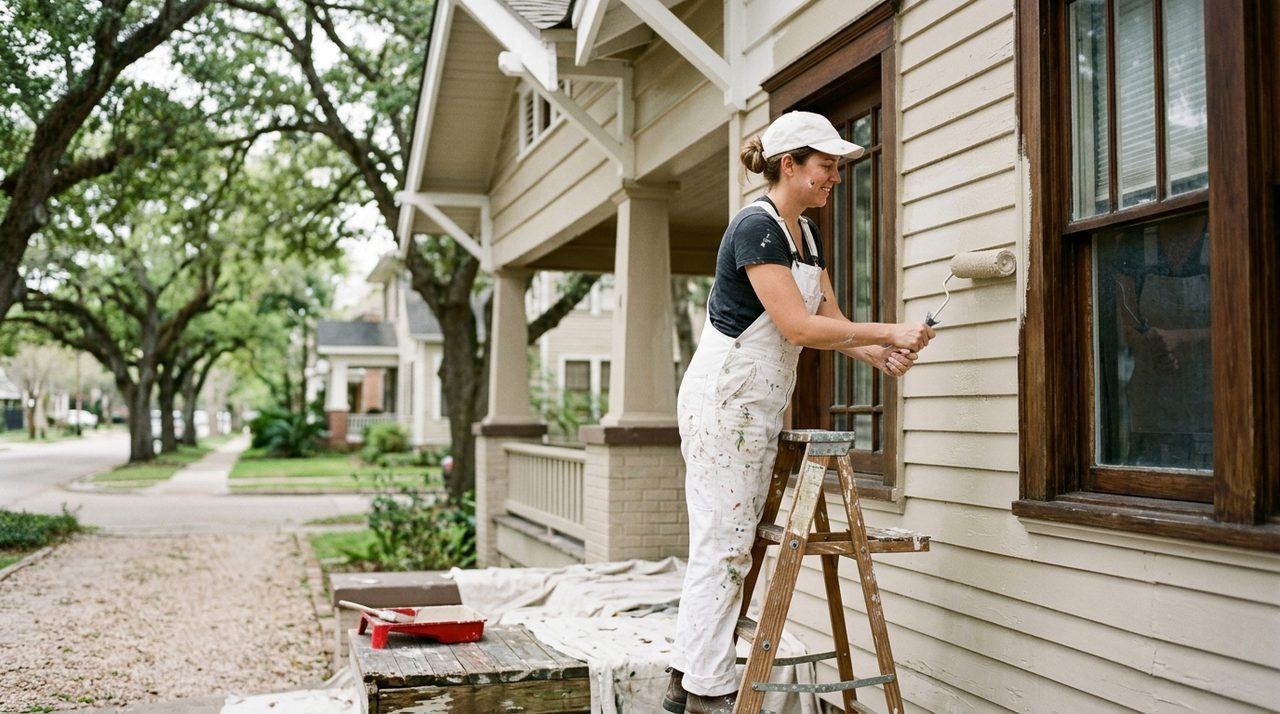
- Median home built
- 1981
- Median home value
- $420,778
- FEMA flood zone
- AE (high)
- Typical exterior repaint cost (est.)
- $3,500–$7,500
- Most common local issue
- Post-flood waterline stains and mold bleed-through on gut-and-repaint drywall
Ranked by verified Google rating × review volume × verification tier. How we rank →
Some highly-rated pros serve Bellaire from nearby and may not keep a Bellaire street address. Those are listed under "Also serving Bellaire" with their real city and distance, so you always know where each business is based.
Min rating:
10 resultsBased in Bellaire
Closed
6910 Renwick Dr #A, Houston, TX 77081
Also serving Bellaire
Highly-rated pros based nearby who cover Bellaire. Distance shown from the Bellaire area.
Closed
Serving Bellaire Based in West University · 2.7 mi away
Open Now
Serving Bellaire Based in West University · 2.7 mi away
Closed
Serving Bellaire Based in Tanglewood · 2.8 mi away
Serving Bellaire Based in Galleria · 3.4 mi away
Closed
Serving Bellaire Based in Sharpstown · 3.4 mi away
Closed
Serving Bellaire Based in River Oaks · 4.6 mi away
Serving Bellaire Based in Westbury · 5.1 mi away
Closed
Serving Bellaire Based in Lazybrook / Timbergrove · 5.2 mi away
Painters in Bellaire: What You Should Know
Harvey and Beryl Waterline Stains Keep Bleeding Through — Even on 'Finished' Post-Flood Repaints
Why it matters to you
Bellaire's near-universal AE flood zone status means a significant share of the housing stock has experienced at least one interior flood event since 2017, and mineral tide lines, mold-stained paper facing on gypsum board, and residual moisture in slab-adjacent walls are the norm in older 1950s–60s ranches that were partially gutted but not fully rebuilt. Painting over these surfaces without verified moisture readings and a mold-encapsulant primer almost always results in bleed-through within six to eighteen months — a pattern documented repeatedly in post-Harvey repaint jobs across this zip code.
What a good pro does
A qualified Bellaire painter will use a calibrated moisture meter on all previously flooded walls before applying any coating, establish a dry threshold (typically below 15% for drywall substrate), and apply a shellac- or oil-based mold-encapsulant primer before any finish coat. Post-flood gut-and-repaint work that involves drywall replacement must be permitted through the City of Bellaire Building Department, and the painting scope should be coordinated with the drywall inspection to avoid re-coating surfaces that inspectors still need to view.
Sources: FEMA National Flood Hazard Layer (NFHL), Municipal permit office (see area profile)
Pre-1978 Brick Ranches and Lead Paint: EPA RRP Rules Apply Before You Touch That Trim
Why it matters to you
A meaningful portion of Bellaire's original housing stock dates to the 1950s and 1960s — well before the 1978 federal lead paint ban — and those single-story brick ranches frequently have multiple layers of lead-containing paint on wood window trim, door casings, fascia, and interior walls. Scraping, sanding, or pressurewashing these surfaces during a repaint disturbs lead paint and triggers the EPA Renovation, Repair, and Painting Rule under 40 CFR 745, which requires the firm performing the work to be EPA Lead-Safe Certified and the individual on-site renovator to hold an EPA RRP Renovator certification — not optional in homes built before 1978, especially where children under 6 are present.
What a good pro does
Before scoping any repaint on a Bellaire home built before 1978, ask the painting firm for their EPA Lead-Safe Certification number, which is publicly verifiable through EPA's contractor search. A compliant firm will conduct a lead test swab or refer you to a certified lead inspector before any surface prep begins, use proper containment and HEPA vacuum protocols, and dispose of debris according to EPA requirements. This adds real cost — budget for it rather than hoping the surface prep stays 'light enough' to avoid triggers.
Sources: EPA Lead Renovation, Repair and Painting (RRP) Rule
Slab Cracks Telegraphing Through Stucco and Drywall on Post-Harvey Rebuilds
Why it matters to you
Bellaire's post-Harvey rebuilds introduced a new wave of custom and semi-custom homes with stucco or EIFS cladding that sit on elevated structural piers over Houston's expansive Beaumont/Houston Black clay soil. As that clay swells and contracts through the seasonal drought-then-rain cycle, hairline and step cracks telegraph through stucco and interior drywall within the first few years of a new build — and a standard latex touch-up will crack again within one season. Older 1950s slab-on-grade ranches that survived Harvey often show persistent step cracking at brick mortar joints for the same reason.
What a good pro does
For stucco and EIFS surfaces showing recurrent cracking, a knowledgeable painter will fill movement cracks with a flexible polyurethane or siliconized acrylic caulk rated for substrate movement before applying an elastomeric topcoat — not standard latex — which bridges hairline cracks as they reopen. On interior drywall, fiberglass mesh tape over the crack followed by a flexible joint compound and a primer designed for high-movement substrates is the correct sequence. Repainting over an unfilled moving crack without elastomeric or flexible materials is a repaint you will redo in 12 months.
Sources: International Residential Code (as adopted by City of Houston)
Bellaire's Own Permit Desk — Not Houston's — Governs Paint Jobs Bundled With Flood Repairs
Why it matters to you
Because Bellaire is an independent incorporated city, its Building Department operates entirely separately from the Houston Permitting Center and Harris County. Post-flood painting jobs that include drywall replacement, window or door trim replacement, or any structural repair — common combinations in a city where so many homes are mid-renovation after Harvey or Beryl — require permits pulled through the City of Bellaire, not through Houston's online portal. Homeowners who hire painting contractors accustomed to working only within Houston city limits sometimes discover midway through a project that the permit was pulled from the wrong jurisdiction, stalling inspections.
What a good pro does
Before any paint project in Bellaire that involves surface repairs beyond simple cosmetic recoating, confirm with the City of Bellaire Building Department whether the bundled scope triggers a building or trade permit — the department's counter staff can clarify thresholds quickly. Additionally, Bellaire's floodplain regulations mean that substantial improvement work on AE-zone properties must comply with elevation requirements, which can affect how and where finish materials are applied on the lowest floor. Confirm the property's current elevation certificate status with the Bellaire Building Department before finalizing the project scope.
Sources: Municipal permit office (see area profile), FEMA National Flood Hazard Layer (NFHL)
Painters in Bellaire: What You Should Know
Hiring painters in Bellaire? Bellaire is an incorporated city almost entirely within the FEMA AE high-risk flood zone, which means elevation requirements, floodplain permitting, and post-Harvey rebuilds dominate the home service landscape. Housing stock ranges from 1950s slab-on-grade ranches to elevated new-construction traditionals, so contractors must be prepared for both legacy and modern systems on the same block. The city runs its own permitting office, and deed restrictions vary by subdivision, making pre-project due diligence essential.
- Housing era
- 1950s–1960s (original ranch stock) with a major wave of teardown/rebuild infill from the 1990s–2020s,…
- Foundation
- Mixed — older homes are commonly slab-on-grade
- Flood zone
- FEMA Zone AE (high flood risk) — source
- Permits
- City of Bellaire Building Department (Bellaire is an incorporated city with its own permitting…
Housing stock & systems
Building era
1950s–1960s (original ranch stock) with a major wave of teardown/rebuild infill from the 1990s–2020s, accelerated after Hurricane Harvey.
Typical style
Traditional brick two-story (newer builds), single-story brick ranch (original 1950s–60s stock), transitional/Mediterranean customs, and remaining bungalows/cottages from the 1920s–1940s.
Foundations
Mixed — older homes are commonly slab-on-grade; post-Harvey new construction and major remodels are typically elevated on pier-and-beam or raised structural piers to meet floodplain requirements.
Common systems
Older ranches: original copper or galvanized plumbing, single-stage HVAC, 100–150 amp electrical panels. Newer builds: PEX plumbing, high-efficiency multi-stage HVAC, 200+ amp panels with whole-home surge protection. Tankless water heaters increasingly standard in post-2010 construction.
What that means for repairs
The dominant renovation activity is full teardown-and-rebuild or substantial elevation of existing structures to comply with the city's requirement that permitted construction be above the 500-year floodplain. Post-Harvey, many 1950s–60s ranches were demolished and replaced with larger two-story homes on elevated foundations.
Permits & restrictions
Permit jurisdiction
City of Bellaire Building Department (Bellaire is an incorporated city with its own permitting office, independent of Houston Permitting Center and Harris County).
HOA & deed restrictions
No single city-wide mandatory HOA. Bellaire is composed of individual subdivisions, each with its own recorded deed restrictions. Some subdivisions have mandatory HOAs with dues and architectural controls; others rely on voluntary civic clubs or deed-restriction committees for enforcement. HOA status is lot-specific — check recorded CC&Rs via Harris County property records.
Historic districts
No City of Houston historic district designation confirmed. Bellaire is an independent incorporated city and does not fall under the Houston Archaeological and Historical Commission (HAHC).
Contractor note
Bellaire's floodplain regulations require an elevation certificate for most permitted work, and new construction or substantial improvements must meet or exceed the 500-year floodplain elevation. Contractors should confirm current BFE requirements and any deed-restriction architectural controls with the Bellaire Building Department before scoping work.
Flood & weather
FEMA flood zone
FEMA Zone AE (high flood risk) — source: fema_nfhl. Virtually the entire city of Bellaire sits within the 100-year floodplain. Brays Bayou runs along Bellaire's northern boundary, and localized drainage issues compound flood risk throughout the city.
Hurricane Harvey impact
Hurricane Harvey (2017) caused significant flooding across Bellaire, inundating a large number of homes — particularly the older slab-on-grade ranch stock. The storm accelerated an already-active teardown cycle, with many flooded homes demolished and replaced by elevated new construction. Post-Harvey, the city enforces strict elevation requirements for permitted work, requiring structures to be built above the 500-year floodplain.
Heat & humidity load
Houston's extreme summer heat and humidity stress older HVAC systems in 1950s–60s ranches, many of which have limited insulation and single-pane windows. Elevated pier-and-beam homes require attention to moisture management and ventilation beneath the structure. Seasonal thunderstorms can overwhelm aging drainage infrastructure, making sump pumps and proper grading critical even for elevated homes.
Working with contractors here
Contractors in Bellaire most commonly handle full teardown-and-rebuild projects, structural elevation of existing homes, and flood damage remediation — all driven by the city's AE flood zone status and post-Harvey rebuilding activity. Older 1950s–60s ranches frequently need complete plumbing re-pipes (galvanized-to-PEX), electrical panel upgrades, and HVAC replacement. Because Bellaire is an incorporated city with its own building department, contractors must pull permits through the City of Bellaire rather than Harris County or Houston, and must navigate subdivision-specific deed restrictions that can impose setback, height, and material requirements. Job scoping should always begin with an elevation certificate review and a check of the property's specific deed restrictions and HOA status, as these vary block by block.
Local Tip
Always ask for a written estimate before work begins. Texas contractors are required to provide one on jobs over $1,000.
About Bellaire
Bellaire is an incorporated city almost entirely within the FEMA AE high-risk flood zone, which means elevation requirements, floodplain permitting, and post-Harvey rebuilds dominate the home service landscape. Housing stock ranges from 1950s slab-on-grade ranches to elevated new-construction traditionals, so contractors must be prepared for both legacy and modern systems on the same block. The city runs its own permitting office, and deed restrictions vary by subdivision, making pre-project due diligence essential.
- Median year built
- 1981
- Median home value
- $420,778
- Owner-occupied
- 26.2%
- Population
- 68,491
- Housing units
- 27,944
- Median income
- $88,690
Source: U.S. Census Bureau, ACS 5-Year 2023
Flood & storm risk
FEMA Zone AEHigh flood riskMuch of Bellaire maps to FEMA Zone AE (high flood risk), so flood-resilient detailing -- elevated equipment, water-tolerant materials, and drainage-first thinking -- is essential here, not optional.
Source: FEMA National Flood Hazard Layer (NFHL). Flood zones vary by parcel — verify your individual FIRM panel.
Frequently Asked Questions
Do I need a permit from the City of Bellaire just to repaint my exterior, or only if I'm doing repairs at the same time?
A standalone exterior repaint in Bellaire — paint only, no substrate work — generally does not require a permit from the City of Bellaire Building Department. However, if your painter is also patching stucco, replacing rotted wood trim, repairing flood-damaged siding, or touching any structural element, that bundled scope can trigger a permit requirement from Bellaire's own building office, which operates independently of the Houston Permitting Center. Always confirm the specific scope of your project with the City of Bellaire Building Department before work begins, especially on post-Harvey rebuild homes where repair and paint work are often intertwined.
Sources: Municipal permit office (see area profile)
My 1950s Bellaire brick ranch has never been fully repainted — how do I know if the old paint contains lead, and does that change how a painter must work?
Any home built before 1978 is presumed to have lead-based paint under EPA rules, and Bellaire's original 1950s–1960s ranch stock almost certainly does. If a painter disturbs those painted surfaces — scraping, sanding, cutting, or pressure-washing — they must be an EPA Lead-Safe Certified Firm and use RRP-compliant containment and disposal procedures under 40 CFR 745. Ask any painter bidding your job to show their current EPA Lead-Safe Certification before signing a contract; firms without it cannot legally disturb those surfaces.
Sources: EPA Lead Renovation, Repair and Painting (RRP) Rule
We're in FEMA Zone AE and had water intrusion during Beryl. How long should we wait after drying out before painting the interior walls?
Industry practice calls for drywall and framing to reach below 12–15% moisture content before primer and paint are applied — rushing that timeline is the single most common reason post-flood paint jobs in Bellaire fail within months. In Bellaire's high humidity (average relative humidity frequently above 75%), that drying process typically takes four to eight weeks after flood water recedes, longer if the home is not aggressively climate-controlled and dehumidified. Have your painter or a remediation company verify moisture readings with a calibrated meter before any coating goes on.
Does my Bellaire subdivision's deed restriction require approval before I change my exterior paint color, and who enforces that?
Bellaire has no city-wide HOA, so whether you need color approval depends entirely on your specific subdivision's recorded deed restrictions — some require an architectural review committee sign-off before any exterior color change, while others have no such requirement. You can look up your property's CC&Rs through the Harris County Clerk's official records to determine what your lot is subject to. If your subdivision does have active deed restrictions with color controls, budget two to four additional weeks before a painter can start exterior work, and get the approval in writing before scheduling.
Sources: Local HOA / deed restrictions (see area profile)
What time of year is best to schedule an exterior repaint on a Bellaire home, and are there seasons painters are harder to book?
In Bellaire, October through early December is typically the best window — humidity drops enough for latex and elastomeric coatings to cure properly, temperatures are moderate, and the intense UV load that accelerates color fade from May through September is gone. Avoid scheduling exterior work immediately after tropical weather events, when surface moisture can linger for weeks even if skies clear. Post-storm periods (late summer and fall in active hurricane years) also create surge demand for painters across the inner loop, so booking two to four weeks ahead during those windows is advisable.
Our post-Harvey rebuild in Bellaire has an elevated foundation and new stucco — is fresh stucco a painting problem, and what should I ask a painter about it?
New stucco needs to fully cure before any topcoat is applied — industry guidance typically calls for at least 28 to 30 days of cure time, and in Bellaire's humidity that window can extend further because high ambient moisture slows carbonation. Painting too soon traps alkali salts that cause efflorescence and premature delamination, a documented failure pattern on post-Harvey new construction across the inner loop. Ask any painter bidding your job how they test stucco moisture content, what pH level they target before priming, and whether they use an alkali-resistant masonry primer as a base coat.