Closed
13410 FM1764, Santa Fe, TX 77510
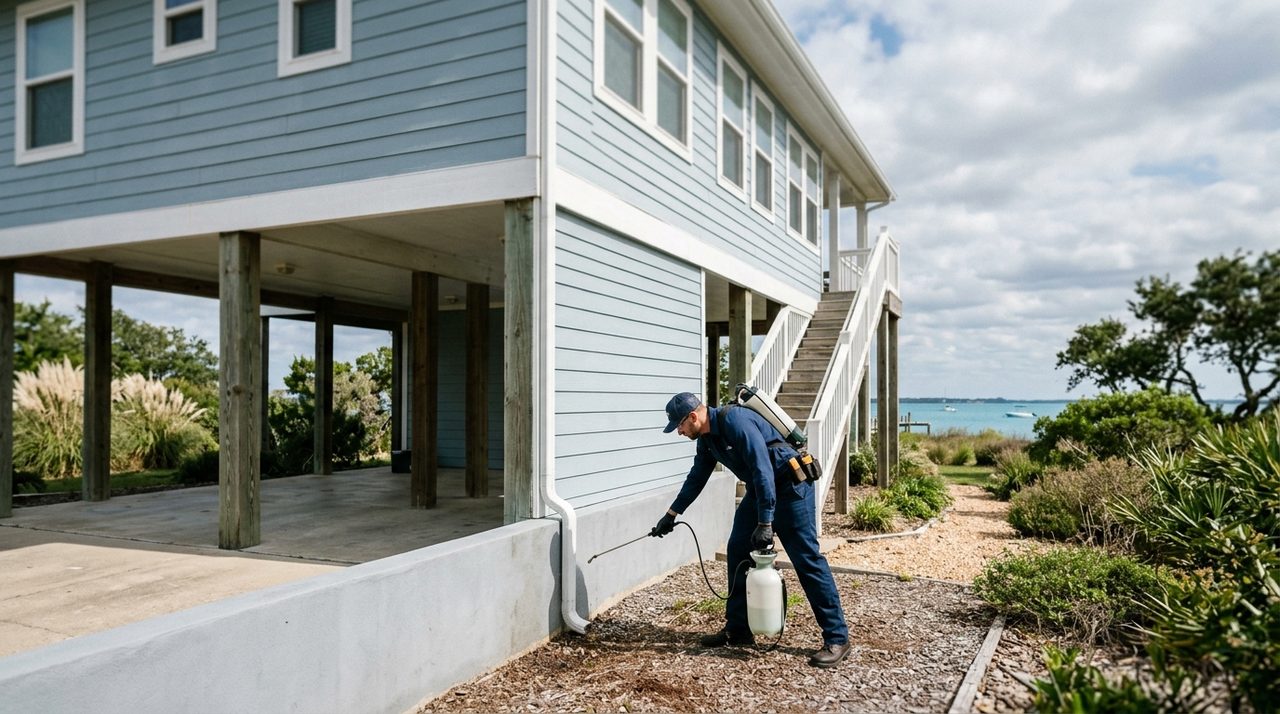
Santa Fe sits inside FEMA Zone AE in Galveston County, meaning flood saturation is not a rare event here — it is a recurring baseline that reshapes which pests show up, how quickly they multiply, and where they enter homes built predominantly around 1991 on slab-on-grade foundations still common across SE Houston. That housing era, Gulf Coast proximity, and the area's flat clay-heavy soils create a specific pest pressure profile — post-flood mosquito breeding, slab-intruding cockroaches displaced by storm sewers, subterranean termites exploiting waterlogged foundation joints, and storm-damaged roof lines inviting wildlife — that generic pest control advice simply does not address.
Ranked by verified Google rating × review volume × verification tier. How we rank →
Some highly-rated pros serve Santa Fe from nearby and may not keep a Santa Fe street address. Those are listed under "Also serving Santa Fe" with their real city and distance, so you always know where each business is based.
13410 FM1764, Santa Fe, TX 77510
12011 Hwy 6, Santa Fe, TX 77510
Highly-rated pros based nearby who cover Santa Fe. Distance shown from the Santa Fe area.
Serving Santa Fe Based in Alvin · 4.8 mi away
Serving Santa Fe Based in La Marque · 6.4 mi away
Serving Santa Fe Based in La Marque · 6.5 mi away
Why it matters to you
Santa Fe's FEMA Zone AE designation means low-lying yards routinely hold standing water for 72 hours or more after named storms — a timeline that perfectly matches the Aedes aegypti egg-to-larva cycle. After Harvey in 2017 and Beryl's July 2024 landfall, Galveston County properties like those in Santa Fe saw explosive mosquito populations within days because clay-heavy soils slow drainage and slab-edge voids trap shallow water invisible from the surface. Harris County Mosquito Control District aerial spraying covers public rights-of-way, not your backyard — so private yard gaps are real and persistent.
What a good pro does
A licensed Texas pest control operator (TDLR Structural Pest Control license required) should conduct a source-reduction site walk after any flood event, identifying slab-edge pooling, clogged gutters, and low spots before larviciding with BTI or spinosad products. Monthly barrier spray programs averaging $75–$150 per application (estimated) are most cost-effective when started immediately after a named storm rather than weeks later once populations peak. Verify the operator holds a TDLR license covering general household pests and ask specifically about Galveston County floodplain site conditions.
Sources: FEMA National Flood Hazard Layer (NFHL), Harris County Flood Control District, Texas Department of Licensing & Regulation
Why it matters to you
Santa Fe's approximately 1991 median build year means many homes carry cast-iron or early PVC drain lines that have experienced significant movement from the area's expansive clay soils over three decades — opening gaps at slab plumbing penetrations that Periplaneta americana uses as direct interior highways after heavy rain pushes them out of storm sewers. Galveston County's flat topography means storm and sanitary sewer systems stay pressurized longer after flood events, intensifying displacement pressure into residential slabs. Interior spraying breaks the visible population but does nothing about the sewer harborage driving re-entry.
What a good pro does
Effective treatment requires a TDLR-licensed technician to treat slab plumbing penetrations and weep holes with residual product, apply gel bait inside floor drains, and inspect for any post-Harvey or post-Beryl repair work that left utility chases resealed improperly. Exclusion caulking at weep holes and threshold sweeps is the durable fix; expect rodent-exclusion and cockroach-exclusion scopes to overlap, running $400–$900 estimated for a full perimeter exclusion on a 2,000 sq ft slab home. No City of Houston permit is involved — confirm with the City of Santa Fe or Galveston County Engineering whether any structural penetration work requires local coordination.
Sources: Texas Department of Licensing & Regulation, FEMA National Flood Hazard Layer (NFHL)
Why it matters to you
The entire Houston-Galveston corridor sits in USDA Zone 5, the highest Formosan and Reticulitermes termite pressure zone in the continental U.S., and Zone AE flood saturation in Santa Fe makes the problem meaningfully worse: repeatedly waterlogged soil directly against slab expansion joints and post-tension cable sleeves creates the moist, warm harborage conditions Coptotermes formosanus colonies prefer. A home built around 1991 in this area likely received a pre-treat termiticide application at construction, but soil flushing from repeated flood events can deplete chemical barriers well ahead of their rated service life — a dynamic specific to high-flood-risk Galveston County properties that dry suburban termite risk models underestimate.
What a good pro does
A TDLR-licensed termite operator should probe foundation perimeters for mud tubes within 90 days after any significant flood event, not just during the February-to-June swarm season. Liquid Termidor-type barrier retreatment for an average Santa Fe slab home runs an estimated $800–$1,800 depending on linear footage; Sentricon-type bait station programs cost an estimated $1,200–$2,000 to install with $300–$500 annual monitoring contracts. Ask the operator whether soil flushing post-flood voids the existing treatment warranty and request written documentation of application rates per the product label for Galveston County soil conditions.
Sources: Texas Department of Licensing & Regulation, FEMA National Flood Hazard Layer (NFHL), Texas Commission on Environmental Quality
Why it matters to you
Beryl made Category 1 landfall in July 2024 and the May 2024 derecho brought 100-plus mph gusts across the SE Houston corridor — both storms stripped fascia boards, soffit panels, and ridge caps from homes throughout Galveston County's coastal communities including Santa Fe. The area's mature tree canopy provides roof rats and raccoons direct branch-to-roofline access, and open soffits on a typical 1991-era wood-framed home can be colonized within days of damage. Texas Parks and Wildlife Department regulations govern handling of bats and certain bird species, adding a compliance layer that standard pest operators without wildlife endorsements cannot legally navigate.
What a good pro does
Homeowners should request a TDLR-licensed operator with a wildlife category endorsement — not just a general pest technician — for any attic inspection after Beryl or derecho damage. Before remediation begins, check whether your TWIA windstorm policy covers wildlife exclusion work resulting from covered storm damage, as many Galveston County coastal properties are TWIA-insured rather than covered under standard homeowners policies. Post-storm remediation inspections and wildlife exclusion in Santa Fe typically run an estimated $500–$1,500 depending on attic access complexity and extent of harborage.
Sources: Texas Windstorm Insurance Association (TWIA), Texas Department of Licensing & Regulation, FEMA National Flood Hazard Layer (NFHL)
Hiring pest control in Santa Fe? Santa Fe sits in Galveston County's FEMA AE high-risk flood zone, making water management the dominant concern for homeowners. Specific details about the neighborhood's housing stock, HOA governance, and permit jurisdiction remain difficult to confirm without a precise subdivision name or ZIP code. Homeowners should prioritize flood-resistant materials, elevated mechanical systems, and proper drainage when planning any renovation or repair.
Building era
Not confirmed - check Galveston County Appraisal District records for primary build decades.
Typical style
Not confirmed - check Galveston County Appraisal District records for architectural styles.
Foundations
Not confirmed - slab-on-grade is typical for SE Houston and Galveston County areas, but verify with local inspection records.
Common systems
Not confirmed - typical SE Houston/Galveston County homes feature central AC systems, copper or PEX plumbing, and standard residential electrical panels, but specifics depend on build era.
What that means for repairs
Given the FEMA AE flood zone designation, flood mitigation upgrades such as elevated HVAC equipment, flood vents, and water-resistant building materials are likely common renovation priorities.
Permit jurisdiction
Not confirmed - if within the City of Santa Fe municipal limits, permits would be handled by the City of Santa Fe; if in unincorporated Galveston County, permits fall under Galveston County Engineering. Verify the exact jurisdiction by address.
HOA & deed restrictions
Not confirmed - research could not verify whether a mandatory HOA, voluntary civic club, or no organized HOA governs this specific area. Check Harris County Clerk and Galveston County Clerk records for recorded deed restrictions.
Historic districts
No City of Houston historic district designation confirmed. Santa Fe is in Galveston County and likely outside City of Houston HAHC jurisdiction.
Contractor note
Contractors should confirm whether the property falls within the City of Santa Fe or unincorporated Galveston County, as permit requirements and floodplain development regulations differ significantly between the two jurisdictions.
FEMA flood zone
FEMA Zone AE (high flood risk) - source: fema_nfhl. Properties in this zone face a 1% annual chance of flooding and require flood insurance for federally backed mortgages. Proximity to local bayous, creeks, or drainage channels could not be confirmed from available research.
Hurricane Harvey impact
Not confirmed from available research - Galveston County broadly experienced significant Harvey flooding in 2017, and the AE flood zone designation suggests this area is vulnerable, but specific street-level impact and recurring flood-prone areas could not be verified. Check Galveston County flood damage records and FEMA claims data for this area.
Heat & humidity load
Houston-area summers bring extreme heat and humidity that stress HVAC systems and promote mold growth, especially in flood-prone areas where moisture intrusion compounds seasonal humidity. Proper attic ventilation, dehumidification, and regular AC maintenance are critical for homes in this zone.
Working with contractors here
The FEMA AE flood zone designation means contractors working in Santa Fe should expect flood mitigation and storm damage repair to be among the most common project types. Elevated mechanical systems, foundation inspections for water damage, and mold remediation are frequent needs. Any substantial improvement or repair exceeding 50% of the structure's market value may trigger floodplain development requirements including elevation to base flood elevation. Contractors should verify the exact permit jurisdiction—City of Santa Fe versus unincorporated Galveston County—before bidding, as compliance requirements vary. Material selections should prioritize flood-resistant options below the base flood elevation per local floodplain ordinances.
Local Tip
Always ask for a written estimate before work begins. Texas contractors are required to provide one on jobs over $1,000.
Santa Fe sits in Galveston County's FEMA AE high-risk flood zone, making water management the dominant concern for homeowners. Specific details about the neighborhood's housing stock, HOA governance, and permit jurisdiction remain difficult to confirm without a precise subdivision name or ZIP code. Homeowners should prioritize flood-resistant materials, elevated mechanical systems, and proper drainage when planning any renovation or repair.
Source: U.S. Census Bureau, ACS 5-Year 2023
Much of Santa Fe maps to FEMA Zone AE (high flood risk), so flood-resilient detailing -- elevated equipment, water-tolerant materials, and drainage-first thinking -- is essential here, not optional; as a Galveston County coastal community, tropical surge and wind add a layer generic guidance misses.
Source: FEMA National Flood Hazard Layer (NFHL). Flood zones vary by parcel — verify your individual FIRM panel.
Houston-specific estimators to plan your project before you call a pro. All results are planning estimates — a licensed local pro confirms the details on site.
| Pest | Cadence | Active window |
|---|---|---|
Mosquito control A standard 4-week barrier treatment holds a typical suburban lot through Houston's core mosquito season. | Every 28 days | April – October |
Termite (subterranean) A once-a-year spring inspection is the baseline for a drier, sunnier Houston lot — catch mud tubes and swarmer wings before damage compounds. | Annual inspection | Spring |
General pest guard (roaches, ants, spiders) Houston's year-round warmth means general pests never fully die off — a quarterly perimeter treatment is the standard maintenance rhythm. | Quarterly | Mar · Jun · Sep · Dec |
This is a planning estimate only — actual requirements depend on an on-site assessment by a licensed Houston pro. Texas requires an SPCB-licensed applicator for chemical treatment — ask for the technician's license number.
Sources: Harris County Flood Control DistrictFEMA National Flood Hazard Layer (NFHL)
Sources: Texas Department of Licensing & RegulationFEMA National Flood Hazard Layer (NFHL)