2513 FM 646 Rd, Santa Fe, TX 77510
Best Roofers in Santa Fe, TX
Santa Fe sits in Galveston County's FEMA Zone AE high-risk flood corridor roughly 30 miles southeast of downtown Houston, where roofs face a punishing combination of Gulf-driven hurricane wind uplift, intense coastal UV heat cycles, and the real possibility that storm-driven rain penetration becomes a flood-insurance and floodplain-compliance problem all at once. With a Census median build year of 1991, the majority of the housing stock predates the 2006 IRC wind-resistance upgrades, meaning a significant share of roofs were engineered to tolerances that modern storm seasons routinely exceed. This page gives Santa Fe homeowners the specific questions to ask — covering TWIA wind pool eligibility, Galveston County permit jurisdiction, and coastal heat degradation — before signing any roofing contract.
Verified against Google Business data
Updated 2026
See the 10 Roofers Serving Santa Fe 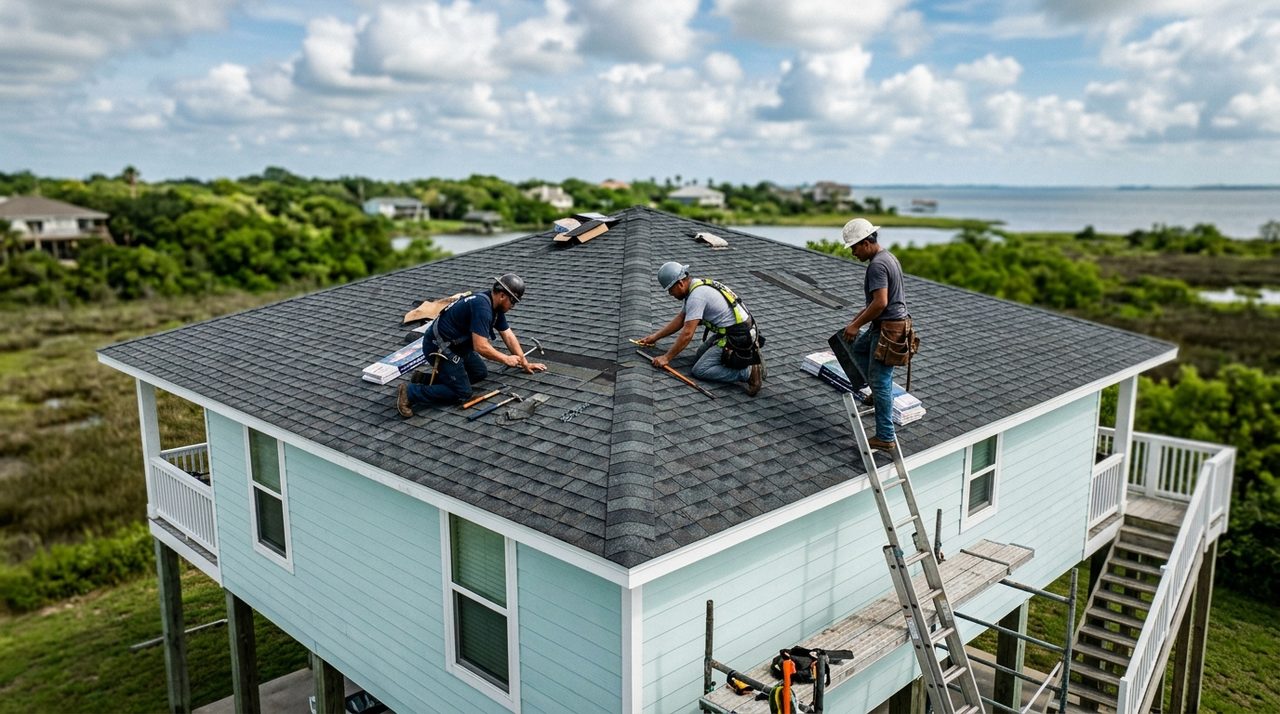
- Median home built
- 1991
- Median home value
- $290,200
- FEMA flood zone
- AE (high)
- Typical re-roof cost (est.)
- $9,000–$16,000
- Most common local issue
- Pre-2006 shingle uplift failure in TWIA coastal wind zone
Ranked by verified Google rating × review volume × verification tier. How we rank →
Some highly-rated pros serve Santa Fe from nearby and may not keep a Santa Fe street address. Those are listed under "Also serving Santa Fe" with their real city and distance, so you always know where each business is based.
Min rating:
10 resultsBased in Santa Fe
Closed
4123 Avenue P, Santa Fe, TX 77510
15525 Maple St, Santa Fe, TX 77517
Also serving Santa Fe
Highly-rated pros based nearby who cover Santa Fe. Distance shown from the Santa Fe area.
Serving Santa Fe Based in Dickinson · 2.9 mi away
Closed
Serving Santa Fe Based in La Marque · 3 mi away
Closed
Serving Santa Fe Based in La Marque · 4.1 mi away
Open Now
Serving Santa Fe Based in Dickinson · 5 mi away
Closed
Serving Santa Fe Based in La Marque · 5.4 mi away
Serving Santa Fe Based in League City · 5.7 mi away
Closed
Serving Santa Fe Based in Dickinson · 6.3 mi away
Roofers in Santa Fe: What You Should Know
Pre-2006 Roofs in TWIA Territory: Wind Uplift Is the First Vulnerability
Why it matters to you
Most Santa Fe homes built around or before 1991 — the Census median build year here — were permitted under wind standards that predate the 2006 IRC revisions requiring improved nail patterns, sealed decks, and enhanced ridge-cap fastening. Galveston County sits squarely within TWIA's designated catastrophe zone, and the May 2024 derecho's 100+ mph straight-line winds, combined with annual Gulf hurricane exposure, make these older fastening details an active risk rather than a theoretical one. A single storm can tear ridge caps and lift tab edges across an entire roof plane in ways that aren't visible from the street.
What a good pro does
A qualified roofer working in Santa Fe should inspect the existing nail pattern and deck attachment — not just the shingle surface — before quoting a repair versus full replacement. TWIA-eligible installations must meet the Windstorm Construction Standards required for Galveston County properties, and the installed product should be verified against TWIA's approved materials list to preserve wind pool insurability. Any full re-roof should include a sealed deck (synthetic underlayment mechanically fastened) and minimum 6-nail shingle patterns per TWIA specs. Confirm whether the permit falls under the City of Santa Fe or unincorporated Galveston County Engineering before work begins, as both jurisdictions apply their own inspection requirements.
Sources: Texas Windstorm Insurance Association (TWIA), International Residential Code (as adopted by City of Houston), Municipal permit office (see area profile)
Zone AE Flood Exposure Means Roof Failures Become Flood-Claim Complications Fast
Why it matters to you
In Santa Fe's FEMA Zone AE designation, a compromised roof during a tropical event doesn't just mean interior water damage — it can trigger a cascade involving both homeowner's insurance and NFIP flood policy, with dispute over which policy covers wind-driven rain intrusion versus rising water. Homes where the roof deck has quietly delaminated from Houston's persistent coastal humidity are especially vulnerable: what looks like a functioning roof can fail under Harvey-level or Beryl-level rainfall intensity, depositing water that mixes with flood intrusion and complicates every downstream claim. Santa Fe's high ownership rate (81% owner-occupied per Census ACS 2023) means most affected households carry the full financial weight of this exposure.
What a good pro does
Before the next storm season, homeowners should have a roofer probe the decking at eaves and valleys — the areas most exposed to prolonged ponding in high-rainfall events — for delamination or soft spots. If a repair or replacement is triggered and the work value exceeds 50% of the structure's market value, Galveston County floodplain regulations may require the project to meet current base flood elevation standards, which can affect how roof and attic assemblies are detailed. Documenting pre-storm roof condition with photos and a written inspection report is valuable evidence if a future dual-policy claim is disputed.
Sources: FEMA National Flood Hazard Layer (NFHL), Municipal permit office (see area profile)
Coastal UV and Heat Cycling Cut Shingle Lifespan Well Below Label Expectations
Why it matters to you
Santa Fe's Galveston County location means roofs absorb some of the highest solar radiation in the Houston metro, with sustained ambient temperatures of 95–105°F from May through September and attic deck temperatures that can exceed 160°F. A standard 30-year architectural shingle installed on a south- or west-facing plane in this coastal environment realistically degrades to functional failure in 15–18 years as asphalt binder oxidizes and granule adhesion weakens — a timeline that aligns uncomfortably with the circa-1991 median build year, suggesting many Santa Fe roofs are already at or past practical service life even if they have not yet suffered visible storm damage.
What a good pro does
When replacing a roof in Santa Fe, homeowners should seriously evaluate Class 4 impact-resistant shingles with a higher solar-reflectance rating; Energy Star-rated cool-roof products can reduce attic temperatures meaningfully and may qualify for utility or federal incentive programs. The cost premium for Class 4 IR shingles — estimated at $1,500–$3,500 over standard architectural on a typical 1,800–2,400 sq ft home — is partly offset by potential TWIA premium discounts for wind-rated products and a longer practical service life in coastal UV conditions. Ask the contractor to provide the shingle's Miami-Dade or UL 2218 rating documentation before signing a contract.
Sources: ENERGY STAR / U.S. Dept. of Energy, Texas Windstorm Insurance Association (TWIA), International Residential Code (as adopted by City of Houston)
Permit Jurisdiction Uncertainty Adds a Step Every Santa Fe Homeowner Must Verify
Why it matters to you
Unlike properties firmly inside Houston's city limits — where the City of Houston's permit office handles roofing permits — Santa Fe addresses may fall either within the City of Santa Fe's municipal jurisdiction or in unincorporated Galveston County, each with distinct permit offices, fee structures, and inspection processes. After a storm, roofing contractors mobilizing quickly across the county sometimes skip this verification step, leaving homeowners with completed work that lacks proper permits or inspections — a problem that surfaces painfully during resale disclosure or an insurance reinspection. Texas has no state-level roofing contractor license, so the permit and inspection process is one of the few formal checkpoints available to homeowners.
What a good pro does
Before any contract is signed, verify the property's exact jurisdiction by address through Galveston County Engineering or the City of Santa Fe's municipal office — the contractor should be able to do this within one business day. For a full re-roof, a permit is required regardless of jurisdiction, and the roofer must be registered to pull permits in the applicable jurisdiction. Because Texas does not license roofers at the state level, homeowners should independently confirm the contractor carries general liability insurance and workers' compensation coverage before work begins, and should obtain a copy of the issued permit number before the first crew arrives.
Sources: Municipal permit office (see area profile), City of Houston Permitting Center, Texas Windstorm Insurance Association (TWIA)
Roofers in Santa Fe: What You Should Know
Hiring roofers in Santa Fe? Santa Fe sits in Galveston County's FEMA AE high-risk flood zone, making water management the dominant concern for homeowners. Specific details about the neighborhood's housing stock, HOA governance, and permit jurisdiction remain difficult to confirm without a precise subdivision name or ZIP code. Homeowners should prioritize flood-resistant materials, elevated mechanical systems, and proper drainage when planning any renovation or repair.
- Housing era
- Not confirmed - check Galveston County Appraisal District records for primary build decades
- Foundation
- Not confirmed - slab-on-grade is typical for SE Houston and Galveston County areas, but…
- Flood zone
- FEMA Zone AE (high flood risk) - source
- Permits
- Not confirmed - if within the City of Santa Fe municipal limits, permits would…
Housing stock & systems
Building era
Not confirmed - check Galveston County Appraisal District records for primary build decades.
Typical style
Not confirmed - check Galveston County Appraisal District records for architectural styles.
Foundations
Not confirmed - slab-on-grade is typical for SE Houston and Galveston County areas, but verify with local inspection records.
Common systems
Not confirmed - typical SE Houston/Galveston County homes feature central AC systems, copper or PEX plumbing, and standard residential electrical panels, but specifics depend on build era.
What that means for repairs
Given the FEMA AE flood zone designation, flood mitigation upgrades such as elevated HVAC equipment, flood vents, and water-resistant building materials are likely common renovation priorities.
Permits & restrictions
Permit jurisdiction
Not confirmed - if within the City of Santa Fe municipal limits, permits would be handled by the City of Santa Fe; if in unincorporated Galveston County, permits fall under Galveston County Engineering. Verify the exact jurisdiction by address.
HOA & deed restrictions
Not confirmed - research could not verify whether a mandatory HOA, voluntary civic club, or no organized HOA governs this specific area. Check Harris County Clerk and Galveston County Clerk records for recorded deed restrictions.
Historic districts
No City of Houston historic district designation confirmed. Santa Fe is in Galveston County and likely outside City of Houston HAHC jurisdiction.
Contractor note
Contractors should confirm whether the property falls within the City of Santa Fe or unincorporated Galveston County, as permit requirements and floodplain development regulations differ significantly between the two jurisdictions.
Flood & weather
FEMA flood zone
FEMA Zone AE (high flood risk) - source: fema_nfhl. Properties in this zone face a 1% annual chance of flooding and require flood insurance for federally backed mortgages. Proximity to local bayous, creeks, or drainage channels could not be confirmed from available research.
Hurricane Harvey impact
Not confirmed from available research - Galveston County broadly experienced significant Harvey flooding in 2017, and the AE flood zone designation suggests this area is vulnerable, but specific street-level impact and recurring flood-prone areas could not be verified. Check Galveston County flood damage records and FEMA claims data for this area.
Heat & humidity load
Houston-area summers bring extreme heat and humidity that stress HVAC systems and promote mold growth, especially in flood-prone areas where moisture intrusion compounds seasonal humidity. Proper attic ventilation, dehumidification, and regular AC maintenance are critical for homes in this zone.
Working with contractors here
The FEMA AE flood zone designation means contractors working in Santa Fe should expect flood mitigation and storm damage repair to be among the most common project types. Elevated mechanical systems, foundation inspections for water damage, and mold remediation are frequent needs. Any substantial improvement or repair exceeding 50% of the structure's market value may trigger floodplain development requirements including elevation to base flood elevation. Contractors should verify the exact permit jurisdiction—City of Santa Fe versus unincorporated Galveston County—before bidding, as compliance requirements vary. Material selections should prioritize flood-resistant options below the base flood elevation per local floodplain ordinances.
Local Tip
Always ask for a written estimate before work begins. Texas contractors are required to provide one on jobs over $1,000.
About Santa Fe
Santa Fe sits in Galveston County's FEMA AE high-risk flood zone, making water management the dominant concern for homeowners. Specific details about the neighborhood's housing stock, HOA governance, and permit jurisdiction remain difficult to confirm without a precise subdivision name or ZIP code. Homeowners should prioritize flood-resistant materials, elevated mechanical systems, and proper drainage when planning any renovation or repair.
- Median year built
- 1991
- Median home value
- $290,200
- Owner-occupied
- 81%
- Population
- 12,828
- Housing units
- 5,207
- Median income
- $95,815
Source: U.S. Census Bureau, ACS 5-Year 2023
Flood & storm risk
FEMA Zone AEHigh flood riskMuch of Santa Fe maps to FEMA Zone AE (high flood risk), so flood-resilient detailing -- elevated equipment, water-tolerant materials, and drainage-first thinking -- is essential here, not optional; as a Galveston County coastal community, tropical surge and wind add a layer generic guidance misses.
Source: FEMA National Flood Hazard Layer (NFHL). Flood zones vary by parcel — verify your individual FIRM panel.
Houston Storm Readiness in Santa Fe
Hurricane & flooding
Galveston Bay exposure means Santa Fe, TX roofs face simultaneous surge-driven moisture from below and 100-plus-mph wind from above, making a closed-cell spray-foam application to the underside of the decking a worthwhile roofer upgrade that resists both uplift and saturation. Have your TDLR-licensed contractor confirm the foam is installed to a minimum one-inch thickness at all panel edges. As a Galveston County community, Santa Fe may follow county rather than City of Houston storm rebuild rules.
Severe storms & hail
Coastal Santa Fe, TX roofs face the highest sustained wind loads during any severe storm, so ask a roofer to verify that all hip and ridge shingles are installed with six nails rather than the standard four and that all field shingles in the first three rows from the eave are hand-sealed with roofing cement. The May 2024 derecho proved that even non-hurricane wind events can exceed design loads on roofs that were correctly installed but never upgraded for coastal exposure. Confirm the current FEMA panel for your Santa Fe parcel — the area maps to Zone AE, but adjacent lots can differ.
Ice storms & freezes
In Santa Fe, TX, ice on a coastal roof does not just load the structure—it also traps salt residue against the shingle surface during the melt cycle, accelerating granule loss and mat degradation. Ask a TDLR-licensed roofer to inspect granule coverage after any freeze event and document shingle condition for your homeowner insurance record while storm-season hail claims are still fresh. Confirm the current FEMA panel for your Santa Fe parcel — the area maps to Zone AE, but adjacent lots can differ.
Sources: FEMA National Flood Hazard Layer (NFHL), Ready.gov -- Hurricanes, CenterPoint Energy -- Storm Center, City of Houston -- Emergency Preparedness, Ready.gov -- Winter Weather, Harris County Flood Control District
Free Santa Fe Tools & Calculators
Houston-specific estimators to plan your project before you call a pro. All results are planning estimates — a licensed local pro confirms the details on site.
Hurricane Roof Wind-Load & TDI/WPI-8 Estimator
Open full tool & FAQ →115–120 mph
Estimated design wind speed for your zone
Outside the TDI catastrophe area, so a WPI-8 is generally not mandated — but Houston still sees hurricane-force gusts (Beryl, 2024). Insist on properly rated shingles installed to the manufacturer's high-wind nailing pattern (6 nails) and starter strips, or a wind claim can be denied for improper installation.
Find a Houston roofer →This is a planning estimate only — actual requirements depend on an on-site assessment by a licensed Houston pro. Wind-speed zones are approximate; your exact TDI/WPI-8 obligation depends on your address's designation. Verify with the Texas Department of Insurance before contracting.
Houston Freeze Prep & Pipe Insulation Checklist
Open full tool & FAQ →Your freeze checklist — 4 tasks
- 1
Disconnect & drain every outdoor hose bib
Remove hoses, drain the spigots, and cover each with an insulated faucet sock. Un-drained hose bibs are the #1 burst point in a Houston freeze.
- 2
Insulate exposed pipes in the attic & garage
Wrap any pipe in an unconditioned space (attic runs, garage walls) with foam sleeves. Houston homes rarely insulate these because they only matter a few nights a year — which is exactly why they burst.
- 3
Open cabinet doors & keep a pencil-width drip
On hard-freeze nights, open kitchen/bath cabinets so warm air reaches the pipes and let faucets on exterior walls drip to relieve pressure.
- 4
Protect the attic/garage water heater & its lines
An attic or garage tank sits in unconditioned space. Insulate the cold-inlet and hot-outlet lines and confirm the emergency drain pan is clear so a leak doesn't reach the ceiling.
This is a planning estimate only — actual requirements depend on an on-site assessment by a licensed Houston pro. If a pipe has already burst, shut off your main water supply and call a licensed Houston plumber immediately — freeze bursts flood fast.
Frequently Asked Questions
Do I need a roofing permit in Santa Fe, TX, and who issues it — the city or Galveston County?
The answer depends entirely on your address: if your home falls within the City of Santa Fe's municipal limits, you apply through the City of Santa Fe's permit office; if you're in unincorporated Galveston County, permits are handled by Galveston County Engineering. This distinction matters because the two jurisdictions have different fee structures, inspection schedules, and floodplain development triggers, so confirm your exact jurisdiction before your roofer pulls any permit — a quick address lookup through Galveston County's online GIS portal can clarify this in minutes.
Sources: Municipal permit office (see area profile)FEMA National Flood Hazard Layer (NFHL)
My Santa Fe home was built around 1991 — does that mean it qualifies for TWIA wind coverage, and will a new roof help lower my premium?
Homes built before 2006 were constructed to wind-resistance standards that predate the IRC's modern nail-pattern and sheathing requirements, which TWIA considers when evaluating wind mitigation credits. Upgrading to a TWIA-eligible roof system — meaning properly fastened decking, a secondary water barrier, and impact-resistant shingles that meet their approved-product standards — can qualify your home for a windstorm inspection certificate (WPI-8), which is often required to maintain or obtain TWIA coverage in Galveston County's coastal wind zone. Ask your roofer specifically whether their proposed scope will meet TWIA's construction standards before signing a contract.
Sources: Texas Windstorm Insurance Association (TWIA)International Residential Code (as adopted by City of Houston)
Because Santa Fe is in FEMA Zone AE, can a roof replacement trigger floodplain compliance rules I didn't expect?
Yes, it can: if the total cost of your roofing project pushes the cumulative 'substantial improvement' threshold past 50% of your structure's pre-improvement market value, Galveston County or the City of Santa Fe may require the entire structure to be brought into compliance with current floodplain elevation requirements — a potentially significant expense beyond the roof itself. With a Census median home value around $290,200, this threshold is reached faster than many homeowners assume, especially if the property already had prior storm repairs. Discuss this threshold with your permit jurisdiction before work begins, not after.
When is the worst time to schedule a roof replacement in Santa Fe, and how far out should I book after a Gulf storm?
The Atlantic hurricane season runs June 1 through November 30, and any named storm or significant Gulf event — like the activity seen after Harvey or the May 2024 derecho — pushes Southeast Houston roofing contractors into backlogs that can stretch 6 to 12 weeks for full replacements, with material costs and labor rates estimated to run 15 to 25 percent above baseline during that surge period. The practical sweet spot for non-emergency scheduling is January through March, when contractor availability is highest and Gulf weather risk is lowest. If you're booking storm repair, get your contractor's TWIA documentation submitted to your insurer before starting work, as the insurer's timeline and the contractor's timeline need to be coordinated.
Are Santa Fe roofers required to be licensed by the State of Texas, and how do I protect myself given the fraud risk after Gulf storms?
Texas does not issue a state roofing contractor license through TDLR or any other agency, which makes Santa Fe especially vulnerable to out-of-area storm chasers after hurricane or derecho events. Your minimum verification steps should be: confirm the contractor carries current general liability and workers' compensation insurance with certificates naming you as additionally insured, ask whether they are registered to pull permits in either the City of Santa Fe or unincorporated Galveston County, and verify they have experience with TWIA-compliant installation details since improperly documented work can void your windstorm coverage.
Sources: Texas Windstorm Insurance Association (TWIA)Municipal permit office (see area profile)
My Santa Fe home has a flat or low-slope addition over a back room — does that section need a different roofing system than the main pitched roof, and what should I budget?
Yes, flat and low-slope sections (less than 2:12 pitch) require a membrane system — typically modified bitumen or TPO — rather than shingles, and in Santa Fe's Zone AE flood environment this matters because even minor membrane failures during Harvey-scale rain events can channel water directly into the structure before you even know there's a problem. Installed replacement costs for modified bitumen or TPO in the current Houston-area market run an estimated $4.50 to $7.50 per square foot, and the scope should include inspection of interior drains and scuppers, which clog quickly in coastal environments with airborne debris. Make sure your roofer details the transition flashing between the flat section and the pitched roof plane — that joint is statistically the most common leak origin on homes of this era.