1701 S Texas 6, Houston, TX 77077
Best Pool Cleaning in Westchase
Westchase's pool stock is dominated by backyard pools installed behind 1970s–1990s single-family homes across a patchwork of separately platted subdivisions, most sitting on slab-on-grade foundations over Houston's expansive Beaumont clay — a combination that keeps pool cleaning techs busy with soil-driven shell movement, scale from hard Harris County water, and the UV punishment of nearly nine months of swimming season. Because there is no single umbrella HOA for the Westchase area, a pool owner in one subdivision may face deed-restriction rules on equipment screening and water clarity that a neighbor two blocks away is completely exempt from — and every permit question routes through the City of Houston's Houston Permitting Center. This page cuts through the noise to explain which pool-maintenance challenges actually matter for a Westchase address.
Verified against Google Business data
Updated 2026
See the 10 Pool Cleaning Serving Westchase 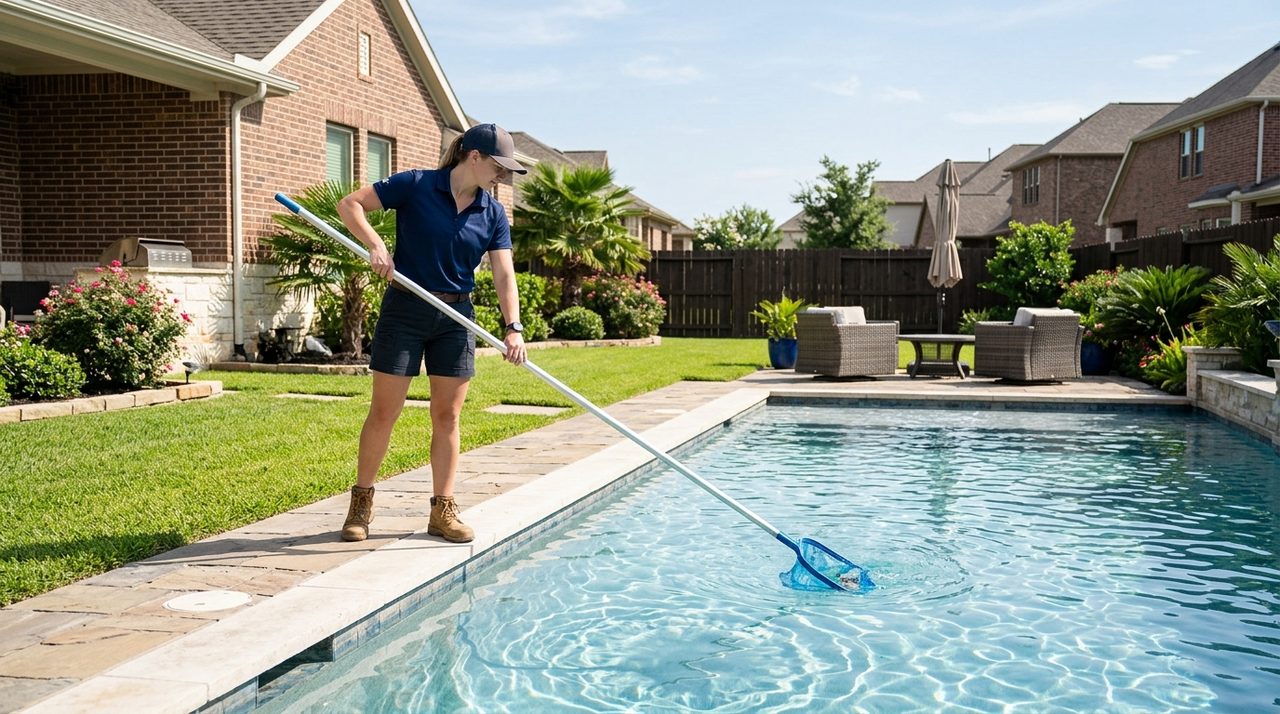
- Median home built
- 1986
- Median home value
- $362,186
- FEMA flood zone
- X (low)
- Typical monthly cleaning cost (est.)
- $150–$250
- Most common local issue
- Calcium scale buildup from hard Harris County water in aging plaster pools
Ranked by verified Google rating × review volume × verification tier. How we rank →
Some highly-rated pros serve Westchase from nearby and may not keep a Westchase street address. Those are listed under "Also serving Westchase" with their real city and distance, so you always know where each business is based.
Min rating:
10 resultsBased in Westchase
Closed
12225 Westheimer Rd unit d, Houston, TX 77077
Closed
11920 Westheimer Rd A, Houston, TX 77077
Also serving Westchase
Highly-rated pros based nearby who cover Westchase. Distance shown from the Westchase area.
Closed
Serving Westchase Based in Alief · 0.4 mi away
Serving Westchase Based in Alief · 1.6 mi away
Serving Westchase Based in Alief · 1.6 mi away
Closed
Serving Westchase Based in Oak Forest · 3.1 mi away
Closed
Serving Westchase Based in Energy Corridor · 3.5 mi away
Closed
Serving Westchase Based in Spring Branch · 3.6 mi away
Closed
Serving Westchase Based in Spring Branch · 3.6 mi away
Pool Cleaning in Westchase: What You Should Know
Calcium Scale on 1980s-Era Plaster from Hard Harris County Water
Why it matters to you
The majority of single-family pools in Westchase were plastered in the 1980s and are now 30-plus years old. Harris County municipal water commonly delivers calcium hardness in the 200–400 ppm range, and in an outdoor pool losing water to evaporation nine months a year, calcium carbonate deposits build visibly on tile lines, coping, and heat exchanger surfaces — accelerating wear on already-aged plaster that is expensive to resurface.
What a good pro does
A qualified cleaning technician will test calcium hardness and total dissolved solids at every visit, targeting a hardness range of 200–400 ppm and adjusting with partial drain-and-refills when TDS climbs too high. For pools already showing heavy tile-line scale, a professional acid-wash or descaling service — not DIY muriatic acid — is the right starting point before the plaster suffers irreversible pitting.
Pool Shell Cracking and Deck Gaps Driven by Westchase's Expansive Clay
Why it matters to you
Virtually every single-family home in Westchase sits on slab-on-grade over the same Houston Black clay that drives routine foundation repairs across the neighborhood. Pool shells are not exempt: the clay swells during wet periods and contracts sharply in summer drought cycles, popping tile, cracking plaster at return fittings, and opening gaps between the coping and deck. A cleaning technician visiting weekly is often the first person to notice a new crack or a fitting that has shifted.
What a good pro does
A good pool cleaning pro will document any new cracks, displaced coping, or deck separation on each visit and photograph changes over time — information a homeowner needs before a hairline crack becomes a structural leak. Catching a broken return-line fitting early can mean a $200 repair; missing it for a season can mean excavating under a deck slab.
Sources: Harris County Flood Control District
Year-Round Algae Pressure Under Houston's High UV and Humidity
Why it matters to you
Westchase pools sit fully exposed to the sun on the smaller suburban lots typical of 1970s–1990s subdivision design, with few mature shade trees positioned over the water. Houston's UV index hits 10–11 from May through September at 29.8°N latitude, destroying unstabilized chlorine within hours of a service visit. Add relative humidity above 70% for most of the year and warm water temperatures, and algae pressure is essentially a nine-month problem, not a seasonal one.
What a good pro does
Proper cyanuric acid (stabilizer) management — typically targeting 30–50 ppm in a non-salt pool — is the single most important chemical variable for Westchase pools in summer. A technician should test and record stabilizer levels at least monthly, not just free chlorine, and adjust dosing to compensate for Houston's UV load rather than applying a standard northern-market protocol.
Freeze-Equipment Risk for Older Pools and Variable HOA Documentation Requirements
Why it matters to you
Winter Storm Uri in February 2021 cracked pump housings, split exposed PVC plumbing, and destroyed salt cells on pools across Westchase, most of which were installed in eras before automated freeze-guard controls became standard. With a census median build year of 1986, many backyard pools here are running original or once-replaced equipment that has no automatic freeze-protection logic. Separately, some individual Westchase subdivisions have their own mandatory HOAs requiring documented proof of regular professional service — but because there is no single area-wide association, owners must verify their specific subdivision's rules through Harris County deed records before assuming they are free of that obligation.
What a good pro does
Any pool cleaning contract for a Westchase home built before 2005 should include a freeze-protocol addendum specifying how the service company will respond to sub-freezing forecasts — whether via a remote-activated pump run or a site visit to drain and plug exposed fittings. For equipment replacements triggered by freeze damage, electrical work on pumps and heaters falls under City of Houston permit requirements handled through the Houston Permitting Center, and homeowners should confirm a permit is pulled before any wiring is touched.
Sources: City of Houston Permitting Center, Local HOA / deed restrictions (see area profile), Texas Department of Licensing & Regulation
Pool Cleaning in Westchase: What You Should Know
Hiring pool cleaning in Westchase? Westchase is a large, mixed-use district near Beltway 8 composed of multiple separately platted subdivisions, each with its own potential HOA and deed restrictions. Housing stock ranges from 1970s–1990s single-family homes to newer multifamily and townhome developments, nearly all built on slab-on-grade foundations. Contractors must verify deed restrictions and HOA rules on a per-subdivision basis, as there is no single umbrella association governing the entire area.
- Housing era
- Primarily 1970s through 1990s, with continued multifamily and townhome development into the 2000s and…
- Foundation
- Slab-on-grade (nearly universal for post-1960s suburban Harris County construction)
- Flood zone
- FEMA Zone X (low flood risk) per official NFHL data
- Permits
- City of Houston — Houston Permitting Center
Housing stock & systems
Building era
Primarily 1970s through 1990s, with continued multifamily and townhome development into the 2000s and 2010s.
Typical style
Contemporary suburban: traditional-to-transitional single-family homes, brick or stucco façade garden-style apartments, and townhomes.
Foundations
Slab-on-grade (nearly universal for post-1960s suburban Harris County construction).
Common systems
Central A/C with gas furnace, copper or CPVC plumbing transitioning to PEX in renovations, standard residential electrical panels (100–200 amp). Older 1970s–1980s homes may still have original galvanized supply lines or polybutylene piping requiring replacement.
What that means for repairs
Kitchen and bath remodels are common in aging 1970s–1980s homes. Plumbing re-pipes (replacing galvanized or polybutylene), HVAC system replacements on units past their 20-year lifespan, and slab foundation repair driven by Houston's expansive clay soils are frequent project types.
Permits & restrictions
Permit jurisdiction
City of Houston — Houston Permitting Center.
HOA & deed restrictions
No single area-wide mandatory HOA exists. The Westchase District is a Texas Legislature-created management district focused on commercial improvements, not residential lot governance. The Westchase Super Neighborhood Council is a City of Houston advisory body. A Westchase Community Association (501(c)(4), formed 1974) exists, but its authority over individual residential lots is not clearly documented. Individual subdivisions within the Westchase area may have their own mandatory HOAs — must be verified per subdivision via Harris County deed records.
Historic districts
No City of Houston historic district designation confirmed.
Contractor note
Contractors must confirm which subdivision a property belongs to and check for active deed restrictions and HOA architectural review requirements before beginning exterior work, fencing, or additions. The lack of a single governing HOA means rules vary block by block.
Flood & weather
FEMA flood zone
FEMA Zone X (low flood risk) per official NFHL data. Drainage is influenced by local bayous and channels within the Harris County Flood Control system; proximity to specific drainage channels should be verified on a per-property basis.
Hurricane Harvey impact
No Westchase-specific street-level Harvey flood impact documentation was found in available sources. The area is east of the Addicks and Barker Reservoir watersheds and experienced varying levels of impact during Harvey. Flood history should be verified through Harris County Flood Control District records and individual property disclosure for any specific address.
Heat & humidity load
Sustained summer heat puts heavy strain on aging HVAC systems in 1970s–1980s homes; capacitor failures, refrigerant leaks, and compressor burnout are common seasonal calls. Slab-on-grade foundations on Houston's expansive clay soils experience movement during summer drought cycles, leading to door/window sticking and drywall cracks that trigger foundation inspection and repair demand.
Working with contractors here
Westchase keeps contractors busy with the bread-and-butter maintenance demands of aging 1970s–1990s suburban homes: HVAC replacements, whole-house plumbing re-pipes, and slab foundation repair. The area's slab-on-grade construction on expansive clay means foundation work is a recurring need, especially after drought-to-rain cycles. Roof replacements on 20–30-year-old composition shingle roofs are common, and many homeowners are upgrading aging electrical panels to support modern loads. Because Westchase comprises many separate subdivisions, contractors must scope each job with attention to the specific subdivision's deed restrictions and any HOA architectural review — exterior modifications, fence styles, and material choices may vary significantly from one block to the next.
Local Tip
Always ask for a written estimate before work begins. Texas contractors are required to provide one on jobs over $1,000.
About Westchase
Westchase is a large, mixed-use district near Beltway 8 composed of multiple separately platted subdivisions, each with its own potential HOA and deed restrictions. Housing stock ranges from 1970s–1990s single-family homes to newer multifamily and townhome developments, nearly all built on slab-on-grade foundations. Contractors must verify deed restrictions and HOA rules on a per-subdivision basis, as there is no single umbrella association governing the entire area.
- Median year built
- 1986
- Median home value
- $362,186
- Owner-occupied
- 31.7%
- Population
- 104,146
- Housing units
- 54,163
- Median income
- $65,848
Source: U.S. Census Bureau, ACS 5-Year 2023
Flood & storm risk
FEMA Zone XLow flood riskMost of Westchase maps to FEMA Zone X (low mapped flood risk), but Houston's flash-flood reality means even low-risk blocks benefit from smart drainage and storm-hardened installs.
Source: FEMA National Flood Hazard Layer (NFHL). Flood zones vary by parcel — verify your individual FIRM panel.
Frequently Asked Questions
Do I need a permit from the City of Houston to replace my pool pump or heater in Westchase?
Westchase falls entirely within City of Houston jurisdiction, so equipment replacements involving electrical connections — including pump motors and heaters — typically require a permit pulled through the Houston Permitting Center, not a suburban city office. Routine chemical cleaning and maintenance visits do not trigger a permit, but any licensed electrician or pool contractor swapping out electrical equipment should confirm the permit requirement with the Houston Permitting Center before starting work. Because Texas TDLR licenses pool and spa contractors separately from the City permit process, make sure your contractor carries both credentials before scheduling equipment work.
Sources: City of Houston Permitting CenterTexas Department of Licensing & Regulation
My Westchase subdivision has its own HOA — can they actually fine me over pool water clarity or equipment screening?
Yes, if your individual subdivision's deed restrictions include pool maintenance or aesthetics requirements, that HOA has enforcement standing independent of the Westchase District or the Westchase Community Association, neither of which governs individual residential lots. Deed restrictions in Harris County subdivisions platted during the 1970s–1990s — exactly Westchase's dominant housing era — frequently specify that pools must remain clear to the bottom drain and that mechanical equipment be screened from street view. Pull your subdivision's recorded deed restrictions from Harris County deed records before assuming no rules apply; requirements vary block by block in Westchase.
Sources: Local HOA / deed restrictions (see area profile)
Westchase is in FEMA Zone X, so should I still worry about storm debris crashing my pool chemistry after a hurricane or derecho?
FEMA Zone X means your property faces low mapped flood risk from riverine or coastal flooding, but that designation does not protect a backyard pool from direct wind-driven debris and rain during events like Hurricane Beryl in July 2024 or the May 2024 derecho — both of which hit the West Houston corridor hard and dumped organic debris, sediment, and diluted rainwater into pools across the area. Even without floodwater intrusion, a major storm can spike phosphates, crash free chlorine to near zero, and cloud water enough to require a professional shock treatment and multi-step clarification visit before the pool is safe to use again. Budget an estimated $250–$600 for a post-storm remediation call, depending on debris load and pool size.
How often should a Westchase pool built in the 1980s realistically need acid washing versus routine brushing to manage calcium scale?
On an aging 1980s plaster pool filled with Harris County water — which commonly runs 200–400 ppm calcium hardness even before summer evaporation concentrates it further — most pool techs recommend a full acid wash every three to five years, with annual tile-line descaling in between to prevent the thick calcium carbonate buildup that regular brushing cannot remove. Weekly brushing slows scale accumulation but does not stop it when source water is this hard and summer heat is accelerating evaporation. Ask your cleaning technician to record Langelier Saturation Index readings at each visit so you have documented evidence of scaling trends rather than relying on guesswork.
What should I ask a Westchase pool cleaning company about freeze-guard monitoring before next winter, given what happened during Uri?
Ask specifically whether your existing pool equipment has an automated freeze guard wired to the pump controller, because most pools built before 2010 in the Houston metro — which covers the bulk of Westchase's housing stock — were installed without one, leaving pumps and PVC lines exposed during hard freezes like Winter Storm Uri in February 2021. A reputable service company should be able to inspect and test your freeze guard during a standard visit, or install an aftermarket controller for an estimated $150–$400 in parts and labor if one is absent. Also confirm they have a protocol for emergency winterization calls, since post-Uri repair bills for cracked plumbing and destroyed salt cells routinely ran $400–$1,500 or more across the West Houston area.
Is there a slow season for pool cleaning in Westchase where I could get a better price or faster scheduling?
Demand for weekly service drops noticeably from late November through January in Westchase, when water temperatures fall enough that most households stop swimming — though Houston's mild winters mean the pool still needs chemistry maintenance and equipment checks, especially ahead of any forecast freeze. That window is the best time to schedule non-urgent work like plaster inspections, salt cell replacements, or filter media changes, when company schedules are lighter. Conversely, plan for peak demand and a potential two-to-three-week wait for new service accounts from April through August, and assume a post-storm surge in appointment availability after any named storm or significant derecho crosses the area.