3200 Southwest Fwy # 3300, Houston, TX 77027
Best Pressure Washing in Galleria
The Galleria/Uptown corridor — a mix of glass-and-stucco high-rises, Mediterranean townhome clusters, and a handful of 1960s–1970s ranch-style holdouts — presents pressure-washing challenges you won't find in a typical Houston subdivision: building-by-building HOA approval requirements, vertical stucco and glazed surfaces that demand low-pressure technique, and Houston's relentless humidity that turns any shaded podium-level concrete dark with mold within months. With owner-occupancy at just 29.2% (ACS 2023), many units are renter-occupied or investment properties whose absentee owners discover exterior staining only when a condo association sends a violation notice. This page explains exactly what Galleria property owners face and how to get it cleaned correctly.
Verified against Google Business data
Updated 2026
See the 10 Pressure Washing Serving Galleria 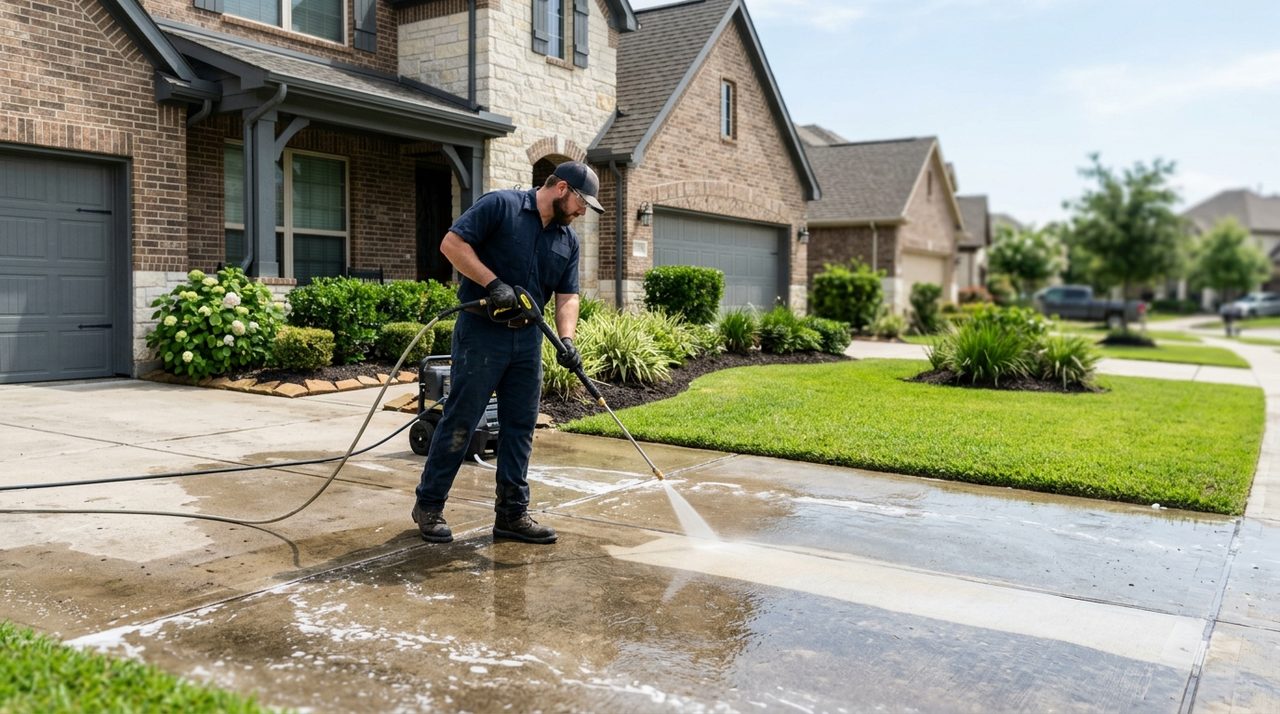
- Median home built
- 2003
- Median home value
- $881,700
- FEMA flood zone
- X (low)
- Typical cost (est.)
- $250–$900
- Most common local issue
- Black algae on shaded podium-level concrete and stucco townhome exteriors
Ranked by verified Google rating × review volume × verification tier. How we rank →
Some highly-rated pros serve Galleria from nearby and may not keep a Galleria street address. Those are listed under "Also serving Galleria" with their real city and distance, so you always know where each business is based.
Min rating:
10 resultsBased in Galleria
Also serving Galleria
Highly-rated pros based nearby who cover Galleria. Distance shown from the Galleria area.
Open Now
Serving Galleria Based in Tanglewood · 0.6 mi away
Serving Galleria Based in Tanglewood · 0.7 mi away
Closed
Serving Galleria Based in Tanglewood · 1.5 mi away
Closed
Serving Galleria Based in Tanglewood · 1.8 mi away
Closed
Serving Galleria Based in Bellaire · 1.9 mi away
Serving Galleria Based in Bellaire · 2.3 mi away
Open Now
Serving Galleria Based in Upper Kirby · 2.3 mi away
Open Now
Serving Galleria Based in Upper Kirby · 2.6 mi away
Closed
Serving Galleria Based in West University · 2.7 mi away
Pressure Washing in Galleria: What You Should Know
Every Building Has Its Own Rules — Approval Before Any Sprayer Touches the Surface
Why it matters to you
Unlike a Katy master-planned community with a single HOA governing the whole subdivision, the Galleria area has no umbrella association: each high-rise condo tower, each townhome enclave, and each gated cluster operates under its own recorded condo declaration or deed restrictions with independent architectural review. A pressure-washing contractor who shows up without written building-management approval can be stopped mid-job, fined, and barred from the property — leaving your exterior half-cleaned and your account charged.
What a good pro does
Before scheduling any work, pull the recorded condo declaration for your specific building or community to confirm what exterior work requires prior approval. For townhomes, confirm whether the HOA or the individual unit owner holds maintenance responsibility for the exterior stucco and driveway apron — it varies by document. A reputable operator working in the Galleria will have a building-approval checklist, carry proof of liability insurance meeting your building's specific minimums, and can supply an insurance certificate naming the condo association as additionally insured before mobilizing.
Sources: Local HOA / deed restrictions (see area profile)
Stucco and Glass-Curtain Facades Are Unforgiving of High Pressure
Why it matters to you
The predominant exterior finish on Galleria-area townhomes and mid-rise buildings is stucco — often a synthetic EIFS or traditional three-coat finish applied over a 1980s–2000s era substrate. High-pressure washing (above 1,000–1,200 PSI) on these surfaces can breach the finish coat, force water behind the cladding, and trigger moisture intrusion that leads to mold inside wall cavities — a particularly costly problem in a high-rise where remediation requires building-management coordination and can disrupt multiple units. Houston's 75%+ average annual humidity means green mold and Gloeocapsa magma black algae visibly colonize shaded stucco within a single wet season.
What a good pro does
Stucco and synthetic EIFS exteriors require soft-wash technique: low-pressure delivery (typically under 500 PSI at the nozzle) combined with a surfactant-and-algaecide solution that kills biological growth chemically rather than blasting it off mechanically. A qualified operator will identify the finish type before quoting, adjust nozzle standoff distance, and apply a post-treatment biocide to slow re-colonization — which on a shaded Galleria townhome exterior can otherwise return within 6–12 months. Texas does not issue a state license specific to pressure washing, but operators applying algaecides at regulated concentrations may need a Texas Department of Agriculture pesticide applicator credential — ask to see it.
Sources: Local HOA / deed restrictions (see area profile), Texas Commission on Environmental Quality
Podium-Level and Parking-Deck Concrete: Efflorescence, Oil, and Runoff Compliance
Why it matters to you
Galleria-area high-rises and townhome clusters built in the 1980s–2000s commonly share podium-level concrete: ground-floor parking aprons, courtyard slabs, and entry plazas that sit directly over engineered caisson foundations. These horizontal concrete surfaces accumulate vehicle oil drips, tire marks, and mineral efflorescence from Houston's mineral-rich water, baking hard under summer UV. Because these areas drain directly to the street or to shared storm infrastructure that connects to Houston's bayou system, pressure-washing wastewater containing degreasers cannot be allowed to enter storm drains — a requirement enforced under TCEQ's Texas Pollutant Discharge Elimination System (TPDES) rules and City of Houston ordinance.
What a good pro does
Oil and tire staining on aged concrete typically requires hot-water equipment and chemical degreaser pre-treatment — expect a 20–40% cost premium over a standard cold-water rinse. On podium slabs or any surface draining toward a storm inlet, a compliant operator will deploy wet-vac containment or absorbent berms to capture wash water and haul it for proper disposal rather than letting it sheet-flow to the drain. When interviewing operators, ask specifically how they handle wastewater on closed-drainage courtyards — it is a concrete differentiator between operators who understand TCEQ rules and those who do not.
Sources: Texas Commission on Environmental Quality, City of Houston Permitting Center
Year-Round Mold on Shaded Courtyards and Low-Occupancy Units
Why it matters to you
With only 29.2% owner-occupancy (ACS 2023), a significant share of Galleria condos and townhomes sit vacant or renter-occupied for stretches at a time, and absentee owners often discover darkened driveways, green courtyard pavers, or black-streaked balcony decks only when prompted by a condo association violation notice — sometimes with a 30-day cure window. Houston's annual rainfall of 60+ inches and persistent high humidity mean shaded concrete, paver courtyards, and north-facing walls accumulate Gloeocapsa magma and green mold year-round, not just in summer; a building's mature landscaping (common in 1980s–1990s Galleria-era developments) accelerates the cycle by keeping surfaces damp longer after rain.
What a good pro does
A single pressure-wash without post-treatment biocide on a shaded Galleria courtyard or balcony deck will look clean for two to four months before biological growth visibly returns. Ask your operator to apply a sodium hypochlorite or quaternary-ammonium post-treatment after washing and to document the application in writing — useful evidence if your condo association re-inspects within the cure window. Scheduling cleaning in late winter (February–March) before Houston's most humid months gives treated surfaces the best chance of staying clean through summer. Estimated cost for a townhome exterior soft-wash runs $250–$550 for a typical 2,000–2,500 sq ft facade; full-property packages including driveway and courtyard paver areas commonly quote $500–$900 — both are estimates and vary by surface condition and building-access logistics.
Sources: Local HOA / deed restrictions (see area profile)
Pressure Washing in Galleria: What You Should Know
Hiring pressure washing in Galleria? The Galleria/Uptown area is dominated by high-rise and mid-rise condominiums, townhome communities, and a small number of older single-family pockets, creating a uniquely diverse home services landscape. Each building and community has its own HOA or condo association with distinct rules governing contractor access, work hours, and architectural approvals. Homeowners must coordinate closely with building management for any interior or exterior work, especially in high-rise settings where logistics, freight elevators, and insurance requirements add complexity.
- Housing era
- 1980s–2010s, with ongoing new construction
- Foundation
- High-rises utilize engineered deep pier/caisson systems with podium slabs
- Flood zone
- FEMA Zone X (low flood risk) — source
- Permits
- Houston Permitting Center (City of Houston)
Housing stock & systems
Building era
1980s–2010s, with ongoing new construction; some surrounding single-family pockets date to 1960s–1970s.
Typical style
High-rise and mid-rise condominiums (contemporary and modern-traditional glass/stucco), townhome clusters (Mediterranean, traditional brick, transitional contemporary), and a few remaining 1960s–1970s ranch-style single-family homes.
Foundations
High-rises utilize engineered deep pier/caisson systems with podium slabs; townhomes and single-family homes are predominantly slab-on-grade. Not confirmed with Galleria-specific engineering records — verify per building.
Common systems
Central HVAC with individual units in condos (often fan coil or split systems); copper and CPVC plumbing in newer towers, galvanized possible in older 1980s buildings; modern electrical panels in towers with dedicated metering per unit.
What that means for repairs
Condo interior renovations (kitchen and bath remodels, flooring upgrades) are the most common projects, driven by aging 1980s–1990s finishes in older towers. Older single-family pockets see teardown-and-rebuild or conversion to townhome developments.
Permits & restrictions
Permit jurisdiction
Houston Permitting Center (City of Houston).
HOA & deed restrictions
No single mandatory HOA covers the entire Galleria area. Each condo building, townhome community, and gated subdivision has its own mandatory HOA or condo association with independent rules, fees, and architectural review processes. Some older single-family pockets may have only civic clubs or no formal HOA. Status is property-specific — review recorded condo declarations and deed restrictions for each property.
Historic districts
No City of Houston historic district designation confirmed.
Contractor note
Contractors must obtain individual building HOA/condo association approval before beginning work, as each high-rise and community has its own rules on work hours, freight elevator scheduling, insurance requirements, and construction debris removal. Failure to secure approval can result in work stoppages and fines.
Flood & weather
FEMA flood zone
FEMA Zone X (low flood risk) — source: fema_nfhl. The Galleria/Uptown core sits west of central bayou channels, with Buffalo Bayou to the south and substantial commercial drainage infrastructure in the area.
Hurricane Harvey impact
The Galleria/Uptown area was not among the worst-publicized residential devastation zones during Hurricane Harvey (2017). Some commercial buildings and parking structures reported street flooding and water intrusion, but large-scale residential flood damage was limited compared to nearby neighborhoods like Meyerland and Memorial. Specific building-level impact should be verified through individual condo association records and seller disclosures.
Heat & humidity load
High-rise HVAC systems face heavy demand during Houston's extreme summer heat and humidity; aging fan coil units in 1980s–1990s towers are prone to condensate drain clogs and mold issues. Flat-roof townhomes and podium-level units require regular roof membrane and drainage inspections to prevent heat-related deterioration and water intrusion.
Working with contractors here
The Galleria area's contractor workload is heavily weighted toward condo interior remodels — kitchen and bath renovations, flooring replacement, and HVAC unit upgrades in aging 1980s and 1990s high-rises. Plumbing repipes are increasingly common in older towers transitioning from original galvanized or early CPVC systems. Townhome communities generate steady demand for exterior stucco repair, roof replacement, and fence/gate maintenance. Contractors must plan for high-rise logistics including freight elevator scheduling, limited staging areas, and strict building-imposed work hours, often 9 AM–5 PM weekdays only. Obtaining proof of insurance meeting each building's specific requirements is essential before mobilizing to any job site in this area.
Local Tip
Always ask for a written estimate before work begins. Texas contractors are required to provide one on jobs over $1,000.
About Galleria
The Galleria/Uptown area is dominated by high-rise and mid-rise condominiums, townhome communities, and a small number of older single-family pockets, creating a uniquely diverse home services landscape. Each building and community has its own HOA or condo association with distinct rules governing contractor access, work hours, and architectural approvals. Homeowners must coordinate closely with building management for any interior or exterior work, especially in high-rise settings where logistics, freight elevators, and insurance requirements add complexity.
- Median year built
- 2003
- Median home value
- $881,700
- Owner-occupied
- 29.2%
- Population
- 19,269
- Housing units
- 13,286
- Median income
- $102,861
Source: U.S. Census Bureau, ACS 5-Year 2023
Flood & storm risk
FEMA Zone XLow flood riskMost of Galleria maps to FEMA Zone X (low mapped flood risk), but Houston's flash-flood reality means even low-risk blocks benefit from smart drainage and storm-hardened installs.
Source: FEMA National Flood Hazard Layer (NFHL). Flood zones vary by parcel — verify your individual FIRM panel.
Frequently Asked Questions
Does the City of Houston Permitting Center require a permit for pressure washing my Galleria townhome or condo exterior?
The Houston Permitting Center does not require a municipal permit for routine residential pressure washing — no application or fee is needed before a crew shows up with a wand. What you do need is written approval from your individual condo association or townhome HOA, which is a contractual requirement separate from city permitting and varies by building in the Galleria corridor.
Sources: City of Houston Permitting CenterLocal HOA / deed restrictions (see area profile)
My Galleria high-rise was built in the late 1980s — do the older stucco and glazed surfaces need a different pressure-washing approach than newer glass-curtain towers?
Yes, and the difference matters. Late-1980s Galleria buildings often have traditional three-coat stucco over metal lath, which is more porous and can erode at the surface layer if hit above roughly 800–1,000 PSI; newer glass-curtain towers need even lower pressure around window-wall seals to avoid infiltration. Ask any operator specifically whether they've worked on 1980s-era stucco mid-rises in the Uptown corridor and what PSI and chemical mix they'll use on your specific facade material.
Will the operator need to contain wash water runoff at my Galleria property, and does being in FEMA Zone X change that?
FEMA Zone X means your block carries low mapped flood risk, but it does not exempt anyone from TCEQ stormwater rules. Wash water containing degreasers or chemical algaecides cannot be discharged into storm drains anywhere in Houston, because those drains flow directly to bayous and eventually Galveston Bay — the Zone X classification is irrelevant to that restriction. For podium-level or parking-deck jobs using chemical cleaners, a compliant operator will either use a wet-vac recovery system or direct runoff to a sanitary drain with building management's coordination.
Sources: Texas Commission on Environmental QualityFEMA National Flood Hazard Layer (NFHL)
What's a realistic timeline and cost estimate to soft-wash a 3-story Mediterranean stucco townhome in the Galleria area, and how far in advance should I book?
For a three-story stucco townhome in the 2,000–2,800 sq ft range, budget an estimate of $400–$700 for a full exterior soft-wash, with a premium toward the higher end if significant black algae or mildew buildup requires chemical dwell time — post-treatment biocide application often adds another $75–$150 to prevent rapid regrowth in Houston's humidity. Scheduling 2–4 weeks out is reasonable most of the year, but factor in HOA or condo association approval time on top of that, since some Galleria communities require 5–15 business days' notice for exterior contractor access.
Sources: Local HOA / deed restrictions (see area profile)
Is there a best season to schedule pressure washing in the Galleria, or does Houston's climate make timing irrelevant?
Late winter to early spring — February through April — is generally the most practical window: humidity is slightly lower than peak summer, temperatures are mild enough for chemical algaecides to work efficiently, and you're cleaning before the most aggressive summer mold growth cycle begins. That said, Houston's heat and humidity mean exterior surfaces re-soil year-round, so fall cleanings (October–November) before the holiday season are also common in the Galleria's owner-investor market. Avoid scheduling immediately after a major rain event, when surfaces are saturated and detergent adhesion and dwell time are compromised.
With owner-occupancy at only 29% in the Galleria, how should an absentee condo owner coordinate a pressure-wash job on their unit's exterior without being on-site?
The first step is contacting your building's property management company — not just the HOA board — because management controls freight elevator scheduling, contractor check-in protocols, and the specific insurance certificate requirements your operator must submit before mobilizing. Most Galleria high-rises and townhome communities require the contractor to carry at minimum $1–$2 million in general liability coverage and to name the association as an additional insured; management can email you the exact requirements so you can confirm your operator qualifies before booking. Have the operator send you a photo report before and after, since you won't be present to verify scope.
Sources: Local HOA / deed restrictions (see area profile)