12558 Holly Blue Ln, Houston, TX 77077
Best Pressure Washing in Westchase
Westchase's housing stock — a mosaic of 1970s through 1990s brick-and-stucco single-family homes, garden apartments, and townhomes sitting on slab-on-grade foundations over Harris County's expansive black clay — creates a specific set of exterior maintenance problems that go well beyond a quick rinse. Decades of Gulf Coast humidity, combined with the clay soil's mineral-wicking behavior against aging concrete and masonry, mean driveways, facades, and fences here accumulate staining faster than the national average. Because the district comprises many separately platted subdivisions — each with potentially its own deed restrictions — even routine exterior cleaning can have compliance implications that vary from one block to the next.
Verified against Google Business data
Updated 2026
See the 10 Pressure Washing Serving Westchase 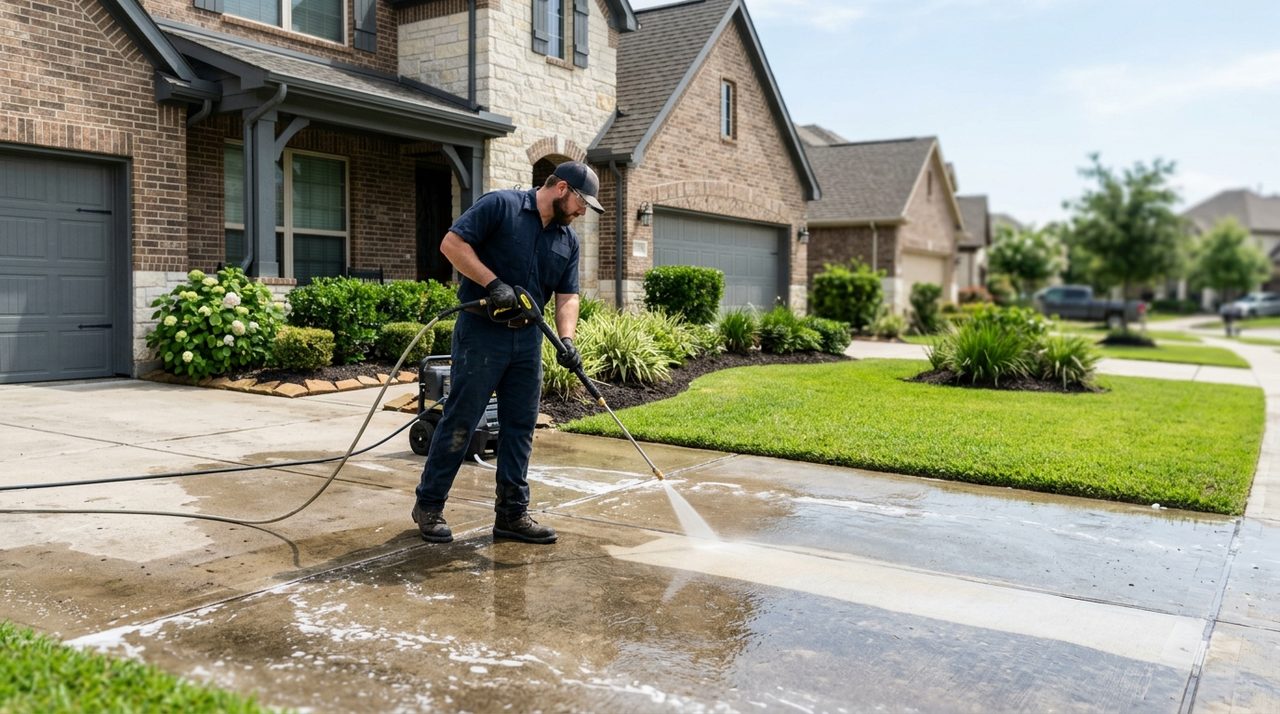
- Median home built
- 1986
- Median home value
- $362,186
- FEMA flood zone
- X (low)
- Typical cost (est.)
- $150–$900 depending on scope
- Most common local issue
- Efflorescence & clay-mineral staining on aged slab driveways and brick facades
Ranked by verified Google rating × review volume × verification tier. How we rank →
Some highly-rated pros serve Westchase from nearby and may not keep a Westchase street address. Those are listed under "Also serving Westchase" with their real city and distance, so you always know where each business is based.
Min rating:
10 resultsBased in Westchase
Closed
1755 Cres Plaza Dr, Houston, TX 77077
Closed
9809 Richmond Ave, Houston, TX 77042
Also serving Westchase
Highly-rated pros based nearby who cover Westchase. Distance shown from the Westchase area.
Open Now
Serving Westchase Based in Sharpstown · 1.8 mi away
Serving Westchase Based in Sharpstown · 1.9 mi away
Closed
Serving Westchase Based in Alief · 2 mi away
Serving Westchase Based in Spring Branch · 2.5 mi away
Open Now
Serving Westchase Based in Spring Branch · 2.5 mi away
Open Now
Serving Westchase Based in Briargrove · 3.2 mi away
Serving Westchase Based in Alief · 3.7 mi away
Pressure Washing in Westchase: What You Should Know
Clay-Wicked Efflorescence on 1970s–1990s Driveways and Brick Facades
Why it matters to you
Nearly every home in Westchase sits on a slab poured directly over Houston Black expansive clay. As the soil wets and dries through Houston's feast-or-famine rain cycles, mineral salts wick upward through the concrete slab and mortar joints in aging brick facades — leaving white efflorescence deposits and red-clay mud staining that routine garden-hose rinsing cannot touch. On homes built in the 1970s and 1980s, the original concrete driveways are porous enough that these deposits have had decades to accumulate and bond.
What a good pro does
A qualified operator will apply a diluted acidic pre-treatment (typically a phosphoric or citric acid wash) to break the mineral bond before low-to-moderate pressure rinsing — not a straight cold-water blast, which drives surface salts deeper into pores. On brick facades, the same controlled-pressure soft-wash approach protects aging mortar joints. Texas does not license pressure washing as a standalone trade, but operators using chemical pre-treatments at pesticide-grade concentrations should hold a Texas Department of Agriculture (TDA) applicator credential; ask to see it.
Sources: Texas Commission on Environmental Quality, City of Houston Permitting Center
Gloeocapsa Magma Black Streaking on Aging Composition Shingle Roofs
Why it matters to you
The median Westchase home was built in 1986, meaning a large share of the neighborhood is on its second or third asphalt shingle roof — surfaces now 10 to 25 years old and increasingly colonized by Gloeocapsa magma, the black-streaking algae that thrives in Houston's average annual humidity above 75 percent. Left untreated, the algae degrades shingle granules and shortens roof life. High-pressure washing on these older shingles accelerates granule loss and can void remaining manufacturer warranties.
What a good pro does
The correct approach is a low-pressure soft-wash (under 500 PSI at the nozzle) using a sodium hypochlorite and surfactant solution, followed by a post-treatment algaecide rinse to slow regrowth — Houston's climate means black streaks can reappear within two to three years without it. No City of Houston permit is required for residential roof soft-washing, but confirm the operator carries general liability insurance sized to cover roof-damage claims; this work is done on the plane of the roof and fall-protection practices matter.
Sources: City of Houston Permitting Center, International Residential Code (as adopted by City of Houston)
Oil, Tire, and UV-Baked Staining on Aged Concrete in High-Density Residential Blocks
Why it matters to you
With a Census owner-occupancy rate of only 31.7 percent, Westchase has a high proportion of rental single-family homes, apartments, and townhomes where driveway and parking-pad maintenance is often deferred. On slab-on-grade driveways poured in the 1970s through 1990s, years of vehicle oil, tire rubber, and Houston's intense UV exposure create layered staining that standard cold-water pressure washing cannot lift. Winter Storm Uri (2021) also accelerated surface spalling on older Westchase concrete, opening micro-cracks that trap organic debris.
What a good pro does
Hot-water pressure washing (180°F+) combined with alkaline degreaser pre-treatment is the effective approach for oil-saturated aged concrete — expect a 20 to 40 percent cost premium over a standard cold-water driveway wash, bringing a typical 1,000-square-foot driveway job to an estimated $200–$490. Critically, wash water containing degreasers cannot be directed into Westchase's street storm drains, which flow to Harris County bayous and ultimately Galveston Bay; TCEQ regulations and City of Houston ordinance both prohibit detergent-laden discharge into storm infrastructure, and a compliant operator will use containment berms or a wet-vac reclaim system on degreaser jobs.
Sources: Texas Commission on Environmental Quality, City of Houston Permitting Center
Subdivision-by-Subdivision Deed Restriction Compliance for Exterior Cleaning
Why it matters to you
Unlike master-planned communities in Sugar Land or Katy where a single HOA sets uniform appearance standards across thousands of lots, Westchase has no umbrella residential HOA — instead, individual subdivisions carry their own deed restrictions, some dating to the 1970s, each with different language about exterior maintenance, fence materials, and approved modification methods. A homeowner on one Westchase street may face a 30-day cure notice for an algae-stained driveway from an active subdivision association, while a neighbor two blocks away has no enforceable appearance mandate at all.
What a good pro does
Before scheduling any exterior wash — especially if a fence restain, roof treatment, or driveway sealer follows — pull your subdivision's deed restrictions from Harris County deed records to confirm whether an architectural review submission is required for surface treatments or follow-on coatings. The Westchase Community Association and the Westchase District (a Texas Legislature-created commercial management district) do not govern individual residential lots; your obligation, if any, runs to your specific platted subdivision's association. A pressure-washing contractor familiar with the area should ask for your subdivision name at the estimate stage, not after the job is done.
Sources: Local HOA / deed restrictions (see area profile), City of Houston Permitting Center
Pressure Washing in Westchase: What You Should Know
Hiring pressure washing in Westchase? Westchase is a large, mixed-use district near Beltway 8 composed of multiple separately platted subdivisions, each with its own potential HOA and deed restrictions. Housing stock ranges from 1970s–1990s single-family homes to newer multifamily and townhome developments, nearly all built on slab-on-grade foundations. Contractors must verify deed restrictions and HOA rules on a per-subdivision basis, as there is no single umbrella association governing the entire area.
- Housing era
- Primarily 1970s through 1990s, with continued multifamily and townhome development into the 2000s and…
- Foundation
- Slab-on-grade (nearly universal for post-1960s suburban Harris County construction)
- Flood zone
- FEMA Zone X (low flood risk) per official NFHL data
- Permits
- City of Houston — Houston Permitting Center
Housing stock & systems
Building era
Primarily 1970s through 1990s, with continued multifamily and townhome development into the 2000s and 2010s.
Typical style
Contemporary suburban: traditional-to-transitional single-family homes, brick or stucco façade garden-style apartments, and townhomes.
Foundations
Slab-on-grade (nearly universal for post-1960s suburban Harris County construction).
Common systems
Central A/C with gas furnace, copper or CPVC plumbing transitioning to PEX in renovations, standard residential electrical panels (100–200 amp). Older 1970s–1980s homes may still have original galvanized supply lines or polybutylene piping requiring replacement.
What that means for repairs
Kitchen and bath remodels are common in aging 1970s–1980s homes. Plumbing re-pipes (replacing galvanized or polybutylene), HVAC system replacements on units past their 20-year lifespan, and slab foundation repair driven by Houston's expansive clay soils are frequent project types.
Permits & restrictions
Permit jurisdiction
City of Houston — Houston Permitting Center.
HOA & deed restrictions
No single area-wide mandatory HOA exists. The Westchase District is a Texas Legislature-created management district focused on commercial improvements, not residential lot governance. The Westchase Super Neighborhood Council is a City of Houston advisory body. A Westchase Community Association (501(c)(4), formed 1974) exists, but its authority over individual residential lots is not clearly documented. Individual subdivisions within the Westchase area may have their own mandatory HOAs — must be verified per subdivision via Harris County deed records.
Historic districts
No City of Houston historic district designation confirmed.
Contractor note
Contractors must confirm which subdivision a property belongs to and check for active deed restrictions and HOA architectural review requirements before beginning exterior work, fencing, or additions. The lack of a single governing HOA means rules vary block by block.
Flood & weather
FEMA flood zone
FEMA Zone X (low flood risk) per official NFHL data. Drainage is influenced by local bayous and channels within the Harris County Flood Control system; proximity to specific drainage channels should be verified on a per-property basis.
Hurricane Harvey impact
No Westchase-specific street-level Harvey flood impact documentation was found in available sources. The area is east of the Addicks and Barker Reservoir watersheds and experienced varying levels of impact during Harvey. Flood history should be verified through Harris County Flood Control District records and individual property disclosure for any specific address.
Heat & humidity load
Sustained summer heat puts heavy strain on aging HVAC systems in 1970s–1980s homes; capacitor failures, refrigerant leaks, and compressor burnout are common seasonal calls. Slab-on-grade foundations on Houston's expansive clay soils experience movement during summer drought cycles, leading to door/window sticking and drywall cracks that trigger foundation inspection and repair demand.
Working with contractors here
Westchase keeps contractors busy with the bread-and-butter maintenance demands of aging 1970s–1990s suburban homes: HVAC replacements, whole-house plumbing re-pipes, and slab foundation repair. The area's slab-on-grade construction on expansive clay means foundation work is a recurring need, especially after drought-to-rain cycles. Roof replacements on 20–30-year-old composition shingle roofs are common, and many homeowners are upgrading aging electrical panels to support modern loads. Because Westchase comprises many separate subdivisions, contractors must scope each job with attention to the specific subdivision's deed restrictions and any HOA architectural review — exterior modifications, fence styles, and material choices may vary significantly from one block to the next.
Local Tip
Always ask for a written estimate before work begins. Texas contractors are required to provide one on jobs over $1,000.
About Westchase
Westchase is a large, mixed-use district near Beltway 8 composed of multiple separately platted subdivisions, each with its own potential HOA and deed restrictions. Housing stock ranges from 1970s–1990s single-family homes to newer multifamily and townhome developments, nearly all built on slab-on-grade foundations. Contractors must verify deed restrictions and HOA rules on a per-subdivision basis, as there is no single umbrella association governing the entire area.
- Median year built
- 1986
- Median home value
- $362,186
- Owner-occupied
- 31.7%
- Population
- 104,146
- Housing units
- 54,163
- Median income
- $65,848
Source: U.S. Census Bureau, ACS 5-Year 2023
Flood & storm risk
FEMA Zone XLow flood riskMost of Westchase maps to FEMA Zone X (low mapped flood risk), but Houston's flash-flood reality means even low-risk blocks benefit from smart drainage and storm-hardened installs.
Source: FEMA National Flood Hazard Layer (NFHL). Flood zones vary by parcel — verify your individual FIRM panel.
Frequently Asked Questions
Do I need a permit from the City of Houston to pressure wash my Westchase home's driveway or exterior?
No permit is required from the Houston Permitting Center for routine residential pressure washing of driveways, siding, fences, or roofs in Westchase — it is not a regulated trade activity under City of Houston building code. However, if the wash contractor is applying chemical algaecides or degreasers that qualify as pesticides under Texas Department of Agriculture rules, the applicator may need a TDA pesticide license, so ask any prospective contractor to confirm their chemical credentials before you hire.
Sources: City of Houston Permitting Center
My Westchase home was built in the early 1980s — is the original concrete driveway too deteriorated to pressure wash safely?
Driveways poured in the 1970s–1980s in Harris County have typically experienced 40-plus years of slab movement from the area's expansive black clay plus surface oxidation from Houston's UV load, which can leave the concrete porous and lightly spalled. A reputable operator should do a quick surface hardness check before running anything above 2,500–3,000 PSI; hot-water or chemical pre-treatment rather than raw pressure is usually the right call for oil and tire staining on concrete this age. Ask specifically whether the crew adjusts PSI for surface condition — that question separates experienced Westchase-area operators from generic services.
My subdivision has deed restrictions — do I need architectural review board approval before scheduling a pressure wash in Westchase?
Most Westchase subdivisions' deed restrictions and HOA rules govern exterior modifications like paint color and fence material rather than routine cleaning, so a standard pressure wash or soft-wash usually does not require an ARC submittal. That said, because Westchase has no single umbrella HOA and rules vary subdivision by subdivision, you should pull your specific deed restrictions through Harris County deed records before doing any work that changes the appearance of the exterior — some CC&Rs do address approved cleaning methods for roofs or specify that high-pressure washing is prohibited on certain surfaces.
Sources: Local HOA / deed restrictions (see area profile)
Westchase is mapped mostly FEMA Zone X — should I still worry about flood-mud staining or storm debris on my exterior after a heavy Houston rain event?
Zone X means your property is outside the 100-year mapped floodplain and you are unlikely to see the bathtub-ring flood-line staining common in AE-zone neighborhoods like Meyerland, so full mud-line removal is less of a typical concern here. However, Houston's flash-flood events — including the May 2024 derecho that dropped several inches of rain across West Houston in hours — still deposit tannic leaf stain, wind-driven clay mud, and organic debris into brick joints and concrete surfaces even on low-risk lots, making a post-storm exterior wash a worthwhile seasonal maintenance step.
What time of year is best to schedule pressure washing in Westchase, and how quickly does mold come back in Houston's climate?
Late February through April is generally the best window in West Houston — temperatures are mild enough for post-treatment biocides to cure properly before summer heat and humidity ramp up, and you can address whatever organic buildup accumulated over the wet fall and winter. Without a follow-up biocide application (sodium hypochlorite or a dedicated algaecide), Gloeocapsa magma black streaking and green mold typically re-establish on shaded Westchase driveways and north-facing siding within 6–12 months given the area's annual average humidity above 75%, so ask every operator whether post-treatment is included in their quote or priced separately.
Can a pressure washing crew legally dump rinse water containing degreasers into the street gutter in front of my Westchase home?
No — TCEQ regulations and Houston city ordinance prohibit wash water containing chemical degreasers, soaps, or oil from entering storm drains, which in West Houston flow directly toward bayous and ultimately Galveston Bay. Any contractor handling degreaser-based driveway cleaning or chemical soft-wash on your property is required to contain and properly dispose of that wash water, not let it sheet-flow to the curb inlet. If a crew proposes to rinse chemically treated surfaces straight to the street, that is a compliance red flag and potential liability for both the operator and the property owner under TCEQ's TPDES rules.