Open Now
2718 Essex Terrace, Houston, TX 77027
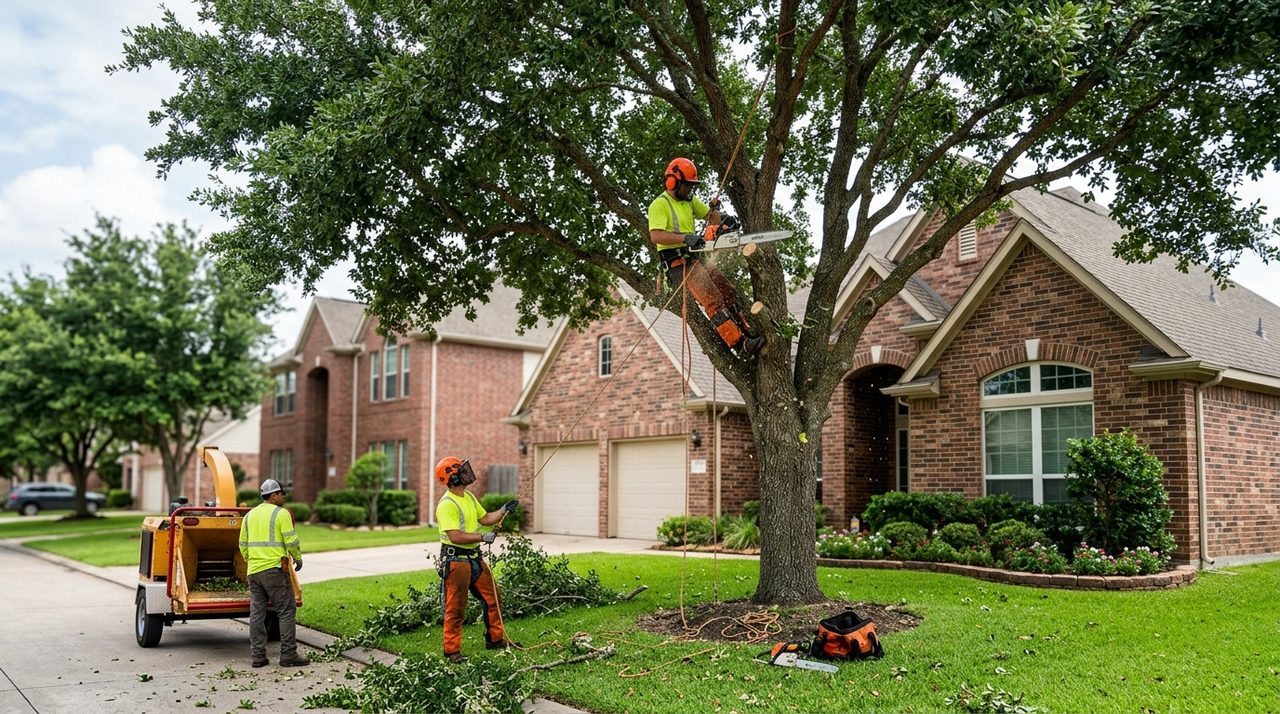
Tree removal in the Galleria looks nothing like it does in a sprawling suburban yard: the area's dense mix of high-rise towers, Mediterranean townhome clusters, and a shrinking stock of 1960s–1970s ranch-style single-family homes on Harris County clay soil means that nearly every job involves navigating a building HOA or condo association's approval process, staging in a parking garage, or threading a crane past glass curtain walls. The City of Houston does not require a homeowner permit for routine private-property tree removal, but each of the area's condo and townhome associations runs its own independent approval process that can delay work just as long as any municipal ordinance. Understanding the unique vertical-living logistics and the few remaining mature trees on older single-family lots is what separates a smooth removal from a costly work stoppage.
Ranked by verified Google rating × review volume × verification tier. How we rank →
Some highly-rated pros serve Galleria from nearby and may not keep a Galleria street address. Those are listed under "Also serving Galleria" with their real city and distance, so you always know where each business is based.
2718 Essex Terrace, Houston, TX 77027
550 Post Oak Blvd Suite #402, Houston, TX 77027
Highly-rated pros based nearby who cover Galleria. Distance shown from the Galleria area.
Serving Galleria Based in Tanglewood · 2 mi away
Serving Galleria Based in Bellaire · 2.4 mi away
Serving Galleria Based in West University · 2.6 mi away
Serving Galleria Based in River Oaks · 3.8 mi away
Serving Galleria Based in Lazybrook / Timbergrove · 4.7 mi away
Serving Galleria Based in Braeswood · 5 mi away
Serving Galleria Based in Lazybrook / Timbergrove · 5.3 mi away
Serving Galleria Based in Lazybrook / Timbergrove · 5.3 mi away
Why it matters to you
The Galleria area has no single mandatory HOA governing the whole neighborhood. Instead, each high-rise tower, townhome community, and gated pocket operates under its own condo declaration or deed restrictions with independent architectural review timelines, approved contractor lists, and insurance thresholds. A tree removal that would take one phone call in an unincorporated part of Harris County can stall for two to four weeks here while a condo association board reviews the request and verifies that the contractor carries the specific liability limits — sometimes $2 million or higher — required by that particular building.
What a good pro does
Before scheduling any crew, request a copy of the relevant condo declaration or HOA governing documents to identify exactly which committee approves tree work, what paperwork is required, and what insurance certificate language the building demands. A reputable arborist working regularly in the Galleria will already have experience submitting these packets and can provide a certificate of insurance tailored to the building's stated requirements — confirming this upfront saves the homeowner the cost of a missed mobilization day.
Sources: Local HOA / deed restrictions (see area profile), City of Houston Permitting Center
Why it matters to you
The remaining ranch-style single-family homes in the Galleria's older residential pockets — predominantly built in the 1960s and 1970s on slab-on-grade foundations — sit on Harris County's expansive Beaumont Black clay soil. Mature water oaks and Chinese tallow trees that have had 50-plus years to establish can push surface-feeding roots under slab edges and into clay sewer laterals that predate modern PVC pipe. Homeowners on these lots sometimes discover that the motivation to remove a large tree (foundation cracking, slow drains) is directly connected to the tree's root system, meaning a tree-removal scope should be evaluated alongside plumbing and foundation conditions rather than in isolation.
What a good pro does
A qualified ISA Certified Arborist should probe the soil around the root zone and review any visible slab cracking pattern before finalizing removal scope. Stump grinding to at least 12 inches below grade — quoted separately at roughly $150–$400 per stump (estimate) — is essential on these lots to prevent resprouting and to reduce continued root pressure on adjacent concrete; for Chinese tallow specifically, the stump should also be treated with an approved herbicide immediately after grinding because cut stumps resprout aggressively in Houston's humid climate.
Sources: Texas Commission on Environmental Quality, Harris County Flood Control District
Why it matters to you
The Galleria's townhome clusters — dense Mediterranean and traditional-brick communities built mostly in the 1990s and 2000s — have limited setbacks and shared courtyard plantings where a single storm-toppled tree can block fire-lane access or damage multiple attached units at once. After the May 2024 derecho and Hurricane Beryl 2024, demand across the Houston metro surged and regional pricing ran 40–80% above normal rates for weeks, with out-of-state crews flooding in offering no local accountability. Townhome association managers who had not pre-qualified a tree contractor were left competing for appointment slots while debris blocked egress.
What a good pro does
Townhome association boards and individual owners should identify and pre-qualify an ISA-certified Houston-based arborist — verifying current liability insurance and a local physical address — before the next storm season rather than after the fact. Get two or three written estimates in a non-emergency window so you have a baseline to compare against any post-storm quote; if a post-storm bid is more than 60% above that baseline, it is worth waiting a few additional days for the demand surge to ease unless there is an active hazard requiring emergency action.
Sources: Local HOA / deed restrictions (see area profile), City of Houston Permitting Center
Why it matters to you
Ornamental and courtyard trees planted in the podium-level landscaping of Galleria-area high-rises — a common design element in towers built from the 1980s through the 2010s — present logistical challenges that simply do not exist on a typical residential lot. Crane access may require coordinating with building management to close a valet lane or loading dock; debris cannot be chipped and blown onto a lawn but must be hand-carried through freight elevators or lowered by rigging to a staging area; and many buildings enforce strict weekday-only work hours of 9 AM to 5 PM, stretching a one-day job into two or three. These constraints translate directly into higher labor costs — expect estimates at the upper end of the $750–$1,800 mid-size tree range or above (estimate).
What a good pro does
When soliciting bids for podium or courtyard tree removal, ask each contractor to describe their rigging and debris-removal plan in writing before signing anything, and confirm that the plan has been reviewed and pre-approved by the building's property manager. Arborists with high-rise experience in the Galleria and Uptown corridor will already know to request a freight-elevator reservation and a parking-garage staging window; those without that experience will discover the constraints on mobilization day, which typically results in delays billed to the homeowner.
Sources: Local HOA / deed restrictions (see area profile), City of Houston Permitting Center
Hiring tree removal in Galleria? The Galleria/Uptown area is dominated by high-rise and mid-rise condominiums, townhome communities, and a small number of older single-family pockets, creating a uniquely diverse home services landscape. Each building and community has its own HOA or condo association with distinct rules governing contractor access, work hours, and architectural approvals. Homeowners must coordinate closely with building management for any interior or exterior work, especially in high-rise settings where logistics, freight elevators, and insurance requirements add complexity.
Building era
1980s–2010s, with ongoing new construction; some surrounding single-family pockets date to 1960s–1970s.
Typical style
High-rise and mid-rise condominiums (contemporary and modern-traditional glass/stucco), townhome clusters (Mediterranean, traditional brick, transitional contemporary), and a few remaining 1960s–1970s ranch-style single-family homes.
Foundations
High-rises utilize engineered deep pier/caisson systems with podium slabs; townhomes and single-family homes are predominantly slab-on-grade. Not confirmed with Galleria-specific engineering records — verify per building.
Common systems
Central HVAC with individual units in condos (often fan coil or split systems); copper and CPVC plumbing in newer towers, galvanized possible in older 1980s buildings; modern electrical panels in towers with dedicated metering per unit.
What that means for repairs
Condo interior renovations (kitchen and bath remodels, flooring upgrades) are the most common projects, driven by aging 1980s–1990s finishes in older towers. Older single-family pockets see teardown-and-rebuild or conversion to townhome developments.
Permit jurisdiction
Houston Permitting Center (City of Houston).
HOA & deed restrictions
No single mandatory HOA covers the entire Galleria area. Each condo building, townhome community, and gated subdivision has its own mandatory HOA or condo association with independent rules, fees, and architectural review processes. Some older single-family pockets may have only civic clubs or no formal HOA. Status is property-specific — review recorded condo declarations and deed restrictions for each property.
Historic districts
No City of Houston historic district designation confirmed.
Contractor note
Contractors must obtain individual building HOA/condo association approval before beginning work, as each high-rise and community has its own rules on work hours, freight elevator scheduling, insurance requirements, and construction debris removal. Failure to secure approval can result in work stoppages and fines.
FEMA flood zone
FEMA Zone X (low flood risk) — source: fema_nfhl. The Galleria/Uptown core sits west of central bayou channels, with Buffalo Bayou to the south and substantial commercial drainage infrastructure in the area.
Hurricane Harvey impact
The Galleria/Uptown area was not among the worst-publicized residential devastation zones during Hurricane Harvey (2017). Some commercial buildings and parking structures reported street flooding and water intrusion, but large-scale residential flood damage was limited compared to nearby neighborhoods like Meyerland and Memorial. Specific building-level impact should be verified through individual condo association records and seller disclosures.
Heat & humidity load
High-rise HVAC systems face heavy demand during Houston's extreme summer heat and humidity; aging fan coil units in 1980s–1990s towers are prone to condensate drain clogs and mold issues. Flat-roof townhomes and podium-level units require regular roof membrane and drainage inspections to prevent heat-related deterioration and water intrusion.
Working with contractors here
The Galleria area's contractor workload is heavily weighted toward condo interior remodels — kitchen and bath renovations, flooring replacement, and HVAC unit upgrades in aging 1980s and 1990s high-rises. Plumbing repipes are increasingly common in older towers transitioning from original galvanized or early CPVC systems. Townhome communities generate steady demand for exterior stucco repair, roof replacement, and fence/gate maintenance. Contractors must plan for high-rise logistics including freight elevator scheduling, limited staging areas, and strict building-imposed work hours, often 9 AM–5 PM weekdays only. Obtaining proof of insurance meeting each building's specific requirements is essential before mobilizing to any job site in this area.
Local Tip
Always ask for a written estimate before work begins. Texas contractors are required to provide one on jobs over $1,000.
The Galleria/Uptown area is dominated by high-rise and mid-rise condominiums, townhome communities, and a small number of older single-family pockets, creating a uniquely diverse home services landscape. Each building and community has its own HOA or condo association with distinct rules governing contractor access, work hours, and architectural approvals. Homeowners must coordinate closely with building management for any interior or exterior work, especially in high-rise settings where logistics, freight elevators, and insurance requirements add complexity.
Source: U.S. Census Bureau, ACS 5-Year 2023
Most of Galleria maps to FEMA Zone X (low mapped flood risk), but Houston's flash-flood reality means even low-risk blocks benefit from smart drainage and storm-hardened installs.
Source: FEMA National Flood Hazard Layer (NFHL). Flood zones vary by parcel — verify your individual FIRM panel.
After a hurricane makes landfall, tree removal demand across the Houston metro surges overnight, so contracting a licensed crew in Galleria for pre-storm hazard removal is far faster and less expensive than emergency post-storm work. Focus removal priority on trees with crowns that extend over the roofline or within one tree-length of the structure, which is where wind-throw damage concentrates. In-city Galleria work falls under City of Houston floodplain and permitting rules.
After any severe thunderstorm drops large limbs in your yard in Galleria, have a licensed contractor assess the parent tree for hidden decay before assuming the remaining structure is sound. Snap failures during the May 2024 derecho frequently involved trees that had experienced prior lightning strikes or previous partial limb loss that had gone uninspected. Confirm the current FEMA panel for your Galleria parcel — the area maps to Zone X, but adjacent lots can differ.
Freeze-cracked bark and split branch unions caused by Uri 2021 left thousands of Houston-area trees with compromised structural integrity that persisted well into subsequent years, so Galleria homeowners should request a post-freeze assessment even if no immediate failure occurred. A licensed contractor can identify cold-induced damage that will accelerate decay and create a hazard within one to three growing seasons. In-city Galleria work falls under City of Houston floodplain and permitting rules.
Sources: FEMA National Flood Hazard Layer (NFHL), Ready.gov -- Hurricanes, CenterPoint Energy -- Storm Center, City of Houston -- Emergency Preparedness, Ready.gov -- Winter Weather, Harris County Flood Control District
Houston-specific estimators to plan your project before you call a pro. All results are planning estimates — a licensed local pro confirms the details on site.
Grouped by mature root aggression & water demand.
Trunk center to the nearest exterior wall.
The root zone likely reaches your foundation's soil during Houston's dry summers, when clay shrinks most. Watch for sticking doors and diagonal cracks, keep soil moisture even with a soaker hose during drought, and have a foundation pro evaluate if you see any movement.
Find a Houston foundation pro →This is a planning estimate only — actual requirements depend on an on-site assessment by a licensed Houston pro. Guidance is based on general species root behavior in expansive clay, not a soil test.
Disconnect & drain every outdoor hose bib
Remove hoses, drain the spigots, and cover each with an insulated faucet sock. Un-drained hose bibs are the #1 burst point in a Houston freeze.
Insulate exposed pipes in the attic & garage
Wrap any pipe in an unconditioned space (attic runs, garage walls) with foam sleeves. Houston homes rarely insulate these because they only matter a few nights a year — which is exactly why they burst.
Open cabinet doors & keep a pencil-width drip
On hard-freeze nights, open kitchen/bath cabinets so warm air reaches the pipes and let faucets on exterior walls drip to relieve pressure.
Protect the attic/garage water heater & its lines
An attic or garage tank sits in unconditioned space. Insulate the cold-inlet and hot-outlet lines and confirm the emergency drain pan is clear so a leak doesn't reach the ceiling.
This is a planning estimate only — actual requirements depend on an on-site assessment by a licensed Houston pro. If a pipe has already burst, shut off your main water supply and call a licensed Houston plumber immediately — freeze bursts flood fast.
Sources: City of Houston Permitting CenterLocal HOA / deed restrictions (see area profile)
Sources: Local HOA / deed restrictions (see area profile)
Sources: FEMA National Flood Hazard Layer (NFHL)Local HOA / deed restrictions (see area profile)
Sources: Local HOA / deed restrictions (see area profile)