Serving Hempstead Based in Waller · 11.4 mi away
Best Foundation Repair in Hempstead, TX
Hempstead's housing stock spans century-old pier-and-beam frames in the original city core to slab-on-grade tract homes built along the US-290 corridor in the 2000s and 2020s — two fundamentally different foundation systems with two very different failure modes, all sitting on Waller County's expansive Houston Black clay. With a Census median build year of 1988 and a wide spread of home ages, foundation work here ranges from long-overdue pier-and-beam releveling on older in-town properties to differential slab settlement on newer subdivisions where root systems and drought cycles are just beginning to bite. Whether your parcel falls inside City of Hempstead limits or unincorporated Waller County changes who inspects the work and how long that process takes — details this page spells out before you sign a repair contract.
Verified against Google Business data
Updated 2026
See the 10 Foundation Repair Serving Hempstead 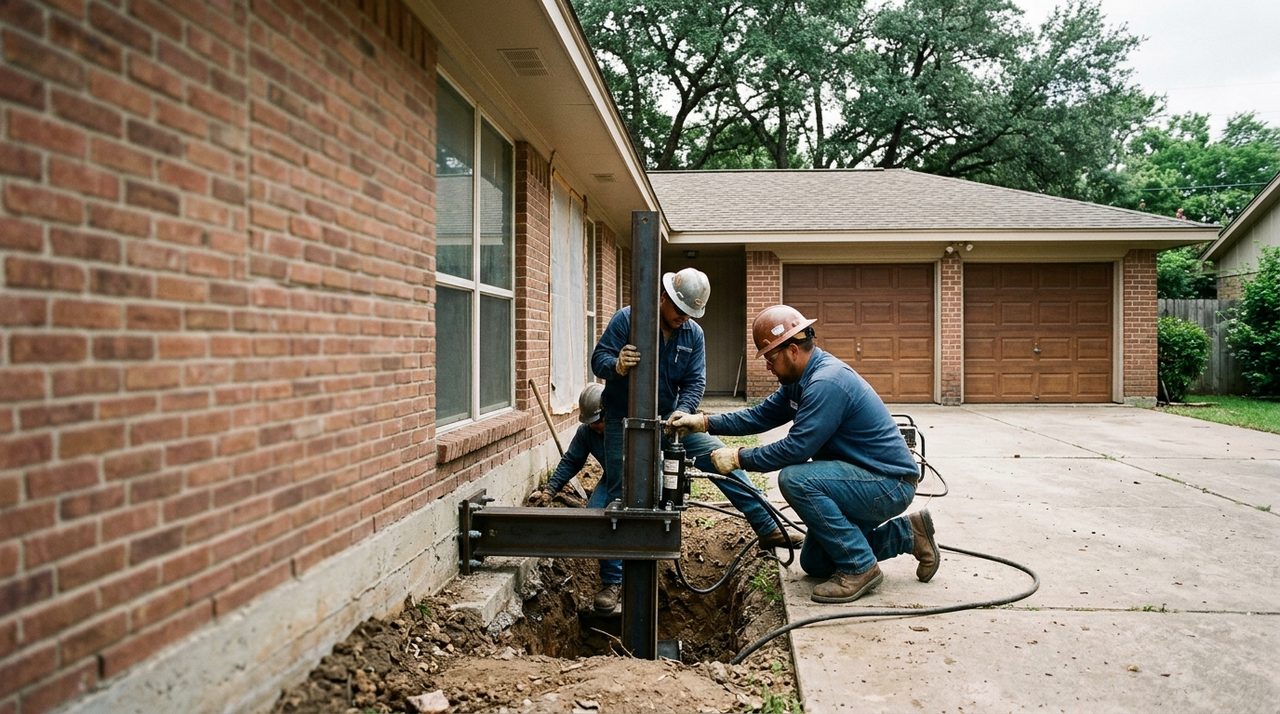
- Median home built
- 1988
- Median home value
- $145,700
- FEMA flood zone
- X (low)
- Typical cost (est.)
- $3,500–$25,000 depending on method and pier count
- Most common local issue
- Pier-and-beam releveling on pre-1970 in-town homes; slab perimeter void on newer US-290 corridor tract builds
Ranked by verified Google rating × review volume × verification tier. How we rank →
Some highly-rated pros serve Hempstead from nearby and may not keep a Hempstead street address. Those are listed under "Also serving Hempstead" with their real city and distance, so you always know where each business is based.
Min rating:
10 resultsAlso serving Hempstead
Highly-rated pros based nearby who cover Hempstead. Distance shown from the Hempstead area.
Closed
Serving Hempstead Based in Magnolia · 19.2 mi away
Serving Hempstead Based in Magnolia · 19.5 mi away
Open Now
Serving Hempstead Based in The Woodlands · 23.1 mi away
Closed
Serving Hempstead Based in Cypress · 23.7 mi away
Closed
Serving Hempstead Based in The Woodlands · 24.1 mi away
Closed
Serving Hempstead Based in Cypress · 24.7 mi away
Closed
Serving Hempstead Based in Magnolia · 24.8 mi away
Closed
Serving Hempstead Based in Katy · 24.8 mi away
Closed
Serving Hempstead Based in Katy · 26.1 mi away
Foundation Repair in Hempstead: What You Should Know
Two Foundation Types on the Same Block — Knowing Which Repair Method Actually Applies to Your Home
Why it matters to you
Hempstead's older in-town blocks — many platted before WWII — are heavily pier-and-beam construction, while tract subdivisions built along US-290 from the 2000s onward are slab-on-grade. A contractor experienced only in slab underpinning may misread the symptoms on a pier-and-beam home (bouncy floors, out-of-square door frames) and propose pressed concrete pilings or steel push piers that are simply the wrong tool for a system that needs wood-post replacement and beam releveling instead. With a median home value of only $145,700 (ACS 2023), an over-specified or mismatched repair can cost more than a meaningful percentage of the home's value.
What a good pro does
Before accepting any proposal, ask the contractor to identify your foundation type in writing and explain how their proposed method addresses that specific system. Pier-and-beam releveling typically involves replacing deteriorated wood posts with adjustable steel shims or concrete piers and re-leveling the girder beams — a scope quite different from slab underpinning. Get at least three written proposals with itemized pier counts, material specs, and depth targets so you can compare apples to apples.
Sources: Municipal permit office (see area profile), Texas Department of Licensing & Regulation
Waller County's Expansive Clay and Drought Cycles Creating Perimeter Voids on Newer Slab Homes
Why it matters to you
The US-290 corridor subdivisions built in the 2000s and 2010s sit on the same Houston Black clay formation that affects the entire northwest Houston metro. After the 2022–2023 La Niña drought cycle baked the soil, many perimeter beams lost soil contact as the clay shrank away from the slab edge. When seasonal rains returned, water channeled into those gaps rather than infiltrating gradually, eroding the bearing zone under the beam. Brick veneer cracks and sticking doors on homes that are only 10–20 years old are a common early symptom on these US-290 tract builds.
What a good pro does
A qualified foundation contractor should probe the perimeter for voids with a moisture meter and visual inspection before recommending underpinning. In many cases, targeted polyurethane foam injection ($2,000–$5,000 estimated for a moderate job) can fill voids and stabilize the perimeter without full pier installation. Equally important: establishing a soaker-hose irrigation ring around the foundation perimeter during future dry spells is the primary prevention tool — most homeowners don't start until cracking is already visible.
Sources: International Residential Code (as adopted by City of Houston)
Older In-Town Homes with Cast-Iron Under-Floor Drains — Ruling Out Plumbing Leaks Before Attributing Movement to Soil
Why it matters to you
Pre-1970 Hempstead homes — many still on pier-and-beam with cast-iron or galvanized drain lines running through the crawl space — are vulnerable to slow drain-line leaks that saturate the soil directly under the floor system. Winter Storm Uri (2021) burst pipes across the region, and many repairs were cosmetic; cracked under-floor lines left untreated continue to wet the clay, causing localized heave or soft spots that mimic structural settlement. A foundation diagnosis that skips plumbing can lead to a repair that fails within a few years.
What a good pro does
Before signing any repair contract on a pre-1990 Hempstead home, budget $250–$400 (estimated) for a hydrostatic plumbing test — a licensed plumber pressurizes the drain system and monitors for pressure loss. Any repair work that involves re-routing or testing under-slab or under-floor plumbing must be performed or overseen by a plumber licensed through the Texas State Board of Plumbing Examiners (TSBPE). Do not let a foundation-only contractor diagnose a plumbing leak.
Sources: Texas State Board of Plumbing Examiners, Municipal permit office (see area profile)
Permit Jurisdiction Split Between City of Hempstead and Waller County — Knowing Which Office Governs Your Repair
Why it matters to you
Unlike the City of Houston's centralized Development Services Department, Hempstead's permit landscape is split: properties inside City of Hempstead corporate limits pull foundation repair permits through the City of Hempstead Building Department, while properties in unincorporated Waller County go through Waller County Engineering and Development Services. The Houston Permitting Center has no authority here. Contractors accustomed to working in Harris County or the City of Houston sometimes pull the wrong permit — or none at all — leaving homeowners with unpermitted work that surfaces on a resale inspection. With only 33.4% of Hempstead housing owner-occupied (ACS 2023), many properties change hands frequently, making resale disclosure exposure a real risk.
What a good pro does
Before work begins, confirm your parcel's jurisdiction using deed records and Waller County Appraisal District data, then verify with the appropriate permit office that your contractor has an active permit in hand — not just a promise to pull one. Texas does not issue a standalone state license for foundation repair contractors (TDLR does not separately credential this trade for residential work), so permit documentation and insurance verification are the primary homeowner protections. Any platted US-290 corridor subdivision with a recorded POA may also require architectural approval before perimeter trenching begins — check deed restrictions at the Waller County Clerk's office.
Sources: Municipal permit office (see area profile), Texas Department of Licensing & Regulation, Local HOA / deed restrictions (see area profile)
Foundation Repair in Hempstead: What You Should Know
Hiring foundation repair in Hempstead? Hempstead spans historic in-town blocks, newer tract subdivisions along the US-290 growth corridor, and large rural tracts, creating a wide range of home service needs. Homeowners must verify whether their property falls within City of Hempstead limits or unincorporated Waller County, as permit requirements and deed restrictions differ significantly. The mixed housing stock—from pre-WWII frame homes to 2020s production builds—means contractors should be prepared for varied foundation types, electrical systems, and plumbing configurations.
- Housing era
- Mixed
- Foundation
- Mixed — newer subdivision homes are predominantly slab-on-grade consistent with regional practice
- Flood zone
- FEMA Zone X (low flood risk) — source
- Permits
- Properties within City of Hempstead limits
Housing stock & systems
Building era
Mixed: pre-WWII through 2020s; older homes in the original City of Hempstead core, newer tract subdivisions along the US-290 corridor from the 2000s onward.
Typical style
One- and two-story contemporary tract homes (brick veneer with siding) in newer subdivisions; ranch-style and small frame houses in older city blocks and rural areas.
Foundations
Mixed — newer subdivision homes are predominantly slab-on-grade consistent with regional practice; older in-town and rural homes may use pier-and-beam. Not confirmed by a specific local source; verify via Waller County Appraisal District records.
Common systems
Newer homes: central HVAC, PEX or CPVC plumbing, 200-amp electrical panels. Older homes: may have window units or older central systems, galvanized or copper plumbing, and 100-amp or lower electrical service. Manufactured homes on rural tracts may have specialized HVAC and plumbing configurations.
What that means for repairs
Older in-town Hempstead homes often need electrical upgrades, foundation releveling (pier-and-beam), and plumbing replacement. Newer subdivision homes are more likely to need cosmetic updates or warranty-period repairs. Rural properties may require well and septic system maintenance or conversion to municipal utilities where available.
Permits & restrictions
Permit jurisdiction
Properties within City of Hempstead limits: City of Hempstead Building Department. Properties in unincorporated Waller County: Waller County Engineering / Development Services. Houston Permitting Center does NOT apply here.
HOA & deed restrictions
No single mandatory HOA covers Hempstead or the surrounding Waller County area. HOA/POA presence is subdivision-specific; platted subdivisions along the US-290 corridor are more likely to have recorded deed restrictions and a mandatory POA. Older in-town lots and rural tracts often have minimal or no HOA governance. Verify at the parcel level using deed records, Waller County Clerk filings, and the TREC HOA database at hoa.texas.gov.
Historic districts
No City of Houston historic district designation confirmed. Hempstead is outside Houston city limits. No local historic district designation was identified in research; check with the City of Hempstead for any local preservation ordinances.
Contractor note
Contractors must first confirm whether a property is within City of Hempstead corporate limits or unincorporated Waller County, as permit requirements, inspection processes, and code enforcement differ. Septic system work on rural tracts requires coordination with Waller County environmental health.
Flood & weather
FEMA flood zone
FEMA Zone X (low flood risk) — source: fema_nfhl. Hempstead and much of Waller County sit on relatively higher ground northwest of Houston, draining toward the Brazos River watershed and local creeks rather than Houston's urbanized bayou network. Individual parcels near creeks or low-lying areas should still be verified against current FEMA FIRMs.
Hurricane Harvey impact
No sources document significant neighborhood-wide Harvey flooding for Hempstead or the NW Waller County fringe. Media and public discussion of Harvey's catastrophic flooding focused on Harris County and areas along major bayous and reservoirs. Hempstead's higher elevation and Brazos-watershed drainage likely limited impacts, but specific street-level inundation data should be verified through FEMA Harvey high-water layers and seller's disclosure for any given property.
Heat & humidity load
Extreme Houston-area summer heat drives heavy HVAC demand across all housing types. Older pier-and-beam homes may experience greater subfloor moisture issues. Newer slab-on-grade homes in subdivisions with limited tree canopy face intense solar loading, increasing cooling costs and accelerating roof wear. Rural properties relying on well systems may see reduced water pressure during peak summer demand.
Working with contractors here
Hempstead's diverse housing stock means contractors encounter everything from century-old frame homes needing full electrical and plumbing overhauls to brand-new tract builds with warranty callbacks. Foundation work is common on older pier-and-beam homes, while newer slab homes may need post-settlement crack repair. The rural-to-suburban transition creates demand for septic-to-sewer conversions, well maintenance, and land-clearing services alongside standard residential trades. Contractors should confirm permit jurisdiction before starting work, as the City of Hempstead and Waller County have different permitting processes and inspection timelines. Travel time from Houston's inner loop should be factored into bids, as Hempstead is roughly 50 miles northwest of downtown Houston.
Local Tip
Always ask for a written estimate before work begins. Texas contractors are required to provide one on jobs over $1,000.
About Hempstead
Hempstead spans historic in-town blocks, newer tract subdivisions along the US-290 growth corridor, and large rural tracts, creating a wide range of home service needs. Homeowners must verify whether their property falls within City of Hempstead limits or unincorporated Waller County, as permit requirements and deed restrictions differ significantly. The mixed housing stock—from pre-WWII frame homes to 2020s production builds—means contractors should be prepared for varied foundation types, electrical systems, and plumbing configurations.
- Median year built
- 1988
- Median home value
- $145,700
- Owner-occupied
- 33.4%
- Population
- 5,899
- Housing units
- 2,061
- Median income
- $58,288
Source: U.S. Census Bureau, ACS 5-Year 2023
Flood & storm risk
FEMA Zone XLow flood riskMost of Hempstead maps to FEMA Zone X (low mapped flood risk), but Houston's flash-flood reality means even low-risk blocks benefit from smart drainage and storm-hardened installs.
Source: FEMA National Flood Hazard Layer (NFHL). Flood zones vary by parcel — verify your individual FIRM panel.
Houston Storm Readiness in Hempstead
Hurricane & flooding
Houston's flash-flood reality means even low-mapped-risk areas like Hempstead, TX can see sheet flow accumulate against a foundation during a slow-moving Gulf system, so verify that your perimeter drainage is clear and properly sloped before hurricane season opens. A TDLR-licensed foundation contractor can add or reposition surface drains to intercept runoff before it softens the clay bearing layer beneath your slab. Confirm the current FEMA panel for your Hempstead parcel — the area maps to Zone X, but adjacent lots can differ.
Severe storms & hail
Hail itself does not crack a concrete foundation, but the insurance repair process — contractors dropping equipment, vibrating compactors near the structure — can disturb marginally stable piers in Hempstead, TX. Coordinate a brief foundation check with a TDLR-licensed contractor before and after any major roof or exterior repair project that involves heavy equipment operating near your home. As a Waller County community, Hempstead may follow county rather than City of Houston storm rebuild rules.
Ice storms & freezes
In Hempstead, TX, where mapped flood risk is low, the primary post-freeze foundation threat is not surface water but slab-leak-driven soil saturation — Uri 2021 caused widespread pipe failures that fed water silently under slabs for days before homeowners noticed. After any hard freeze, have a plumber pressure-test your lines first, then schedule a foundation elevation check if any under-slab leak is confirmed. As a Waller County community, Hempstead may follow county rather than City of Houston storm rebuild rules.
Sources: FEMA National Flood Hazard Layer (NFHL), Ready.gov -- Hurricanes, CenterPoint Energy -- Storm Center, City of Houston -- Emergency Preparedness, Ready.gov -- Winter Weather, Harris County Flood Control District
Free Hempstead Tools & Calculators
Houston-specific estimators to plan your project before you call a pro. All results are planning estimates — a licensed local pro confirms the details on site.
Houston Soil & Tree Proximity Risk Calculator
Open full tool & FAQ →Grouped by mature root aggression & water demand.
Trunk center to the nearest exterior wall.
Moderate risk
The root zone likely reaches your foundation's soil during Houston's dry summers, when clay shrinks most. Watch for sticking doors and diagonal cracks, keep soil moisture even with a soaker hose during drought, and have a foundation pro evaluate if you see any movement.
Find a Houston foundation pro →This is a planning estimate only — actual requirements depend on an on-site assessment by a licensed Houston pro. Guidance is based on general species root behavior in expansive clay, not a soil test.
Houston Freeze Prep & Pipe Insulation Checklist
Open full tool & FAQ →Your freeze checklist — 4 tasks
- 1
Disconnect & drain every outdoor hose bib
Remove hoses, drain the spigots, and cover each with an insulated faucet sock. Un-drained hose bibs are the #1 burst point in a Houston freeze.
- 2
Insulate exposed pipes in the attic & garage
Wrap any pipe in an unconditioned space (attic runs, garage walls) with foam sleeves. Houston homes rarely insulate these because they only matter a few nights a year — which is exactly why they burst.
- 3
Open cabinet doors & keep a pencil-width drip
On hard-freeze nights, open kitchen/bath cabinets so warm air reaches the pipes and let faucets on exterior walls drip to relieve pressure.
- 4
Protect the attic/garage water heater & its lines
An attic or garage tank sits in unconditioned space. Insulate the cold-inlet and hot-outlet lines and confirm the emergency drain pan is clear so a leak doesn't reach the ceiling.
This is a planning estimate only — actual requirements depend on an on-site assessment by a licensed Houston pro. If a pipe has already burst, shut off your main water supply and call a licensed Houston plumber immediately — freeze bursts flood fast.
Frequently Asked Questions
Do I need a permit from the City of Hempstead or Waller County for pier underpinning or mudjacking on my home?
Which office you contact depends entirely on your parcel's location: properties inside City of Hempstead corporate limits go through the City of Hempstead Building Department, while homes on unincorporated Waller County land — including many US-290 corridor tract subdivisions outside city limits — fall under Waller County Engineering and Development Services. The Houston Permitting Center has no authority here. Before signing any repair contract, ask your contractor to confirm jurisdiction using your parcel address, because an unpermitted job can surface as a liability on a title search or TREC disclosure when you sell.
Sources: Municipal permit office (see area profile)
My Hempstead home was built in the 1960s and sits on pier-and-beam. How is the repair process different from what neighbors with slab homes experience?
Pier-and-beam homes in Hempstead's older in-town core are typically releveled by adjusting or replacing the interior wood posts and beams — a process that often involves crawl-space access and can be completed in one to two days, compared to multi-day exterior trenching required for slab pier underpinning. The upside is that interior leveling on pier-and-beam is generally less invasive and can cost less than slab work, with estimates typically in the lower range of a repair budget. However, homes of this era frequently have galvanized or cast-iron drain lines running through the crawl space that should be inspected for leaks before any releveling — a slow drip can cause wood sill rot and recurring settlement that will undo the repair.
Hempstead is mapped FEMA Zone X, so is foundation-related drainage work less urgent here than in flood-prone Houston neighborhoods?
Zone X means Hempstead has low mapped flood risk — there is no FEMA-required elevation certificate for most residential properties here — but it does not mean drainage around your foundation is a low priority. Waller County's expansive Houston Black clay absorbs heavy Waller Creek runoff events poorly, and poor yard grading can still pool water against the perimeter beam after a flash storm, accelerating the void formation that drives slab settlement. Keeping gutters extended and maintaining a positive slope away from the slab edge matters regardless of flood zone.
Several foundation contractors have offered free inspections in my US-290 corridor neighborhood. What specific questions should I ask before accepting a repair proposal?
Ask each contractor to provide a written proposal that states the number of piers, their installed depth in feet, and the method — pressed concrete piling, steel push pier, or helical pier — so you can compare bids on equal terms rather than just total price. Also ask whether they will pull a permit with the City of Hempstead Building Department or Waller County Engineering before work starts, and request proof of general liability and workers' compensation insurance. Because Texas does not issue a standalone state license for foundation repair contractors, insurance and a permit trail are your primary documentation that the work was done to code.
Sources: Texas Department of Licensing & RegulationMunicipal permit office (see area profile)
Does a POA in one of the newer Hempstead-area subdivisions off US-290 have any say over exterior foundation work like perimeter trenching?
Platted subdivisions along the US-290 corridor are more likely to have recorded deed restrictions and a mandatory property owners' association, and some of those restrictions require POA architectural approval before any visible exterior work — including trenching around the foundation perimeter. Check your deed and any HOA documents filed with the Waller County Clerk, or search the TREC HOA database at hoa.texas.gov, before scheduling work. Skipping POA approval when it is required can result in a fine or a demand to restore landscaping at your cost.
Sources: Local HOA / deed restrictions (see area profile)
I'm selling a Hempstead home that had pier-and-beam releveling done about three years ago. What do I have to disclose and what documentation helps?
Texas law requires sellers to disclose known foundation movement and any repairs on the TREC Seller's Disclosure Notice, so the releveling must be disclosed regardless of how minor it seemed. The strongest position at closing is to have a copy of the permit (from the City of Hempstead or Waller County, whichever applied), the contractor's written warranty, and any engineer's report or post-job inspection if one was produced. Buyers in Hempstead's price range — with a Census median home value around $145,700 — are often sensitive to undisclosed repairs, and a clean paper trail typically reduces negotiation friction more than it hurts the sale price.
Sources: Municipal permit office (see area profile)