Closed
4510 Westerdale Dr, Fulshear, TX 77441
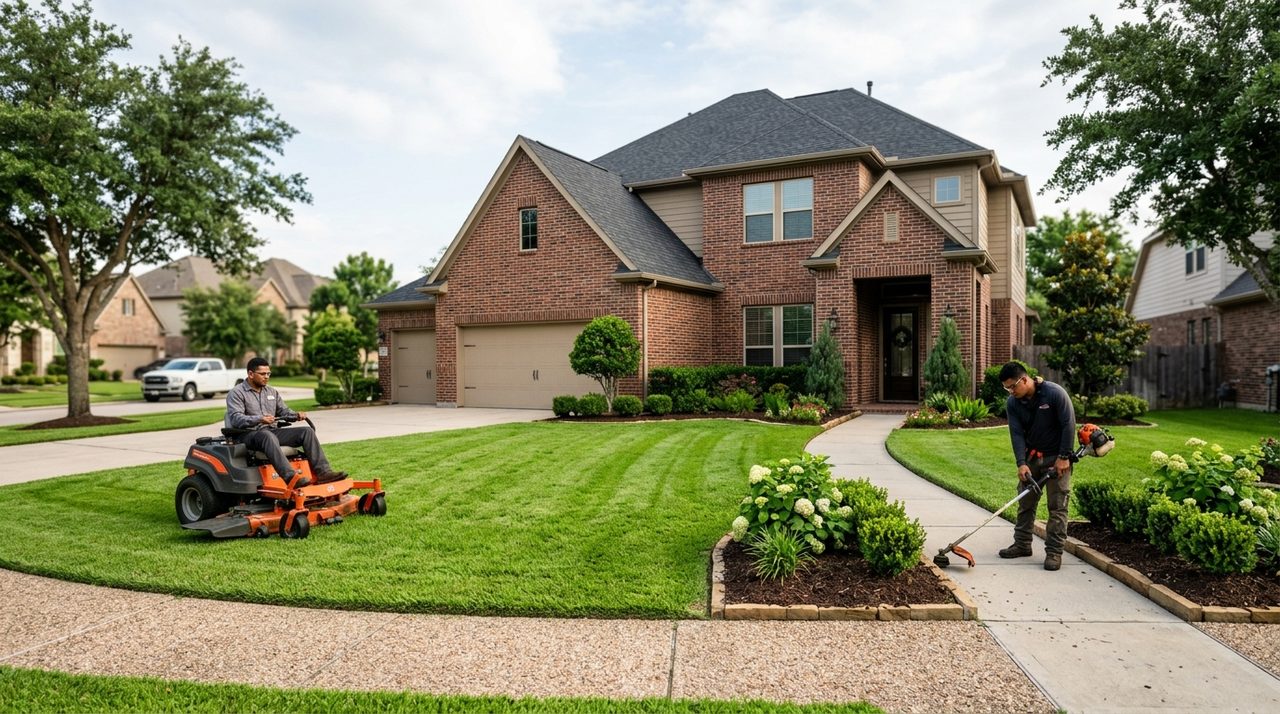
Fulshear's explosion of post-2000 master-planned subdivisions — Weston Lakes, Fulshear Lakes, Pecan Ridge, Polo Ranch — means nearly every landscaping job here begins not with a shovel but with an HOA architectural review application. Beneath those brick-and-stone production homes sits the same expansive Fort Bend County clay soil that can drown new plantings after a Gulf rain event and crack beds open during summer drought, a cycle that affects virtually every subdivision lot regardless of Fulshear's mostly FEMA Zone X designation. Understanding which jobs need City of Fulshear Building Department permits versus Fort Bend County Engineering sign-off — and which need HOA approval first — is what separates landscapers who keep clients out of trouble from those who cost them money.
Ranked by verified Google rating × review volume × verification tier. How we rank →
Some highly-rated pros serve Fulshear from nearby and may not keep a Fulshear street address. Those are listed under "Also serving Fulshear" with their real city and distance, so you always know where each business is based.
4510 Westerdale Dr, Fulshear, TX 77441
7733 Lifestyle Blvd, Fulshear, TX 77441
30806 Shady Oak Dr, Fulshear, TX 77441
6505 Sprigg St, Fulshear, TX 77441
Highly-rated pros based nearby who cover Fulshear. Distance shown from the Fulshear area.
Serving Fulshear Based in Richmond · 3 mi away
Serving Fulshear Based in Katy · 3.6 mi away
Serving Fulshear Based in Richmond · 3.8 mi away
Serving Fulshear Based in Katy · 6.7 mi away
Serving Fulshear Based in Katy · 7 mi away
Why it matters to you
In Fulshear's master-planned subdivisions, your HOA's architectural review committee — not a city planning office — controls what turf species you plant, where trees are placed, what mulch type is acceptable, and how high a landscape wall can rise. Some communities like Fulshear Lakes even include front yard maintenance in annual assessments (~$1,850/year), meaning unauthorized plantings can trigger removal orders and fines before you've watered them once. Non-compliance discovered during a resale inspection can kill a deal on a home worth well over the $546,200 median value in this ZIP.
What a good pro does
A landscaper working in Fulshear should pull the specific subdivision's deed restrictions and HOA design guidelines before preparing any proposal — these documents vary by community and specify details like approved St. Augustine varieties, tree setbacks from lot lines, and prohibited species. Submit the architectural review application with plant lists, layout drawings, and material specs, and get written approval in hand before scheduling installation or pulling any permits. Only after that written HOA approval should you contact the City of Fulshear Building Department or Fort Bend County Engineering about permits for retaining walls or irrigation work.
Sources: Local HOA / deed restrictions (see area profile), Municipal permit office (see area profile)
Why it matters to you
Fulshear's production-home lots — typically graded by the builder to drain toward rear easements or subdivision detention — sit on expansive Beaumont/Houston Black clay that absorbs water slowly and swells dramatically after Gulf rain events. On lots under 8,000 square feet with fence-line-to-fence-line sod, even a modest grade change by a landscaper can redirect sheet flow toward a neighbor's yard or foundation, violating both Fort Bend County drainage rules and HOA grading standards. New plantings installed flush to grade frequently drown at the root zone within a season.
What a good pro does
A qualified landscaper in Fulshear should evaluate post-construction grading before any bed installation, using a hand level or transit to confirm positive drainage away from the slab — critical given that all post-2000 production homes here use slab-on-grade foundations. French drain or dry creek corrections for a typical subdivision lot run an estimated $2,500–$7,500 depending on linear footage and outfall options; any grading modification that alters lot drainage should be reviewed against Fort Bend County Engineering standards, and homeowners should verify whether the HOA requires separate approval for drainage structures visible from the street.
Sources: Harris County Flood Control District, Municipal permit office (see area profile), Local HOA / deed restrictions (see area profile)
Why it matters to you
Every home in Fulshear's subdivisions is slab-on-grade, built on Fort Bend County clay soil that moves with moisture cycles — the same soil that dried and cracked during Uri's freeze and swells after summer storms. Live oaks, crepe myrtles, and Chinese tallows planted within 10–15 feet of a foundation accelerate differential settlement by drawing moisture unevenly from the clay, a particular concern on smaller production lots where the temptation is to plant large-caliper trees close to the house for immediate curb appeal. Foundation repair in Fort Bend County runs far beyond the cost of replanting, and some landscapers operating in Fulshear have faced liability claims after recommending placements that violated basic setback guidelines.
What a good pro does
A responsible landscaper here should recommend large-canopy trees — including the live oaks popular in Hill Country-inspired elevations common in Polo Ranch and Pecan Ridge — at a minimum of 15 feet from the foundation, and provide a root barrier spec for any tree planted between 10 and 20 feet from the slab. HOA design guidelines in some Fulshear communities specify approved tree species and placement; cross-referencing those requirements with setback best practices ensures the install satisfies both the HOA architectural committee and long-term foundation integrity. Document the recommended setbacks in your proposal so the homeowner has a clear record.
Sources: Local HOA / deed restrictions (see area profile), International Residential Code (as adopted by City of Houston)
Why it matters to you
Most of Fulshear's master-planned subdivisions are served by Municipal Utility Districts that enforce water-use restrictions during drought periods, and Stage 2 restrictions can sharply limit irrigation run-days — directly affecting turf health on the St. Augustine lawns standard across the area. Beyond timing, Texas state law requires any irrigator designing or installing a system to hold a TCEQ Irrigator License, and backflow prevention devices must meet TCEQ Chapter 344 specifications and be tested annually by a separately licensed backflow tester. The City of Fulshear Building Department requires a permit before new irrigation installation within city limits; properties in the unincorporated ETJ route permits through Fort Bend County Engineering instead.
What a good pro does
When scoping an irrigation installation or upgrade in Fulshear, confirm first whether the property is inside Fulshear city limits or in the county ETJ — that single question determines which permit office handles the application. Your irrigator must carry a current TCEQ license; verify this before signing a contract, as unlicensed irrigation work creates homeowner liability during a future sale inspection. Smart controller retrofits programmed to the local MUD's allowed watering schedule — typically odd/even day restrictions — paired with properly spaced rotary heads for clay-soil slow infiltration rates are a genuine operational necessity in Fulshear, not an upsell.
Sources: Texas Commission on Environmental Quality, Municipal permit office (see area profile)
Hiring landscapers in Fulshear? Fulshear is one of the fastest-growing communities in the Houston metro, dominated by post-2000 master-planned subdivisions with mandatory HOAs and rigorous deed restrictions. Homeowners here typically deal with newer construction systems but face strict architectural review for any exterior modifications. The mix of production homes and rural acreage tracts means service needs range from standard warranty-era maintenance to custom work on larger estate properties.
Building era
2000s–2020s (bulk of inventory); limited older housing in original town of Fulshear.
Typical style
Contemporary suburban production homes — brick and stone façades, 1- and 2-story detached single-family, mix of traditional, Texas Hill Country-inspired, and transitional elevations.
Foundations
Slab-on-grade (standard for post-2000 Fort Bend County production homes; older farmhouses or custom acreage homes may use pier-and-beam but are a small minority).
Common systems
Modern high-efficiency HVAC systems (14+ SEER), PEX or copper plumbing, 200-amp electrical panels, tankless or high-efficiency water heaters common in newer builds.
What that means for repairs
Most homes are under 20 years old, so major renovation is limited. Common projects include patio covers, outdoor kitchens, pool installations, and garage conversions — all typically requiring HOA architectural review and approval before work begins.
Permit jurisdiction
City of Fulshear Building Department for properties within city limits; Fort Bend County Engineering for unincorporated ETJ areas. Jurisdiction depends on exact property location.
HOA & deed restrictions
Most master-planned subdivisions (Weston Lakes, Fulshear Lakes, Pecan Ridge, Polo Ranch, and others) have mandatory HOAs with formal architectural review, deed restriction enforcement, and annual assessments (e.g., Fulshear Lakes charges ~$1,850/year including front yard maintenance). Non-HOA parcels exist on acreage tracts and older rural roads but are the minority of housing units.
Historic districts
No historic district designation confirmed. Fulshear is a rapidly growing area with almost entirely modern construction.
Contractor note
Contractors must verify whether a property falls within Fulshear city limits or unincorporated Fort Bend County, as permitting requirements and inspection processes differ. Nearly all subdivision work also requires prior HOA architectural committee approval before permits are pulled.
FEMA flood zone
FEMA Zone X (low flood risk) per official NFHL data. However, the broader Fulshear area sits between bayous and the Brazos River, so flood risk is highly location-specific — some parcels closer to waterways may carry different designations. Always verify FEMA FIRM panels for specific addresses.
Hurricane Harvey impact
No area-wide documentation confirms broad Harvey flooding across Fulshear subdivisions. Regional Harvey impact reports focus on Brazos River flooding near Simonton and Richmond rather than Fulshear master-planned communities. Marketing materials for major Fulshear subdivisions do not disclose Harvey flooding. However, no authoritative source definitively confirms zero impact for all Fulshear properties — for a specific address, check FEMA claims data and Fort Bend County floodplain records.
Heat & humidity load
New slab-on-grade construction on expansive Fort Bend County clay soils is subject to significant seasonal soil movement. Extended summer heat and drought cause soil shrinkage that can stress slab foundations and exterior hardscape. Proper irrigation of foundation perimeters is critical. High-efficiency HVAC systems in these larger homes (many 2,500–4,000+ sq ft) face heavy summer loads and benefit from annual pre-season maintenance.
Working with contractors here
Contractors in Fulshear primarily handle new-home warranty work, HVAC maintenance on modern high-efficiency systems, and outdoor living additions such as pools, covered patios, and outdoor kitchens. Because most homes are under 20 years old, major system replacements are uncommon, but foundation monitoring and minor slab repair due to expansive clay soils is a recurring need. HOA architectural review is a significant factor — contractors should advise homeowners to secure written HOA approval before scheduling exterior work, as non-compliant modifications can result in forced removal. The mix of production subdivisions and rural acreage means job scoping varies widely: subdivision work follows tight lot-line and setback constraints, while acreage properties may involve well/septic systems and longer material delivery logistics.
Local Tip
Always ask for a written estimate before work begins. Texas contractors are required to provide one on jobs over $1,000.
Fulshear is one of the fastest-growing communities in the Houston metro, dominated by post-2000 master-planned subdivisions with mandatory HOAs and rigorous deed restrictions. Homeowners here typically deal with newer construction systems but face strict architectural review for any exterior modifications. The mix of production homes and rural acreage tracts means service needs range from standard warranty-era maintenance to custom work on larger estate properties.
Source: U.S. Census Bureau, ACS 5-Year 2023
Most of Fulshear maps to FEMA Zone X (low mapped flood risk), but Houston's flash-flood reality means even low-risk blocks benefit from smart drainage and storm-hardened installs; risk climbs sharply on blocks nearest the Brazos River, where it varies parcel to parcel.
Source: FEMA National Flood Hazard Layer (NFHL). Flood zones vary by parcel — verify your individual FIRM panel.
Sources: Municipal permit office (see area profile)
Sources: FEMA National Flood Hazard Layer (NFHL)Harris County Flood Control District
Sources: Local HOA / deed restrictions (see area profile)
Sources: Local HOA / deed restrictions (see area profile)