Closed
Serving Kemah Based in Seabrook · 2.1 mi away
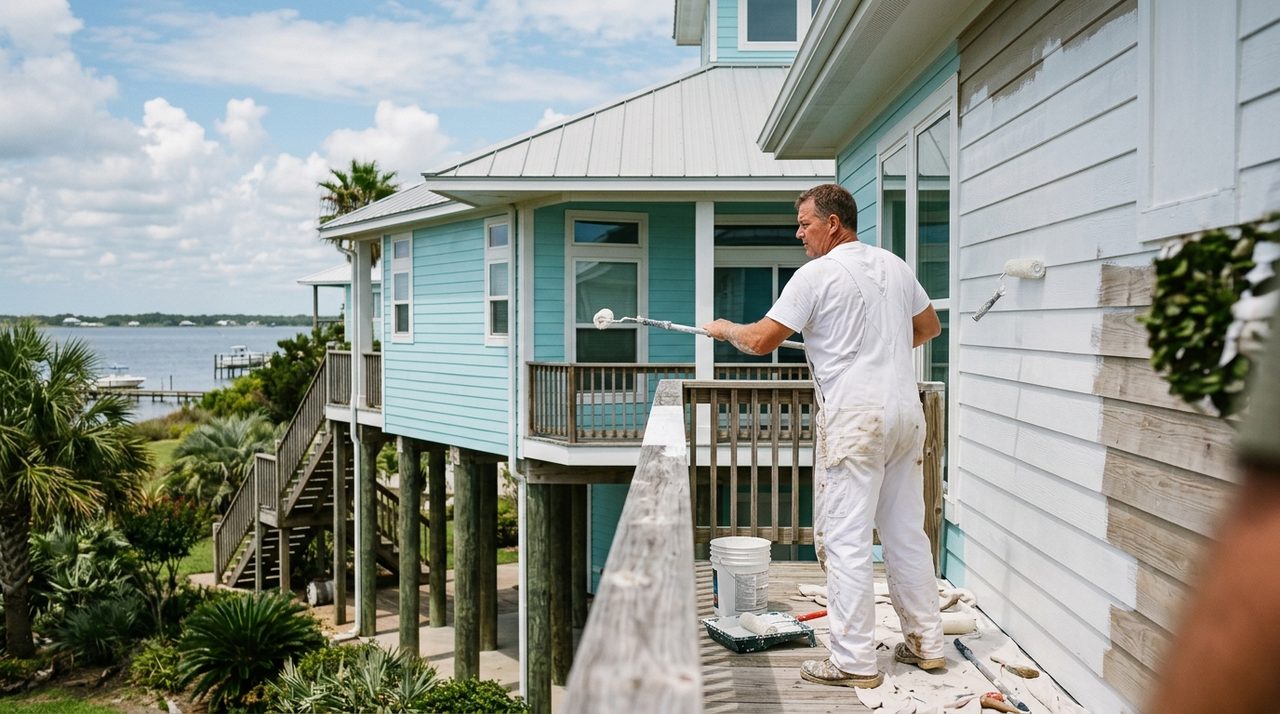
Kemah's Galveston Bay waterfront puts every painted surface through conditions that inland Houston homeowners never face: salt-laden air off the bay accelerates coating breakdown on pier-and-beam cottages, stucco-clad 1990s redevelopments, and fiber-cement townhomes alike, while the city's FEMA Zone AE designation means flood-damaged interiors are a recurring repaint reality rather than a rare event. Understanding how coastal humidity, storm surge history, and the City of Kemah's independent permit office shape a painting project here can save you thousands in premature repaint cycles.
Ranked by verified Google rating × review volume × verification tier. How we rank →
Some highly-rated pros serve Kemah from nearby and may not keep a Kemah street address. Those are listed under "Also serving Kemah" with their real city and distance, so you always know where each business is based.
Highly-rated pros based nearby who cover Kemah. Distance shown from the Kemah area.
Serving Kemah Based in Seabrook · 2.1 mi away
Serving Kemah Based in League City · 2.5 mi away
Serving Kemah Based in League City · 2.7 mi away
Serving Kemah Based in League City · 2.9 mi away
Serving Kemah Based in League City · 2.9 mi away
Serving Kemah Based in League City · 2.9 mi away
Serving Kemah Based in League City · 3.8 mi away
Serving Kemah Based in League City · 3.9 mi away
Serving Kemah Based in League City · 4.9 mi away
Serving Kemah Based in League City · 5.2 mi away
Why it matters to you
Kemah's position directly on Galveston Bay means airborne sodium chloride deposits on every painted surface year-round — not just after storm events. On the raised pier-and-beam and elevated pile foundations common along the waterfront and canal-adjacent streets, the underside of soffits, exposed wood fascia, and any metal trim see constant marine-grade humidity and salt spray that can blister even a well-applied latex coat within 18 months. This is categorically different from the humidity-driven paint failure seen in inner-loop Houston neighborhoods.
What a good pro does
A painter experienced with Kemah's bay exposure should specify a two-part epoxy or 100% acrylic elastomeric topcoat rated for marine or coastal environments, not a standard contractor-grade exterior latex. All bare wood and metal surfaces require a dedicated corrosion-inhibiting primer before topcoat. The City of Kemah's building department handles permits independently of Houston or Galveston County, so if prep work involves replacing deteriorated trim or fascia boards, verify with Kemah's permit office whether a building permit is required before work begins.
Sources: Municipal permit office (see area profile), International Residential Code (as adopted by City of Houston)
Why it matters to you
Much of Kemah sits in FEMA Zone AE, and the city's low-lying bayfront cottages and 1970s–1980s infill homes absorbed floodwaters in Harvey 2017, Imelda 2019, and again during Beryl 2024. Painting over mineral tide lines, mold-stained drywall paper, or compromised gypsum board without moisture testing and mold-encapsulant primer is a documented failure pattern — the stain bleeds through within months and mold returns. Homes with ground-level habitable space beneath older elevated structures are especially vulnerable because those areas often flood repeatedly.
What a good pro does
Before any post-flood repaint, a pro should use a calibrated moisture meter to confirm gypsum board is below 12–15% moisture content and perform a visual mold assessment; in Kemah's AE zone, assume mold is present until proven otherwise. Stained surfaces need a shellac-based or specialty mold-encapsulant primer (not standard PVA primer) before finish coats. Note that if flood damage repairs exceed 50% of the structure's pre-damage market value, FEMA's substantial improvement rule kicks in and can require the entire building to be brought into current floodplain compliance — which is a project-scoping conversation to have with the City of Kemah's permit office before you authorize any combined repair-and-repaint scope.
Sources: FEMA National Flood Hazard Layer (NFHL), Municipal permit office (see area profile)
Why it matters to you
The 1990s–2000s waterfront redevelopment boom left Kemah with a large inventory of stucco and fiber-cement-sided townhomes and condos, many oriented to maximize bay views — which means significant south- and west-facing wall exposure. At 29°N latitude with UV index regularly reaching 10–11 from May through September, organic pigments on these elevations can fade visibly within two to three years, far ahead of what paint-can warranties (calibrated for northern climates) suggest. Deep accent colors chosen to complement nautical or coastal aesthetics are the fastest to degrade.
What a good pro does
Specify paints with inorganic or ceramic pigments and a high-LRV (light reflectance value) formulation for south- and west-facing stucco, or accept a shorter repaint cycle and budget accordingly. Sherwin-Williams Emerald or Benjamin Moore Aura carry stronger fade warranties than builder-grade lines and are worth the premium on heavily sun-exposed elevations — expect to add $800–$2,000 to a standard exterior quote for premium product upgrades. If the property sits within a newer marina-oriented townhome or condo development in Kemah, check with the project-level HOA's architectural review committee before selecting a replacement color, as some of these communities maintain approved palettes.
Sources: Local HOA / deed restrictions (see area profile), Municipal permit office (see area profile)
Why it matters to you
Kemah's original pre-1960s bay cottages and a share of the 1970s–1980s infill stock predate the 1978 federal ban on residential lead paint. Any painting project that disturbs these surfaces — scraping, sanding, or pressure-washing deteriorated paint — on a pre-1978 home triggers the EPA Renovation, Repair, and Painting (RRP) Rule under 40 CFR 745, requiring the painting firm to hold EPA Lead-Safe Certification and follow specific containment and waste-disposal protocols. This adds real cost but is legally non-negotiable, and it applies regardless of whether the City of Kemah requires a separate painting permit.
What a good pro does
Ask any painter you interview whether they hold current EPA Lead-Safe Firm Certification before signing a contract on a pre-1978 Kemah cottage. Texas does not license painters as a standalone trade through TDLR, so EPA Lead-Safe Certification is the primary credential to verify for older homes. Encapsulation with an elastomeric overcoat is a legitimate RRP-compliant approach for sound lead-painted surfaces and avoids the higher cost of full removal — a qualified Kemah painter can assess whether encapsulation or abatement is the right call based on surface condition.
Sources: EPA Lead Renovation, Repair and Painting (RRP) Rule, Texas Department of Licensing & Regulation, Municipal permit office (see area profile)
Hiring painters in Kemah? Kemah is a small incorporated city on Galveston Bay with a mix of original bay cottages, 1990s–2000s waterfront redevelopment, and newer elevated townhome/marina communities. Homeowners here face persistent challenges from storm surge exposure, salt-air corrosion, and FEMA floodplain compliance requirements. Contractors working in Kemah must be familiar with elevated foundation systems, coastal building codes, and the City of Kemah's own permitting process.
Building era
Mixed: pre-1960s original cottages, 1970s–1980s infill, significant 1990s–2000s waterfront redevelopment, and post-2008 elevated infill.
Typical style
Coastal raised beach-house style (pier-supported with elevated living areas), traditional suburban SFRs (brick veneer or siding), and townhome/condo marina-oriented developments with stucco or fiber-cement siding.
Foundations
Mixed — pier-and-beam/elevated pile foundations dominate along the bayfront and canal-adjacent properties; slab-on-grade more common in interior and newer suburban pockets.
Common systems
Older cottages may have original copper or galvanized plumbing and outdated electrical panels; 1990s–2000s homes typically feature central HVAC, PVC/CPVC plumbing, and 200-amp electrical service. Salt-air exposure accelerates corrosion on HVAC condensers, metal roofing components, and exterior electrical fixtures across all eras.
What that means for repairs
Most common renovation activity includes elevating older homes to meet current FEMA BFE requirements, replacing storm-damaged structures with new elevated construction, upgrading HVAC and exterior materials to salt-air-resistant alternatives, and converting or remodeling ground-level areas beneath raised homes for parking or storage.
Permit jurisdiction
City of Kemah (independent incorporated city with its own municipal government and building department).
HOA & deed restrictions
No city-wide mandatory HOA or master association. HOAs are present in specific newer townhome, condo, and marina developments on a project-by-project basis. Older platted areas (e.g., original Kemah Townsite) generally have no organized HOA. Voluntary civic clubs may exist in some pockets but are not confirmed. Deed restrictions vary by subdivision — check Galveston County Clerk records for specific parcels.
Historic districts
No City of Houston historic district designation confirmed. Kemah is an independent incorporated city; no HAHC jurisdiction applies. No locally designated historic districts confirmed in current city records.
Contractor note
Contractors must pull permits through the City of Kemah, not Houston or Galveston County. Coastal AE zone requirements often mandate elevation certificates, flood-resistant materials below BFE, and compliance with FEMA substantial improvement/damage rules for renovations exceeding 50% of the structure's market value.
FEMA flood zone
FEMA Zone AE (high flood risk) — source: fema_nfhl. Kemah sits directly on Galveston Bay and is exposed to both storm surge and tidal flooding. Much of the city falls within AE and potentially VE (velocity) zones along the immediate shoreline. Proximity to Clear Creek and Galveston Bay amplifies flood risk during tropical weather events.
Hurricane Harvey impact
Kemah experienced flooding during Hurricane Harvey (2017) from a combination of extreme rainfall and storm surge/tidal influence from Galveston Bay. Specific damage data for Kemah was not itemized separately from broader Galveston County FEMA reports, but the bayfront location and low elevation made the area vulnerable to both surge-driven and rain-driven flooding. Many older, non-elevated homes in the area sustained water damage. Post-Harvey, elevated construction and stricter floodplain compliance have become more prevalent.
Heat & humidity load
Extreme humidity and sustained heat along Galveston Bay push HVAC systems hard from May through October. Salt-laden coastal air accelerates corrosion on condenser coils, ductwork fasteners, and exterior metal components. Pier-and-beam homes benefit from under-house ventilation but require regular inspection for moisture damage, mold, and pest intrusion during the humid season.
Working with contractors here
Contractors in Kemah most frequently handle foundation elevation projects, HVAC replacement with salt-air-resistant units, and exterior envelope repairs caused by coastal weather exposure. Roof replacements are common after storm events, with wind-rated materials and proper tie-downs critical given the bayfront exposure. Plumbing work in older cottages often involves full re-pipes from galvanized to modern materials. Job scoping must account for FEMA elevation requirements — any substantial improvement to a structure in the AE zone requires bringing the entire building into current floodplain compliance, which can dramatically expand project scope and cost. Access can be tight on narrow waterfront lots, and contractors should verify whether the specific property falls under a project-level HOA with architectural review requirements before beginning exterior work.
Local Tip
Always ask for a written estimate before work begins. Texas contractors are required to provide one on jobs over $1,000.
Kemah is a small incorporated city on Galveston Bay with a mix of original bay cottages, 1990s–2000s waterfront redevelopment, and newer elevated townhome/marina communities. Homeowners here face persistent challenges from storm surge exposure, salt-air corrosion, and FEMA floodplain compliance requirements. Contractors working in Kemah must be familiar with elevated foundation systems, coastal building codes, and the City of Kemah's own permitting process.
Source: U.S. Census Bureau, ACS 5-Year 2023
Much of Kemah maps to FEMA Zone AE (high flood risk), so flood-resilient detailing -- elevated equipment, water-tolerant materials, and drainage-first thinking -- is essential here, not optional; risk climbs sharply on blocks nearest Galveston Bay, where it varies parcel to parcel.
Source: FEMA National Flood Hazard Layer (NFHL). Flood zones vary by parcel — verify your individual FIRM panel.
Sources: Municipal permit office (see area profile)FEMA National Flood Hazard Layer (NFHL)
Sources: Local HOA / deed restrictions (see area profile)
Sources: EPA Lead Renovation, Repair and Painting (RRP) RuleTexas Department of Licensing & Regulation
Sources: Local HOA / deed restrictions (see area profile)
Sources: FEMA National Flood Hazard Layer (NFHL)International Residential Code (as adopted by City of Houston)