9001 Spring Branch Dr, Houston, TX 77080
Best Water & Flood Restoration in Spring Branch
Spring Branch's 1950s–1960s brick ranch homes sit on concrete slabs over Houston Black clay soil, a combination that turns even a broken washing-machine supply line into a weeks-long drying project because the clay holds moisture against the slab edge long after surface water is gone. Although most of Spring Branch maps to FEMA Zone X, the neighborhood's aging galvanized and cast-iron plumbing infrastructure means internal pipe failures — not bayou overflows — are the dominant driver of water damage claims here. Understanding how vintage construction materials and City of Houston permitting interact with modern restoration standards is the practical difference between a closed insurance claim and a mold problem discovered during the next renovation.
Verified against Google Business data
Updated 2026
See the 10 Water & Flood Restoration Serving Spring Branch 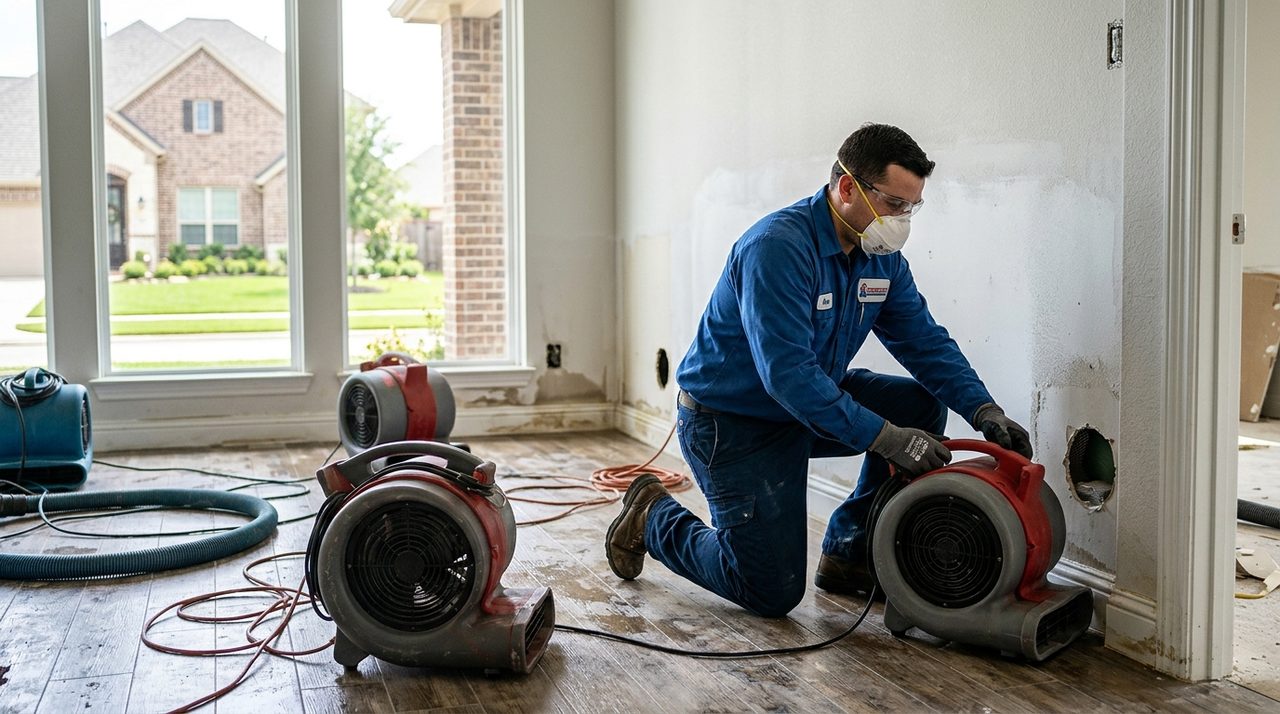
- Median home built
- 1978
- Median home value
- $640,789
- FEMA flood zone
- X (low)
- Typical mitigation cost (est.)
- $3,500–$15,000
- Most common local issue
- Galvanized/cast-iron pipe failures saturating slab-edge clay soil in 1950s–60s ranch homes
Ranked by verified Google rating × review volume × verification tier. How we rank →
Min rating:
10 results Open Now
1330 Sherwood Forest St Suite 108, Houston, TX 77043
Open Now
7055 Old Katy Rd Suite 1015, Houston, TX 77024
Open Now
2415 Blalock Rd Ste B, Houston, TX 77080
2121 Brittmoore Rd Suite 2100 B, Houston, TX 77043
Open Now
1530 W Sam Houston Pkwy N, Houston, TX 77043
Open Now
1626 Oak Tree Dr Suite A, Houston, TX 77080
Open Now
8435 Interstate 10 Frontage Rd, Houston, TX 77024
Open Now
1631 Oak Tree Dr #106, Houston, TX 77080
Open Now
109 N Post Oak Ln #350, Houston, TX 77024
Water & Flood Restoration in Spring Branch: What You Should Know
Clay Soil Traps Moisture Against Your 1960s Slab for Weeks
Why it matters to you
Spring Branch's original ranch homes rest on conventional concrete slabs poured directly over expansive Houston Black clay. When water escapes from a failed galvanized supply line or a backed-up cast-iron drain — both common in homes built here between 1950 and 1969 — the clay soil beneath and around the slab perimeter absorbs and retains that moisture far longer than sandy or loamy soils would. Floors may look and feel dry within days while the slab edge and bottom wall plates remain saturated, silently feeding mold growth behind intact drywall.
What a good pro does
A qualified restoration crew will deploy calibrated moisture meters and thermal imaging cameras along every wall base and slab perimeter — not just the visibly wet zones — and establish drying goals using IICRC S500 psychrometric standards before removing a single dehumidifier. Because work touching exposed plumbing after a pipe-burst loss requires a TSBPE-licensed plumber to make the line repair, and any structural demo requires a City of Houston demolition permit pulled through the Houston Permitting Center, a properly scoped project coordinates those licensed trades before the drying clock starts.
Sources: IICRC (water/mold restoration standards), Texas State Board of Plumbing Examiners, City of Houston Permitting Center
Galvanized Pipe Failures Hiding Behind Unrenovated Walls
Why it matters to you
Homes on blocks like Blalock Road and Long Point Road that have never been fully re-plumbed still carry galvanized steel supply lines that corrode from the inside out over seven-plus decades. A pinhole leak inside a wall cavity in a Spring Branch ranch can saturate fiberglass batt insulation, original plaster or early-generation drywall, and the wood bottom plate for months before a water stain appears on the surface. With roughly half the neighborhood owner-occupied (ACS 2023), many long-term residents are surprised to learn how much concealed damage accompanies what appears to be a minor stain.
What a good pro does
Restoration contractors working in Spring Branch's unrenovated originals should probe suspected wall cavities with a borescope before committing to a demo scope, because the moisture source is often a slow leak several feet away from the visible damage. Once the source is confirmed, a TSBPE-licensed plumber must pull a City of Houston plumbing permit to replace the failed galvanized segment — the restoration contractor cannot self-perform that work — and the permit record becomes part of the documentation package for the insurance claim.
Sources: Texas State Board of Plumbing Examiners, City of Houston Permitting Center, IICRC (water/mold restoration standards)
Older Flex Duct Turning Into a Mold Incubator After Any Water Intrusion
Why it matters to you
Many of Spring Branch's partially updated ranch homes had new HVAC systems retrofitted into attic space during the 1980s and 1990s using flex duct with fiberglass insulation wrap — a product type that absorbs and holds moisture. When a pipe burst or roof leak sends water through the attic, that duct insulation can stay wet for weeks in Spring Branch's 74-percent average relative humidity environment, creating ideal conditions for Cladosporium and Aspergillus growth within 48 to 72 hours. A homeowner who replaces drywall and flooring without addressing saturated ductwork will often face a mold complaint within the same cooling season.
What a good pro does
Any restoration scope in a Spring Branch home with original or early-retrofit flex duct should include attic moisture mapping and a duct inspection before reconstruction begins. If insulation wrap tests above 15-percent moisture content after structural drying is complete, replacement is the correct call under IICRC S500 guidance — partial drying of contaminated flex duct is not a recognized remediation method. Firms performing mold assessment or remediation in Texas must hold a TDLR-issued Mold Assessment Consultant or Mold Remediation Contractor license; homeowners should verify that credential before signing any remediation contract.
Sources: IICRC (water/mold restoration standards), Texas Department of Licensing & Regulation
Winter Storm Uri Left Hidden Moisture in Attic-Run Plumbing Still Untouched
Why it matters to you
February 2021's Uri freeze caused widespread pipe bursts across Spring Branch, particularly in the older ranch homes where supply lines were routed through unconditioned attic space — a common configuration in 1950s Houston construction that was never designed for subfreezing temperatures. Many homeowners made surface-level repairs: replaced a burst segment, painted over a water stain, replaced a ceiling panel. But restoration contractors called into Spring Branch homes for unrelated work routinely find Uri-era microbial growth behind undisturbed drywall in utility closets, secondary bathrooms, and laundry areas where the original cavity was never professionally dried.
What a good pro does
Before any renovation or new-damage restoration project in a Spring Branch ranch built before 1970, a good contractor will run a baseline moisture scan of attic-adjacent walls and ceilings to rule out residual Uri-era saturation. If mold is confirmed, remediation must precede reconstruction and must be performed by a TDLR-licensed Mold Remediation Contractor. The City of Houston Houston Permitting Center requires a demolition permit for structural demo work, even when driven by mold discovery mid-project, so the scope and permit application should be revised before demo proceeds.
Sources: Texas Department of Licensing & Regulation, City of Houston Permitting Center, IICRC (water/mold restoration standards)
Water & Flood Restoration in Spring Branch: What You Should Know
Hiring water & flood restoration in Spring Branch? Spring Branch's housing stock is dominated by 1950s–1960s single-family brick ranch homes on slab foundations, creating consistent demand for foundation repair, re-plumbing, and electrical upgrades. Ongoing teardown-and-rebuild activity means contractors regularly encounter both vintage systems and modern infill construction side by side. Deed restrictions and HOA rules vary subdivision by subdivision, so contractors should verify requirements on a per-project basis.
- Housing era
- Primarily 1950s–1960s, with significant infill and townhome construction from the 2000s onward
- Foundation
- Predominantly concrete slab-on-grade for original 1950s–1960s homes
- Flood zone
- FEMA Zone X (low flood risk) per the official NFHL API
- Permits
- City of Houston — Houston Permitting Center (Spring Branch is within Houston city limits)
Housing stock & systems
Building era
Primarily 1950s–1960s, with significant infill and townhome construction from the 2000s onward.
Typical style
One-story brick ranch houses (original stock); two-story contemporary/transitional homes and townhomes (infill).
Foundations
Predominantly concrete slab-on-grade for original 1950s–1960s homes; some pier-and-beam in earlier or custom structures. Confirm per-property via inspection or appraisal records.
Common systems
Original homes often have galvanized steel or cast-iron drain plumbing, older electrical panels (60–100 amp), and aging central HVAC units. Many properties have been partially updated but may still have legacy piping and wiring. Newer infill homes feature modern PEX plumbing, 200-amp panels, and high-efficiency HVAC systems.
What that means for repairs
Teardown-and-rebuild activity is very common as lot values support new construction. Remaining original homes frequently undergo whole-house renovations including re-plumbing (replacing galvanized lines), electrical panel upgrades, HVAC replacement, and kitchen/bath remodels. Foundation leveling is a recurring need on slab homes due to expansive clay soils.
Permits & restrictions
Permit jurisdiction
City of Houston — Houston Permitting Center (Spring Branch is within Houston city limits).
HOA & deed restrictions
No single area-wide mandatory HOA. Voluntary civic associations (e.g., Spring Branch Civic Association, Spring Branch Oaks Civic Association) cover much of the older residential area. Some platted subdivisions have mandatory HOAs with recorded deed restrictions and mandatory assessments (e.g., Spring Branch Estates, Spring Branch Estates II). At least six mandatory HOAs are registered in the broader Spring Branch area. Deed restrictions are common at the subdivision level but vary by plat—check Harris County Clerk records for each property.
Historic districts
No City of Houston historic district designation confirmed.
Contractor note
Because deed restrictions and HOA requirements vary by subdivision, contractors should confirm any architectural review, fence/accessory structure, and material restrictions before beginning work. The City of Houston permitting process applies to all structural, electrical, plumbing, and mechanical work.
Flood & weather
FEMA flood zone
FEMA Zone X (low flood risk) per the official NFHL API. However, Spring Branch is bisected by several tributaries of White Oak Bayou and Spring Branch Creek, and localized street flooding can still occur during heavy rain events. Property-level flood risk should be verified, especially for lots near drainage channels.
Hurricane Harvey impact
Research did not return specific Harvey damage documentation for this civic-association-defined area of Spring Branch. Broader media and City of Houston reporting indicate that portions of the Spring Branch area experienced significant flooding during Harvey, particularly near bayou tributaries and low-lying streets. Homeowners and contractors should check individual property flood claims history through FEMA and the Harris County Flood Control District for site-specific impact data.
Heat & humidity load
Extended Houston summers with sustained 95°F+ temperatures and high humidity stress aging HVAC systems and accelerate attic insulation degradation in 1950s–1960s ranch homes. Slab-on-grade foundations on expansive clay soils are vulnerable to differential settlement during summer drought cycles. Exterior paint and caulking on older brick veneer homes deteriorate quickly in UV-intense conditions.
Working with contractors here
The most common work in Spring Branch involves updating the mechanical and plumbing systems in 1950s–1960s ranch homes—re-plumbing galvanized supply lines, replacing cast-iron drains, upgrading electrical panels, and installing modern HVAC systems. Foundation repair is a perennial need due to expansive clay soils and slab-on-grade construction. Teardown-and-rebuild projects are frequent, requiring contractors familiar with City of Houston new-construction permitting and lot-specific deed restriction compliance. For renovation jobs on older homes, contractors should budget for potential asbestos abatement (siding, flooring, duct insulation) and lead paint remediation. Scoping should account for the wide variation between unrenovated originals and partially updated homes on the same block.
Local Tip
Always ask for a written estimate before work begins. Texas contractors are required to provide one on jobs over $1,000.
About Spring Branch
Spring Branch's housing stock is dominated by 1950s–1960s single-family brick ranch homes on slab foundations, creating consistent demand for foundation repair, re-plumbing, and electrical upgrades. Ongoing teardown-and-rebuild activity means contractors regularly encounter both vintage systems and modern infill construction side by side. Deed restrictions and HOA rules vary subdivision by subdivision, so contractors should verify requirements on a per-project basis.
- Median year built
- 1978
- Median home value
- $640,789
- Owner-occupied
- 52.3%
- Population
- 157,142
- Housing units
- 65,035
- Median income
- $90,513
Source: U.S. Census Bureau, ACS 5-Year 2023
Flood & storm risk
FEMA Zone XLow flood riskMost of Spring Branch maps to FEMA Zone X (low mapped flood risk), but Houston's flash-flood reality means even low-risk blocks benefit from smart drainage and storm-hardened installs.
Source: FEMA National Flood Hazard Layer (NFHL). Flood zones vary by parcel — verify your individual FIRM panel.
Houston Storm Readiness in Spring Branch
Hurricane & flooding
Water-restoration companies serving Spring Branch can install or recommend backflow prevention add-ons on floor drains and advise on contents-elevation strategies that limit category-2 water contact during a tropical event. The May 2024 derecho reminded Houston homeowners that extreme rain is not exclusive to named hurricanes, making year-round readiness essential. In-city Spring Branch work falls under City of Houston floodplain and permitting rules.
Severe storms & hail
Straight-line winds exceeding 80 mph, as recorded during the 2024 derecho, broke seals on sliding glass doors and drove water into flooring assemblies throughout Spring Branch neighborhoods with no prior flood history. Contact a licensed Texas restoration firm — TDLR regulates their mold-assessment and remediation work — to inspect and dry any affected areas before summer humidity accelerates microbial growth. Confirm the current FEMA panel for your Spring Branch parcel — the area maps to Zone X, but adjacent lots can differ.
Ice storms & freezes
Ice accumulation on exterior pipe chases and uninsulated attic runs caused widespread freeze-and-burst events across Spring Branch during Uri 2021, and the resulting water losses required IICRC-trained technicians with commercial dehumidifiers to dry out wall and ceiling cavities that building materials alone could not off-gas. Confirming you have a preferred restoration contractor's number before a freeze forecast arrives eliminates critical delays when crews are in high demand across the metro. With a median build year of 1978, the older building stock here is more exposed to hard-freeze damage than newer construction. Confirm the current FEMA panel for your Spring Branch parcel — the area maps to Zone X, but adjacent lots can differ.
Sources: FEMA National Flood Hazard Layer (NFHL), Ready.gov -- Hurricanes, CenterPoint Energy -- Storm Center, City of Houston -- Emergency Preparedness, Ready.gov -- Winter Weather, Harris County Flood Control District
Free Spring Branch Tools & Calculators
Houston-specific estimators to plan your project before you call a pro. All results are planning estimates — a licensed local pro confirms the details on site.
Houston Freeze Prep & Pipe Insulation Checklist
Open full tool & FAQ →Your freeze checklist — 4 tasks
- 1
Disconnect & drain every outdoor hose bib
Remove hoses, drain the spigots, and cover each with an insulated faucet sock. Un-drained hose bibs are the #1 burst point in a Houston freeze.
- 2
Insulate exposed pipes in the attic & garage
Wrap any pipe in an unconditioned space (attic runs, garage walls) with foam sleeves. Houston homes rarely insulate these because they only matter a few nights a year — which is exactly why they burst.
- 3
Open cabinet doors & keep a pencil-width drip
On hard-freeze nights, open kitchen/bath cabinets so warm air reaches the pipes and let faucets on exterior walls drip to relieve pressure.
- 4
Protect the attic/garage water heater & its lines
An attic or garage tank sits in unconditioned space. Insulate the cold-inlet and hot-outlet lines and confirm the emergency drain pan is clear so a leak doesn't reach the ceiling.
This is a planning estimate only — actual requirements depend on an on-site assessment by a licensed Houston pro. If a pipe has already burst, shut off your main water supply and call a licensed Houston plumber immediately — freeze bursts flood fast.
Frequently Asked Questions
Do I need a permit from the City of Houston to demo water-damaged drywall and flooring in my Spring Branch ranch home?
Yes — Spring Branch sits entirely within Houston city limits, so all structural demolition, plumbing repairs, and any electrical work exposed during flood demo requires permits pulled through the City of Houston Permitting Center, not a separate suburban office. Your restoration contractor should pull the demolition permit, while any licensed plumber or electrician working on the exposed systems pulls their own trade permits independently. Skipping permits can delay the Certificate of Completion your insurer needs to close the claim. Budget extra lead time during post-storm surges when the Permitting Center's queue backs up.
Sources: City of Houston Permitting Center
My Spring Branch home is in FEMA Zone X — can a water-damage restoration scope still be filed as a flood claim, or does Zone X status complicate things?
Zone X designation reflects low mapped flood risk but does not prevent a flood insurance claim if you carry an NFIP or private flood policy — eligibility depends on your policy terms, not your flood zone. More practically, most Spring Branch water-damage claims originate from internal pipe failures rather than rising bayou water, and those typically fall under homeowners insurance (dwelling coverage), not flood insurance. Restoration contractors experienced with both claim types can document the water source correctly from the outset, which is the single biggest factor in avoiding a mid-claim reclassification dispute.
How long should I realistically expect structural drying to take in a 1950s Spring Branch slab home after a plumbing leak?
In a 1950s–1960s slab-on-grade ranch home sitting on Houston Black clay soil, plan for a minimum of five to seven days of active drying with commercial dehumidifiers and air movers as an estimate — and longer if the leak saturated the slab edge, where clay holds water against the concrete for weeks after surface moisture is gone. IICRC S500 standards require daily moisture readings to confirm when materials have reached acceptable dryness levels before reconstruction begins, and skipping that verification step is the most common reason Spring Branch homeowners end up with mold remediation costs on top of the original repair bill. Older unrenovated homes with original cast-iron slab plumbing can see extended timelines if the leak source itself is under the slab and requires saw-cutting to reach.
Does the water-damage contractor need a TDLR mold license to work on my Spring Branch home, or is that only for dedicated mold jobs?
Under Texas Occupations Code Chapter 1958, any firm performing mold assessment or mold remediation in Texas — regardless of whether the job started as water restoration — must hold a TDLR-issued Mold Assessment Consultant (MAC) or Mold Remediation Contractor (MRC) license. In Spring Branch's older housing stock, mold growth is a realistic secondary outcome whenever drying is delayed more than 48–72 hours, so verifying your contractor's TDLR license number before work begins protects you if the scope expands mid-project. Ask for the license number and confirm it on the TDLR public license lookup before signing any contract.
My Spring Branch home has asbestos-era floor tile and popcorn ceilings — does a water-damage restoration crew have to test for asbestos before tearing out wet materials?
Any home built before 1980 — which includes virtually all of Spring Branch's original 1950s–1960s ranch stock — is a candidate for asbestos-containing materials in floor tile, mastic adhesive, duct insulation, and textured ceilings. While Texas does not mandate a pre-demolition asbestos survey for single-family residential work the way it does for commercial projects, disturbing asbestos-containing materials without proper containment creates both a health hazard and a legal liability. Ask your restoration contractor whether they will test suspect materials before demo or will subcontract to a TCEQ-registered asbestos abatement firm, and get that answer in writing before any wet demolition begins.
Sources: Texas Commission on Environmental QualityEPA Lead Renovation, Repair and Painting (RRP) Rule
If I live in a Spring Branch subdivision with a mandatory HOA — like Spring Branch Estates — do I need HOA approval before a restoration crew sets up dumpsters or strips exterior materials after a pipe burst?
Deed restrictions in platted Spring Branch subdivisions vary by plat, so you should pull your specific recorded deed restrictions from Harris County Clerk records to confirm what architectural review applies to demo work, dumpster placement, and exposed exterior materials. Time matters critically here — IICRC S500 standards call for drying to begin within 24–48 hours of water intrusion to prevent Category 2 losses from escalating to mold-territory Category 3 losses, so waiting on an HOA approval cycle for exterior-facing work can cost you significantly more in remediation. Notify your HOA in writing immediately and document that you acted under emergency-mitigation timelines; most reasonable HOA boards provide retroactive approval when properly notified of the urgency.
Sources: IICRC (water/mold restoration standards)Local HOA / deed restrictions (see area profile)