8505 Airline Dr Ste1, Houston, TX 77037
Best Foundation Repair in Acres Homes
Acres Homes sits on Houston's expansive Beaumont and Houston Black clay formations, but what makes foundation repair here unusually complex is the block-by-block mix of mid-century pier-and-beam cottages and post-2015 slab-on-grade infill homes — two completely different structural systems that require completely different diagnoses and repair strategies. With a census median year built of 1979, a roughly 43-percent rental rate, and no mandatory HOA imposing any design controls, homeowners here carry full responsibility for understanding what they're getting into before signing a repair contract. All foundation permits in Acres Homes are issued through the City of Houston's Houston Permitting Center, and pulling the right permit for the right structural system is the first thing a credible contractor should be able to explain.
Verified against Google Business data
Updated 2026
See the 10 Foundation Repair Serving Acres Homes 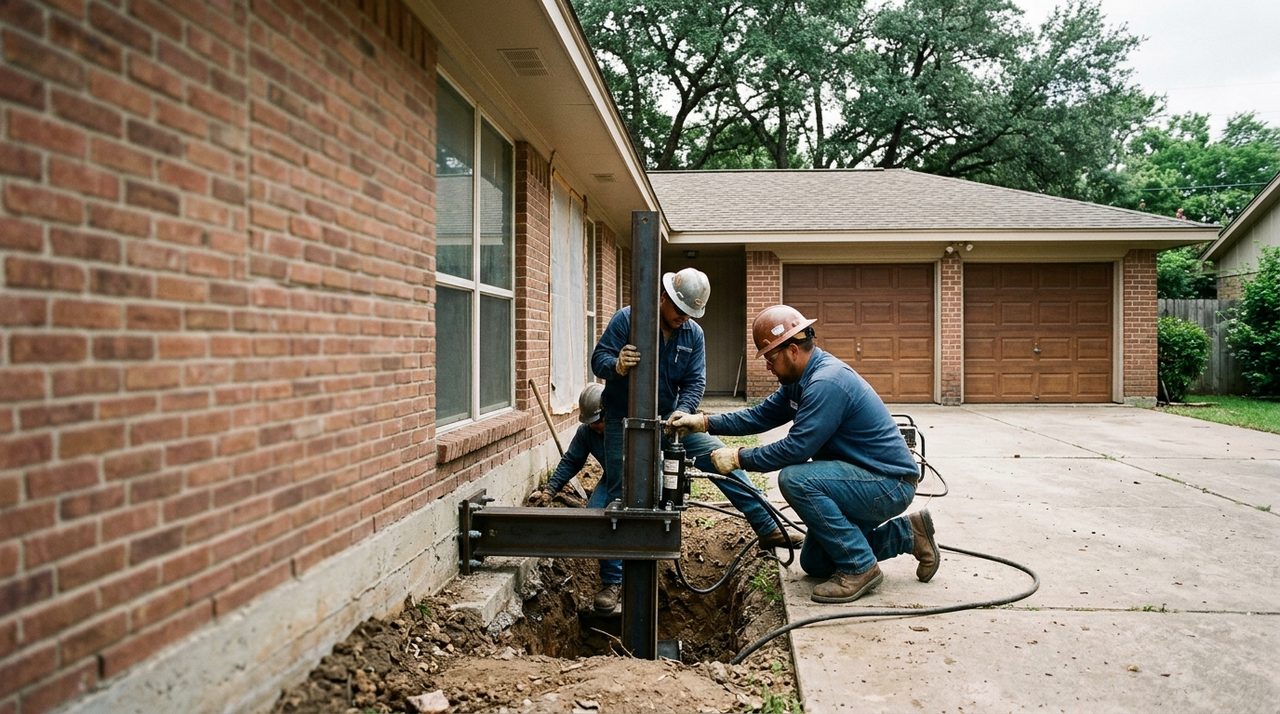
- Median home built
- 1979
- Median home value
- $189,084
- FEMA flood zone
- X (low)
- Typical cost (est.)
- $3,500–$25,000 depending on foundation type and method
- Most common local issue
- Pier-and-beam leveling on 1950s–1970s cottages with moisture-damaged wood beams
Ranked by verified Google rating × review volume × verification tier. How we rank →
Some highly-rated pros serve Acres Homes from nearby and may not keep a Acres Homes street address. Those are listed under "Also serving Acres Homes" with their real city and distance, so you always know where each business is based.
Min rating:
10 resultsBased in Acres Homes
Also serving Acres Homes
Highly-rated pros based nearby who cover Acres Homes. Distance shown from the Acres Homes area.
Closed
Serving Acres Homes Based in Garden Oaks · 2.1 mi away
Serving Acres Homes Based in Lazybrook / Timbergrove · 2.7 mi away
Serving Acres Homes Based in Brookhollow · 3 mi away
Closed
Serving Acres Homes Based in Independence Heights · 3.2 mi away
Closed
Serving Acres Homes Based in Lazybrook / Timbergrove · 3.2 mi away
Serving Acres Homes Based in Brookhollow · 3.4 mi away
Closed
Serving Acres Homes Based in Brookhollow · 3.6 mi away
Closed
Serving Acres Homes Based in Brookhollow · 3.6 mi away
Closed
Serving Acres Homes Based in Brookhollow · 4 mi away
Foundation Repair in Acres Homes: What You Should Know
Pier-and-Beam Cottages from the 1950s–1970s: Wood Rot, Settling Piers, and Uneven Floors
Why it matters to you
A significant share of Acres Homes' housing stock — those one-story frame cottages and bungalows built between 1950 and 1975 — sits on pier-and-beam foundations, not concrete slabs. Over five to seven decades, the wood sills and beams resting on those piers absorb ground moisture from Houston's clay soil, soften, and allow floors to sag noticeably in the center of rooms. This is distinct from slab movement: the problem is often the beam itself, not just the soil beneath it, and misdiagnosing it leads to repairs that don't hold.
What a good pro does
A qualified contractor must physically enter the crawl space (typically 18–24 inches of clearance on these older homes) to inspect each pier, assess beam integrity, and document moisture levels before quoting any work. Repairs may involve shimming or replacing individual concrete or steel piers, sistering or replacing deteriorated beams, and improving under-floor ventilation to slow future moisture intrusion. The City of Houston requires a foundation repair permit for structural underpinning work; verify the contractor pulls it through the Houston Permitting Center before work begins.
Sources: City of Houston Permitting Center, Municipal permit office (see area profile), International Residential Code (as adopted by City of Houston)
Expansive Clay Soil Attacking the Newer Slab-on-Grade Infill Homes
Why it matters to you
Post-2015 infill construction in Acres Homes — the contemporary traditional homes replacing demolished cottages — uses concrete slab-on-grade foundations directly in contact with Houston's clay soils. These slabs are newer but not immune: Houston's Beaumont and Houston Black clay formations swell when wet and shrink during dry spells, creating seasonal differential movement that can crack brick veneer, jam doors, and split interior drywall in a repeating wet-dry cycle. Because many of these infill lots were graded flat during construction without deep tree canopies to moderate soil moisture, the perimeter of the slab is especially exposed to drought-cycle void formation.
What a good pro does
Homeowners in newer infill houses showing early door-sticking or hairline brick cracks should have a foundation contractor assess perimeter void formation before the problem escalates. Maintaining a consistent soaker-hose irrigation ring two feet from the foundation edge during extended dry stretches (as Houston experienced through the 2022–2023 La Niña drought cycle) is the single most effective prevention. If underpinning is needed, steel push piers at $1,200–$1,800 per pier (est.) are the appropriate method for these slabs; pressed concrete pilings are not recommended for post-2010 construction.
Sources: Harris County Flood Control District, International Residential Code (as adopted by City of Houston), City of Houston Permitting Center
Post-Uri Under-Slab and Under-Floor Plumbing Leaks Compounding Foundation Problems
Why it matters to you
Many of Acres Homes' pre-1990 homes — both pier-and-beam and the slab-on-grade homes from the 1990s–2000s secondary wave — have cast-iron or galvanized drain lines that were stressed or cracked during Winter Storm Uri in February 2021. The area's active renovation market means many of these homes had walls patched afterward, but under-floor or under-slab drain lines were left in place leaking slowly. On pier-and-beam homes, a slow drain leak saturates the soil and accelerates wood beam decay; on slab homes, it creates localized heave and then settlement directly under the foundation beam.
What a good pro does
Before agreeing to any foundation repair contract on a pre-1990 Acres Homes home, insist on a hydrostatic plumbing test first — this costs roughly $250–$400 (est.) and definitively identifies under-slab or under-floor drain leaks that would otherwise cause a repaired foundation to fail again within a few years. If a leak is confirmed, a plumber licensed through the Texas State Board of Plumbing Examiners (TSBPE) must perform or directly oversee any under-slab drain repair before structural work proceeds. The City of Houston requires separate plumbing permits for this scope, issued through the Houston Permitting Center.
Sources: Texas State Board of Plumbing Examiners, City of Houston Permitting Center, Municipal permit office (see area profile)
No HOA Safety Net: Permitting and Disclosure Responsibility Falls Entirely on the Homeowner
Why it matters to you
Acres Homes has no mandatory master HOA, which means no architectural review board is going to catch an unpermitted foundation repair before it becomes your legal problem at resale. Texas TREC disclosure rules require sellers to disclose known foundation movement and repairs — if a prior owner paid a contractor who skipped the City of Houston permit process, that unpermitted work surfaces on a buyer's inspection report and can kill or reprice a sale. With a median home value of roughly $189,000 (ACS 2023), the financial stakes of undocumented repair work are real relative to the asset's value.
What a good pro does
Homeowners should confirm permit status directly through the City of Houston's Development Services / Houston Permitting Center — not just take the contractor's word for it — before work begins and again before final payment. For newer infill homes on small plats, check Harris County Clerk records for any private deed restrictions that might impose their own approval step; most Acres Homes lots have none, but individual plats from 2015–2024 infill development vary. Texas does not issue a standalone state license for foundation repair contractors through TDLR, so insurance verification (general liability plus workers' comp) is the primary quality screen alongside permit compliance.
Sources: City of Houston Permitting Center, Municipal permit office (see area profile), Texas Department of Licensing & Regulation, Local HOA / deed restrictions (see area profile)
Foundation Repair in Acres Homes: What You Should Know
Hiring foundation repair in Acres Homes? Acres Homes presents a uniquely diverse housing stock ranging from mid-century pier-and-beam cottages to post-2015 slab-on-grade infill homes, often on the same block. Most of the area has no mandatory HOA or formal deed restrictions, giving homeowners wide latitude on repairs and renovations but also creating a patchwork of building conditions. Contractors working here must be comfortable with both legacy wood-frame structural repairs and modern systems found in newer affordable construction.
- Housing era
- 1950s–1970s (legacy stock) with significant post-2015 infill construction
- Foundation
- Mixed — older homes are commonly pier-and-beam
- Flood zone
- FEMA Zone X (low flood risk) per official NFHL data
- Permits
- City of Houston — Houston Permitting Center (Acres Homes is within Houston city limits)
Housing stock & systems
Building era
1950s–1970s (legacy stock) with significant post-2015 infill construction; secondary wave from 1990s–2000s.
Typical style
Older homes are one-story wood-frame cottages, bungalows, and modest ranch-style houses; newer infill is contemporary traditional single-family with Hardie siding or brick-and-Hardie exteriors.
Foundations
Mixed — older homes are commonly pier-and-beam; newer infill construction is predominantly concrete slab-on-grade.
Common systems
Older homes often have galvanized or cast-iron plumbing, older electrical panels (60–100 amp), and window-unit or aging central HVAC systems. Newer infill homes typically have PEX or CPVC plumbing, 200-amp electrical panels, and modern split-system HVAC with SEER 14+ ratings.
What that means for repairs
Extensive infill and revitalization activity driven by the City of Houston's New Home Development Program (NHDP) and private developers replacing or renovating aging frame houses. Common renovation work includes pier-and-beam leveling, plumbing repipes on older homes, electrical panel upgrades, and full gut-rehabs of mid-century cottages.
Permits & restrictions
Permit jurisdiction
City of Houston — Houston Permitting Center (Acres Homes is within Houston city limits).
HOA & deed restrictions
No mandatory master HOA for most of Acres Homes. Voluntary civic clubs and community organizations exist (e.g., Acres Home Super Neighborhood #6) but do not impose dues or design controls. Some newer small infill plats may carry private deed restrictions governing minimum square footage and use, but these vary lot by lot.
Historic districts
No City of Houston historic district designation confirmed.
Contractor note
With no overarching HOA design review, contractors typically need only City of Houston permits. However, some newer infill plats may have private deed restrictions with architectural standards — confirm with the property owner and check Harris County Clerk records before beginning exterior work.
Flood & weather
FEMA flood zone
FEMA Zone X (low flood risk) per official NFHL data. However, portions of Acres Homes adjacent to Vogel Creek and its tributary channels fall within 100-year and 500-year floodplains per Harris County Flood Control District mapping. Flood risk varies significantly by proximity to these waterways and local low points along drainage ditches.
Hurricane Harvey impact
Acres Homes experienced structural flooding during Hurricane Harvey (2017), but it was not among the highest-profile disaster zones like Meyerland or Greenspoint. Areas near Vogel Creek and low-lying drainage channels were most affected. The exact extent of damage is not clearly quantified in public summaries. Harris County Flood Control District has undertaken channel improvement and detention projects along Vogel Creek in this area, indicating recognized recurring drainage issues.
Heat & humidity load
Older pier-and-beam cottages with aging HVAC systems and limited insulation are especially vulnerable to Houston's extreme summer heat and humidity. Condensation under pier-and-beam homes can accelerate subfloor rot and encourage mold growth. Newer slab-on-grade infill homes perform better thermally but still demand regular HVAC maintenance during peak cooling season.
Working with contractors here
The most common contractor work in Acres Homes includes foundation leveling and pier-and-beam repair on mid-century frame houses, full plumbing repipes replacing galvanized lines, and electrical panel upgrades from 60-amp to 200-amp service. The active infill development market also generates steady demand for new construction trades, demolition, and site prep. Because housing stock varies dramatically from block to block — a 1950s cottage may sit next to a 2020 build — contractors must scope each job individually and cannot assume uniform conditions. Drainage and grading work is important near Vogel Creek tributaries, and properties in low-lying areas may need additional moisture mitigation measures.
Local Tip
Always ask for a written estimate before work begins. Texas contractors are required to provide one on jobs over $1,000.
About Acres Homes
Acres Homes presents a uniquely diverse housing stock ranging from mid-century pier-and-beam cottages to post-2015 slab-on-grade infill homes, often on the same block. Most of the area has no mandatory HOA or formal deed restrictions, giving homeowners wide latitude on repairs and renovations but also creating a patchwork of building conditions. Contractors working here must be comfortable with both legacy wood-frame structural repairs and modern systems found in newer affordable construction.
- Median year built
- 1979
- Median home value
- $189,084
- Owner-occupied
- 56.5%
- Population
- 101,056
- Housing units
- 36,313
- Median income
- $45,829
Source: U.S. Census Bureau, ACS 5-Year 2023
Flood & storm risk
FEMA Zone XLow flood riskMost of Acres Homes maps to FEMA Zone X (low mapped flood risk), but Houston's flash-flood reality means even low-risk blocks benefit from smart drainage and storm-hardened installs.
Source: FEMA National Flood Hazard Layer (NFHL). Flood zones vary by parcel — verify your individual FIRM panel.
Houston Storm Readiness in Acres Homes
Hurricane & flooding
Wind-driven rain during a hurricane can saturate soil on the windward side of your home while the leeward side stays dry, creating differential moisture conditions beneath your slab that show up as sticking doors weeks later in Acres Homes. Schedule a Zip-Level elevation reading after any named storm passes so a foundation professional can distinguish normal seasonal movement from storm-induced settlement requiring pier work. Confirm the current FEMA panel for your Acres Homes parcel — the area maps to Zone X, but adjacent lots can differ.
Severe storms & hail
Even with low mapped flood risk, Acres Homes is not immune to the localized sheet flow that accompanies a Houston severe thunderstorm, and repeated minor inundation at the foundation perimeter sustains the clay moisture that drives slow heave cycles. A pre-storm season inspection confirming that soil grade, splash blocks, and downspout extensions all direct water away from the slab is the most cost-effective foundation repair step you can take. Confirm the current FEMA panel for your Acres Homes parcel — the area maps to Zone X, but adjacent lots can differ.
Ice storms & freezes
Ice loading from roof accumulation during a hard freeze transfers compressive stress to your foundation corners, and in Acres Homes that added load on clay subgrade that has stiffened from cold can create corner settlement that persists after the thaw. A TDLR-licensed foundation contractor should inspect visible brick-to-foundation transitions and interior door frames after any multi-day freeze event, even if no pipe damage occurred. With a median build year of 1979, the older building stock here is more exposed to hard-freeze damage than newer construction. Confirm the current FEMA panel for your Acres Homes parcel — the area maps to Zone X, but adjacent lots can differ.
Sources: FEMA National Flood Hazard Layer (NFHL), Ready.gov -- Hurricanes, CenterPoint Energy -- Storm Center, City of Houston -- Emergency Preparedness, Ready.gov -- Winter Weather, Harris County Flood Control District
Free Acres Homes Tools & Calculators
Houston-specific estimators to plan your project before you call a pro. All results are planning estimates — a licensed local pro confirms the details on site.
Houston Soil & Tree Proximity Risk Calculator
Open full tool & FAQ →Grouped by mature root aggression & water demand.
Trunk center to the nearest exterior wall.
Moderate risk
The root zone likely reaches your foundation's soil during Houston's dry summers, when clay shrinks most. Watch for sticking doors and diagonal cracks, keep soil moisture even with a soaker hose during drought, and have a foundation pro evaluate if you see any movement.
Find a Houston foundation pro →This is a planning estimate only — actual requirements depend on an on-site assessment by a licensed Houston pro. Guidance is based on general species root behavior in expansive clay, not a soil test.
Houston Freeze Prep & Pipe Insulation Checklist
Open full tool & FAQ →Your freeze checklist — 4 tasks
- 1
Disconnect & drain every outdoor hose bib
Remove hoses, drain the spigots, and cover each with an insulated faucet sock. Un-drained hose bibs are the #1 burst point in a Houston freeze.
- 2
Insulate exposed pipes in the attic & garage
Wrap any pipe in an unconditioned space (attic runs, garage walls) with foam sleeves. Houston homes rarely insulate these because they only matter a few nights a year — which is exactly why they burst.
- 3
Open cabinet doors & keep a pencil-width drip
On hard-freeze nights, open kitchen/bath cabinets so warm air reaches the pipes and let faucets on exterior walls drip to relieve pressure.
- 4
Protect the attic/garage water heater & its lines
An attic or garage tank sits in unconditioned space. Insulate the cold-inlet and hot-outlet lines and confirm the emergency drain pan is clear so a leak doesn't reach the ceiling.
This is a planning estimate only — actual requirements depend on an on-site assessment by a licensed Houston pro. If a pipe has already burst, shut off your main water supply and call a licensed Houston plumber immediately — freeze bursts flood fast.
Frequently Asked Questions
Does a pier-and-beam leveling job on my 1950s Acres Homes cottage require a City of Houston permit, and how do I verify my contractor actually pulled one?
Yes, structural foundation repair — including pier replacement and beam work on pier-and-beam homes — requires a permit through the City of Houston Permitting Center, not a separate suburban office, since all of Acres Homes falls within Houston city limits. You can verify permit status yourself by searching the address on the Houston Permitting Center's online portal; do not rely solely on the contractor's verbal confirmation. Unpermitted work discovered during a future sale inspection can delay or kill your closing, and with no HOA here to flag violations early, the entire compliance burden rests on you as the owner.
Sources: City of Houston Permitting CenterMunicipal permit office (see area profile)
My Acres Homes house was built in the early 1960s — should I get a hydrostatic plumbing test before signing a foundation repair contract?
Strongly yes: homes from that era commonly have cast-iron under-floor drain lines that were already aging before Winter Storm Uri (2021) stressed them further, and a slow leak directly beneath or around a pier-and-beam floor system will keep soil moisture elevated and re-damage any leveling work within a few years. A hydrostatic test, performed by a licensed plumber under Texas State Board of Plumbing Examiners (TSBPE) authority, typically costs roughly $250–$400 (estimate) and identifies active leaks before you commit to a $5,000–$15,000 leveling or beam-replacement job. Any reputable foundation contractor working on older Acres Homes stock should welcome, not resist, this step.
The 2022–2023 drought was brutal and I noticed my slab-on-grade infill home's doors started sticking. Now that rains are back, will the foundation self-correct?
Partial self-correction can happen as Houston's Beaumont clay re-hydrates, but if perimeter voids formed during the drought and erosion occurred when heavy rains returned, the soil is no longer uniformly supporting your slab edge — and seasonal re-swelling can actually worsen differential movement rather than fix it. Door and window sticking that improves in wet weather and returns in dry weather is a sign of active clay cycling, not a one-time event, and the newer infill slabs in Acres Homes are thinner post-tension designs that can develop stress cracks if the cycle repeats. Get a written evaluation — most local foundation contractors offer free inspections — and ask specifically whether the inspector is checking for perimeter void depth, not just interior crack patterns.
Acres Homes is mostly FEMA Zone X, so do I still need to worry about flood-related soil saturation affecting my foundation after a major storm like Beryl?
Zone X means your property is outside the mapped 100-year floodplain, so federally required flood insurance and elevation certificate rules generally don't apply here — but Zone X does not mean your soil drains quickly after a multi-day rain event like Beryl (2024). Houston's clay retains water for weeks, and blocks near Vogel Creek tributaries in Acres Homes can experience prolonged subsurface saturation that temporarily reduces the clay's load-bearing capacity, causing post-storm settlement on both slab and pier-and-beam foundations. If you see new cracking or door misalignment six to twelve weeks after a major storm, that timing is a red flag worth investigating before it progresses.
Sources: FEMA National Flood Hazard Layer (NFHL)Harris County Flood Control District
I got three foundation repair quotes for my Acres Homes pier-and-beam house and they ranged from $4,200 to $14,000 — why is the spread so wide, and what line items should I compare?
On pier-and-beam homes the spread usually comes down to how many piers are being replaced versus shimmed, whether wood beams and sills need to be sistered or fully replaced, and whether the contractor is including crawl-space moisture barriers and ventilation improvements or just doing the minimum leveling pass. Ask each contractor to itemize: number of piers addressed, linear feet of beam work, pier material (concrete block, adjustable steel, or poured concrete), and whether a re-level check visit is included at six months, since settling clay in Acres Homes often requires one adjustment after the first dry season. Also confirm each quote explicitly lists whether permit fees are included — City of Houston foundation permits carry their own fee schedule and are not optional.
Sources: City of Houston Permitting Center
Acres Homes has a lot of infill development — if I bought a post-2015 slab-on-grade new build here, is it too early to worry about foundation issues, or do new slabs have problems too?
Post-2015 infill slabs in Acres Homes are typically post-tensioned concrete, which is stronger than older conventionally reinforced slabs, but they still sit on the same expansive Beaumont clay and are vulnerable to the same drought-cycle void formation along the perimeter — sometimes within the first five to seven years if the original grade was poorly established or if the builder skimped on the compacted fill layer. Signs to watch even in newer homes include diagonal cracking at door corners, garage slab separation, and grade-beam gaps visible from outside; if your home was built on a previously cleared lot where old structures were demolished, fill quality is especially variable. A proactive moisture-management routine — keeping a soaker hose on the perimeter during extended dry spells — is far cheaper than the earliest-stage repair estimates of $3,500 and up.